
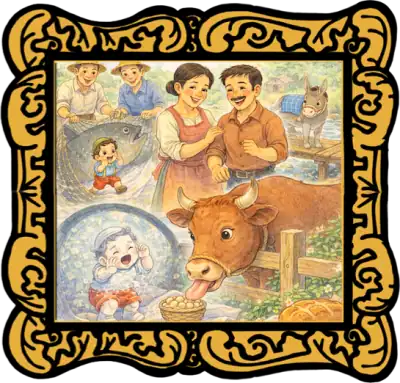

Garbancito The Little Chickpea
A Wish in a Quiet Kitchen
In a bright little village, a kind couple wished for a child. They did not ask for riches or a grand house. Instead, they only wanted laughter at their table. One evening as the wife shelled chickpeas, she sighed.
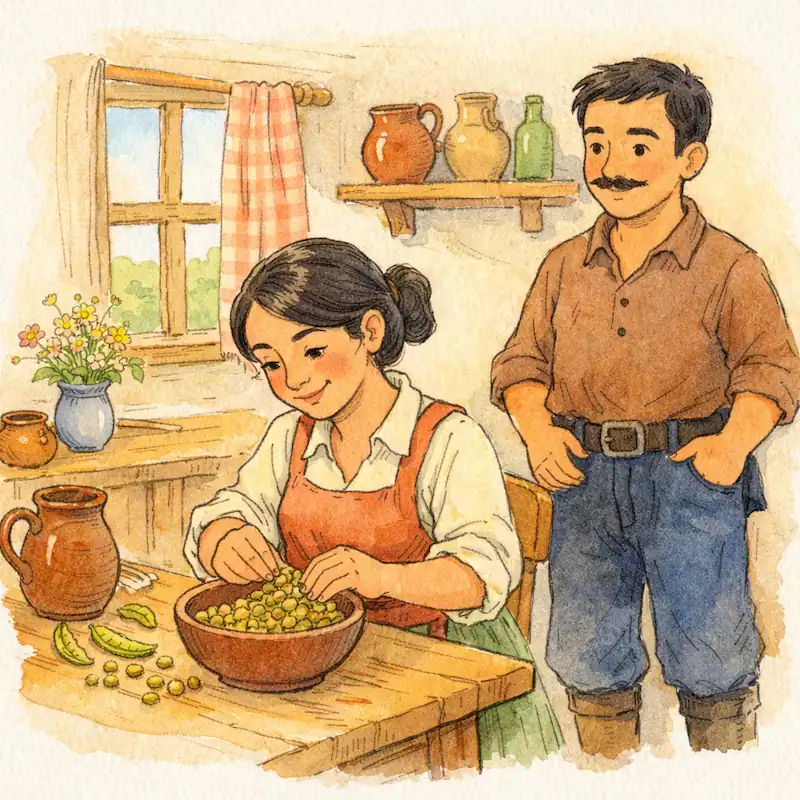
“I would be happy with any child,” she said, “even one as small as a garbanzo.”
Her husband smiled. “Then let us wish for that. A tiny child with a big heart.”
A Voice from the Windowsill
The next morning, a tiny cheerful voice came from a flowerpot on the windowsill. The couple hurried over and leaned in close.
A boy no taller than a thumb sat beside a chickpea sprout. His eyes shone like buttons and his grin looked far too wide for such a small face.
“Good morning,” he chirped. “You asked for me, so here I am.”
The wife laughed through tears. “Our son. Garbancito.”
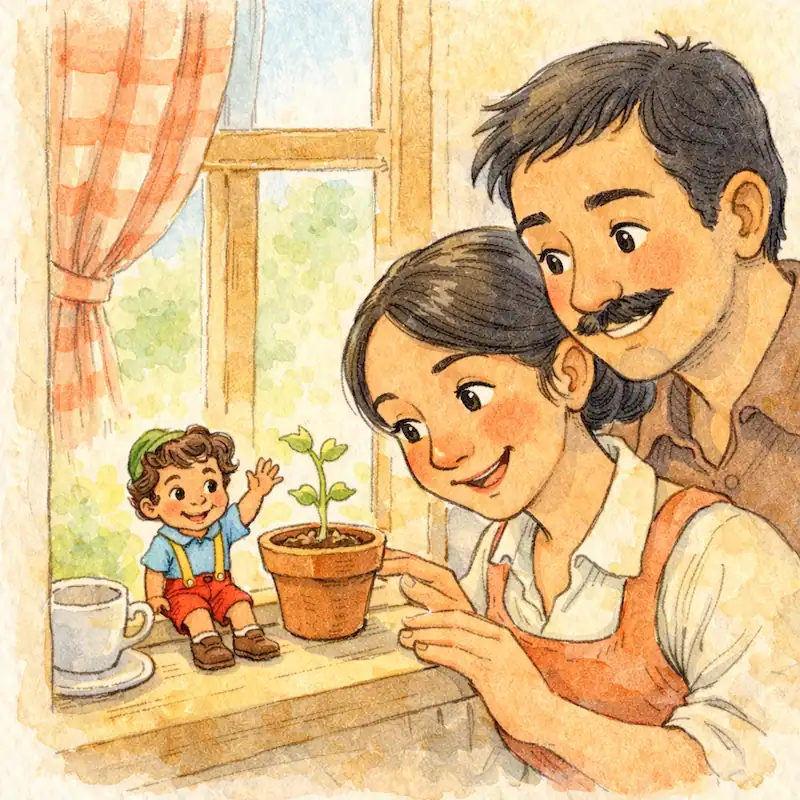
The husband bent close. “This world is huge. Can you handle it?”
Garbancito planted his tiny hands on his hips. “I can. Also, do we have breakfast?”
A Small Life with Big Energy
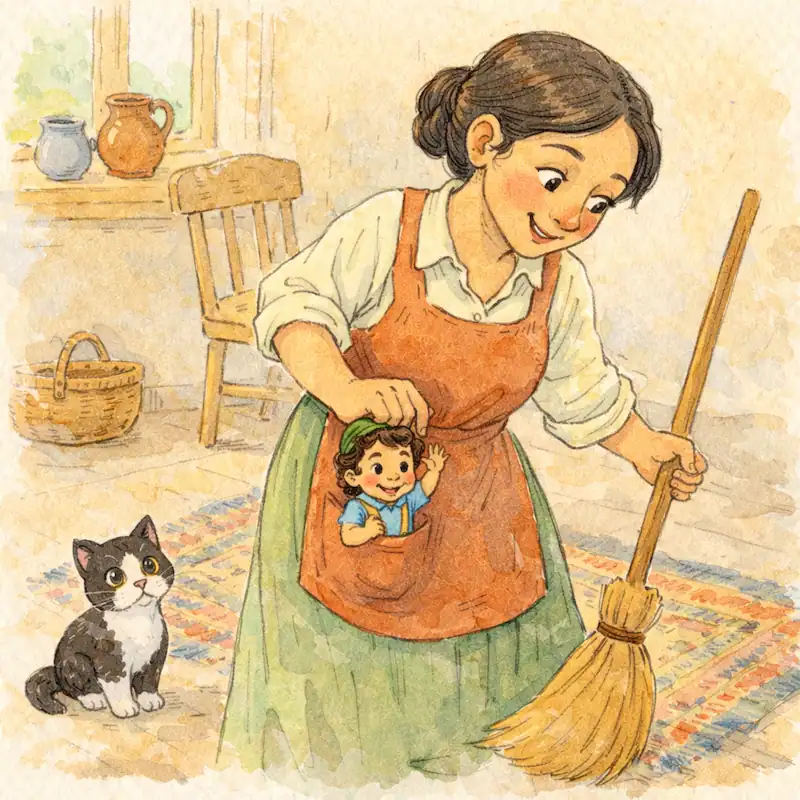
Before long, the once quiet house felt lively from morning to night. Garbancito rode in his mother’s apron pocket while she swept.
He perched on his father’s shoulder on walks to town. When neighbors stared, he waved like being tiny was normal.
Still, being small was risky. A cat could swat him. A gust of wind could tumble him. Because of that, Garbancito learned to stay alert and to speak up fast.
“I am small,” he often said, “but my voice is full sized.”
Even so, while his parents smiled at that, they still worried. Love makes you careful.
A Pouch Ride to the Market
One morning his father said, “I must go to market and then to the mill. We need flour for bread.”
“I will come,” Garbancito said at once.
His mother shook her head. “It is safer at home.”
“I want to help,” Garbancito insisted. “I cannot carry sacks, but I can watch and warn.”
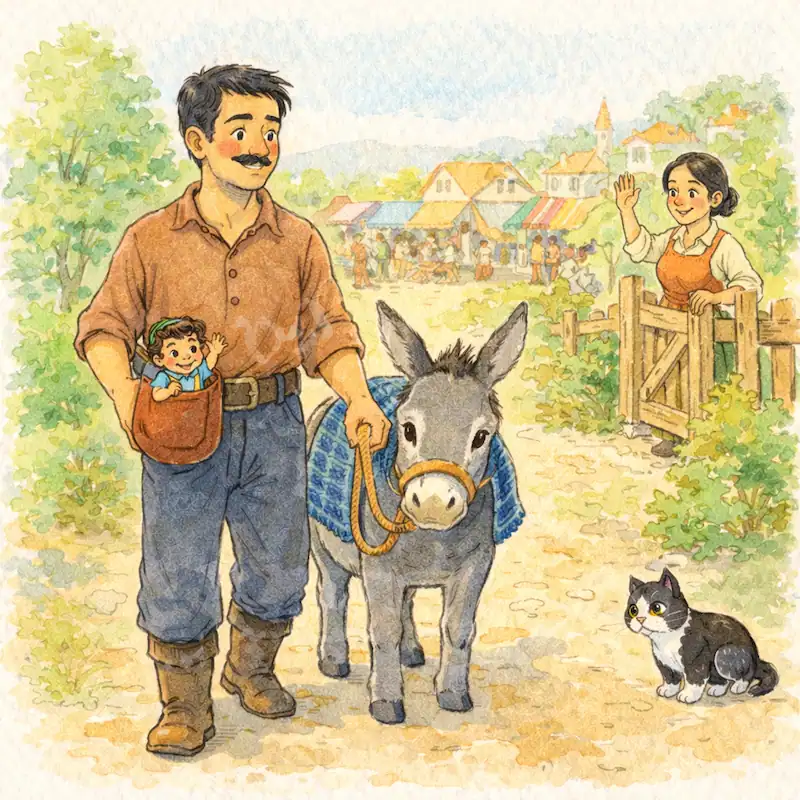
His father hesitated, then nodded. “All right. Stay in this pouch and do not jump out.”
Garbancito saluted. “Yes, Father. I am small, not silly.”
His father loaded their little gray donkey with an empty sack for the grain and led it toward the market.
Thieves in the Crowds
The market buzzed with shouting sellers, clinking coins and people weaving past with baskets. Garbancito peeked from the pouch as his father bought grain and cheese.
Meanwhile, two thieves drifted closer, eyes on the donkey’s load. One slipped a hand toward the rope.
Garbancito’s stomach flipped. Garbancito’s stomach flipped. Facing the stall, his father counted change. The crowd was loud, so a normal shout would vanish.
So Garbancito did not shout like a normal boy.
He shouted like a bell.
“HEY!” he cried. “Hands off that donkey!”
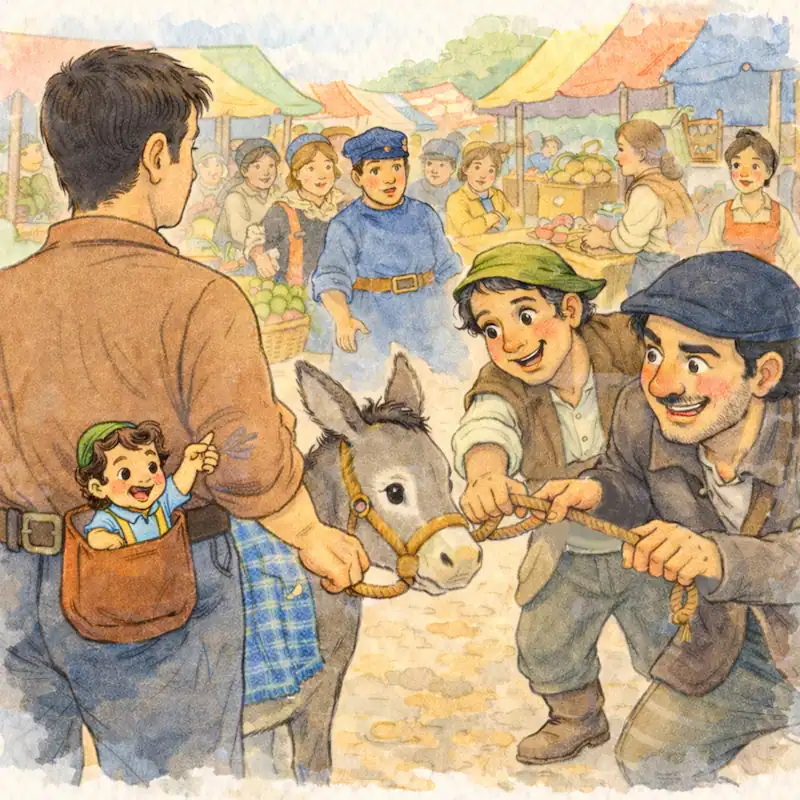
The thieves froze. Shoppers turned, confused. Garbancito yelled again, sharper this time.
“They’re stealing! Right there!”
A market guard pushed through. “What is going on?”
The thieves tried to smile, but Garbancito pointed from the pouch. “Those two. They were untying the rope so they could lead the donkey away.”
The guard grabbed them by the sleeves. “Then you can explain yourself in jail.”
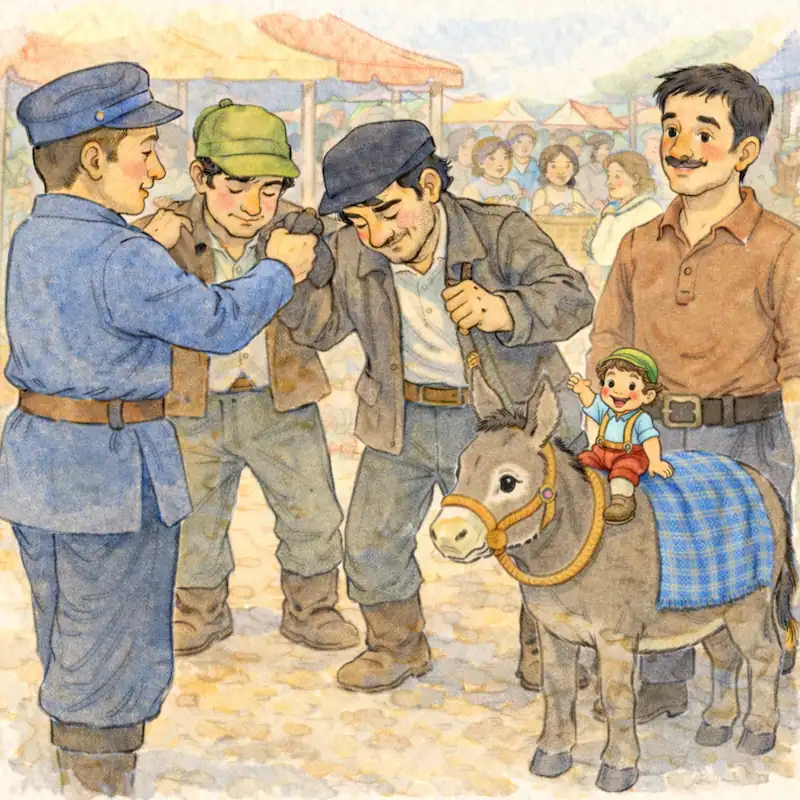
His father spun around. “Garbancito? Was that you?”
Garbancito grinned. “Yes. I told you my voice is strong.”
His father lifted the pouch with careful hands. “You saved our food. Thank you, little one.”
The River That Would Not Wait
After the market they headed toward the mill. The road crossed a shallow river over smooth stones. A narrow wooden bridge creaked in the wind.
The donkey disliked the bridge. It planted its hooves and refused to move. The father tugged the rope, but the donkey only sidestepped, avoiding the bridge.
The pouch swung. Garbancito grabbed the edge, but the leather was damp. His fingers slipped and he tumbled out.
Splash.
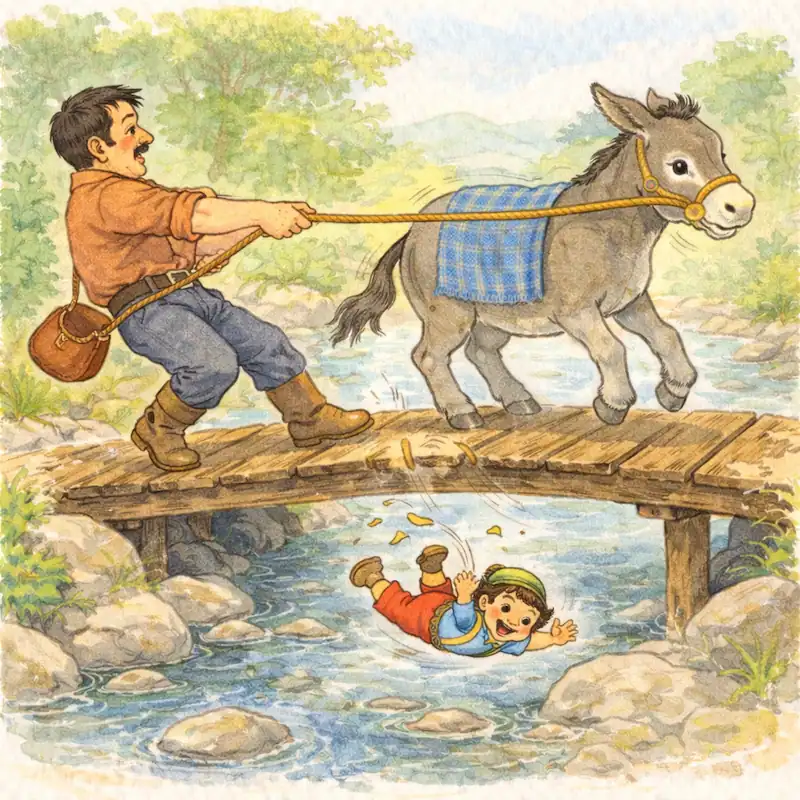
Cold water wrapped around him. The current pulled hard.
“Father!” Garbancito squeaked. “I’m in the river!”
His father rushed to the bank and scanned the water. A thumb-sized head can vanish between ripples.
Garbancito bobbed up, coughing. “Here! Here!”
The father spotted a hollow gourd near the shore and tossed it in.
“Hold on!” he shouted.
Garbancito clung to the gourd with both arms. It kept him floating, but the current carried him away. Meanwhile, his father ran along the bank, slipping on stones.
“Stay close!” the father called.
“I am trying,” Garbancito sputtered. “Tell the river to stop!”
A Fish with Bad Manners
A dark shape slid under the water. Garbancito saw a wide mouth rise and then, in one gulp, everything went dark.
The fish had swallowed him.
Garbancito landed in a warm, squishy place that smelled like pond weeds. He sat up, dripping and forced himself to breathe slowly.
“Well,” he muttered, “this is new.”
The fish’s belly rumbled.
“That is rude,” Garbancito said. “I am not lunch.”
He pressed an ear to the fish’s side. Muffled voices drifted in. The fish was near the shore.
Garbancito filled his lungs and yelled, “Help! I am Garbancito! I am inside a fish!”
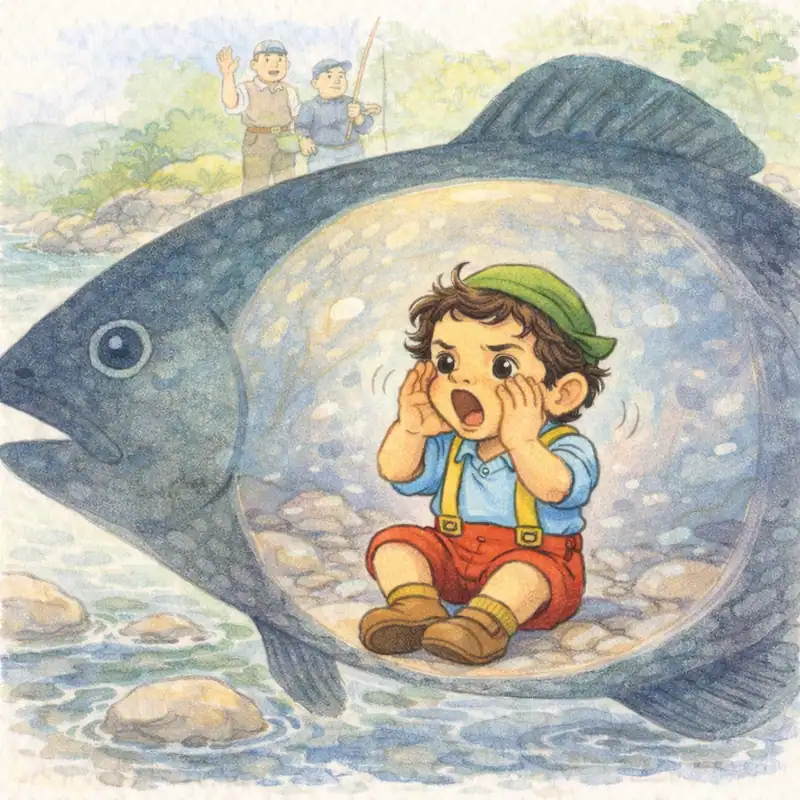
Two fishermen on the bank jumped.
“Did you hear that?” one asked.
“It came from the big fish,” the other whispered.
Garbancito shouted again. “Yes, the big fish! Catch it, please!”
They threw their net. The fish thrashed, but they hauled it onto the bank. Garbancito banged on the inside like a tiny drummer.
“Careful!” he called. “Open the fish, not me!”
The fishermen stared at each other, then sliced the fish open. Light poured in and fresh air rushed over Garbancito.He climbed out, soaked and proud, while the fishermen gaped.
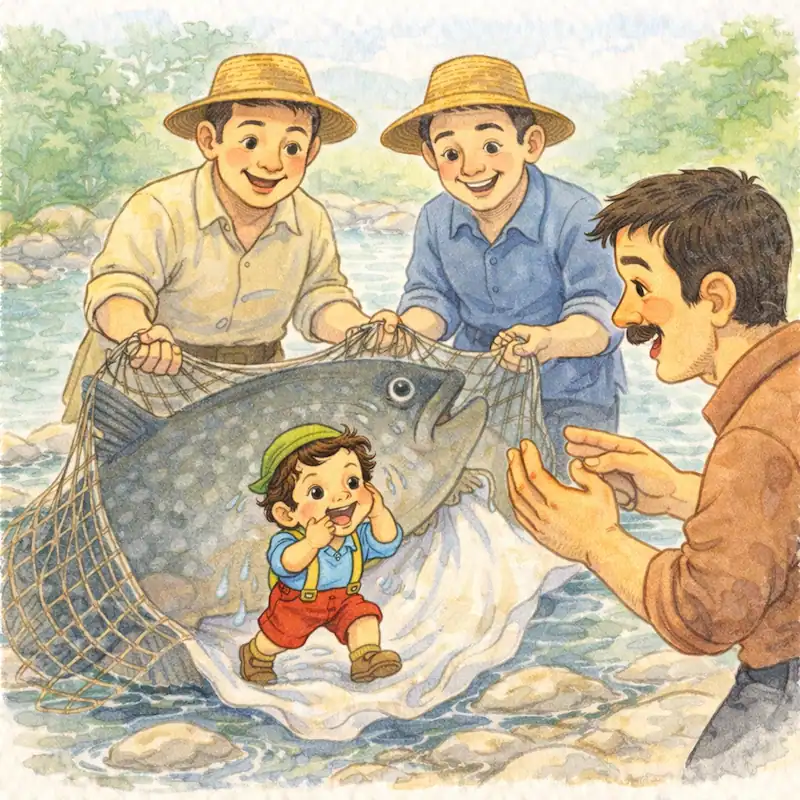
One finally said, “You are the smallest boy I have ever seen.”
Garbancito nodded. “And I have had the strangest day.”
They wrapped him in a cloth, gave him a warm crust of bread and walked with him along the riverbank until they found his father.
The Garden That Turned Dangerous
A few days later, when the river adventure had become village gossip, Garbancito asked to help again. His mother agreed, but only in the garden where she could watch him.
She handed him a tiny basket and set him among the chickpea plants.
“Stay where I can see you,” she warned.
“I will,” Garbancito said and he started picking chickpeas, one by one.
A Sloppy Lick from the Fence
Near the fence, a neighbor’s ox leaned over, curious.
It sniffed the air, then lowered its nose toward the basket of chickpeas.
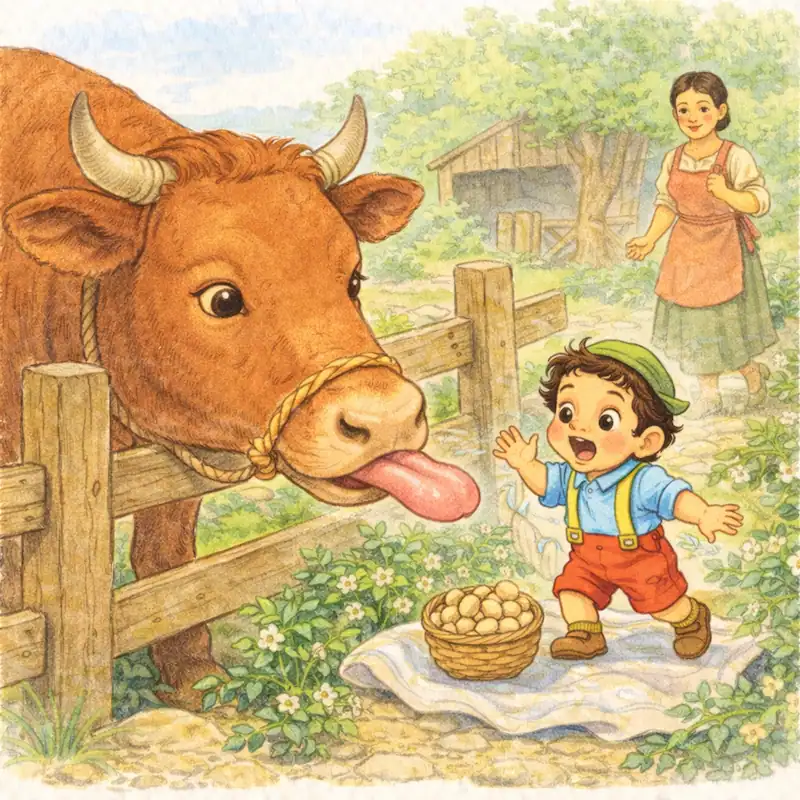
Garbancito stepped back, but the ox’s wide tongue swept the ground and, with a sloppy lick, swallowed chickpeas and one tiny boy.
Darkness again.
Garbancito sat up, damp and annoyed. “I have been eaten twice. That feels unfair.”
Then he took a breath and shouted, “Mother! I am inside the ox!”
His mother heard the voice from the fence and rushed over. The ox blinked and chewed, calm as ever.
“Garbancito?” she cried.
“Yes,” his voice echoed. “Please do not let anyone take this ox anywhere.”
That was the problem. A farmhand was already leading the ox down the road because it was going to be sold that afternoon.
Quickly his mother ran for her husband. Together they hurried after it, calling out. Garbancito kept yelling from inside.
“Excuse me! I am a boy, not a bean!”
The farmhand stopped, pale, when the ox seemed to talk. The father explained quickly and offered his savings to buy the ox back on the spot. The farmhand agreed, relieved to be rid of a “talking” animal.
Back in their yard, the father mixed warm water with bran and a little oil. He poured it into a wooden bucket and set it under the ox’s mouth.
“Drink,” he said. “Then cough, if you can.”
The ox drank and, after a heavy gulp, let out a loud burp and a mighty cough.
Garbancito popped out into the bucket with a splash.
He wiped his face, glared up at the ox and said, “We need rules about licking.”
His mother rinsed him off and hugged him tight. His father laughed, shaky with relief.
Home Again, and Still Helping
After that, his parents kept Garbancito close. He did not mind because he liked being useful and there were plenty of jobs that fit a tiny boy.
He counted eggs into a bowl, sorted herbs into neat piles and watched the cat like a guard with a very serious face.
Lost in the Flour Sack
When the flour sack was opened, a puff of white dust rose like a cloud. Garbancito sneezed so hard he nearly fell over.
His father chuckled. “Stand back, little one.”
“I am standing back,” Garbancito said, though his standing back was only two small steps away.
His mother reached for a scoop. At that exact moment, the cat leapt onto the table, curious about the new smell. The table wobbled, the scoop tipped and Garbancito slipped.
Plop.
He tumbled right into the open sack and vanished in the flour.
It went quiet for half a heartbeat. Then a tiny voice shouted from inside, muffled but furious.
“I AM IN THE FLOUR!”
The cat bolted off the table like it had seen a ghost.
His mother froze with the scoop in midair. “Did you hear that?”
His father leaned close. “Garbancito?”
“YES,” came the shout. “Do not scoop. I do not want to be bread.”
His parents burst into laughter and then, very carefully, reached into the sack. They lifted him out, white from head to toe, blinking through flour like a powdered little statue.
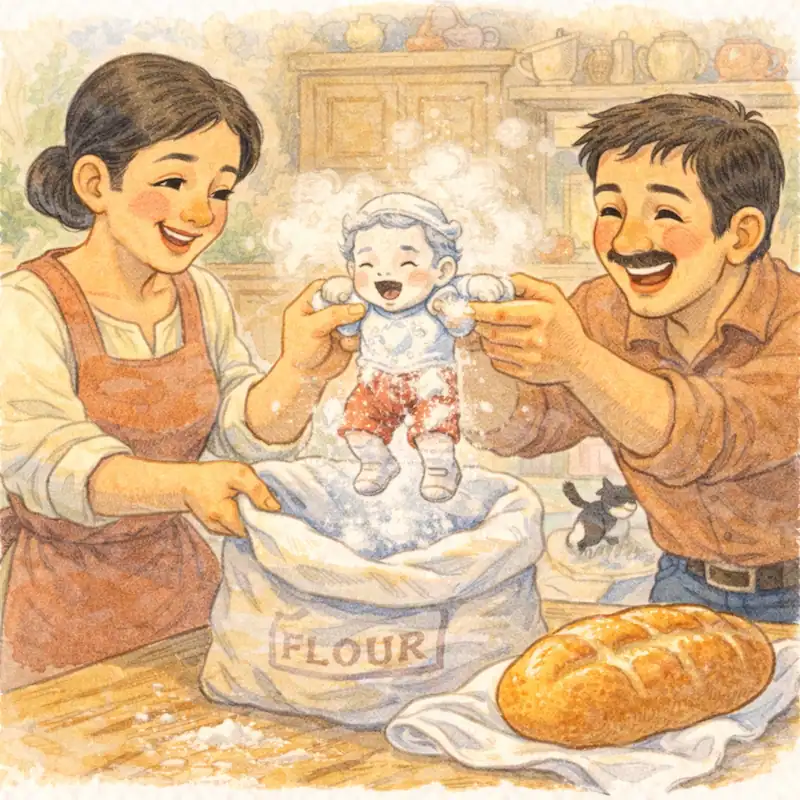
His mother brushed his cheeks. “Are you all right?”
Garbancito coughed. “I am fine. I just do not wish to live in a sack.”
His father shook his head, smiling. “Even at home you find adventure.”
Garbancito wiped flour from his eyebrows. “Adventure finds me. I simply complain loudly.”
Bread, Flour, and a Tiny Promise
“We will make bread,” his mother said.
Garbancito nodded. “Bread is worth a little danger.”
His mother laughed. “No more danger. Just measuring.”
So Garbancito measured salt grain by grain, serious as a chef. He stirred a small corner of dough with a wooden spoon that was taller than he was.
Soon the smell of baking bread filled the house, warm and safe.
At the table, his father set a tiny crumb of the bread on a saucer for him.
Garbancito took a bite and smiled at his parents.
“I am small,” he said, “but I can still help. And if trouble comes, I can call for help too.”
His mother nodded. “That is what matters.”
His father raised his cup. “To Garbancito. Small, brave and wise.”
Garbancito lifted his crumb like a toast. “And loud,” he added.
They all laughed and the storm outside did not seem so big anymore.
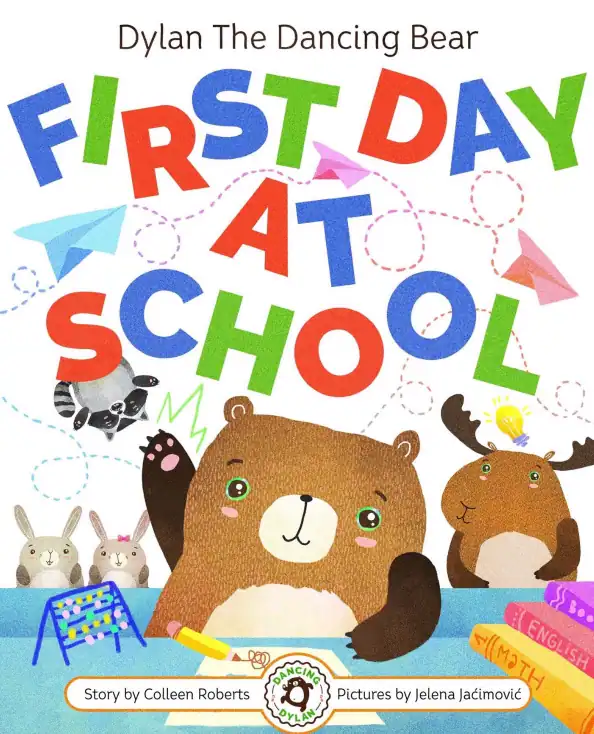
Get Dylan’s First Adventure
Join the dancing fun! Grab your free copy of Dylan’s school debut.
Send My CopyCheck your email (and junk folder).


