
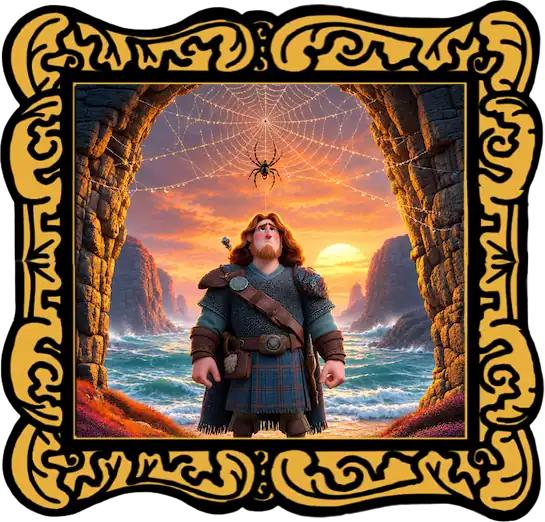

Robert the Bruce and the Spider is a classic Scottish folktale for kids about perseverance, patience and not giving up after failure. In this child-friendly retelling, Robert the Bruce hides in a cave after defeat and watches a spider keep trying until it succeeds. The story is often told as a lesson in resilience, determination and learning to try again.
- Independent Reading Age: 7–10 years
- Reading Level: Upper Elementary
- Reading Time: 7–8 minutes
- Author / Source: Traditional Scottish legend / folktale
- Story Type: Scottish folktale / historical legend
- Region / Origin: Scotland
- Main Characters: Robert the Bruce, the spider
- Moral / Themes: Perseverance, patience, resilience, leadership, hope
The Story of Robert Bruce and the Spider.
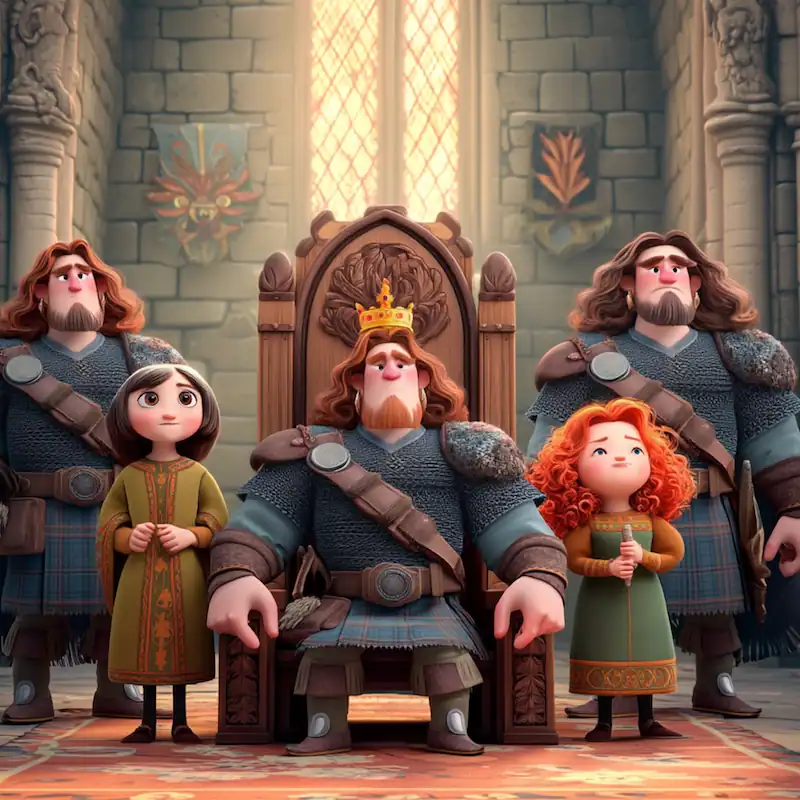
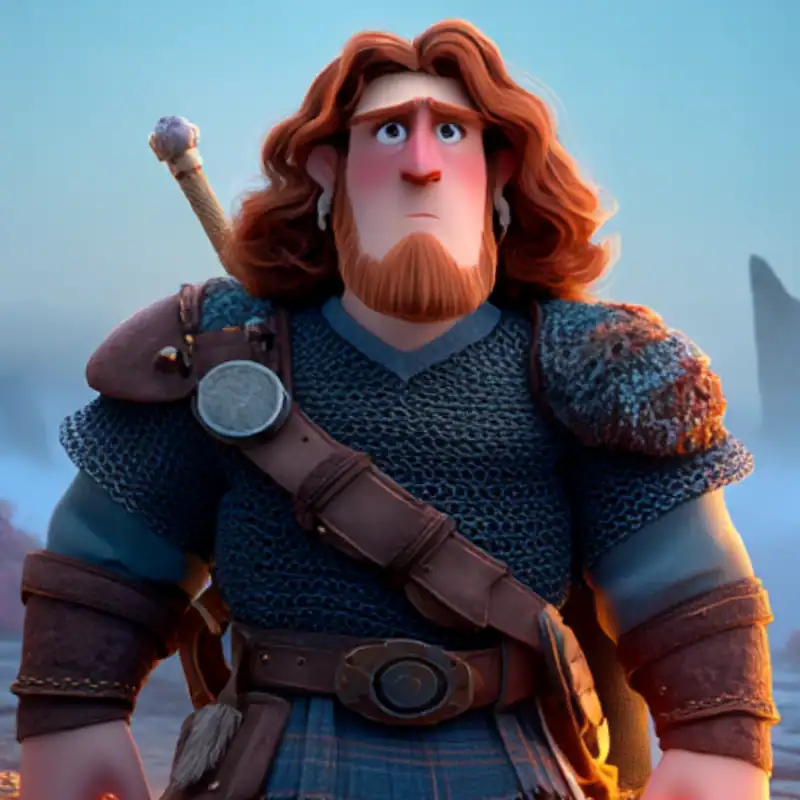
Long ago in Scotland, a brave leader named Robert Bruce wanted his country to be free from English rule and to choose its own king and laws. He was crowned King of Scots, but a crown did not make life easy.
The Cave by the Sea
Enemies hunted him, food ran low and bad news rode on every wind. After several defeats he had to hide in a cave from the soldiers who searched for him.
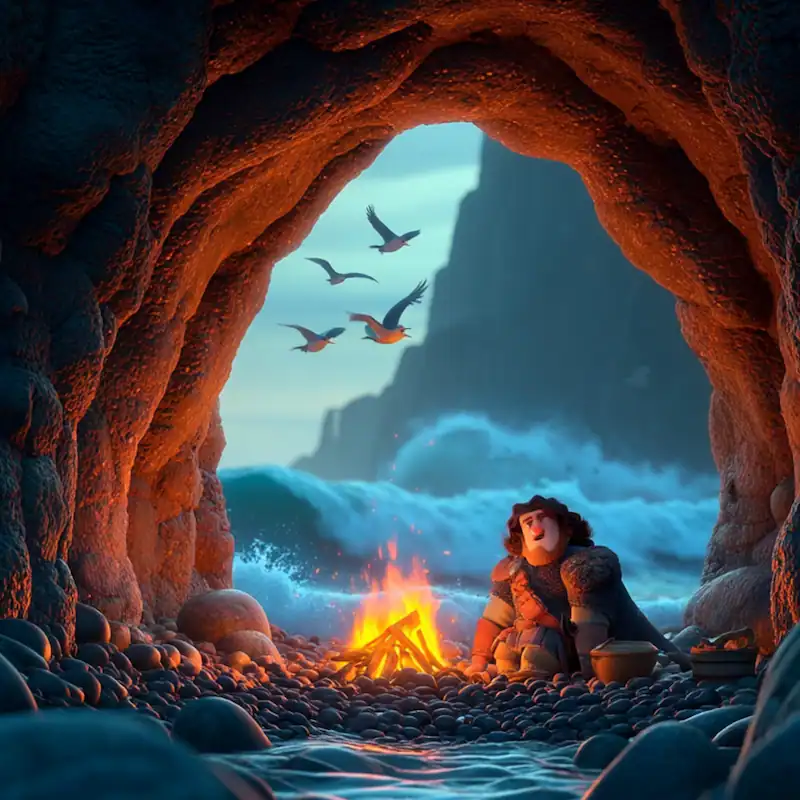
The cave was cold and damp. Rain beat on the rocks. Waves rolled and hissed along the shore. Inside that dark place, Robert pulled his cloak tight and tried to rest. He felt tired. Tired of losing, tired of hiding, tired of wondering if he should give up.
“Six times I’ve tried,” he murmured, counting on his fingers. “Six times I’ve been beaten. How many more can I bear?”
He had chosen clever plans. He had swung his axe and stood beside brave men. Still, the enemy pressed him back. Some friends were dead. Others had been taken. Villagers were afraid to help. He was a king, yes, but a king without a throne. The cave was his castle; the wind was his only music.
Why Robert the Bruce Kept Fighting?
Robert fought for Scotland’s freedom. He wanted Scottish laws made by Scots. He wanted farmers safe in their fields and children growing under a sky that truly felt like home. He believed Scotland should be ruled in Scotland, for the good of Scotland.
Yet noble ideas are hard to carry when your feet are wet and your belly is empty. Doubt crept closer as he watched the cave roof fade into shadow.
The Spider in the Cave
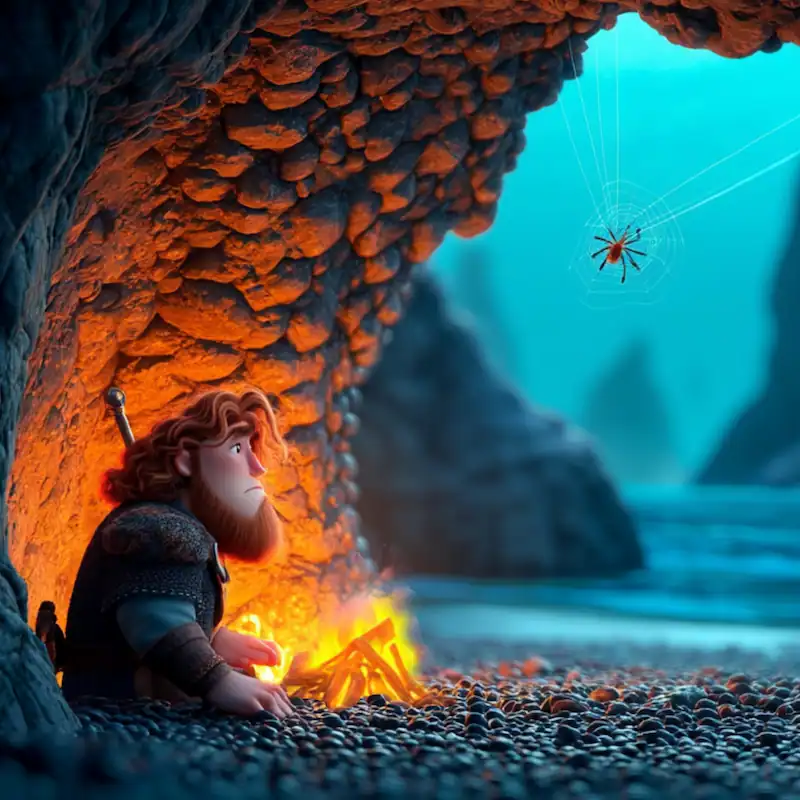
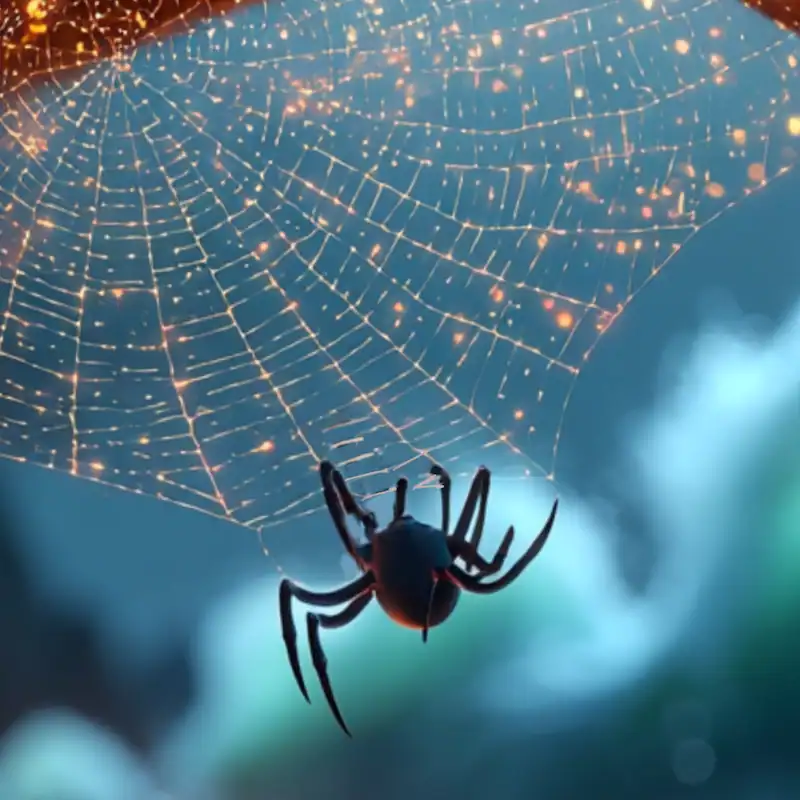
Then he noticed a small movement above. A spider swung on a silver thread, aiming for a tiny ledge of rock. The jump looked impossible for such a little creature.
The spider leapt—and missed.
It tried again—and missed.
Again—missed.
Again—missed.
Again—missed.
Again—missed.
Robert counted in a whisper. “Once, twice, thrice… four, five, six. Just like me.” The cave seemed to hold its breath.
The spider hung still. Perhaps it rested. Perhaps it simply gathered strength, the way small creatures do, without fuss or complaint. Robert knew that feeling…
The Promise in the Dark
“If the spider tries once more and succeeds, I will try once more too. If it fails, I will leave this struggle.”
The spider swayed forward, steadied itself and sprang.
The thread caught. Tiny legs held fast. Quick and careful, it fixed another line, then another. A web began to grow in the cave’s dark corner, thread by shining thread.
Robert Bruce smiled for the first time in many days. “A small creature has given a great lesson,” he said. “I will go back. I will try a seventh time.”
Back to the People
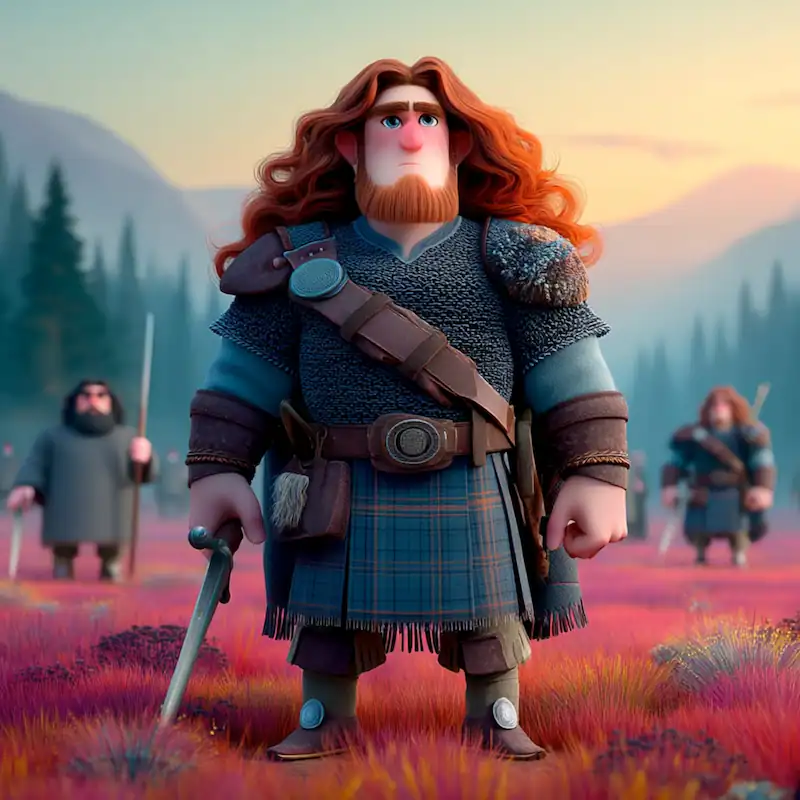
At dawn he left the cave. He crossed heather hills and slipped through birch woods. He knocked on farmhouse doors and spoke quietly. Old friends heard he would not give up. New friends heard Scotland could still stand proud.
He did not build a huge army at once. Step by step, he gathered steady hearts—farmers who knew the fields, fishermen who knew the tides, shepherds who knew the folds of the hills. They trained where the ground was rough and the heather thick. They shared simple meals and simple hopes. Each day they practised long spears, short axes and quick feet. Each night they watched for enemy scouts and for the moon rising over the moors.
Robert did not rush. Patience could be powerful. When storms came, he kept his men safe. When chances came, he took them carefully. When fear whispered, he remembered the spider’s leap.
Small Wins, Growing Hope
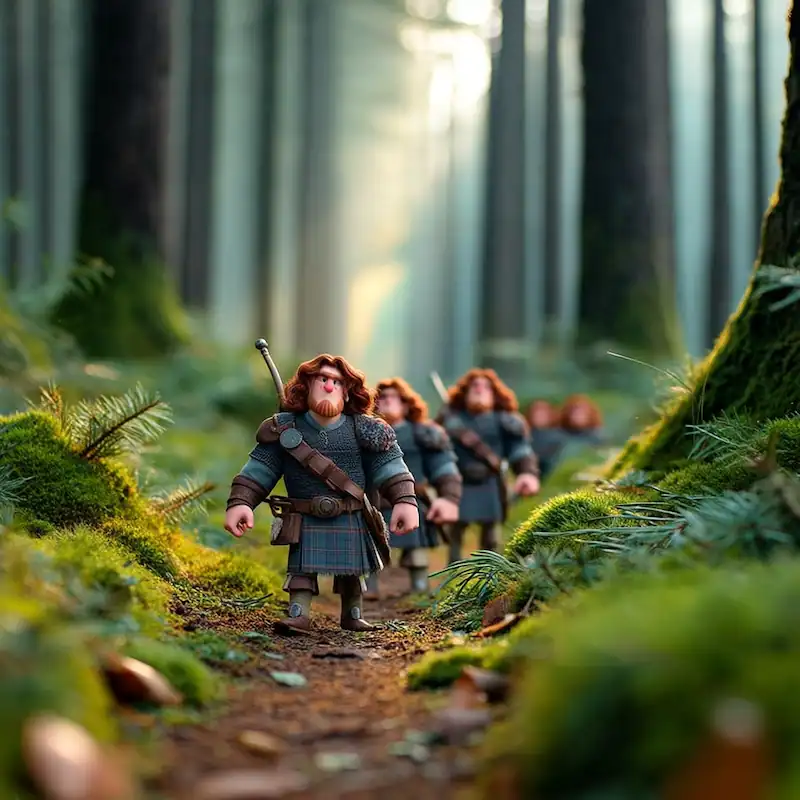
First, there was a narrow path through a forest. Robert’s men waited there, quiet as owls. When a larger force tried to pass, the Scots blocked the way with thick spears and drove them back. It was a small victory, yet it warmed their hearts.
Next, there was a stone bridge over a marsh. Robert studied the soft ground and the water’s flow. He chose his moment well. His men struck fast, then vanished into the hills before a larger army could form.
Step by step, hope returned to Scotland.
Bannockburn and Scotland’s Turning Point
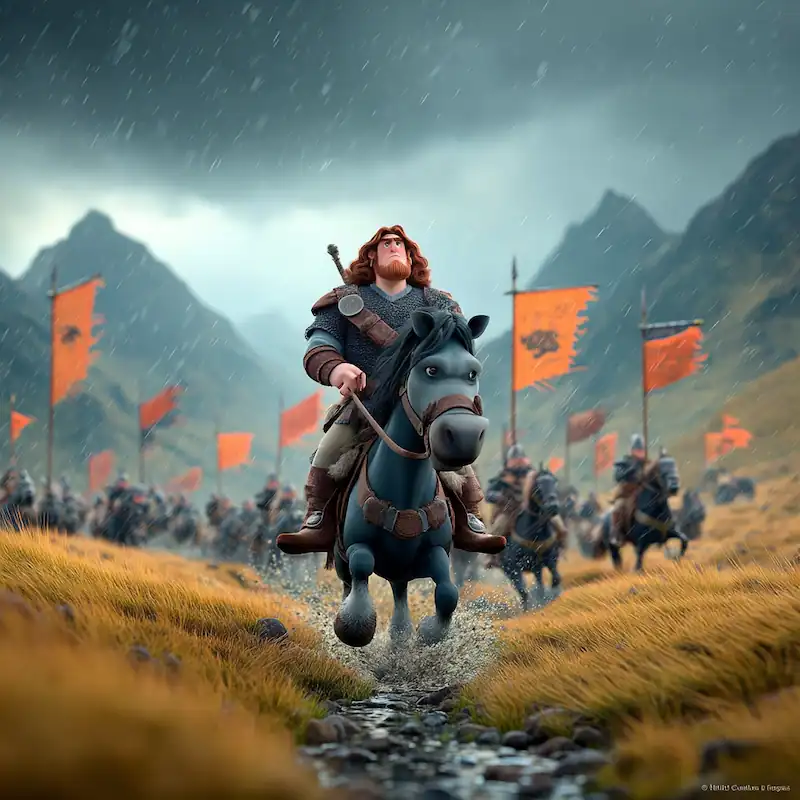
At last the English king’s army marched north in strength. Steel flashed on helmets. Drums thudded. Banners snapped in the wind. The two sides faced each other near a place called Bannockburn.
Robert rode a plain horse. His men stood close together in thick lines, long spears pointing out like a thorny hedgehog. Across the field, the enemy knights shone like steel fish in the sun.
Robert raised his hand. “Steady,” he called. “Remember your training. Stand firm, help one another, and do not break the line. We fight for our homes. We fight for our children. We fight for Scotland.”
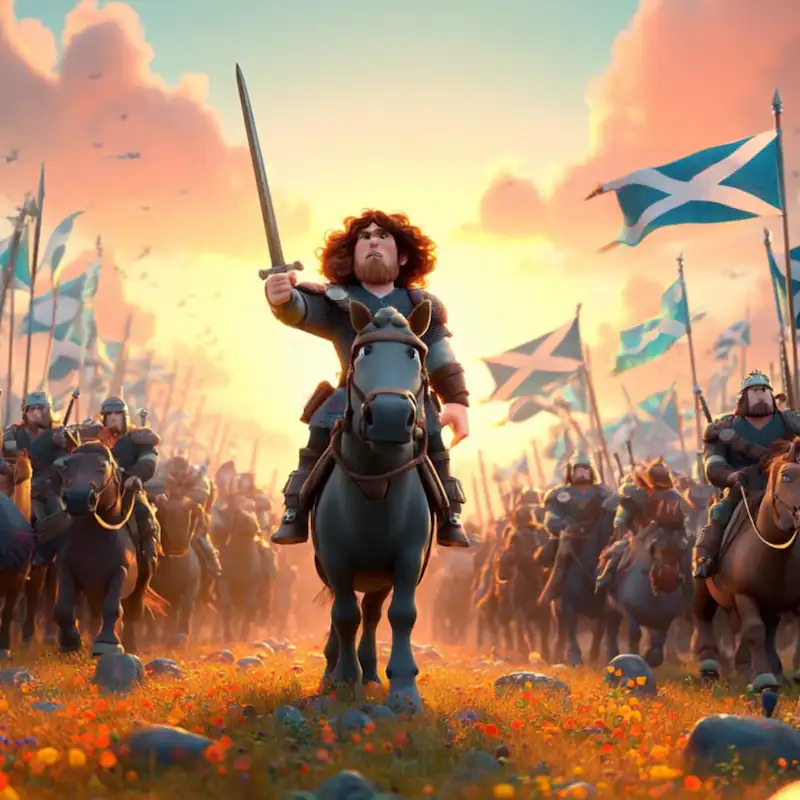
The enemy charged. Hooves hammered the turf. The ground shook. Yet the Scottish line held. The soft earth slowed the heavy horses. The long spears kept the knights from breaking in. Again and again the enemy tried to split the ranks. Again and again the Scots closed the gaps and stood firm.
When the fight finally turned, it turned like a great wheel. The enemy line wavered, then cracked, then broke. After the battle the field fell quiet except for the wind in the grass and the cheers of men who had stood together and had not been moved.
Scotland had won an important victory and word of it carried far on the wind.
The Lesson of the Spider
When the noise faded and the banners were lifted, Robert Bruce remembered the cave and smiled. A tiny spider had not known it was being watched. It had only done what spiders do: try, fail, and try again until the web was strong.
Robert told the story to his men around their campfires. Parents told it to their children. Teachers told it in their schools. The story stayed because it fits in any pocket:
If at first you don’t succeed, try, try, and try again.
Moral of Robert the Bruce and the Spider
The moral of Robert the Bruce and the Spider is that failure does not mean the end. The story teaches children that patience, courage and trying again can lead to success, even after repeated setbacks. It also shows that wise leaders do not always rush. Sometimes they pause, learn and return stronger.
More Scottish Stories
- Whuppity Stoorie – a Scottish folktale about cleverness, courage and outwitting danger
- The Light Princess – a Scottish fairy tale about love, empathy and emotional growth
- Scottish Folklore: A Cosy Guide for Families – a parent friendly introduction to Scottish folktales, folklore, myths and legends
More Celtic Stories
- The Children of Lir – an Irish myth about sorrow, endurance and the lasting power of love
- Finn MacCool and the Giant’s Causeway – an Irish folktale about wit, courage and brains over brawn
- Tír na nÓg – an Irish story about the Otherworld, love and the cost of breaking a promise
- The Tale of Gelert – a Welsh legend about loyalty, grief and the danger of acting too quickly
- The Fairies’ Harp – a Welsh folktale about kindness, music and using gifts wisely
- The Lady of the Lake – a Welsh legend about love, promises and what happens when trust is broken
Vocabulary Spotlight
Perseverance – continuing to try even when something is difficult or does not work at first.
Defeat – losing a battle, game or struggle.
Resilience – the ability to recover and keep going after hardship.
Crowned – officially made a king or queen.
Legend – a traditional story about a real person or event that may include details that cannot be fully proved.
Bannockburn – the site of an important battle in 1314 where Robert the Bruce’s army defeated a much larger English force.
Strategy – a careful plan for achieving something.
Scouts – people sent ahead to gather information.
Teacher’s Note
Robert the Bruce and the Spider works well as a Scottish folktale for kids and as a short classroom text for resilience, growth mindset and introductory Scottish history. It is especially useful for discussing how stories can mix real history with legend. Teachers can explore the difference between a historical fact and a traditional moral tale, while still using the story’s strong message about perseverance and leadership.
This page also supports discussion around:
- trying again after failure
- patience and planning
- the difference between bravery and rushing
- how legends grow around real historical figures
Parent and Teacher Discussion Questions for Robert the Bruce and the Spider
- Why was Robert the Bruce hiding in the cave?
- What did the spider do that caught Robert’s attention?
- Why did the spider matter so much to him at that moment?
- What promise did Robert make to himself in the cave?
- How did Robert change after watching the spider?
- Why is patience sometimes just as important as bravery?
- What does this story teach about failure?
- Why do you think people still tell the story of Robert the Bruce and the Spider today?
- Do you think the spider story needs to be historically proven to still be meaningful? Why or why not?
- Can you think of a time when you had to try again after failing?
Classroom Activities
1. Cave Decision Freeze Frame
Ask pupils to work in small groups and create a freeze-frame of Robert the Bruce inside the cave just before he decides whether to give up or try again. Then ask each group to explain what Robert might be thinking, fearing and hoping in that moment.
Why it works:
This pushes inference, empathy and speaking skills rather than just retelling the plot.
2. The Spider’s Lesson
Ask children to draw or write about the six failed attempts and the final successful attempt. Then ask: What changed? Was it luck, patience, practice, timing or determination?
Extension:
Have pupils connect the spider’s lesson to a real-life example such as learning to read, swim, ride a bike or solve a difficult problem.
Why it works:
This gets beyond the slogan of “try again” and into actual thinking.
3. Legend or History Evidence Hunt
Give pupils short statements from the page, such as:
- Robert the Bruce was a real king of Scotland
- He fought for Scottish independence
- He hid in a cave and watched a spider
- Bannockburn was a real battle
- The spider taught him not to give up
Ask them to sort each one into:
- historical fact
- legend
- we cannot be fully sure
Then discuss why legends often grow around real people.
Why it works:
Much better than a simple two-column sort. It introduces evidence and uncertainty properly.
4. A Speech Before Battle
Ask pupils to write a short speech Robert the Bruce might give to his men before battle. Encourage them to include:
- courage
- patience
- Scotland
- working together
- not giving up
Then let pupils read their speeches aloud.
Why it works:
This links directly to leadership, persuasion and historical imagination.
5. From Defeat to Victory Map
Ask pupils to create a simple story journey map with key stages such as:
- defeat
- hiding in the cave
- watching the spider
- making a promise
- gathering support
- small victories
- Bannockburn
For each stage, they should label Robert’s emotions and decisions.
Why it works:
This combines sequencing with emotional development and leadership choices.
6. Was Hiding Wise or Weak?
Set up a short class debate around the question:
Was Robert the Bruce right to hide in the cave, or should a leader always stay visible?
Encourage children to use details from the story to support their answers.
Why it works:
This is much stronger than a vague “leadership discussion” because it gives a real tension to think about.
7. Write the Story from the Spider’s Point of View
Ask children to retell the cave scene from the spider’s perspective. They can imagine the cave, the repeated attempts and the strange human watching from below.
Why it works:
It is creative, memorable and different from a standard diary entry.
History of Robert the Bruce and the Spider
Robert the Bruce, also known as Robert I of Scotland, was a real Scottish king who ruled from 1306 to 1329. He is best known for leading Scotland during the First War of Scottish Independence and for winning the decisive Battle of Bannockburn in 1314. Britannica describes him as the king who “freed Scotland from English rule,” with Scottish independence later formalised in the Treaty of Northampton in 1328.
The story of Robert the Bruce and the Spider, however, is usually treated as a legend rather than a proven historical event. Robert the Bruce was real, but the spider episode survives mainly because it teaches a memorable lesson about perseverance, patience and trying again after failure. That is why the story has lasted in Scottish tradition for centuries, even though historians treat it as folklore rather than established fact. Robert’s real historical importance comes from his kingship, his military leadership and his victory at Bannockburn, not from the spider story itself.
For families and teachers who want the historical background, see Britannica’s page on Robert the Bruce.
About This Story
We narrate Robert the Bruce and the Spider because it is one of the best-known Scottish legends for children and a useful story for talking about resilience. It also gives families and teachers a simple way to introduce children to Scottish history without turning the page into a full history lesson. The story is short, memorable and easy to connect to everyday life whenever a child feels discouraged or tempted to give up.
Frequently Asked Questions about Robert the Bruce and the Spider
-
Who was Robert the Bruce?
Robert the Bruce was a real King of Scots who ruled in the early 14th century and led Scotland during part of the fight for independence from England.
-
Is Robert the Bruce and the Spider a true story?
Robert the Bruce was real, but the spider story is usually treated as a Scottish legend rather than a fully proven historical event.
-
What is the moral of Robert the Bruce and the Spider?
The moral is that people should keep trying, even after failure. The story teaches perseverance, patience and resilience.
-
Why is Bannockburn important in the story?
Bannockburn was a real battle in 1314 where Robert the Bruce’s forces defeated a much larger English army. It became one of the most important victories in Scottish history.
-
Why is the spider important?
The spider represents persistence. By watching it try again and again, Robert finds the courage to continue.
-
Is this a folktale or a history story?
It is both a historical legend and a Scottish folktale. It is linked to a real king, but the spider episode belongs to legend.
-
Why do children still read Robert the Bruce and the Spider?
Children still read it because it is short, memorable and teaches a clear lesson about not giving up.