

The Story of La Ratita Presumida (the Vain Little Mouse)
The Coin in the Dust
Ratita lived beneath a rosemary bush behind a bakery. Every morning she swept her tiny floor until it looked like new. She liked clean corners and straight chairs, but she liked compliments even more.
One sunny day, as she shook out her rug, something sparkled near her doorstep.
A coin.
Ratita picked it up and held it close to her whiskers. It was warm from the sun and bright enough to make her blink.
“Well,” she said, glancing left and right, “if no one is looking for it then it must be mine.”
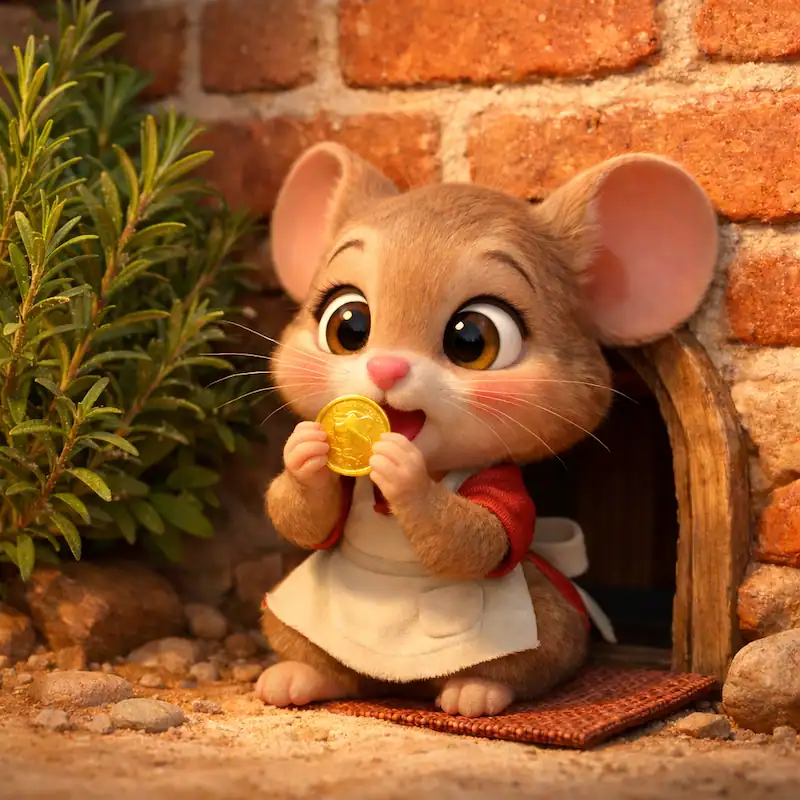
She tucked the coin into her apron pocket and hurried to the market. The street smelled like oranges and fresh bread. Baskets of flowers bumped against piles of cloth. Everyone seemed to be talking at once.
Ratita stopped at a stall full of ribbons and little combs.
“What can one coin buy?” she asked.
“A bow,” the seller said, holding up a red one that shone like a cherry. “Just the right size for a mouse.”

Ratita didn’t even bargain. She placed the coin on the table and tied the bow between her ears.
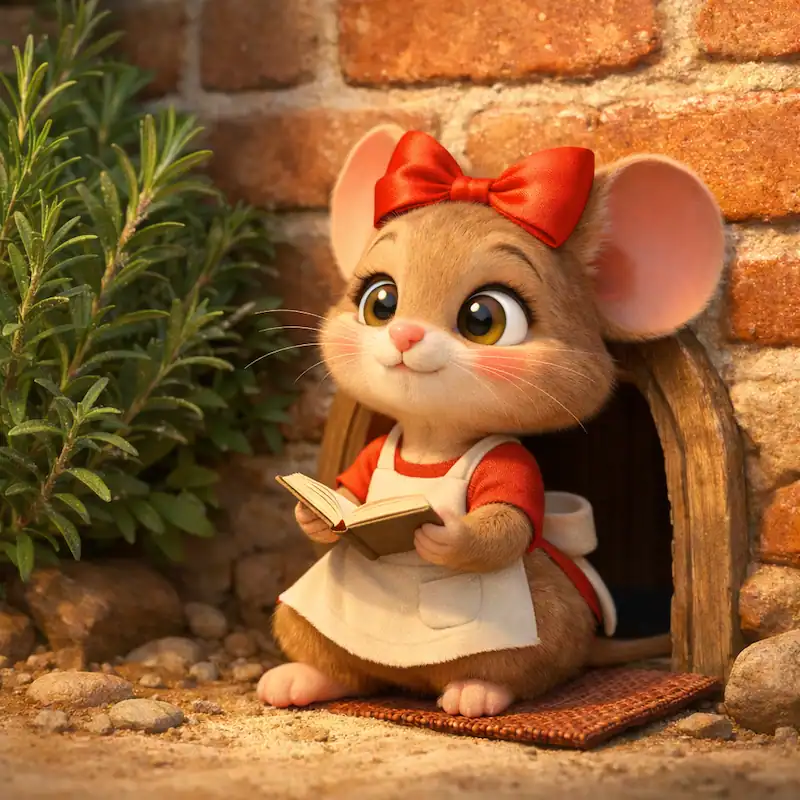
When she reached home, she stood in her doorway so the light would catch the ribbon. She lifted her chin and folded her paws neatly in her lap.
Now, she thought, everyone will notice me.
The Doorway Pose
A breeze flicked the ends of Ratita’s bow. She pretended to read a book, though she kept peeking over the top, hoping someone would pass by and praise her. Her tail curled around her feet like a question mark.
Before long a shadow crossed the path. A rooster strutted closer, chest puffed, feathers glossy.
“Good morning, Ratita Presumida,” he said. “Why are you sitting so fine?”
Ratita smiled as if she had been waiting all day. “Because I am fine.”
The rooster leaned in. “Then marry me.”
Ratita’s ears twitched. She liked that word, marry. It sounded important.
“First,” she said, “tell me this. How would you wake me each morning?”
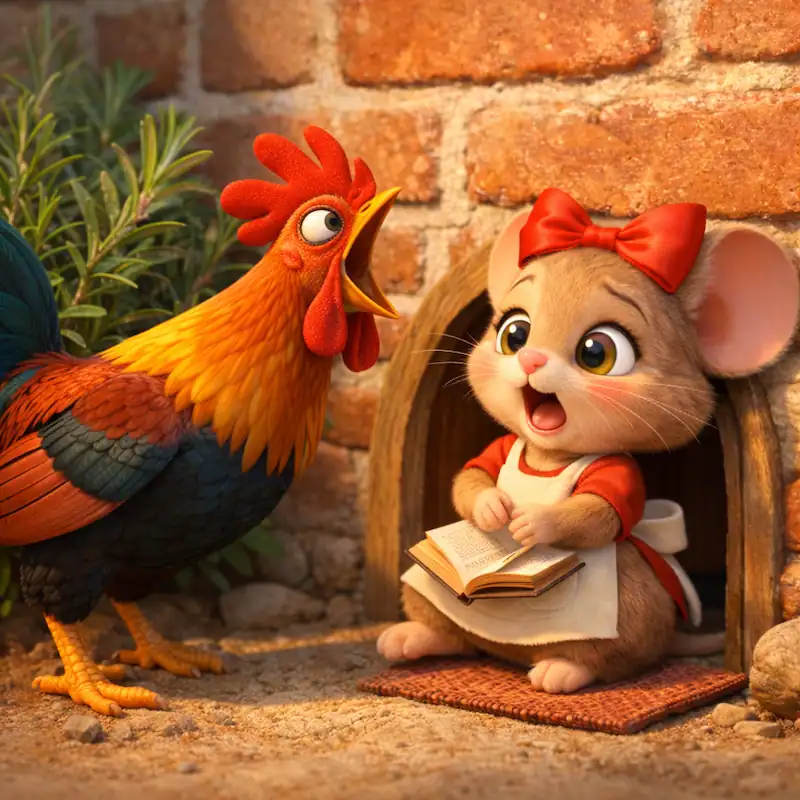
The rooster took a deep breath and sang, “Cock-a-doodle-dooooo!”
The noise startled Ratita so much she jumped and her book slid off her lap.
“Oh no,” she said quickly. “That would rattle my bones. Thank you, Rooster, but no.”
The rooster marched away, offended and loud.
A Line of Loud Promises
Ratita sat straighter. Compliments were like warm cookies. She wanted another.
Before long, a pig trotted up, tail curled like a spring.
“You look splendid,” the pig said. “Would you marry me?”
Ratita lifted her chin. “Then answer my question. If I married you, how would you wake me each morning?”
“Oink oink oiiink!” the pig squealed.
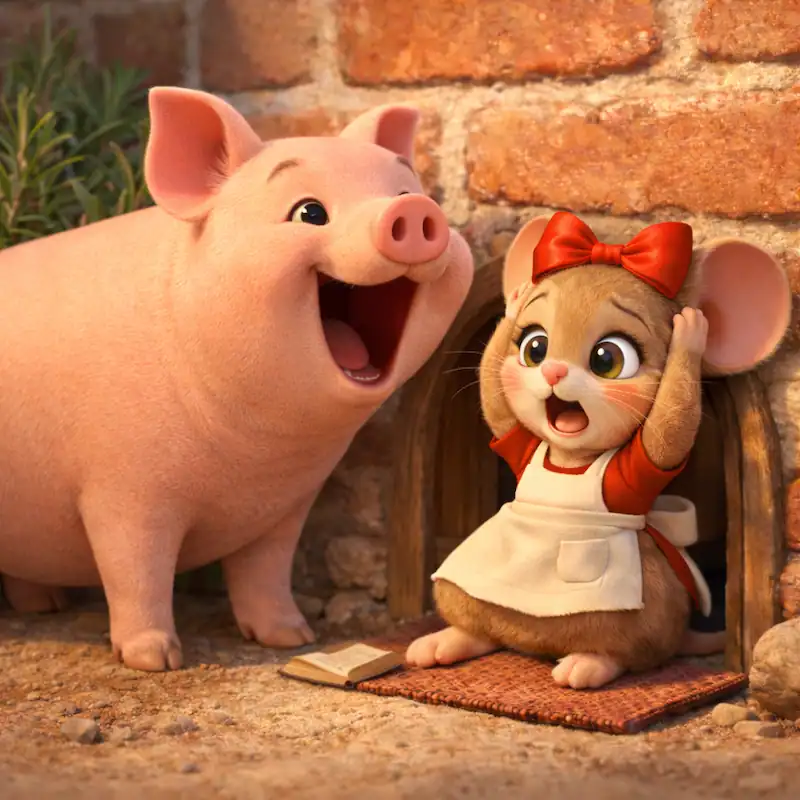
Ratita covered her ears. “Too noisy.”
Next came a dog with hopeful eyes.
“I would keep you safe,” the dog promised. “Marry me.”
“And if I married you,” Ratita said, “how would you wake me each morning?”
“Woof! Woof!” barked the dog, eager to prove himself.
Ratita jumped. “Too loud.”
A goat offered a simple home. A donkey offered strong shoulders. A frog offered songs by the pond. Each one meant well. Still, each one answered in the only voice they had.
“Maaaa!”
“Hee-haw!”
“Ribbit!”
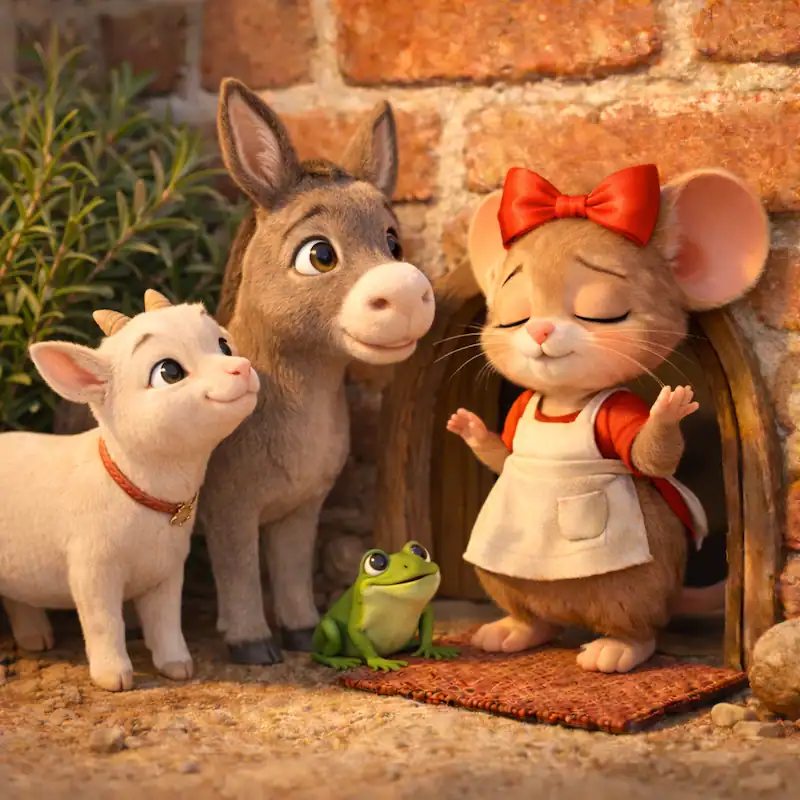
Ratita shook her head every time. She hardly noticed that she was not choosing a friend. She was choosing a sound.
The Question That Felt Clever
As the afternoon drifted on, Ratita felt proud of herself. She believed she was being careful. After all, she was asking a question, wasn’t she?
Yet her question was only about how a suitor would please her. It was not about how he treated others. It was not about whether he told the truth.
Ratita did not see that, because the red bow tickled her ears and made her feel grand.
After the last suitor left, Ratita slipped back inside her little home. Just as the sun began to dip, someone tapped softly at her door.
Tap tap.
The Visitor With the Velvet Voice
Ratita opened the door a crack. On the step sat a cat with fur as dark as night and eyes as bright as marbles.
He bowed his head. “Good evening, Ratita Presumida. I have heard you are the tidiest mouse and the prettiest too.”
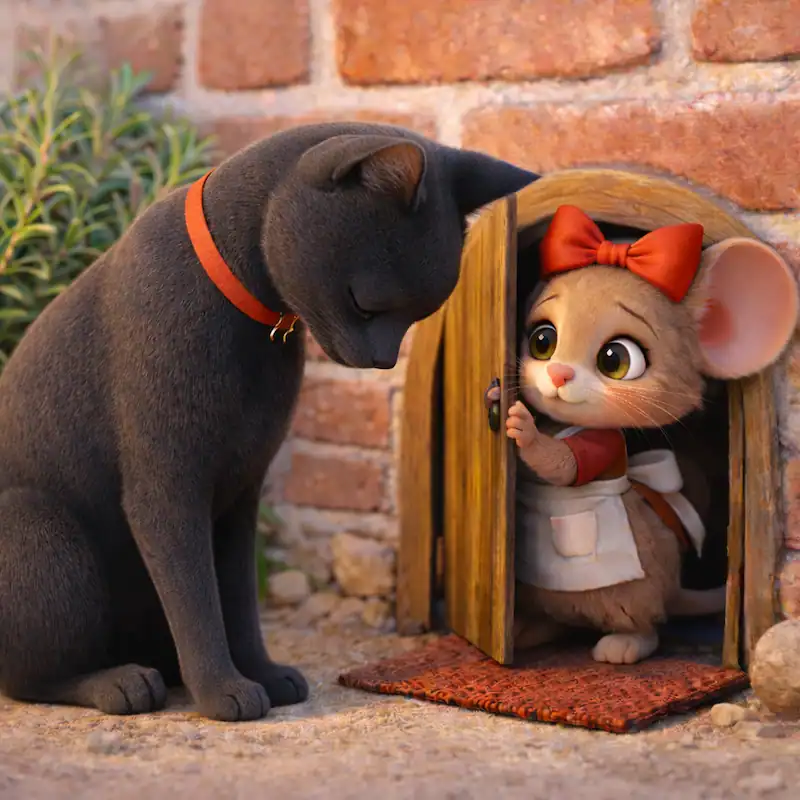
Ratita’s heart fluttered. The cat spoke as if he had practiced every word.
“And I have heard,” the cat went on, “that you are looking for a husband.”
Ratita smoothed her bow. “Perhaps.”
The cat smiled. “Then marry me.”
Ratita remembered her question, because she wanted to feel wise.
“If we were married,” she said, “how would you speak to me in the morning?”
The cat lowered his voice until it slid like silk. “I would say, ‘Good morning, my dear.’ And I would sound like this… meow.”
It was so gentle that Ratita let out a dreamy little sigh.
“That is perfect,” she whispered. “Yes.”
The cat’s smile widened. “Wonderful.”
A few neighbors nearby went still. The dog paused at the corner. The rooster stopped mid-strut. Even the sparrows quieted for a heartbeat.

But Ratita was already imagining a calm home and a soft dreamy voice. She didn’t notice the worried looks around her.
A Sweet Sound and Sharp Teeth
That evening Ratita scrubbed her house until it gleamed. She set out cookie crumbs and a thimble of warm milk. She tied her bow again and again until it sat just right.
The cat arrived with manners as smooth as his voice. He greeted the neighbors politely and thanked them for their good wishes.
Ratita felt like the star of a classic fairy tale. She did not notice how the cat’s watchful eyes followed her every move.
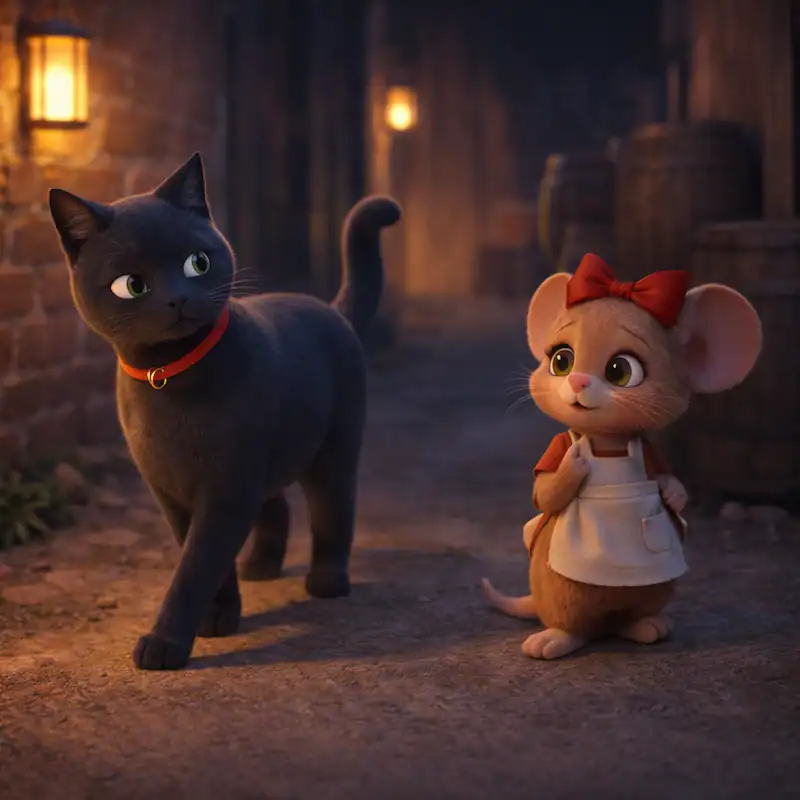
A few neighbors lingered at the doorway to offer quick congratulations. When the last one left and the street grew quiet, the cat leaned close.
“My dear,” he purred, “come with me. I have a special place for us.”
Ratita hesitated. “Here is nice.”
The cat’s smile stayed in place. “Just for tonight. You will love it.”
Ratita did not want to seem difficult. So she followed.
The House That Smelled Wrong
The cat’s home sat near the alley behind old barrels. Inside, it was cool and still. Ratita’s paws made no sound on the smooth floor.
She looked around and frowned.
There were no crumbs. No jars. No cozy nest. The air smelled dusty and sharp, like metal left in rain.
“Where do you eat?” Ratita asked.
The cat’s tail swished slowly. “Right this way.”
He led her into a back room and pointed to a plain wooden box on the floor.
Ratita stepped closer. The box had no blanket. No pillow. It looked like a trap.
A cold feeling crawled up Ratita’s spine.
“I think I would rather go home,” she said, forcing a laugh.
The cat’s voice changed. It dropped its softness like a mask.
“No,” he said and his eyes flashed.
Ratita froze.
In that moment she understood the truth she had ignored all day. A gentle voice can be practiced. Kindness cannot.
She backed away.
The cat moved forward.
Feet Faster Than Fear
Ratita spun and ran. Her paws slipped on the floor. Behind her, the cat’s footsteps thudded closer, heavy and confident.
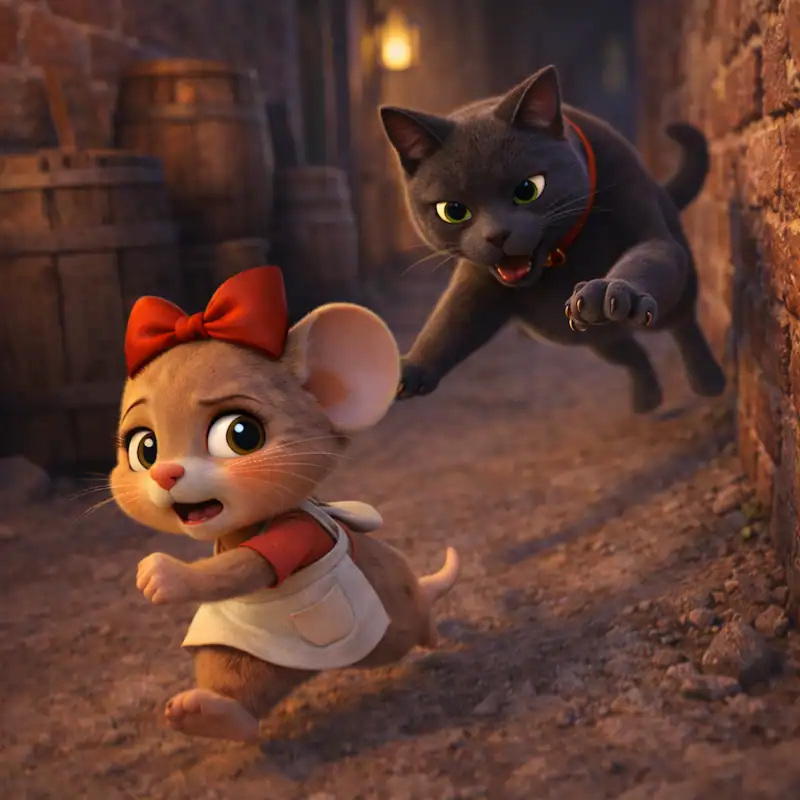
Ratita spotted a narrow crack beneath the door and squeezed through, whiskers brushing wood. She burst into the alley and darted behind the barrels.
The cat lunged, but his paws were too big to reach. He hissed in frustration.
Ratita did not stop. She raced to the bakery wall, grabbed the drainpipe with both paws and scrambled up. She had climbed it many times before, but never like this. This time she scampered so fast her feet blurred and her bow bounced with every pull.
At the top, a window stood open. Warm air spilled out, carrying the smell of bread. Ratita pulled herself inside and tumbled onto a sack of flour.
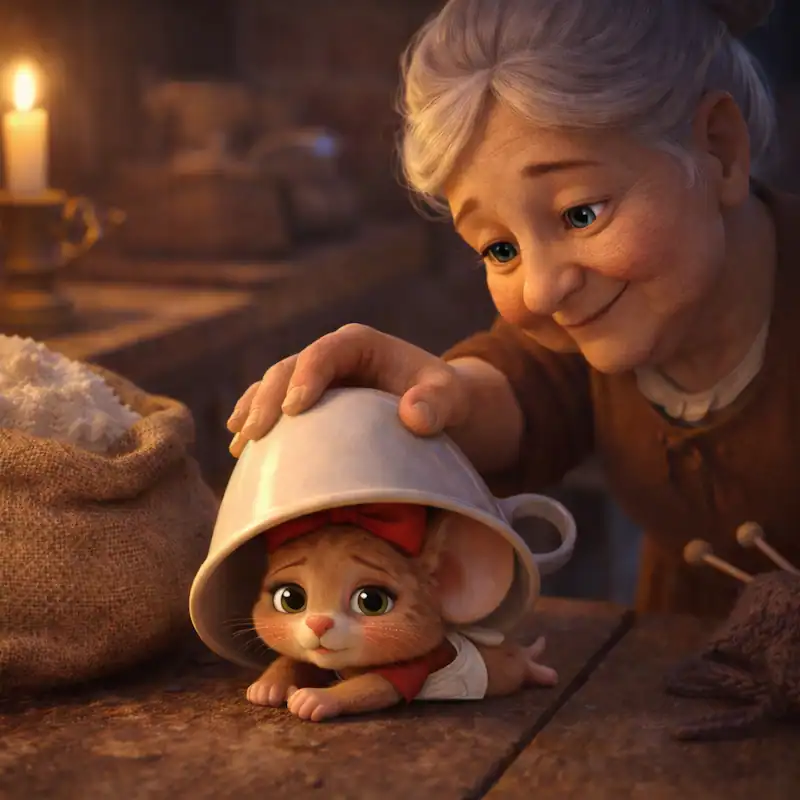
An elderly woman sat nearby, knitting by candlelight. She gasped when Ratita landed, shaking, with a red bow crooked between her ears.
“Oh dear,” the woman whispered. “What trouble found you?”
Ratita’s voice came out in a squeak. “I married a cat.”
The woman’s mouth tightened. She did not laugh or scold. Instead she turned her chair toward the window and shut it firmly.
“No cats in my kitchen,” she said. Then she set a teacup upside down over Ratita like a tiny shelter. “Rest.”
Outside, there was a faint angry meow. Then silence.
A Better Question
Morning light filled the bakery. Ratita peeked from under the teacup. Her paws still trembled, but the warm smells steadied her.
The elderly woman placed a crumb beside her. “Eat,” she said kindly. “Then tell me what you learned.”
Ratita took a bite. “I listened to his voice,” she said, ashamed. “I liked his compliments and I thought that meant he was good.”
The woman nodded. “You wanted gentleness. That is not foolish. But you only asked how he would please you. You did not ask who he truly was.”
Ratita looked down at her bow. It was still pretty, but it felt different now, like a sign she needed to read.
“So what should I ask?” Ratita whispered.
The woman smiled. “Ask this: Is he kind when no one is clapping? Is he honest? Does he treat smaller creatures with care?”
Ratita thought of the dog who wanted to protect her, even if he barked. She thought of the rooster, loud but plainspoken. She thought of the others who never hid what they were.
“I was unkind,” Ratita admitted. “I cared more about being admired than being wise.”
“Then be wiser now,” the woman said. “Beauty can be joyful. Just do not let it blind you.”
Home With Open Eyes
Later that day Ratita returned to her rosemary bush house. She swept her floor, because she still liked things tidy. Then she opened her door, not to pose, but to greet the world.
When the dog passed, Ratita called out, “Thank you for your kindness. I should have spoken more gently.”
The dog wagged his tail, surprised and pleased.
When the rooster strutted by, Ratita said, “Your song is loud, but you are honest. I respect that.”
The rooster blinked, then nodded once.
Ratita kept her bow, because she liked it. Yet she stopped believing the bow made her better than anyone else.
From then on, she watched what others did, not just what they said. She made friends who were steady and kind. Little by little, she laughed more and listened more. She even waved to the pig and goat when they passed, because good neighbors mattered.
In time Ratita stopped being famous for her bow and became known for her warm hello. That became the best kind of shine in La Ratita Presumida, because it came from good sense.
And whenever a sweet voice tried to charm her, Ratita remembered the quiet house that smelled wrong and the better question that saved her life.