
The Fairies Harp: Welsh Folktale

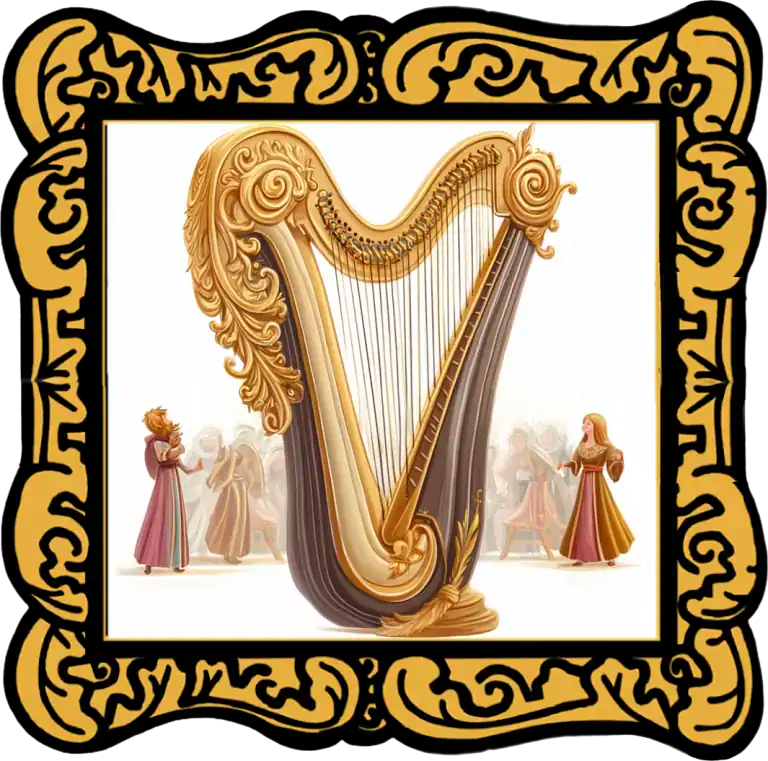
Audiobook cover of The Fairies’ Harp, also known as The Golden Harp – A Welsh Folktale. An ornate golden harp with intricate carvings and mystical figures -
0:00 / 0:00
The Fairies Harp - A Welsh Folktale
Kooky Kids World Cloud Logo showing where the audio read aloud file is.

The Fairies’ Harp is a Welsh folktale about Morgan Rhys, a cheerful cottager who welcomes three weary strangers into his home near Cader Idris. In return for his kindness, the fairies reward him with a magical golden harp that fills the cottage with irresistible music. But when Morgan uses the gift to embarrass the bard who once mocked him, the fairies take it back. This traditional story explores hospitality, gratitude, humility, and the importance of using gifts wisely.

The Story of The Fairies Harp

Long ago in the shadow of the mighty Cader Idris mountains in Wales, a company of fairies made their home. These fair folk often wandered through the valleys testing the hearts of the people they encountered. Those who welcomed them with kindness received blessings in return. However, anyone who turned them away or treated them cruelly invited misfortune.

The mountains of Cader Idris in Wales, home of the fairies in The Fairies’ Harp


One cold autumn night, Morgan Rhys, a simple yet merry cottager sat alone in his small house by the fire. With a mug of warm ale in his hand, he hummed a tune.

Morgan Rhys drinking alone by the fire in The Fairies’ Harp

Morgan loved music, though others did not share his opinion of his singing. Once a sharp-tongued bard cruelly compared his voice to the braying of a donkey and the wail of a lost sheep, but Morgan paid no heed to such remarks. To him, his singing sounded delightful and that was all that mattered.

Morgan Rhys enjoying his own terrible singing

As he sang, a knock came at the door. Delighted at the prospect of company, he bellowed, “Come in, whoever you are!” When no one entered he frowned. Another knock followed, more insistent this time. Rising from his chair he strode to the door and pulled it open.

Before him stood three weary travellers, their clothes dusted with the day’s journey. Morgan had no idea that these were no ordinary men but fairies in disguise, testing his hospitality. One of them spoke, his voice kind but tired.

“Good sir, we have travelled far and seek only a morsel of food to sustain us. Might you spare something for three strangers?”

Three fairies (or travelers) knock at Morgan Rhys’ door

Morgan clapped his hands together. “Is that all? By my life you shall have more than a morsel! A feast is what I’d offer were my wife here to prepare it but as she’s away, we must make do with what I have.” He led them inside and placed bread and cheese before them along with a jug of fresh ale.

“Eat your fill,” he said heartily. “For never shall it be said that Morgan Rhys let a guest leave hungry.”

Morgan Rhys preparing a feast for the fairies

The travellers ate in silence. When they finished, the eldest among them spoke. “You have shown us great kindness Morgan Rhys and kindness must always be repaid. Tell us, if you could have one wish granted, what would it be?”

Morgan scratched his chin. He had never been a man of great ambition. After a moment’s thought, he grinned. “If I could have anything, it would be a harp—a harp that plays lively tunes no matter how clumsy my fingers may be.” He laughed. “But surely, that’s a foolish wish.”

Morgan Rhys thinking about his wish

The travellers exchanged knowing smiles. “Not foolish at all,” the eldest said. With a wave of his hand a golden harp appeared by the hearth. Morgan gasped and turned to thank his guests but they had vanished into the night. He stared at the harp, scarcely believing his eyes.

The fairies leave Morgan Rhys a golden harp

Cautiously, he reached out and plucked a string. At once the fairies’ harp burst into a merry tune, its melody bright and infectious. Just then his wife Anna returned home with a group of friends. The moment they heard the music, their feet took on a will of their own. They danced, twirling and skipping in perfect time with the tune. No one stopped until Morgan lifted his hands from the strings.

Anna, Morgan Rhys’ wife, dancing to the sound of the fairies’ harp

News of the enchanted harp spread quickly. Visitors from near and far flocked to Morgan’s cottage, eager to witness its magic. Each time he played, people danced until they collapsed breathless, unable to resist the harp’s lively spell.Visitors dancing to the sound of the golden fairies’ harp  

Among the visitors stood the very bard who had once mocked Morgan’s singing. With a smirk, he challenged Morgan to play.

The bard who mocked Morgan Rhys’ singing comes to visit

Accepting the challenge, Morgan struck the strings and the bard’s feet sprang to life. Faster and faster he danced, his limbs flailing wildly. His smirk vanished, replaced by a look of horror.

The bard can’t stop dancing to the golden fairies’ harp

“Enough, Morgan! Stop this madness!” he cried, but Morgan, overcome with laughter, played on. The bard spun and stumbled, knocking over furniture and tumbling about like a puppet on invisible strings. Only when Morgan’s own sides ached from laughter did he finally take his hands off the fairies’ harp. The bard collapsed in exhaustion, vowing never to mock Morgan again.

Morgan Rhys laughing at the bard’s predicament

That night as Morgan slept, a soft voice whispered through the room. “You have misused our gift,” it said. “Fairy magic is not meant for revenge.”

When Morgan awoke the golden harp had vanished. He searched high and low but found no trace of it. The fairies had reclaimed their gift, taking it back to the hidden depths of Cader Idris.

From that day forward Morgan never again wielded fairy magic. Yet he learned a valuable lesson: Gifts given in kindness should never serve spite. Though he never saw the fairies’ harp again, he remained a happy man, for he had gained something just as precious—a tale to tell. A tale of magic, music and the kindness that fairies never forget.

Morgan Rhys telling the tale of the golden fairies’ harp to others

Moral

Kindness is often rewarded, but gifts should be used with gratitude and never for spite or revenge.

In The Fairies’ Harp, Morgan Rhys is rewarded because he welcomes strangers with warmth and generosity. However, once he uses the magical harp to humiliate the bard who mocked him, he crosses a line. The story reminds children that even a wonderful gift can be lost if it is used cruelly.

Vocabulary Spotlight

Cottager – A person who lives in a small cottage.

Bard – A poet or singer, especially one connected with storytelling and music.

Hospitality – The friendly and generous way people treat guests or strangers.

Morsel – A small piece of food.

Enchanted – Under a magical spell.

Infectious – Spreading quickly from person to person, like laughter or excitement.

Spite – A desire to hurt or upset someone.

Humility – Being modest and not acting as if you are better than others.

Misfortune – Bad luck or trouble.

Vanished – Disappeared suddenly.

Teacher’s Note

The Fairies’ Harp works well for lessons on character choices, consequences, and theme. It also gives children a strong introduction to Welsh folklore, especially the idea that fairies may reward kindness but punish cruelty or misuse of magic. The story supports discussion around hospitality, gratitude, self-control, and how people respond when they are given power.

Dylan's First Day at School
FREE EBOOK

Get Dylan’s First Adventure

Join the dancing fun! Grab your free copy of Dylan’s school debut.

Send My Copy

Check your email (and junk folder).

Parent and Teacher Discussion Questions for The Fairies’ Harp

  1. Why did the fairies reward Morgan Rhys?
  2. What does Morgan’s kindness at the door show about his character?
  3. Why do you think Morgan wished for a harp instead of something richer or grander?
  4. How did the magical harp change Morgan’s life at first?
  5. Why was it wrong for Morgan to use the harp against the bard?
  6. Do you think the fairies were right to take the harp back? Why or why not?
  7. What does this story teach about using gifts or talents responsibly?
  8. How might the story have ended differently if Morgan had shown mercy to the bard?
  9. Why do you think fairy tales and folktales often test kindness?
  10. What is one gift or talent that should be used carefully and kindly?


Classroom Activities

Character Choices Chart
Compare Morgan’s kind choice at the start of the story with his unkind choice later on.

Hospitality Discussion
Ask children what it means to welcome someone kindly and how Morgan showed hospitality.

Magical Harp Illustration
Invite students to draw the fairies’ harp and label what makes it special.

Alternate Ending Writing Prompt
Ask students to write a new ending where Morgan chooses not to embarrass the bard.

Theme Match Activity
Have students match key moments in the story to themes such as kindness, gratitude, revenge, and humility.

Music and Mood Task
Discuss how music changes the mood in the story and why it feels magical.

kindness

What is one gift or talent that should be used carefully and kindly?

Fun Facts

  • Harps are strongly associated with Welsh culture and tradition.
  • Many Welsh folktales connect music with magic, emotion, or mystery.
  • Cader Idris is one of the most famous mountains in Welsh legend and storytelling.

More Stories from Wales

Explore More Celtic Stories

Scotland

Ireland

History of The Fairies’ Harp

The Fairies’ Harp is told as a Welsh folktale set near Cader Idris, a mountain long connected with legend and folklore. Stories from Wales often feature the Tylwyth Teg, or fair folk, who may reward kindness, test human character, or punish selfish behavior. This tale follows that tradition by showing how a simple act of hospitality brings a magical reward, while pride and spite lead to its loss.

To learn more about Welsh folktales, see the National Library of Wales.

Why We Narrated This Story

We narrated The Fairies’ Harp because it is a memorable Welsh folktale with a clear lesson about kindness, gratitude, and self-control. It also introduces children to the rich tradition of Welsh storytelling through music, magic, and a real legendary setting near Cader Idris.

Frequently Asked Questions about The Fairies’ Harp

  • What is The Fairies’ Harp about?

    The Fairies’ Harp is a Welsh folktale about Morgan Rhys, a kind cottager who welcomes three disguised fairies into his home. They reward him with a magical harp, but when he uses it for revenge, the gift is taken away

  • What is the moral of The Fairies’ Harp?

    The story teaches that kindness and hospitality are rewarded, but gifts should never be used for spite or revenge.

  • Is The Fairies’ Harp a traditional Welsh folktale?

    Yes. It is told as a Welsh folktale and reflects traditional themes found in Welsh storytelling, including fairies, music, place-based legend, and moral consequences.

  • Who is Morgan Rhys?

    Morgan Rhys is the cheerful cottager at the center of the story. He loves music, welcomes strangers warmly, and later learns an important lesson about using magic wisely.

  • What does the harp represent in the story?

    The harp represents joy, music, and the special gifts that come with responsibility. It also shows how something magical can be misused when pride or revenge takes over.

  • Are the fairies good or mischievous in this story?

    They are generous but firm. They reward kindness, but they also take back their gift when Morgan uses it in the wrong spirit.

  • Why is the story set near Cader Idris?

    Cader Idris is a famous mountain in Welsh folklore and is often linked with mystery, magic, and inspiration, making it a fitting setting for the tale.