Aesops Fables
Read Aesop’s Fables for kids online at Kooky Kids World. These short classic fables use animals, simple stories and memorable morals to help children think about honesty, kindness, patience, pride, greed and clever choices.
This collection includes well-known Aesop stories such as The Tortoise and the Hare, The Lion and the Mouse, The Ants and the Grasshopper, The Boy Who Cried Wolf, The Fox and the Grapes and The Town Mouse and the Country Mouse. Each fable is ideal for reading at home, using in the classroom or discussing as a short story with a moral.
Read Aesop’s Fables Online
Explore our growing collection of Aesop’s Fables for children. Each story is written in a clear, child-friendly style and includes a moral to help children understand the lesson behind the tale.
The Tortoise and the Hare
A proud hare laughs at a slow tortoise and agrees to race him. The hare is sure he will win, but the race does not end the way he expects.
Moral: Slow and steady effort can beat careless speed.
Best for: Patience, perseverance, pride, effort and classroom discussion.
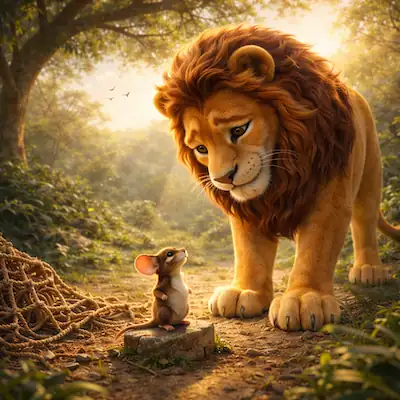
The Lion and the Mouse
A mighty lion spares a tiny mouse, even though he thinks the little creature is too small to help him. Later, the lion discovers that kindness can return in unexpected ways.
Moral: Kindness is never wasted.
Best for: Kindness, friendship, helping others and understanding that everyone has value.
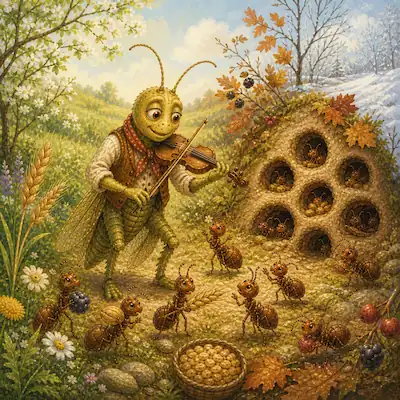
The Ants & the Grasshopper
While the ants work hard to prepare for winter, the grasshopper spends his days playing music. When the cold weather arrives, he learns why planning ahead matters.
Moral: It is wise to prepare for the future.
Best for: Responsibility, preparation, choices, consequences and PSHE lessons.
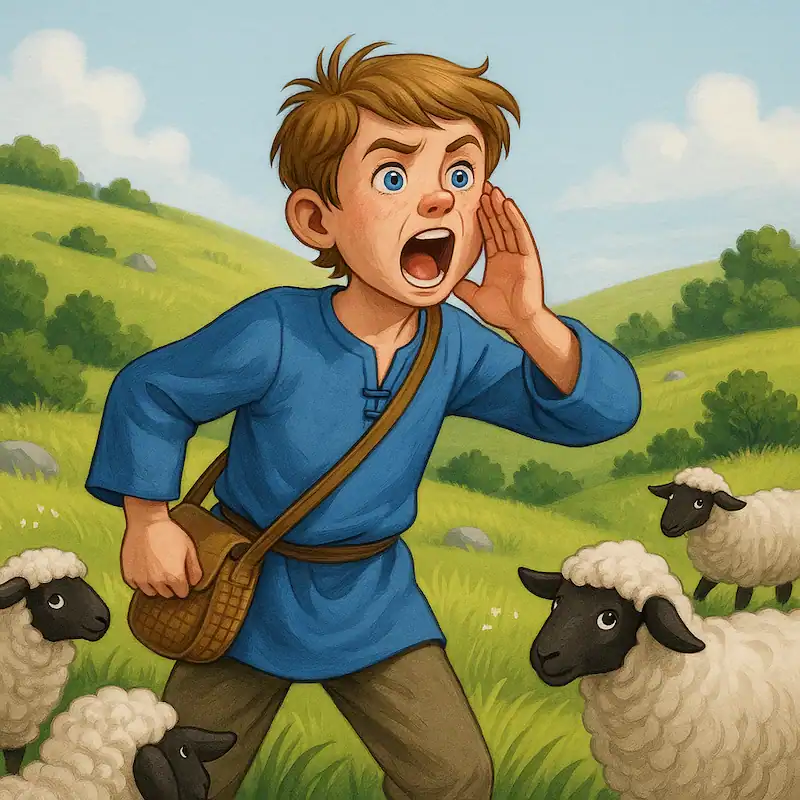
The Boy Who Cried Wolf
A shepherd boy tricks the villagers by pretending a wolf is attacking his sheep. When a real wolf finally appears, no one believes him.
Moral: If you lie too often, people may not believe you when you tell the truth.
Best for: Honesty, trust, consequences and moral discussion.
The Fox and the Grapes
A hungry fox spots some juicy grapes hanging from a vine. When he cannot reach them, he decides they were probably sour anyway.
Moral: People sometimes reject what they cannot have.
Best for: Pride, frustration, self-awareness, vocabulary and the meaning of “sour grapes.”
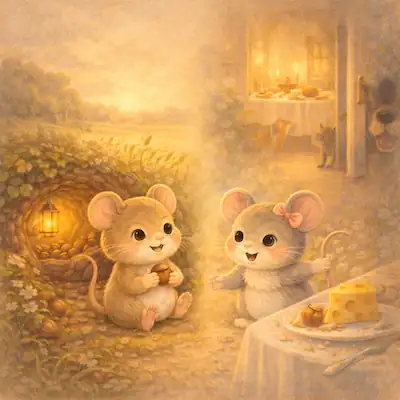
The Town Mouse & the Country Mouse
A country mouse visits his cousin in town and sees a very different way of life. The food may be richer, but the danger is much greater.
Moral: A simple, safe life may be better than a rich but risky one.
Best for: Comparing settings, lifestyle choices, safety, contentment and discussion work.
What Are Aesop’s Fables?
Aesop’s Fables are short traditional stories that usually teach a moral. Many of them use animals as the main characters, but the animals often behave like people. They make mistakes, show pride, act kindly, tell lies, work hard or learn lessons through their choices.
These fables have been retold for many centuries because they are simple, memorable and useful for children. A story may only take a few minutes to read, but the lesson can lead to a much longer conversation.
Aesop’s Fables are especially useful for children because they help explain big ideas in a simple way. Instead of giving a lecture about honesty, patience or kindness, the fable shows what happens through a short story.
Who Was Aesop?
Aesop is traditionally described as an ancient storyteller connected with the Greek world. Many details about his life are uncertain, and some accounts of him may be legendary rather than factual.
What matters most is the collection of fables linked with his name. These stories have been passed down, translated and retold across many cultures. Today, Aesop’s Fables remain some of the best-known moral stories for children.
Because the stories are so old, there are many different versions. Some are very short. Others have been expanded for younger readers. At Kooky Kids World, we retell them in a clear, child-friendly way while keeping the main moral and story structure.
Why Do Aesop’s Fables Use Animals?
Many Aesop’s Fables use animals because children can understand animal characters quickly. A fox can seem clever, a lion can seem powerful, a mouse can seem small, and a tortoise can seem slow but determined.
These animal characters help children spot human behavior from a safe distance. A child can talk about the hare being overconfident, the fox being proud or the ants being prepared without feeling personally criticized.
That makes Aesop’s animal fables very useful for classroom discussion, bedtime reading and moral conversations at home.
Aesop’s Animal Fables
Here are some of the animal characters found in Aesop’s Fables and the ideas they often represent.
Tortoise
In Aesop’s Fables, the tortoise often represents patience, steady effort and determination.
Example story: The Tortoise and the Hare
Hare
The hare often represents speed, pride and carelessness.
Example story: The Tortoise and the Hare
Lion
The lion usually represents power, strength or authority. Sometimes, he also learns mercy.
Example story: The Lion and the Mouse
Mouse
The mouse shows that even someone small can be helpful, brave or important.
Example story: The Lion and the Mouse
Ants
The ants represent hard work, planning and preparation.
Example story: The Ants & the Grasshopper
Grasshopper
The grasshopper often represents carelessness, fun and failing to prepare.
Example story: The Ants & the Grasshopper
Fox
The fox is usually clever, proud or quick-thinking. Sometimes he tricks others, and sometimes he fools himself.
Example story: The Fox and the Grapes
Wolf
The wolf often represents danger, fear or the consequences of not being believed.
Example story: The Boy Who Cried Wolf
Town Mouse
The town mouse represents comfort, luxury and risk.
Example story: The Town Mouse & the Country Mouse
Country Mouse
The country mouse represents simplicity, caution and contentment.
Example story: The Town Mouse & the Country Mouse
Aesop’s Fables List with Morals
The Tortoise and the Hare
Main characters: Tortoise and hare
Moral: Slow and steady effort can beat careless speed.
The Lion and the Mouse
Main characters: Lion and mouse
Moral: Kindness is never wasted.
The Ants & the Grasshopper
Main characters: Ants and grasshopper
Moral: Prepare today for what you may need tomorrow.
The Boy Who Cried Wolf
Main characters: Shepherd boy, wolf and villagers
Moral: Lies can destroy trust.
The Fox and the Grapes
Main character: Fox
Moral: People sometimes reject what they cannot have.
The Town Mouse & the Country Mouse
Main characters: Town mouse and country mouse
Moral: Safety and peace may matter more than luxury.
Why Aesop’s Fables Are Good for Children
Aesop’s Fables are useful for children because they are short, clear and easy to discuss. Most of the stories focus on one main idea, which helps children understand the moral without becoming confused by too many characters or plotlines.
They are also good for developing reading comprehension. Children can practise identifying characters, settings, problems, choices and consequences. After reading, they can explain what happened and decide whether they agree with the moral.
For younger children, the animal characters make the stories fun and memorable. For older children, the fables can lead to deeper conversations about fairness, honesty, pride, kindness and responsibility.
Aesop’s Fables for the Classroom
Aesop’s Fables work well in classrooms because they are short enough to read in one lesson but rich enough to support discussion, writing, drama and PSHE activities.
Teachers can use these fables to help children:
- identify the moral of a story
- compare characters and their choices
- discuss honesty, kindness, pride and responsibility
- retell a story in their own words
- write a modern version of a traditional fable
- act out a scene and explain the lesson
- compare two fables with similar themes
A strong classroom activity is to ask pupils whether they agree with the moral. For example, after reading The Tortoise and the Hare, children can debate whether slow and steady always wins, or whether the real lesson is about arrogance and carelessness.
Another useful activity is to remove the moral from the end of a fable and ask children to write their own. This checks whether they have understood the story and encourages independent thinking.
Discussion Questions for Aesop’s Fables
Use these questions after reading any Aesop fable:
- Who are the main characters in the fable?
- What problem does one of the characters face?
- What choice does the character make?
- What happens because of that choice?
- What is the moral of the story?
- Do you agree with the moral?
- Can you think of a real-life situation where this lesson might help?
- Which character made the best decision?
- Which character made the biggest mistake?
- How could the story have ended differently?
Classroom Activities for Aesop’s Fables
1. Moral Match
Write the titles of several Aesop’s Fables on one set of cards and the morals on another set. Children match each fable to the correct moral, then explain their choice.
This works well for checking comprehension and encouraging children to justify their answers.
2. Character Courtroom
Choose one character from a fable and put them “on trial.” For example, pupils can decide whether the hare was lazy, arrogant or simply careless in The Tortoise and the Hare.
Children can take roles such as judge, character, witness and jury. This encourages speaking, listening, reasoning and evidence-based discussion.
3. Rewrite the Fable in a Modern Setting
Ask children to rewrite one Aesop fable in a modern setting. The tortoise and hare could become two children in a school race. The fox and grapes could become someone who pretends not to want a prize after failing to win it.
The key rule is that the moral must stay the same.
4. Draw the Moral
Children draw one scene from a fable and write the moral underneath. For older pupils, ask them to include visual clues that show the lesson of the story.
This is especially useful for younger readers and visual learners.
5. Change the Ending
Ask children to change one important choice in the story. What if the hare had not gone to sleep? What if the villagers had believed the boy one last time? What if the fox had admitted he was disappointed?
This helps children understand cause and effect.
6. Fable Debate
Give pupils a statement linked to one fable and ask them to agree or disagree.
Examples:
- “The hare deserved to lose.”
- “The villagers should have helped the boy even though he lied before.”
- “The grasshopper should have been helped by the ants.”
- “The country mouse made the right choice.”
This turns a simple story into deeper moral discussion.
Aesop’s Fables FAQs
-
What are Aesop’s Fables?
Aesop’s Fables are short traditional stories that usually teach a moral. Many of the stories use animals as characters to show human behavior in a simple and memorable way.
-
Who was Aesop?
Aesop is traditionally described as an ancient storyteller linked with the Greek world. Details about his life are uncertain, but the fables connected with his name have been retold for centuries.
-
Was Aesop a real person?
Aesop may have been a real storyteller, but many details about his life are uncertain. Some stories about him are likely legendary. The fables themselves are the most important part of his legacy.
-
Why do Aesop’s Fables use animals?
Aesop’s Fables often use animals because they make human behavior easier for children to understand. Animals such as foxes, lions, mice, hares and tortoises can show pride, kindness, cleverness, patience and greed in a simple way.
-
What is the most famous Aesop fable?
One of the most famous Aesop fables is The Tortoise and the Hare. Other very well-known fables include The Lion and the Mouse, The Boy Who Cried Wolf and The Ants and the Grasshopper.
-
What do Aesop’s Fables teach children?
Aesop’s Fables teach children about honesty, kindness, patience, responsibility, pride, greed, trust and consequences. Each fable usually focuses on one clear moral lesson.
-
Are Aesop’s Fables good for classroom use?
Yes. Aesop’s Fables are excellent for classroom use because they are short, clear and easy to discuss. They work well for reading comprehension, moral discussion, drama, writing activities and PSHE lessons.
-
What age are Aesop’s Fables suitable for?
Aesop’s Fables can be suitable for children from around age 5 upwards, depending on the version. Younger children may enjoy them as read-aloud stories, while older children can discuss the morals in more detail.
-
Are Aesop’s Fables public domain?
Traditional Aesop’s Fables are very old and are generally considered public domain. However, modern retellings, illustrations and translations may still be protected by copyright.
-
How do you pronounce Aesop?
Aesop is usually pronounced EE-sop.