

The Story of Maria Makiling
Long ago in the Philippines, when the world seemed quieter and the stars felt closer, there stood a soft green mountain wrapped in morning mist. The villagers called her Makiling, because they believed the mountain leaned gently toward them like a caring mother. Although many mountains lived in the land, this one felt alive. Birds chirped sweetly on its branches. Deer walked gracefully along its trails and rivers flowed from its heart as if singing.

Of all the wonders Makiling held, the greatest was the spirit who lived within her. Her name was Maria Makiling, the mountain’s guardian. People said she looked like sunlight and moved gently between branches with her long hair drifting behind her like a warm breeze. Others said she walked silently on the forest floor, leaving flowers blooming with each step. No matter how anyone described her, they all agreed on one thing: she was loving and kind.
A Gentle Protector
Each morning, Maria walked along the forest paths to greet the creatures under her care. She touched the leaves, and they brightened. She lifted fallen nests to safer branches. She whispered encouragement to small plants struggling to grow.

Villagers rarely saw her, yet they felt her kindness. When their wells dried, a spring appeared near the edge of the forest. When fish vanished from the river, they returned overnight. When crops wilted, warm breezes lifted them with new life. Because these gifts always arrived silently, people believed Maria helped them out of love, not for praise.

Although the villagers loved her, only a few actually met her. One of them was a young farmer named Lito, who was gentle like the dawn and hardworking like the river.
The Wounded Deer
One bright morning Lito walked into the forest to collect firewood. As he crossed a small clearing, he heard a rustle behind a fallen tree. He crept closer, his heart beating fast. What if it was a wild boar? Or maybe a snake?

But when he peered behind the log, he found a small deer trembling in pain. Its leg held a fresh wound and its soft eyes were full of fear. Lito’s worry melted into kindness. He knelt and spoke gently.
“Don’t be afraid. I’ll help you.”
Carefully he tore a strip from his shirt and wrapped the wound. When the deer tried to stand, Lito stroked its back to calm it. Then he carried it to a shaded spot where cool leaves grew thick. He whispered stories to soothe it until the trembling stopped.

Suddenly, he felt someone watching him. He looked up.
There on a smooth gray rock stood Maria Makiling.
Her hair fluttered like sunlight on water and her eyes glowed as softly as starlight. She smiled warmly at Lito.

“You were gentle with the deer,” she said. “Not everyone shows kindness when no one is watching.”
Lito blushed. “I only did what felt right.”
“That is why the mountain smiles on you,” Maria said.
Before he could speak, she stepped back and disappeared into a swirl of leaves. Lito felt the breeze shift in a way he had never felt before. It carried the faint scent of flowers that did not grow anywhere else.
From that day on, Lito treasured the memory like a gift.
Gifts from the Mountain
Maria Makiling began leaving small blessings quietly around the village.
A basket of seeds appeared at Lito’s door.
A patch of vegetables grew overnight near an empty field.
Fruit trees blossomed twice in one season.

The villagers noticed. They praised Maria for watching over them.
However, one person did not appreciate the gentle ways of the mountain. His name was Datu Rey, a landlord who cared more for silver coins than for kindness.
The Greedy Landlord
Unlike Lito, who farmed with care and respect, Datu Rey wanted everything quickly. He chopped trees without planting new ones. He raised rents on tenants while giving nothing in return. He ignored the forest animals and frightened them with noise.

Many villagers complained. They begged him to stop cutting trees so close to the mountain, but he refused. “This is my land,” he said proudly. “I will do what I want.”
One night he found a patch of golden fruit near his home. He filled basket after basket, selling them greedily the next morning.
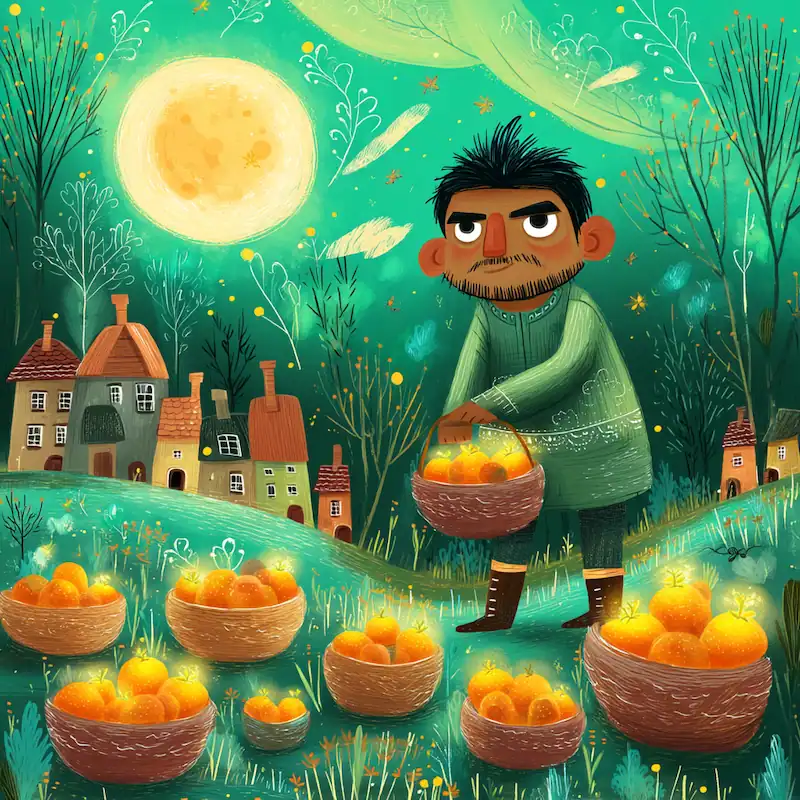
Maria watched silently.
She did not punish quickly. She gave chances. But when Datu Rey continued ignoring the land, she decided it was time to teach him a gentle lesson.
A Warning from the Mountain
One warm afternoon Datu Rey rode his fancy cart along the mountain path. Suddenly, thick vines grew across the trail. His horse jerked to a stop, snorting nervously.
“Out of my way!” he shouted at the plants, as if they could hear him.
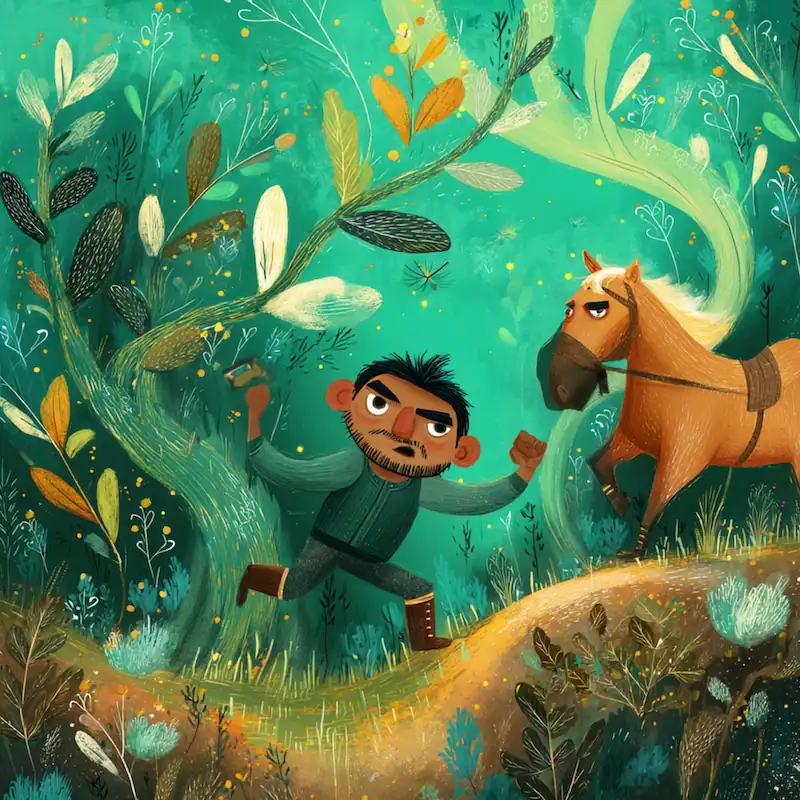
He climbed down and tried to pull the vines but they only tightened and grew thicker.
Frustrated, he marched through a side path but there the ground turned muddy and his shiny boots sank deep. His cart wheels stuck too, refusing to budge.
Villagers passing by watched quietly. They did not laugh aloud, but their eyes twinkled with knowing sympathy.
At sunset Maria appeared behind Datu Rey. Her presence made the wind pause.
“Datu Rey,” she said softly, “the mountain grows tired of being taken from and never cared for.”
He frowned. “I never promised you anything.”
“You didn’t need a promise to do what was right,” Maria said. “Still, you were warned again and again. The villagers asked you to stop cutting so close to Makiling. Your workers needed fair treatment. The forest needed time to heal.”
He scowled. “Caring costs too much.”
Maria shook her head sadly. “Kindness is never too costly.”
She offered him a choice.
“Care for the forest and the people, or the mountain will give you nothing more.”
Pretending to agree, Datu Rey nodded quickly. But in his heart, he had no intention of changing.
Maria knew—but she still hoped he might find wisdom.
The Mountain Responds
Days passed. Lito continued helping everyone. He carried water for older villagers. He shared seeds with families whose crops failed. He smiled easily and never asked for reward. Because of that, his field turned greener than ever.
Meanwhile, Datu Rey ignored the warning again. He cut more trees, he scolded workers and he turned away from the mountain’s gentle ways.
One morning he woke to find that the river running through his land had shifted. It now flowed gently toward Lito’s field instead. Birds no longer perched on his fences. His vegetables remained small and wilted.

“Why is this happening to me?” he muttered.
Then he remembered Maria’s calm voice on the path. He looked at the bare stumps and the tired soil. For the first time, he understood: the mountain wasn’t punishing him out of anger. It was simply no longer helping someone who refused to care.
That evening, Datu Rey stood at the edge of the field and watched the wind move through Lito’s green crops. His stomach twisted. At last, he went to his workers and said, “Tomorrow we plant. We’ll start giving back.” Some villagers didn’t trust him yet. Still, he picked up a young seedling with his own hands, and for once, he didn’t rush.
Little Ana’s Promise
In the middle of this trouble, the rains stopped coming. Weeks passed with no clouds. The earth cracked from heat, and even strong plants wilted. People worried their harvest would fail.
One child refused to give up. Her name was Ana, a small girl with big hopes.
“My grandmother says the mountain listens,” she told her friends. “So I will talk to it.”
People smiled kindly but did not expect much. Yet Ana remained determined. She climbed the path to the mountain spring and sat by the stream.
She whispered, “Maria Makiling, I promise to plant trees when I grow older. I promise to take care of the forest. I promise not to waste water. Please help us.”

The mountain grew quiet.
Then a cool breeze brushed her face. Clouds moved across the sky. Raindrops began to fall softly at first, then steadily. The earth drank gratefully.
The villagers cheered. The crops grew again. And Maria smiled from the shadows, proud of Ana’s brave heart.
The Final Blessing
After many seasons of watching over the village, Maria felt both joy and tiredness. People had learned to care for each other and they looked after the land.
Now she wished to rest.
One morning, when the fog lay soft across the valley, Maria visited Lito and Ana. She handed them a small pouch of shimmering seeds.
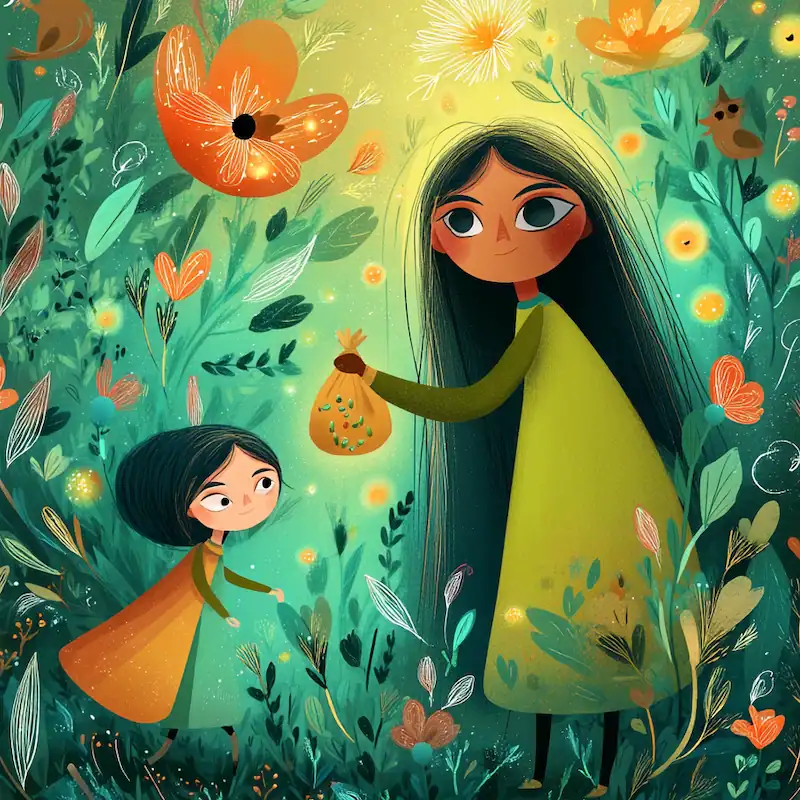
“These will grow into trees that protect the mountain,” she said. “Plant them wherever you walk.”
Ana held the pouch carefully. “We will take care of everything. We promise.”
“The mountain believes you,” Maria said gently.
The air around her sparkled.
Her form shimmered and softened into silver mist. Slowly she rose into the morning sky, leaving only the scent of wildflowers behind.
Though she disappeared, she was never truly gone. Whenever fog curls around Makiling’s peak, people say they see a woman’s silhouette watching over them with love.