

The Story
A Prince of Gold

High above a cold and crowded city, on a tall stone column, stood a beautiful statue. It was the statue of the Happy Prince. His body was covered in gold leaf, his eyes sparkled with sapphires, and a bright red ruby gleamed from the hilt of his sword.
Everyone in the city admired him.
“He’s as grand as a weathercock!” said a Town Councillor, hoping to sound clever.
“Why can’t you be more like the Happy Prince?” sighed a mother to her grumpy son.
“He looks just like an angel!” gasped a group of schoolchildren in their red cloaks and neat white pinafores.
They all thought he must have lived the happiest life of anyone.
But they were wrong.
The Swallow and the Statue
One chilly evening, a small Swallow flew over the city. His friends had gone south to Egypt weeks ago, but he had stayed behind because he’d fallen in love with a Reed.
She had a slim waist and waved so beautifully in the wind that he had courted her all summer. But in the end, she didn’t want to leave her river home. So, the Swallow said goodbye and flew off alone.
That night, the little bird spotted the statue of the Happy Prince.
“I’ll rest here for the night,” he said. “Plenty of fresh air, and what a view!”
He settled down between the Prince’s golden feet. But just as he tucked his head under his wing…
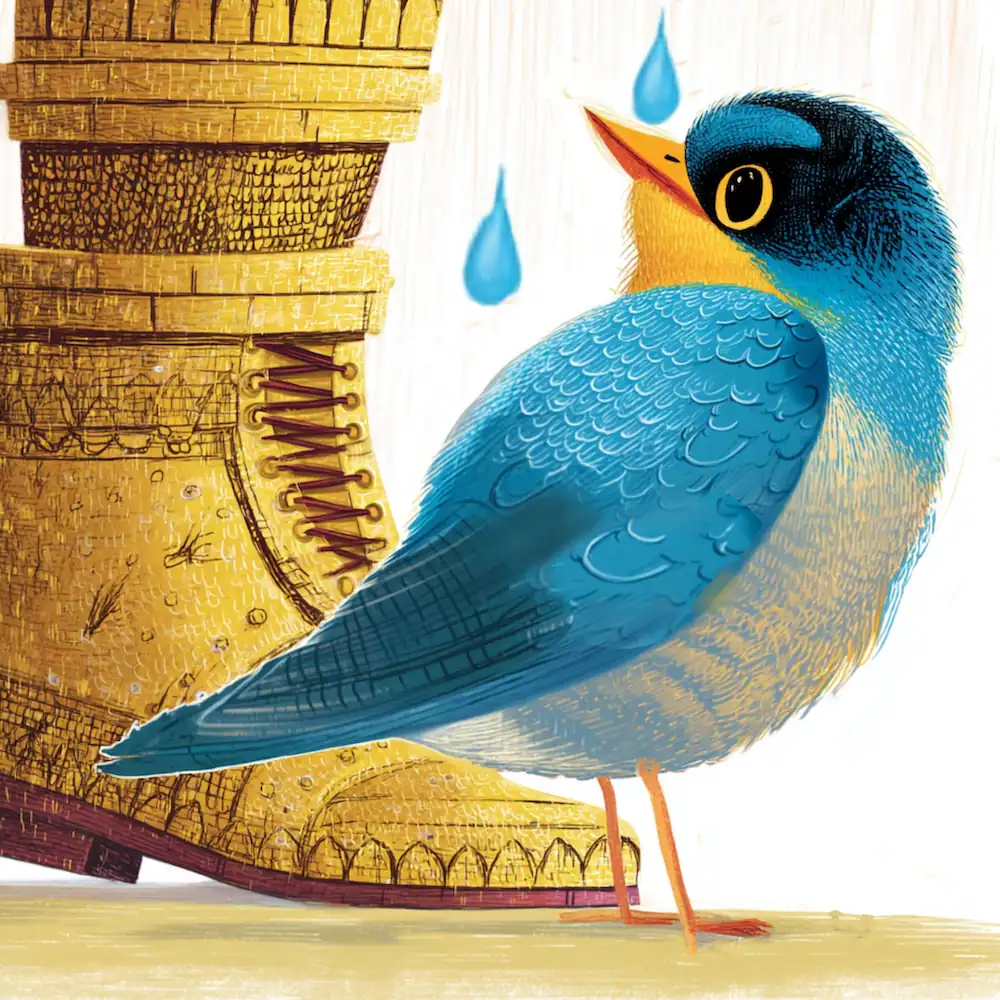
Plop!
A drop of water landed on him.
“Strange!” he said, looking up. “Not a cloud in the sky.”
Plop!
Another drop.
Then a third.
The Swallow looked again. The statue’s eyes were filled with tears.
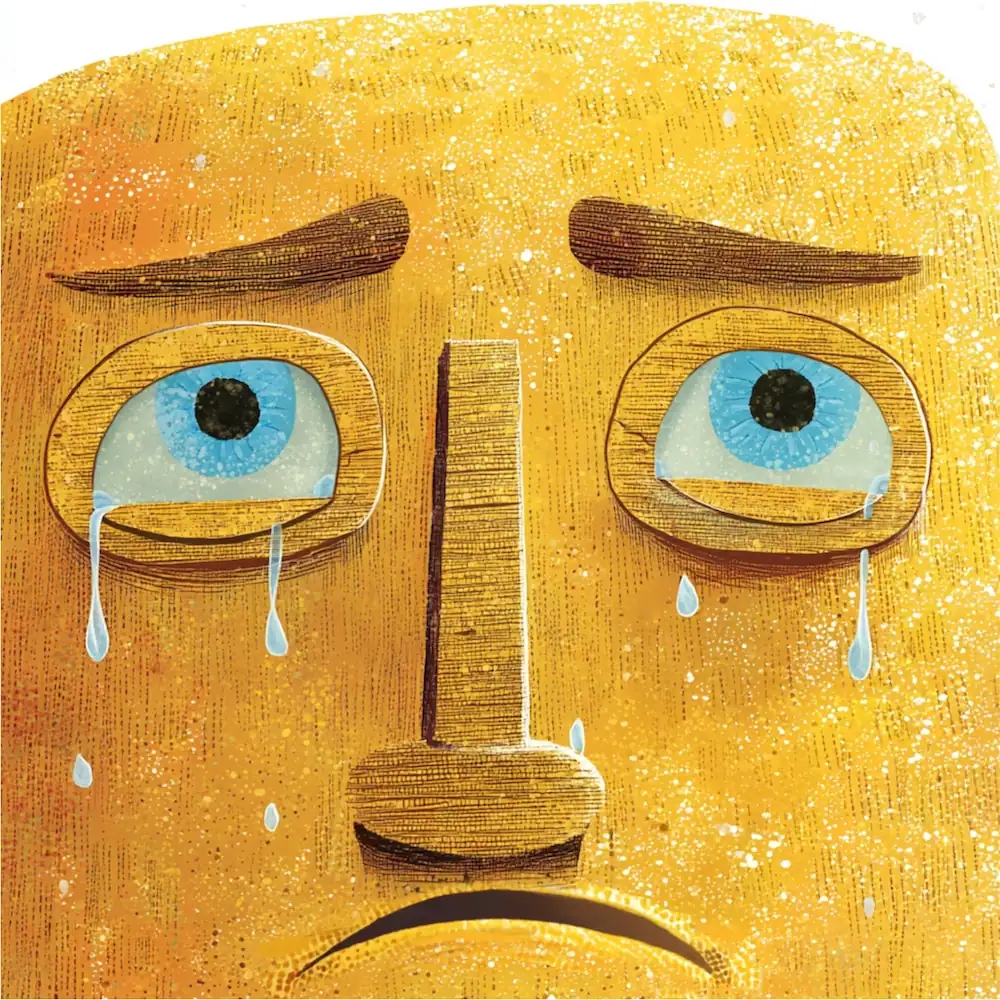
“Who are you?” asked the Swallow.
“I am the Happy Prince,” said the statue in a soft voice.
“Then why are you crying?” asked the bird, puzzled. “You’ve got gold skin, shiny jewels, and the best spot in town!”
“When I was alive,” said the Prince, “I lived in a palace where sadness was never allowed. People called me the Happy Prince, because I smiled all the time. But now that I’m up here, I can see the pain and sorrow in the city and my heart of lead, once hidden beneath all that gold, aches every day.”
The Swallow tilted his head. “You have a heart?”
“Yes,” said the Prince. “And I need your help.”
A Gift for the Seamstress
“Far away,” said the Prince, “in a little house, a woman sits sewing dresses for the Queen’s court. Her hands are sore and red. Her little boy is lying sick in bed with a fever, crying for something to eat. But she has nothing to give him but river water.”
The Swallow ruffled his feathers. “I was planning to go to Egypt, you know.”
“I cannot move,” said the Prince, “but you can fly. Take the ruby from my sword and give it to her.”
The Swallow sighed. “Fine. I’ll stay one night.”
He gently plucked the ruby from the hilt and flew over the rooftops.
He passed the cathedral, the palace, the river, and the noisy markets. At last, he reached the tiny house. The mother had fallen asleep at her sewing, and the child moaned in his dreams.
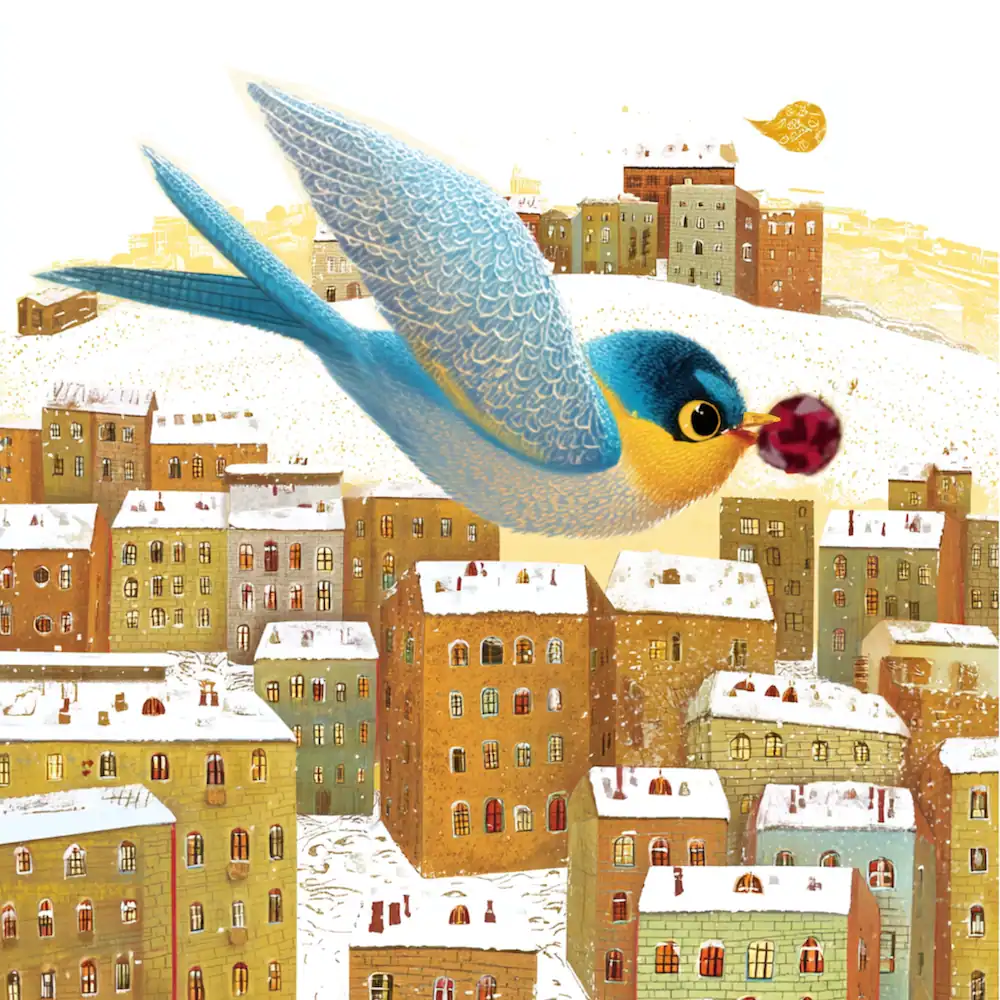
The Swallow laid the ruby next to her thimble and gently fanned the boy’s forehead with his wings. The boy sighed in his sleep.
“So cool,” he whispered. “I think I’m getting better.”
The Swallow had never felt this kind of warmth before. Not from the sun. Not even from the Reed.
Another Night, Another Gift
The next day, the Swallow bathed in the river.
“What an unusual sight,” said a man crossing the bridge. “A swallow so late in the year!” He scribbled a long letter about it for the newspaper. Everyone quoted it, even though it was full of words they didn’t understand.
“I really must leave tonight,” said the Swallow. “Egypt awaits!”
But when the moon rose and he returned to say goodbye, the Prince had another request.
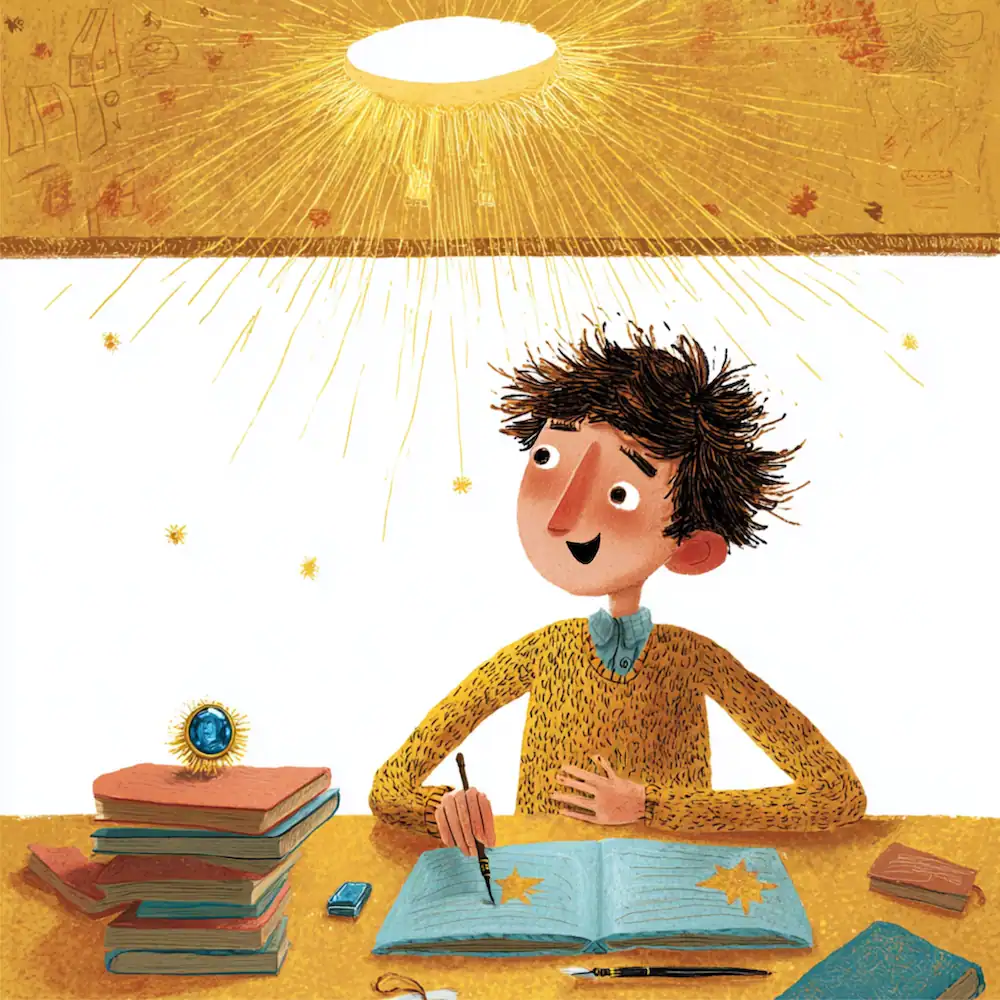
“Across the city, I see a student in an attic room,” said the Prince. “He’s trying to finish a play, but he’s cold and hungry. Please take him one of my eyes. They are sapphires from India.”
The Swallow hesitated. “Your eye? But then you’ll only have one!”
“Please,” said the Prince.
So the Swallow pecked out one sapphire and flew it to the attic room. The young man saw the jewel and cried, “A gift! Now I can finish my play!”
A Third Gift and a Big Decision
That evening, the Prince spoke again.
“In the square below stands a poor match girl. She’s lost her matches in the gutter and is crying because she’s frightened to go home with nothing to show.”
“I can’t take your other eye,” said the Swallow. “You’ll be blind!”
“Please,” whispered the Prince.
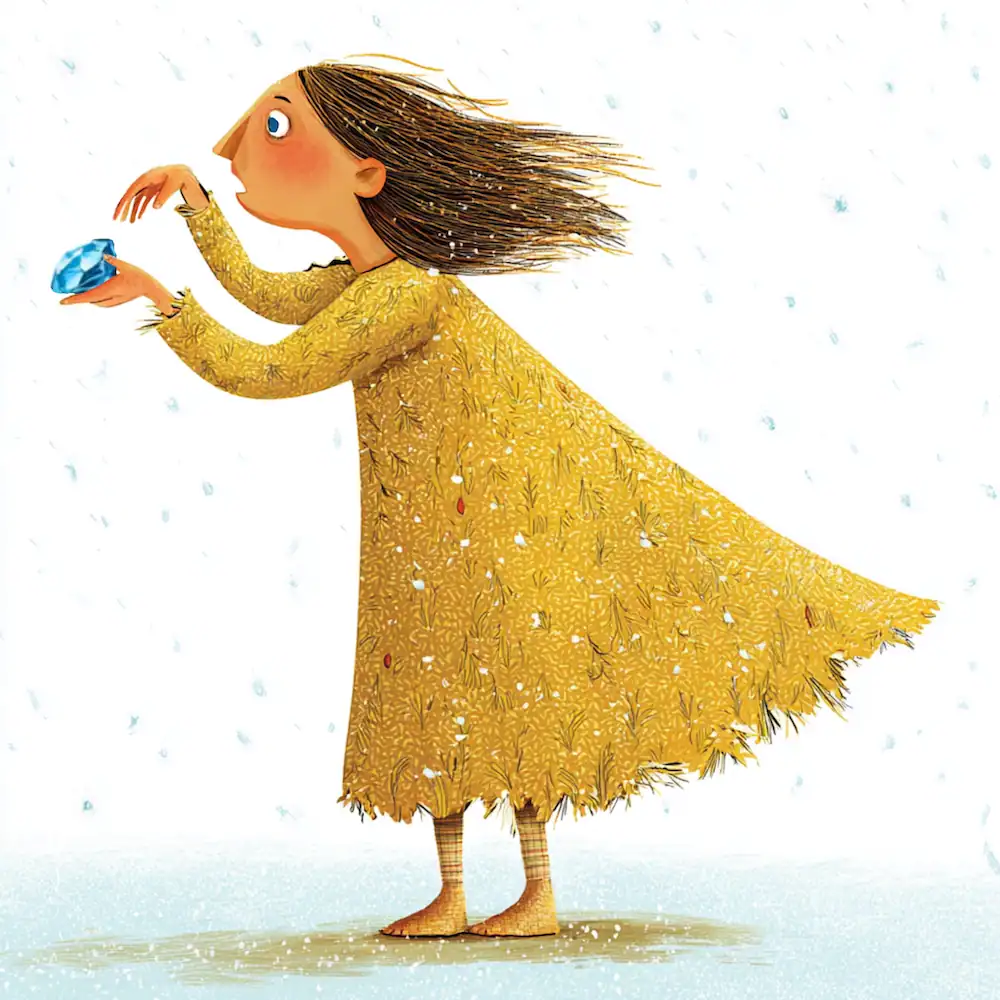
So the Swallow took the second sapphire and dropped it into the girl’s hand. She laughed with relief and ran home, clutching the jewel tightly in her hand.
Then the Swallow returned and whispered, “You are blind now. I will stay with you always.”
And he did.
The Last of the Gold
Every day, the Swallow perched on the Prince’s shoulder and told him tales of faraway lands. Red birds on the Nile, wise old Sphinxes, golden palaces, and secret deserts.
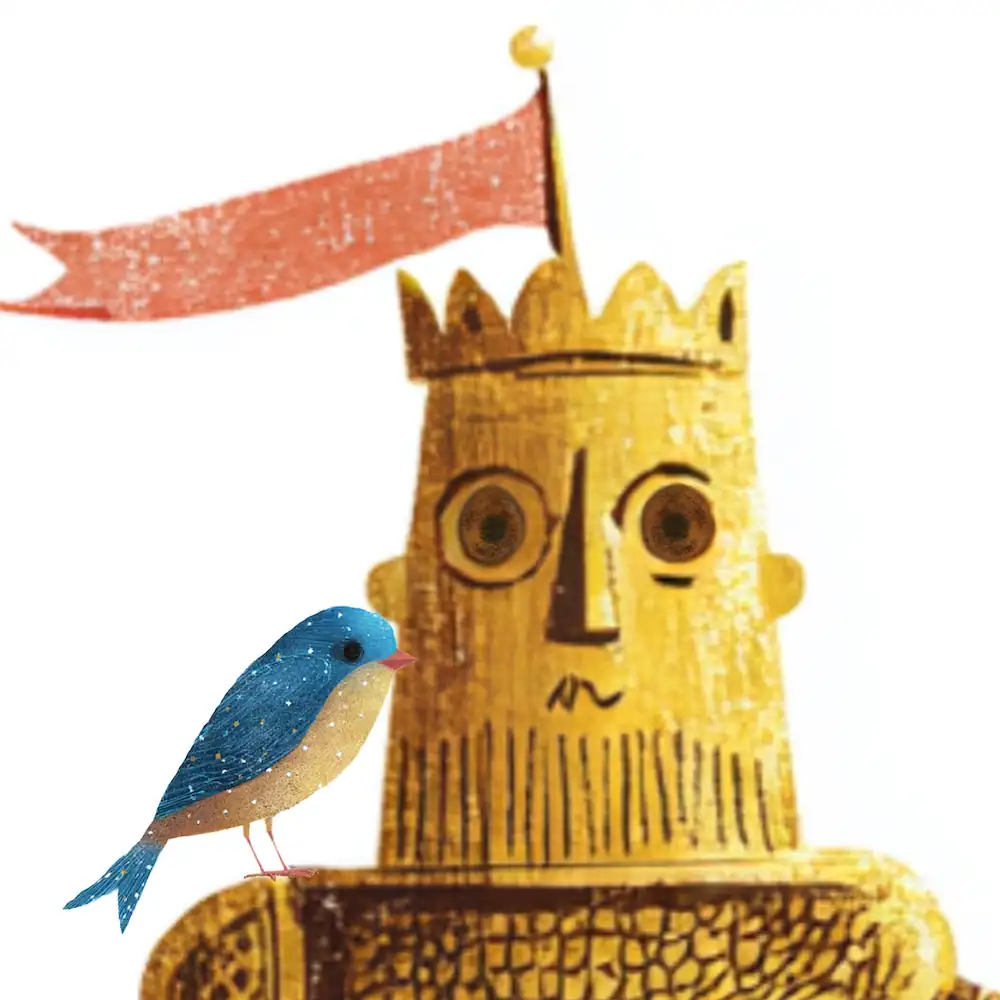
“Those are wonders indeed,” said the Prince. “But the greatest mystery is the misery of people.”
“Then let me fly over the city and report what I see,” said the Swallow.
He returned with stories of hungry children, shivering beggars, and boys sleeping under bridges.
“Take the gold from my body,” said the Prince. “Leaf by leaf. Give it to the poor.”
So the Swallow did.
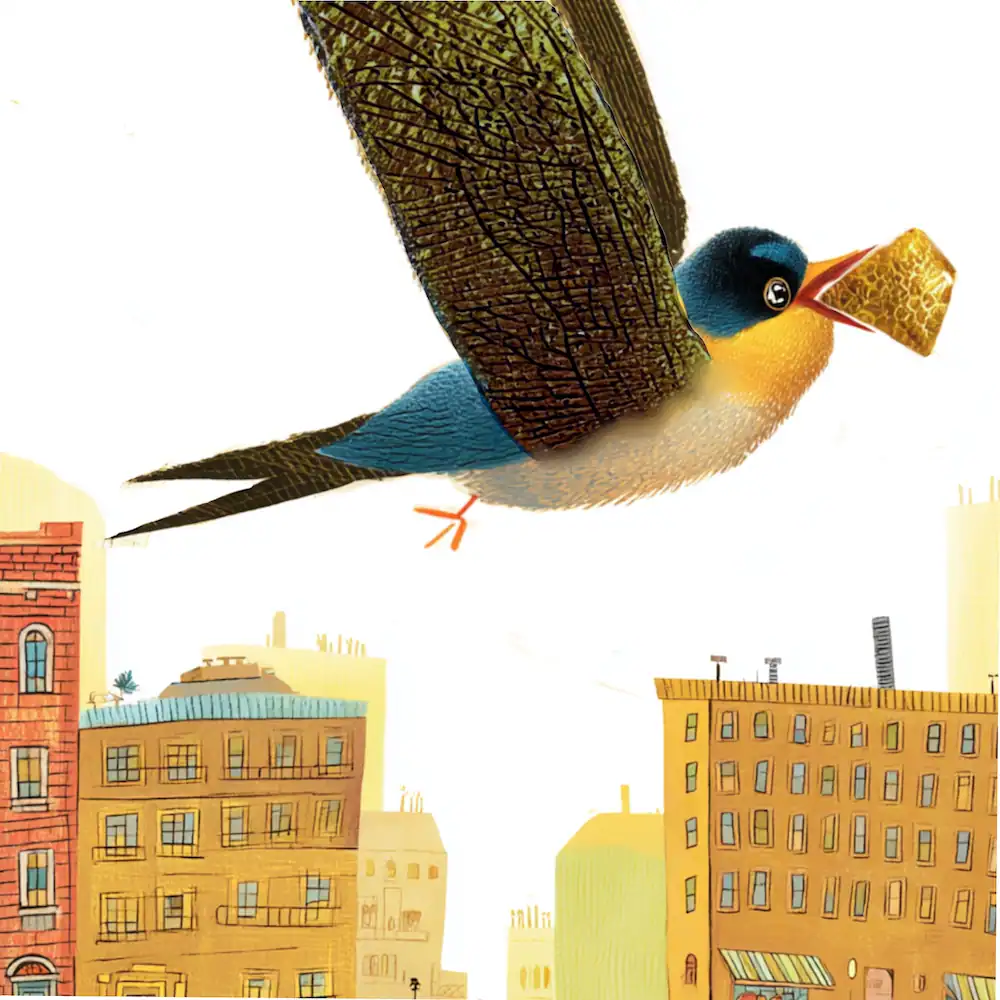
Soon, the statue looked dull and grey, but the people in the city had bread, firewood, and warm smiles.
The Swallow’s Final Gift
Winter came. Snowflakes drifted down. Frost glittered like diamonds on the rooftops.
He could barely fly now, and searched for crumbs with trembling wings. But he never left the Prince.
One morning, he felt it was time.
“Goodbye, dear Prince,” he whispered. “Let me kiss your hand.”
“No,” said the Prince softly. “Kiss me on the cheek, for I love you.”
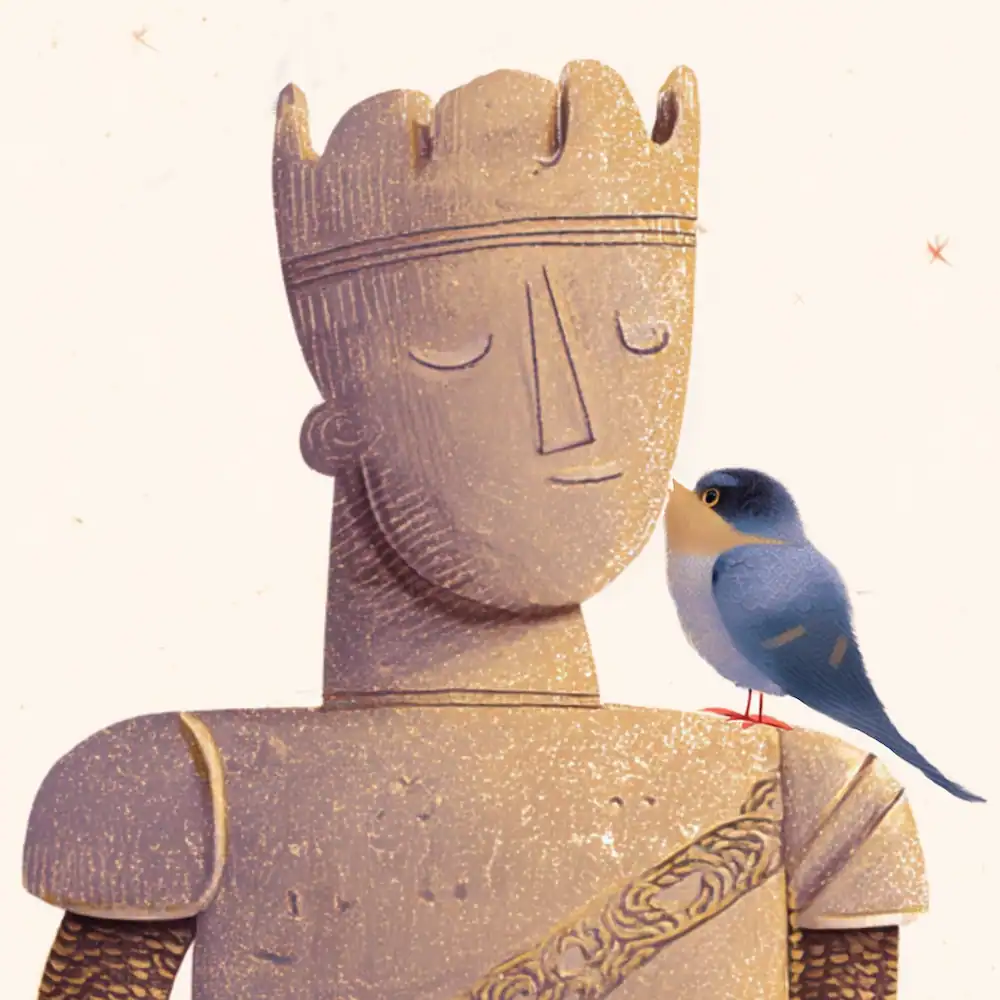
The Swallow kissed him and with that, he fell at the statue’s feet and died.
At that same moment, the Prince’s heart of lead, once hidden beneath all that gold, snapped in two.
What Happened Next
The next morning, the Mayor walked through the square with his councilors.
“Goodness me!” he said, looking up. “The statue looks awful! No ruby, no eyes, and no gold at all!”
“Indeed!” agreed the councilors. “He’s no longer beautiful or useful.”
So they pulled the statue down and threw it into a furnace. But the broken heart didn’t melt.
“This bit’s useless,” said the foundry worker. He tossed it onto a dust heap right beside the little dead Swallow.
Later that day, an Angel passed by.
“Bring me the two most precious things in the city,” said God.
The Angel returned with the lead heart and the lifeless Swallow.
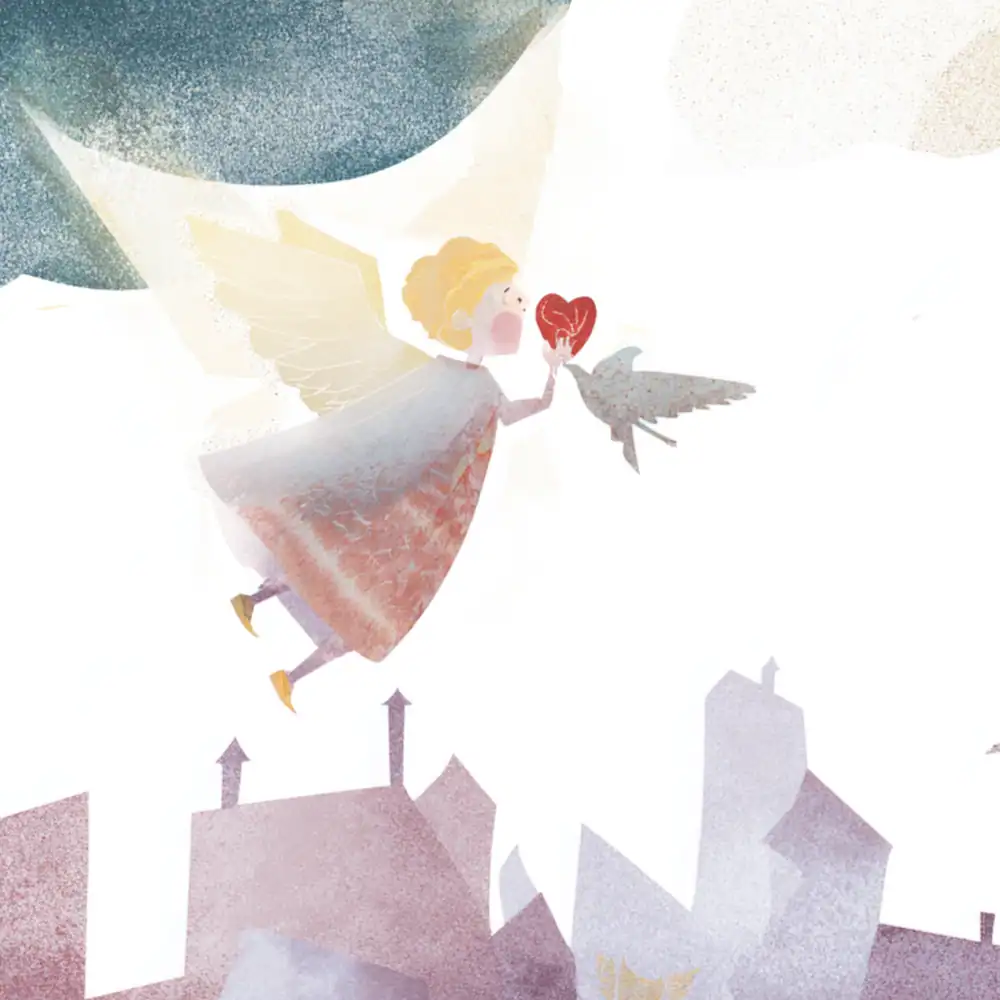
“You have chosen well,” said God. “This little bird shall sing forever in my garden, and the Happy Prince shall live in my city of gold.”
And so they were reunited, one who had given everything, and one who had flown for love in a place where joy and kindness never fade.
Get Dylan’s First Adventure
Join the dancing fun! Grab your free copy of Dylan’s school debut.
Send My CopyCheck your email (and junk folder).
