
Mexican Stories and a K’iche’ Maya Story for Children
Looking for a lively story to share? Begin with a quick-thinking rabbit, a farmer learning responsibility, or the Hero Twins from the Popol Vuh. This small collection brings together two KKW stories set in Mexico and one K’iche’ Maya story, each with a different reason to read together.
Mexican Stories and a K’iche’ Maya Story
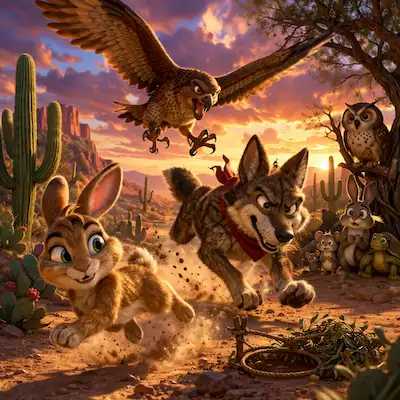
A lively desert trickster tale about Rico the rabbit and a hungry coyote. Rico uses observation, timing and clever thinking to escape danger, while Coyote begins to learn that being feared is not the same as being respected. This story works well for discussing cleverness, consequences, trust and whether a character can begin to change.
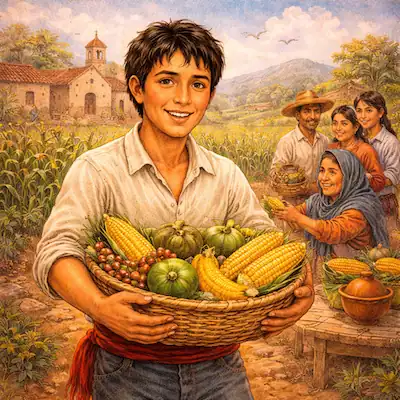
A rural Mexican village story about Tomás, a farmer who wants food without doing the work to grow it. When the villagers stop rescuing him from his own choices, Tomás learns that honest work brings dignity, respect and a real place in the community. This story works well for discussing responsibility, fairness and why help should not be taken for granted.
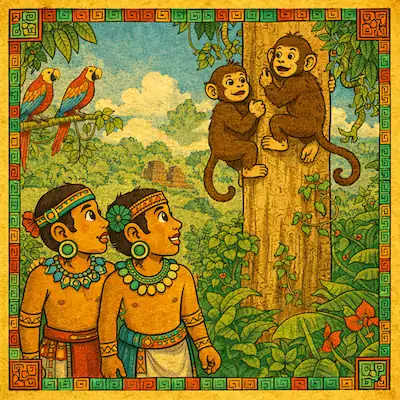
A traditional Maya story about Hunahpu and Xbalanque, the Hero Twins, and their older half-brothers, Hun Batz and Hun Chuen. This episode explores talent, pride, jealousy and transformation, showing how gifts can turn into sorrow when they are used without humility or kindness.
Where Should You Start?
Start with Coyote and Rabbit for a lively trickster tale about quick thinking and trust.
Choose The Lazy Farmer for a village story about responsibility, consequences and earning respect.
Try The Hero Twins and the Howler Monkey Brothers when your child is ready for a mythic story about pride, jealousy and transformation.
For Parents and Teachers
These stories offer different kinds of shared reading. Coyote and Rabbit invites conversation about clever choices and trust. The Lazy Farmer can open a discussion about responsibility and the way actions affect other people. The Hero Twins story includes jealousy and transformation, so consider reading it first when choosing for a younger or more sensitive child.
About the Stories in This Collection
Coyote and Rabbit is a KKW retelling set in Mexico and inspired by wider North American and Mesoamerican trickster tale patterns. The Lazy Farmer is a KKW folktale-style moral story set in a Mexican village. The Hero Twins episode comes from the K’iche’ Maya Popol Vuh, rooted in the highlands of present-day Guatemala. These stories are not one single tradition, so each card names its own source or adaptation.
Adults who would like more background can explore this Popol Vuh record from Google Arts & Culture.
Explore More Stories
To explore beyond this collection, visit Folk Tales for Children, Indigenous Stories of North America, Trickster Tales for Children, or Stories From Around the World.
Frequently Asked Questions
-
Which story should we read first?
Start with Coyote and Rabbit for quick thinking and a lively trickster challenge. Choose The Lazy Farmer for a story about responsibility and consequences. Save The Hero Twins and the Howler Monkey Brothers for a mythic tale with jealousy and transformation.
-
Are all the stories in this collection from Mexico?
No. Coyote and Rabbit and The Lazy Farmer are KKW stories set in Mexico. The Hero Twins and the Howler Monkey Brothers is adapted from the K’iche’ Maya Popol Vuh and is rooted in the highlands of present-day Guatemala.
-
What is the Popol Vuh?
The Popol Vuh is a K’iche’ Maya text that preserves creation accounts and traditional narratives, including stories about the Hero Twins.
-
Is The Hero Twins and the Howler Monkey Brothers suitable for younger children?
The story includes family rivalry, jealousy, and transformation. Adults may wish to read it first when choosing for a younger or more sensitive child.
-
How can I use these stories at home or in class?
After reading, ask what each character wants, what choice they make, and what happens next. Children can compare the characters’ choices, draw a memorable scene, or retell the story from another character’s point of view.
Copyright Notice
© Kooky Kids World. This original retelling, illustrations, audio narration and supporting educational content are protected by copyright. The underlying folk tale is traditional and may exist in many public domain or oral storytelling versions.
