
Native American and Indigenous Stories for Children
Explore child-friendly retellings of Indigenous stories from North America, including stories connected with Haida, Ojibwe, Inuit, Cherokee and wider Native American storytelling traditions.
These stories include tricksters, animals, powerful natural forces, clever choices and lessons about care, respect, courage and the world around us. Some are funny. Some are thoughtful. Some are more serious and better suited to older children.
Many stories include audio, vocabulary support, discussion questions and classroom activities.
What Are Indigenous Stories of North America?
Indigenous stories of North America come from many different peoples, places, languages and oral traditions. They are not all the same, and they should not be treated as one single culture or one single type of story.
Some stories explain features of the natural world. Some teach lessons about behavior, respect or survival. Others feature trickster figures such as Raven or Coyote, who may be clever, greedy, funny, helpful or disruptive depending on the story.
Many traditional stories have more than one version. Details can change depending on the community, storyteller, language, region and source. The versions shared here are adapted retellings for reading, listening and discussion.
Choose a lighter animal tale, a powerful trickster story, a gentle story about forgiveness or a more serious Arctic legend depending on the age and maturity of the child.
Read Indigenous Stories from North America
Raven Steals the Light
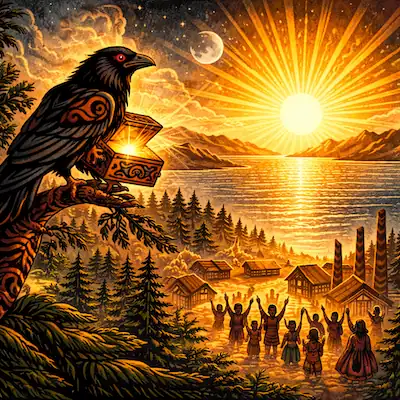
- Tradition / Origin: Haida / Pacific Northwest
- Best for: Trickster stories, sharing, transformation, power and community
- Suggested Age: 8 to 10 years
- Reading Time: 10 to 15 minutes
A Haida story about Raven, darkness, light and cleverness. Raven uses transformation and trickery to release the stars, moon and sun into the world. This story works well for discussing trickster characters, sharing, power and why some gifts should belong to the whole community.
Asibikaashi and the Dreamcatcher
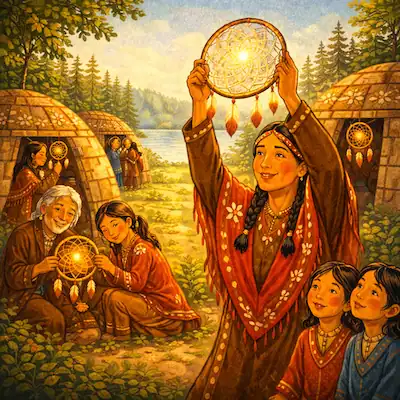
- Tradition / Origin: Ojibwe / Anishinaabe linked
- Best for: Protection, care, symbolism, emotional safety and respectful cultural discussion
- Suggested Age: 8 to 11 years
- Reading Time: 10 to 12 minutes
A gentle story about Asibikaashi, also known as Spider Woman, and the meaning of the dreamcatcher. This story works well for discussing protection, care, dreams, symbolism and why culturally meaningful objects should not be treated only as decorations.
Sedna, Goddess of the Sea
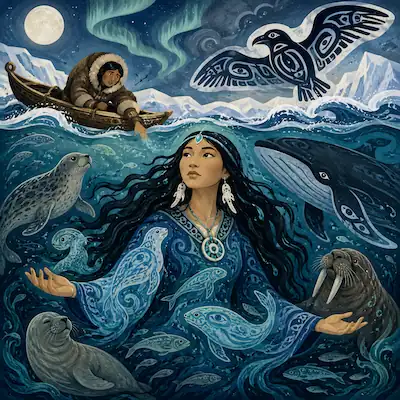
- Tradition / Origin: Inuit / Arctic
- Best for: Older children, choice, betrayal, transformation, strength and respect for the sea
- Suggested Age: 9 to 12 years
- Reading Time: 10 to 15 minutes
An Inuit legend about Sedna, a young woman who wants to choose her own life but is deceived, betrayed and cast into the sea. This more serious story is best suited to older children who are ready to discuss broken trust, fear, transformation and how Sedna becomes the powerful guardian of the sea animals.
Read Sedna, Goddess of the Sea
Read Sedna, Goddess of the Sea
How Coyote Stole Fire
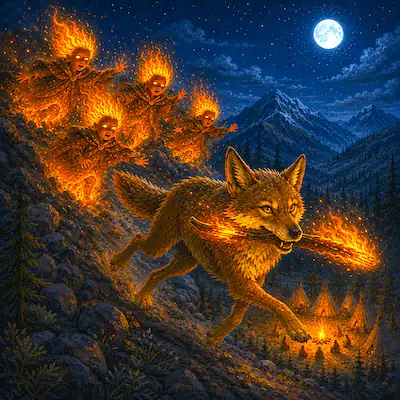
- Tradition / Origin: Inspired by traditional Coyote fire stories from Indigenous North American storytelling traditions
- Best for: Teamwork, courage, clever planning, sharing and helping others
- Suggested Age: 8 to 11 years
- Reading Time: 8 to 10 minutes
A trickster tale about Coyote and the animals working together to bring fire to the people. Coyote is not the strongest or fastest animal, but he watches carefully, makes a plan and helps others without expecting a reward. This story works well for discussing teamwork, sharing, cleverness and whether important things should belong to only a few.
How the Bear Lost His Tail
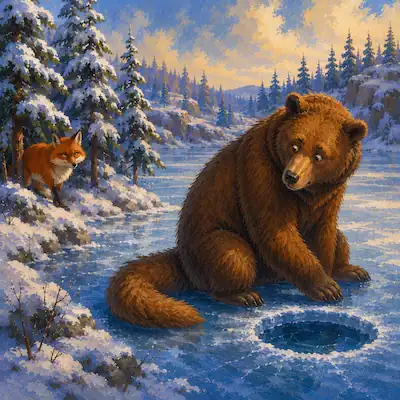
- Tradition / Origin: North American animal trickster tale, with versions linked to Indigenous storytelling traditions
- Best for: Trust, pride, trickery, consequences and thinking before choosing the easy option
- Suggested Age: 7 to 10 years
- Reading Time: 9 to 11 minutes
A shorter animal trickster tale about Bear, Fox and a frozen lake. Bear wants an easy meal and trusts Fox too quickly, but the trick leaves him with a painful lesson. This story works well for discussing pride, common sense, cause and effect and why it helps to ask questions before accepting advice.
The First Strawberry
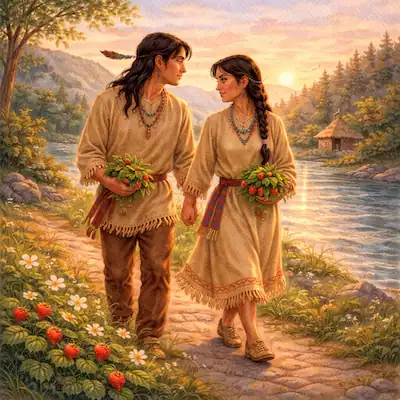
- Tradition / Origin: Cherokee
- Best for: Kindness, forgiveness, patience and making peace
- Suggested Age: 7 to 10
- Reading Time: 12 to 16 minutes
A traditional Cherokee story about the first man and first woman, an argument that drives them apart and the first strawberry, which helps soften anger and bring them back together. This gentle story works well for discussing feelings, forgiveness, empathy and how small acts of kindness can help repair hurt.
Coyote and Rabbit
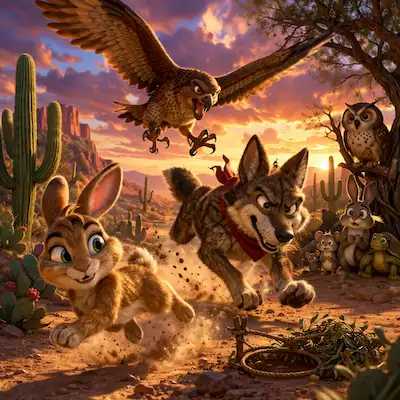
- Tradition / Origin: Mexican-set retelling inspired by wider North American and Mesoamerican trickster tale traditions
- Best for: Cleverness, caution, trust, second chances and character change
- Suggested Age: 8 to 10 years
- Reading Time: 10 to 12 minutes
A lively desert trickster tale about Rico the rabbit and a hungry coyote. Rico uses observation, timing and clever thinking to escape danger, but the story also explores trust, consequences and whether a selfish trickster can begin to change.
A Note on Respectful Reading
These stories are connected with living cultures, not just old books. They should not be treated as one single tradition or one complete lesson about a whole people.
Many stories have different versions depending on the community, storyteller, language, region and source. The versions shared here are adapted retellings for reading, listening and discussion.
Useful wording for teachers:
“This is one adapted retelling.”
“Versions vary by community, storyteller and source.”
“This page is not a replacement for community-led teaching.”
For Teachers and Parents
These stories can support reading comprehension, listening practice, vocabulary work, discussion and creative writing. They are especially useful for lessons on:
- Trickster characters
- Oral storytelling
- Cause and effect
- Respect for nature
- Story structure
- Different versions of traditional tales
- Feelings, choices and consequences
For teachers, these stories can work well as reading texts, listening activities or discussion starters. Several story pages also include vocabulary, questions and classroom activities, so children can explore the story beyond the main text.
When using these stories in class, make clear that each page is one retelling and does not represent every Indigenous community or tradition.
More Story Collections
Explore more story collections on Kooky Kids World:
Canadian Stories for Children
Folk Tales for Children
Fairy Tales for Children
Trickster Tales for Children
Frequently Asked Questions
-
What are Indigenous stories of North America?
Indigenous stories of North America come from many different peoples, places, languages and oral traditions. They are not one single culture or one single type of story.
-
Are Native American stories the same as American tall tales?
No. Native American and Indigenous stories long predate the United States and belong to living cultures and communities. They should be shared with care and respect, not treated as frontier tall tales.
-
Which stories are best for younger children?
For younger children, start with gentler animal or trickster stories and read with an adult. More serious stories, such as Sedna, are better for older children who can talk about fear, betrayal and transformation.
-
How should teachers use these stories respectfully?
Teachers can introduce each page as one adapted retelling, explain that versions vary by community and source, and avoid presenting any story as a complete lesson about a whole culture.
-
Do these stories all come from the same tradition?
No. The stories on this page are connected with different peoples, regions and storytelling traditions, including Haida, Ojibwe, Inuit, Cherokee and wider Indigenous North American traditions.
Copyright Notice
© Kooky Kids World. This original retelling, illustrations, audio narration and supporting educational content are protected by copyright. The underlying folk tale is traditional and may exist in many public domain or oral storytelling versions.
