
Canadian stories for kids are full of clever animals, winter skies, sea legends, magical journeys and big questions about courage, sharing, respect and survival.
They are also not all the same.
A French Canadian legend from Quebec is not the same kind of story as an Inuit legend from the Arctic. A Haida myth from the Pacific Northwest has a different setting and cultural background from an Ojibwe teaching story linked with the Great Lakes region.
On Kooky Kids World, children can explore Canadian stories for kids in a child-friendly format. Many stories include audio, so children can read independently, listen along or enjoy the story while a parent is busy. Several pages also include vocabulary support, discussion questions and classroom activities.

What Counts as a Canadian Story?
Canadian stories can include folk tales, legends, myths, animal stories, trickster tales and historical stories connected with Canada’s many peoples and regions.
Some come from French Canadian folklore, such as The Flying Canoe. Others are connected with Indigenous storytelling traditions, including Inuit, Ojibwe and Haida traditions.
The important thing is not to put everything into one big “Canadian folklore” box. Canada includes First Nations, Inuit and Métis peoples, and these are distinct peoples with their own histories, languages and cultures. Canadian government guidance also separates First Nations, Inuit and Métis as distinct Indigenous peoples. (canada.ca)
That does not mean children cannot enjoy these stories. They can. It simply means each story should be introduced clearly, with its own tradition or region where that information is known.
That is the balance: fun first, accuracy always.
How the Bear Lost Its Tail: A North American Trickster Tale

How the Bear Lost Its Tail is a traditional animal trickster tale with versions told across North America, including versions linked with Canada and Indigenous storytelling traditions.
It is funny, easy to follow and has a useful lesson.
Bear is hungry and proud. Fox gives him an easy answer. Bear trusts him too quickly. The result is painful.
Children enjoy the trick. Parents and teachers can use it to talk about cause and effect, trust, pride and common sense.
This is a good story to start with because it gives children an easy way into trickster storytelling before moving on to heavier legends.
Read How the Bear Lost Its Tail trickster tale for a shorter animal story about clever words, bad judgment and learning the hard way.
The Flying Canoe: A French Canadian Folk Tale from Quebec
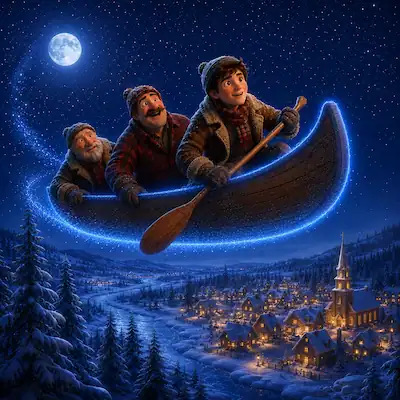
The Flying Canoe is one of the best-known French Canadian folk tales. It is also known as La Chasse-Galerie or The Bewitched Canoe.
In the story, a group of homesick lumberjacks want to return home on New Year’s Eve. The problem is distance. The solution is a magical canoe flying through the night sky. The catch is a dangerous bargain.
That is a classic folk tale setup: strong desire, strange magic, strict rules and consequences if the rules are broken.
Children get the adventure. Teachers get the discussion points: promises, temptation, shortcuts, homesickness and consequences.
The Canadian Encyclopedia describes La Chasse-Galerie as a French Canadian variant of the Wild Hunt tradition.
Read The Flying Canoe French Canadian folk tale for a lively winter story with suspense, humor and a clear cautionary lesson adapted for children.
Raven Steals the Light: A Haida Myth from the Pacific Northwest
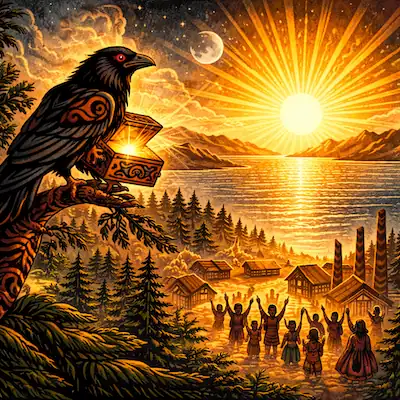
Raven Steals the Light is a Haida story from the Pacific Northwest about Raven bringing light into the world.
Raven is not a neat superhero. He is clever, disruptive, funny, greedy, helpful and difficult. That is what makes him interesting. He can cause trouble and still change the world.
This story belongs in a Canadian stories collection when it is labelled properly as Haida and Pacific Northwest, not just “Canadian.” Haida culture is strongly connected with Haida Gwaii off the coast of British Columbia. Read more on The Canadian Encyclopedia.
This is also a strong story for children who enjoy trickster stories for kids because Raven wins through disguise, patience and cleverness.
A useful classroom question is:
Was Raven wrong to steal the light, or right to share what one person had kept hidden?
Read Raven Steals the Light Haida myth for a bold story about light, sharing and transformation.
The Dreamcatcher: An Ojibwe Legend About Protection and Care
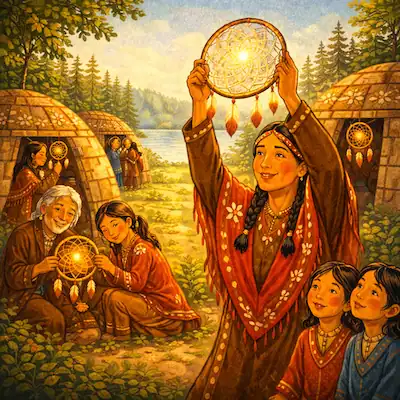
The Dreamcatcher: Ojibwe Legend is connected with Asibikaashi, also known as Spider Woman. It explores protection, patience, care and learning from the natural world.
This is a gentler story than Sedna or Raven Steals the Light, but it still gives children plenty to think about. Why do people make objects with meaning? How can something simple become a symbol of care? Why do some stories connect protection with the natural world?
Dreamcatchers are often treated as decoration today, but this story gives children a way to think about their meaning rather than only their appearance.
NativeTech shares an Ojibwe account connecting Asibikaashi, Spider Woman and dreamcatchers. (nativetech.org)
Read The Dreamcatcher Ojibwe legend for a quieter story about care, protection and the meaning objects can carry.
Sedna, Goddess of the Sea: An Inuit Legend from the Arctic
Sedna, Goddess of the Sea is an Inuit legend from the Arctic about the sea, survival and the origins of certain sea animals.
This is not a fluffy bedtime tale. It is powerful, serious and better suited to older children who can talk about its meaning with adult guidance.
Sedna stories vary across Inuit communities. The sea goddess is known by different names in different areas, including Sedna, Nuliayuk, Taluliyuk and Taleelayuk. The Canadian Encyclopedia confirms those names and describes Sedna as one of the best-known Inuit traditional stories.
That matters. Our version is best described as a child-friendly retelling of an Inuit legend, with the understanding that versions vary.
A good parent or classroom question could be:
What does this story show about respect, survival and the sea?
Read Sedna, Goddess of the Sea Inuit legend for a deeper Canadian story with a strong Arctic setting.
Quick Guide for Parents and Teachers
Here is a simple way to choose the right Canadian story for your child or class.
Start with How the Bear Lost Its Tail if you want a shorter, funny trickster tale that is easy to discuss. It works well for cause and effect, trust, pride and common sense.
Choose The Flying Canoe if you want adventure, suspense and a clear lesson about promises, temptation and consequences.
Read Raven Steals the Light if you want a bigger trickster story about sharing, power, cleverness and transformation.
Try The Dreamcatcher: Ojibwe Legend if you want a quieter story about care, protection, symbolism and meaning.
Save Sedna, Goddess of the Sea for older children who are ready to discuss a more serious Arctic legend about respect, survival and the sea.
Many Kooky Kids World stories also include audio, vocabulary support, discussion questions and classroom activities, so children can read independently, listen along or use the stories for classroom reading, speaking and writing tasks.
For more traditional stories, children can also explore trickster stories for kids, folk tales for kids, myths and legends for kids, fairy tales for kids and bedtime stories for kids.
Many Kooky Kids World stories also include audio, vocabulary support, discussion questions and classroom activities, so children can read independently, listen along or use the stories for classroom reading, speaking and writing tasks.
For more traditional stories, children can also explore trickster stories for kids, folk tales for kids, myths and legends for kids, fairy tales for kids and bedtime stories for kids.
Reading Canadian Stories with Care
Canadian stories are fun to read, but it helps to introduce them clearly.
Traditional stories can have more than one version. Details may change between communities, Nations, regions, storytellers and sources, while the core story or teaching often remains recognizable. The stories on Kooky Kids World are child-friendly retellings for reading, listening and discussion.
Where that information is known, it is clearer to describe a story as French Canadian, Inuit, Haida or Ojibwe rather than calling everything simply “Canadian folklore.”
That keeps the stories enjoyable for children while still treating their origins with care.
Frequently Asked Questions About Canadian Stories for Kids
-
What are Canadian stories for kids?
Canadian stories for kids include folk tales, legends, myths, animal stories, trickster tales and stories connected with Canada’s many cultures and regions. Stories may include French Canadian tales, Inuit legends, Haida myths, Ojibwe stories and other traditional tales.
-
Are Canadian stories the same as Indigenous stories?
No. Some Canadian stories come from Indigenous storytelling traditions, but not all Canadian stories are Indigenous. The Flying Canoe is a French Canadian legend from Quebec. Sedna is an Inuit legend. Raven Steals the Light is a Haida myth. The Dreamcatcher is connected with Ojibwe tradition.
-
What is a famous Canadian folk tale?
The Flying Canoe, also known as La Chasse-Galerie or The Bewitched Canoe, is one of the best-known French Canadian folk tales. It tells of homesick lumberjacks who take a magical flight through the winter sky. Different versions have different endings, and the version on Kooky Kids World has been adapted to be suitable for children.
-
Are Canadian stories good for classrooms?
Yes. Canadian stories can support reading, listening, vocabulary, oral discussion, cultural comparison and creative writing. Teachers should choose stories by age, theme and cultural context.
-
What age are Canadian stories best for?
Most of the Canadian stories on Kooky Kids World work best for children aged around 7 to 12. Lighter animal tales can suit younger children, while more serious legends such as Sedna work better for older children with adult guidance.
-
Can children listen to Canadian stories online?
Yes. Many Kooky Kids World stories include audio, so children can read the story, listen to it or follow along. This can help busy parents and give children extra support with fluency, vocabulary and story rhythm.
