
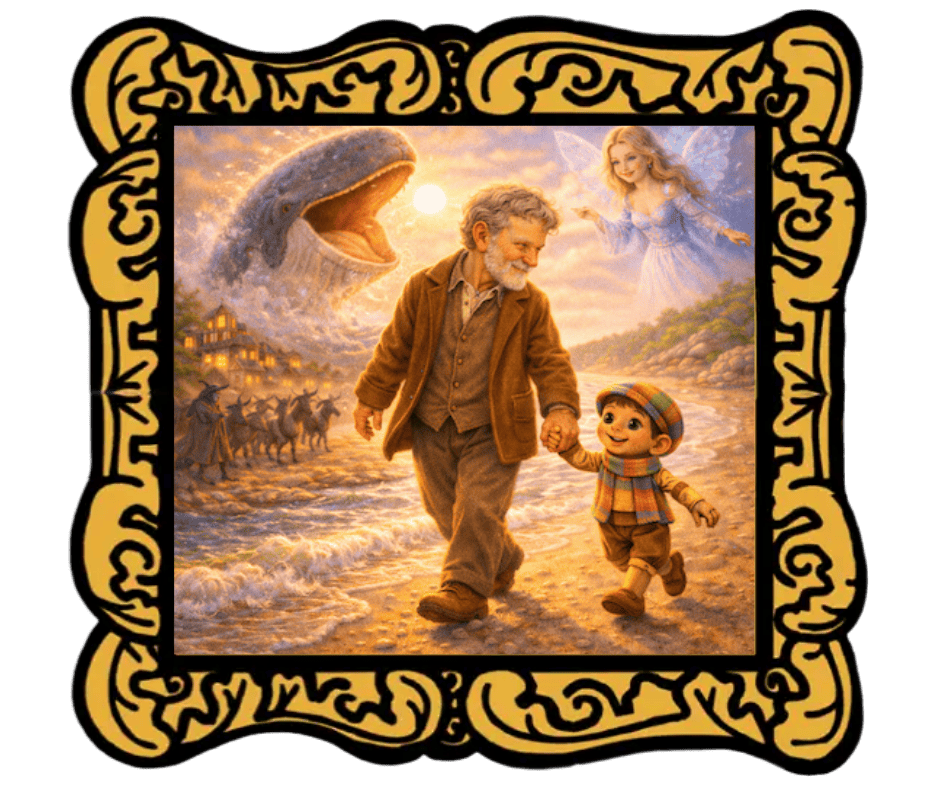

Pinocchio is a classic fairy tale about a magical puppet and an old clockmaker named Geppetto. This retelling of Pinocchio is for kids ages 6–12 and it follows a boy who keeps choosing the easy road. As a moral story for kids, it shows how honesty and steady effort can turn a wish into real life.
A Wish in the Workshop – A Puppet with Bright Eyes
Geppetto was a clockmaker who lived above his little shop. All day, his clocks clicked and chimed and kept him busy. But when the last customer left and the lamps grew low, Geppetto felt lonely in the silence.
“I just want someone to laugh with,” he said softly to the empty room.
Then Geppetto had an idea. If the house was too quiet, he would make something to fill it. Not another clock, but a companion. So he chose a smooth piece of wood and began to carve. He shaped a round face, a pointed nose and a grin that looked ready for trouble. Then he made arms and legs and fastened them so they could move. He stitched a simple outfit and set a little cap on the puppet’s head.
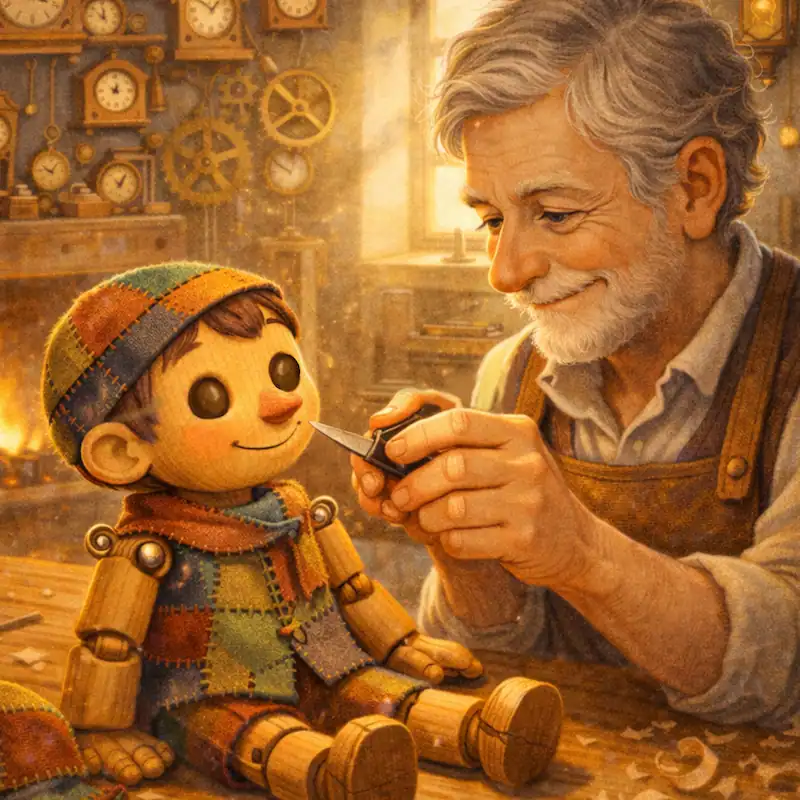
Geppetto held the finished puppet at arm’s length. “You will be called Pinocchio,” he decided. “Maybe you will keep me company.”
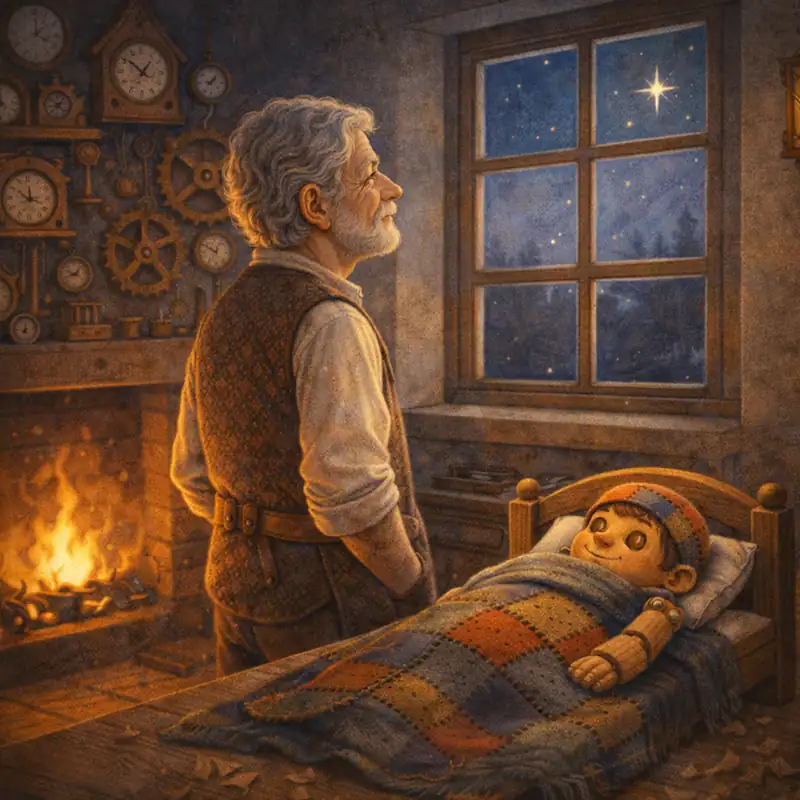
That night he placed the puppet in a small bed by the fire. The flame cracked softly. Outside the window, one bright star seemed to watch the town.
Geppetto leaned toward the sky. “If wishes ever come true,” he whispered, “let me have a real boy to love.”
He shut the window, shook his head at his own foolish hope and fell asleep.
A Visitor of Blue Light
Near midnight, the star’s light spilled into the room as if it had poured through the glass. The Blue Fairy appeared beside Pinocchio’s bed, quiet as snow.
“Little puppet,” she said, “open your eyes.”
Pinocchio’s eyelids lifted. He stared at The Blue Fairy with wide wonder.
“In the morning you will walk and talk,” the Blue Fairy told him. “Be brave. Be kind. Be honest. And when you make a mistake, admit it and try again. If you live that way, you may become a real boy.”
A Cricket hopped from the hearth and chirped politely. The Blue Fairy smiled. “This Cricket will stay close. He will warn you when your choices are careless.”
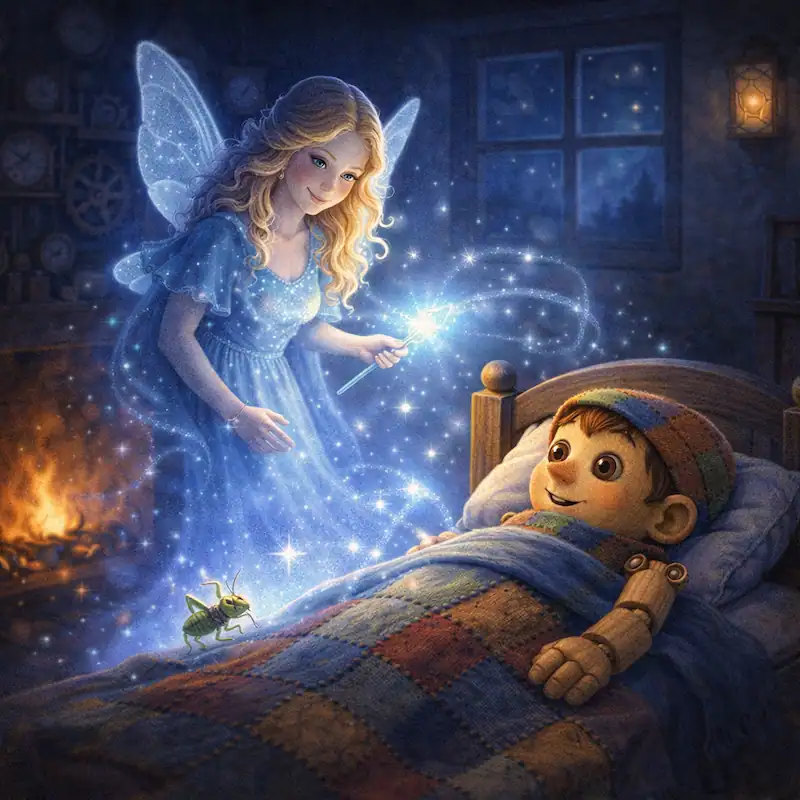
Pinocchio blinked again, as if he had just heard a promise too big to hold. The Blue Fairy touched his forehead with her wand, then vanished in a soft swoosh of light.
Books Bought with Love
At sunrise, Geppetto hurried to the little bed he had made for Pinocchio.
It was empty.
“Father!” a voice called from the other side of the room.
Geppetto spun around. Pinocchio was walking towards him on wobbling legs. His eyes were bright and curious like a little boy.
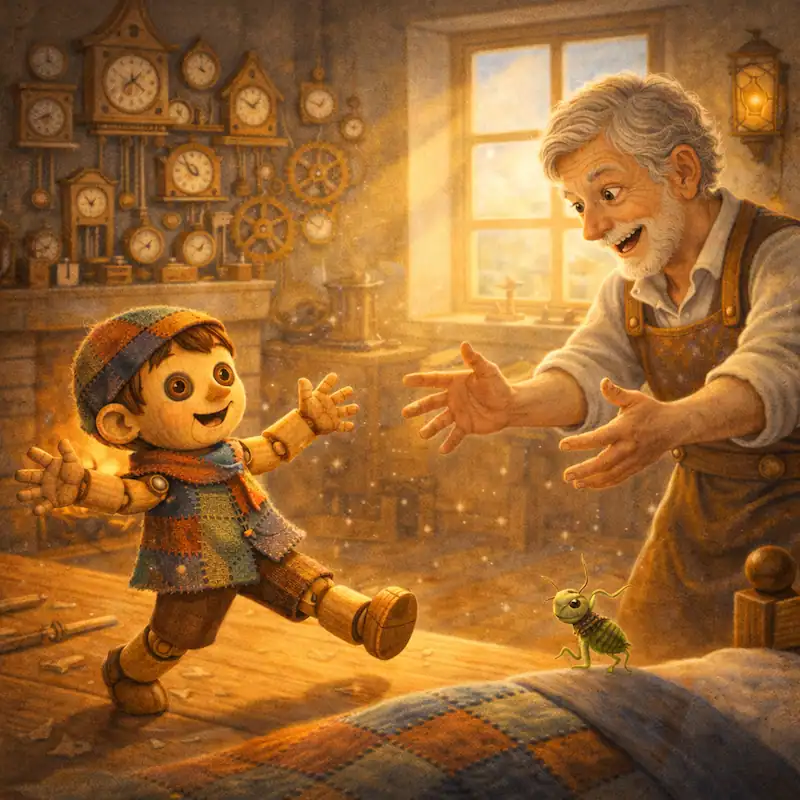
Geppetto let out a laugh he didn’t know he’d been holding, then swept him into a tight hug. “My son,” he kept saying, as if the words were music.
Pinocchio explored the shop all morning. He opened drawers, tried on hats and asked question after question. The Cricket followed, watching with worried pride.
A group of boys passed the shop window, laughing, their slates tucked under their arms. Pinocchio stepped closer and watched them go. He wondered what it felt like to write your own name.
He wanted to sit at a desk, raise his hand and hear someone say, “Well done.” Most of all, he wanted Geppetto to look at him the way fathers looked at their sons.
Pinocchio pointed toward the street and said. “I want to go to school like other boys.”
Geppetto’s smile stayed, but his pockets were nearly empty. Still, he nodded. “You should learn. Tomorrow you will go.”
That evening, when Pinocchio slept, Geppetto took his warm coat and hurried away. He returned shivering, holding a stack of schoolbooks tied with twine.
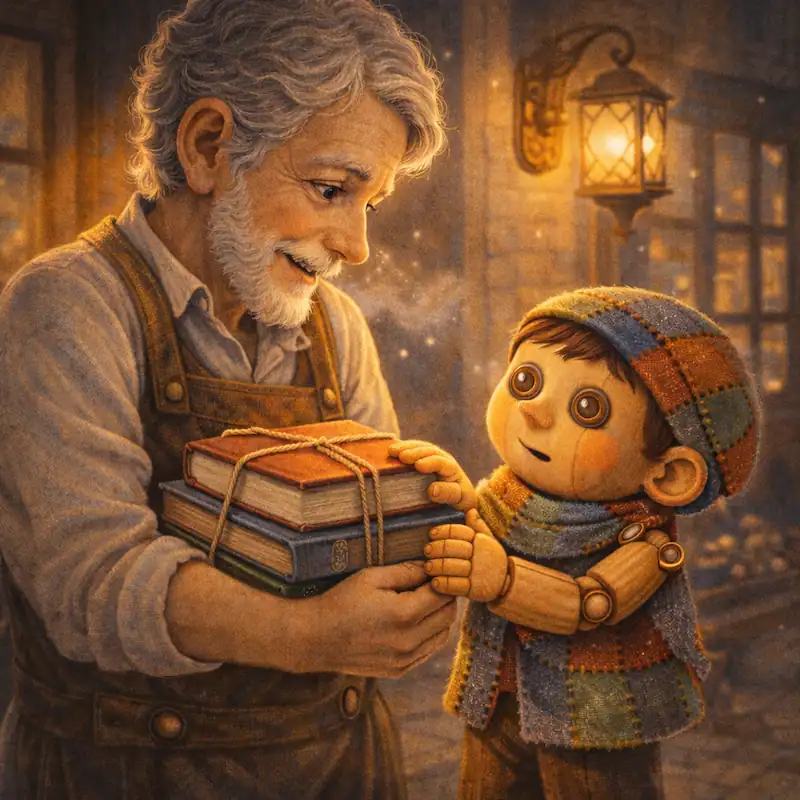
Pinocchio hugged the books. “Father, where is your coat?”
Geppetto waved it off. “Books matter more. Go straight to school and make good choices.”
Pinocchio promised he would.
The Fair That Calls Too Loudly
Pinocchio skipped toward the schoolhouse with his books under his arm. The Cricket rode on his shoulder and chirped quick reminders.
From behind a hedge, a Fox stepped out. A Cat stood beside him with a mischievous laugh.
“Where are you going?” asked the Fox.
“To school,” Pinocchio said proudly.
“School on a day like this?” the Cat purred. “What a waste.”
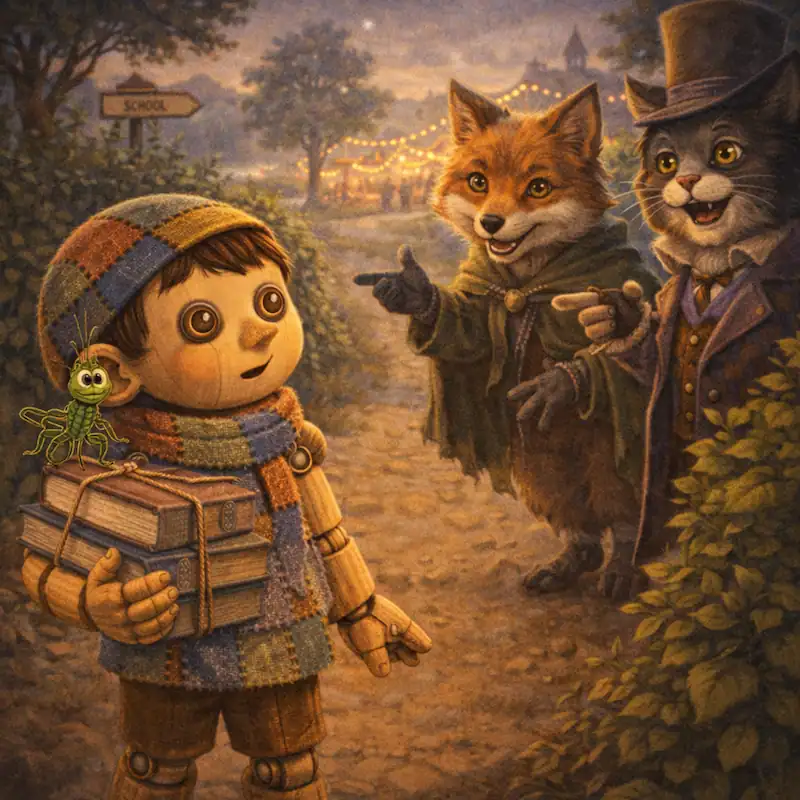
The Fox leaned close. “There is a fair in town. Music, games and puppet shows. You can learn more there than in any dull classroom.”
The Cricket chirped sharply. “Do not listen. The fox and cat are tricking you.”
With a quick motion, the Fox dropped his hat over the Cricket. The chirps turned muffled.
Pinocchio hesitated. The fair’s music drifted in the distance. He imagined cheering and prizes.
“Just for a little while,” he said.
The Fox smiled. The Cat’s tail flicked. Together they led him to the gate.
A Cage and a Growing Nose
At the entrance, Pinocchio patted his pockets. No coins.
A man at a table pointed at the schoolbooks. “Sell those and you can buy a ticket.”
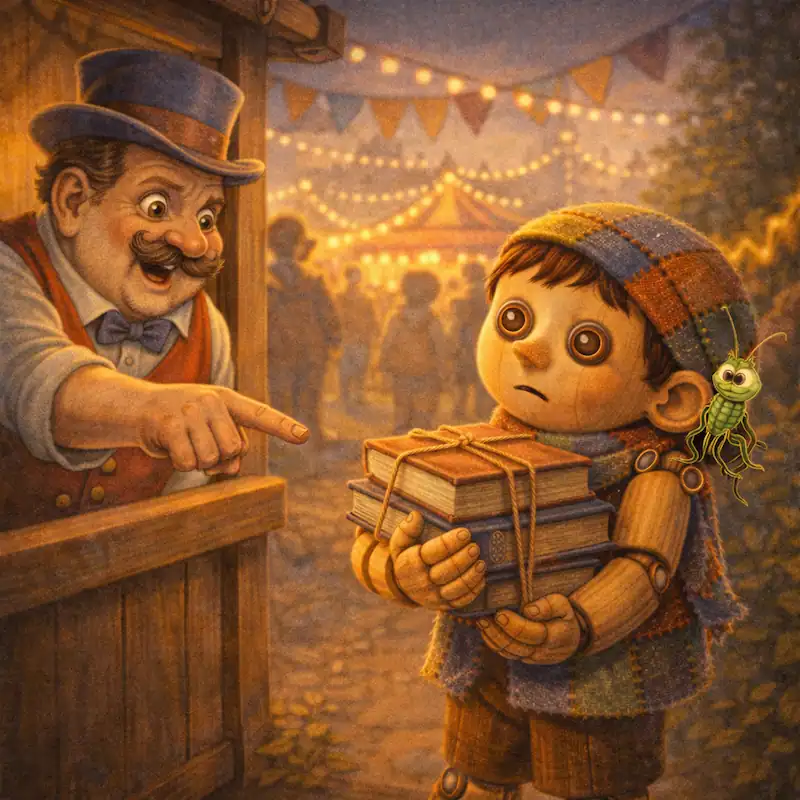
The Cricket wriggled free and chirped, “No! Those books cost your father dearly.”
Pinocchio swallowed. Then he told himself he would fix it later. He traded the books for coins and rushed inside before guilt could catch him.
On a stage, wooden puppets danced. Pinocchio burst with excitement. “I am a puppet too,” he said and jumped up beside them. He danced so fast and so freely that the crowd shouted in surprise.
“Look,” people cried, “he has no strings!”
Coins flew onto the boards. The puppet master scooped them up, then stared at Pinocchio like a treasure.
“This puppet will make me rich,” he said. He snapped his fingers and helpers shoved Pinocchio into a metal cage. The door clanged shut.
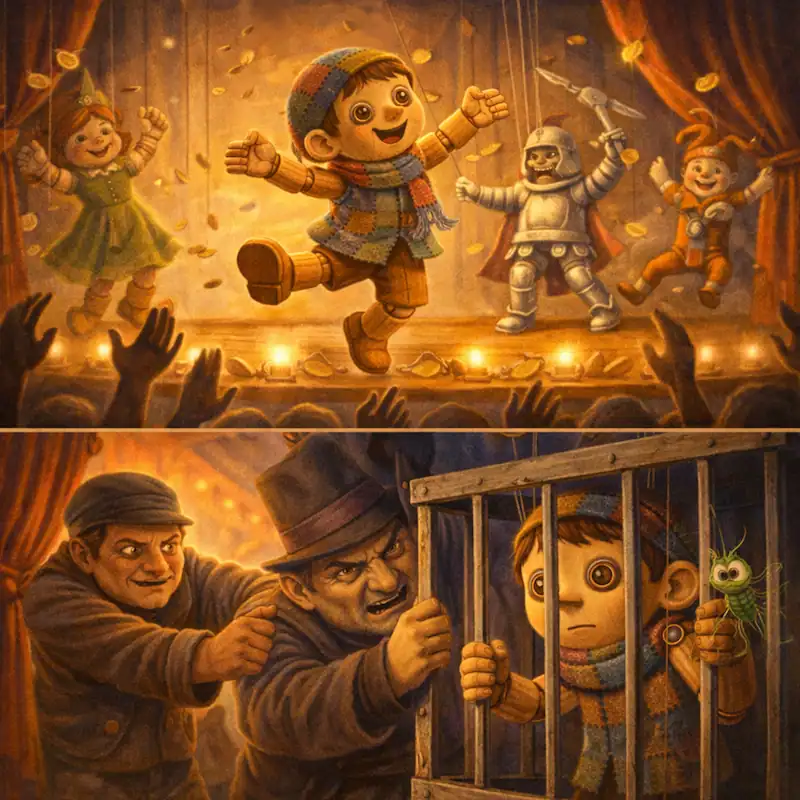
Pinocchio grabbed the bars. “Let me out!”
Blue light swirled. The Blue Fairy appeared and opened the cage with a wave.
“How did you end up here?” she asked.
Pinocchio’s cheeks burned. “I was robbed,” he said quickly.
“Is that true?” the Blue Fairy asked.
Pinocchio’s nose stretched forward, longer and longer, until he could barely see past it.
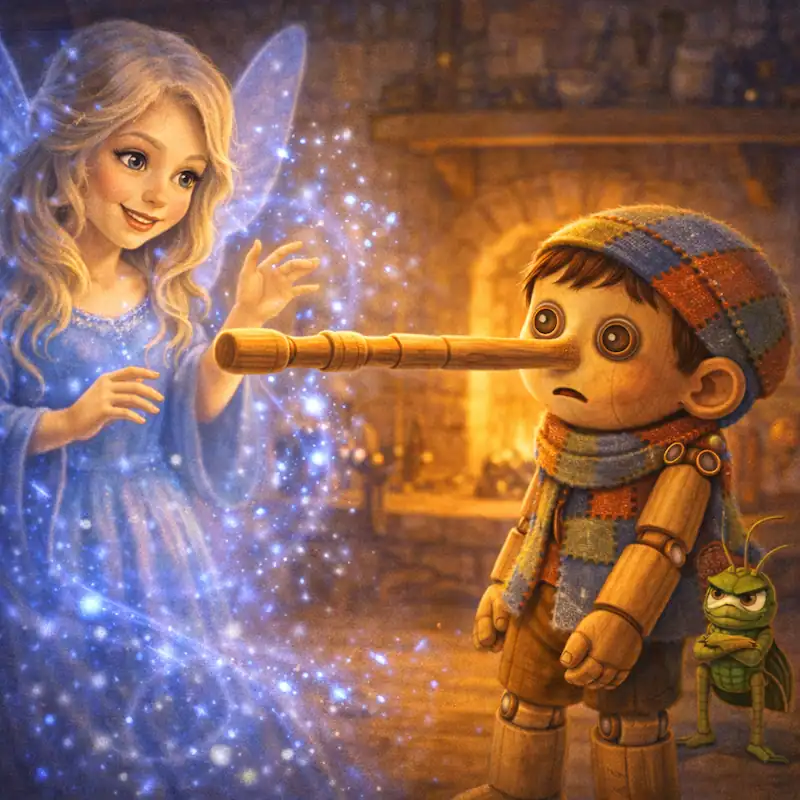
He gasped and blurted, “I wanted to go to the fair. Fox and Cat talked me into it. I sold my books.”
As the truth came out, his nose shrank back to normal.
The Blue Fairy gave a wave and the books appeared in Pinocchio’s arms again. “This is your second chance,” she said. “Choose wisely because you may not always be rescued.”
Then she vanished.
A Coachman’s Easy Promise
Pinocchio hurried back toward the school road. His books felt heavier now because he understood what they meant.
A shiny coach rolled beside him. The Coachman leaned down with a grin.
“Need a ride?” he asked. “I can take you somewhere better than school.”
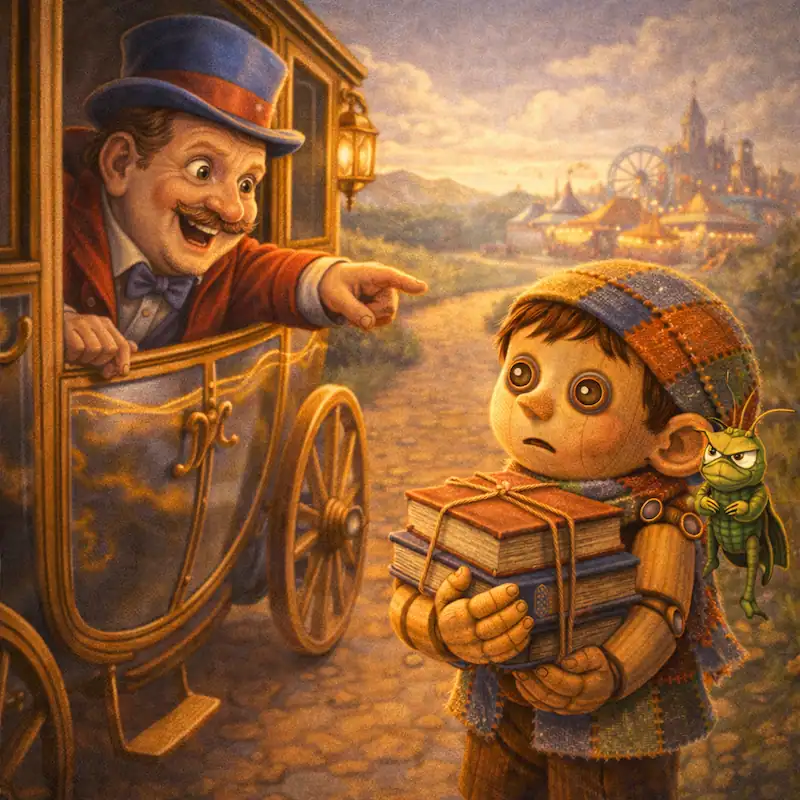
“I should go to class,” Pinocchio said, yet his feet slowed.
The Coachman spoke smoothly. “Why wait to be happy? Come to the Land of Toys. Boys play all day. They eat candy, smash things, shout as loud as they like and nobody tells them to stop.”
The Cricket chirped, “Nothing good lasts when it is built on laziness.”
The Coachman laughed. “That bug worries too much.”
Pinocchio thought of homework, chores and rules. Then he thought of candy and freedom.
“All right,” he said. “Just for a little while.”
The Coachman’s grin widened. “That is what they all say.”
Donkey Ears and the Sea
The Land of Toys sparkled at first. Pinocchio ran with other boys, ate sweets until his stomach hurt and forgot about school. Soon days blurred together.
Then boys began to disappear. In their place, donkeys began to appear, led by a dark stranger who counted them like coins.
Pinocchio touched his head. His ears felt hot.
With a sharp pop, one ear stretched into a donkey ear. Then the other.
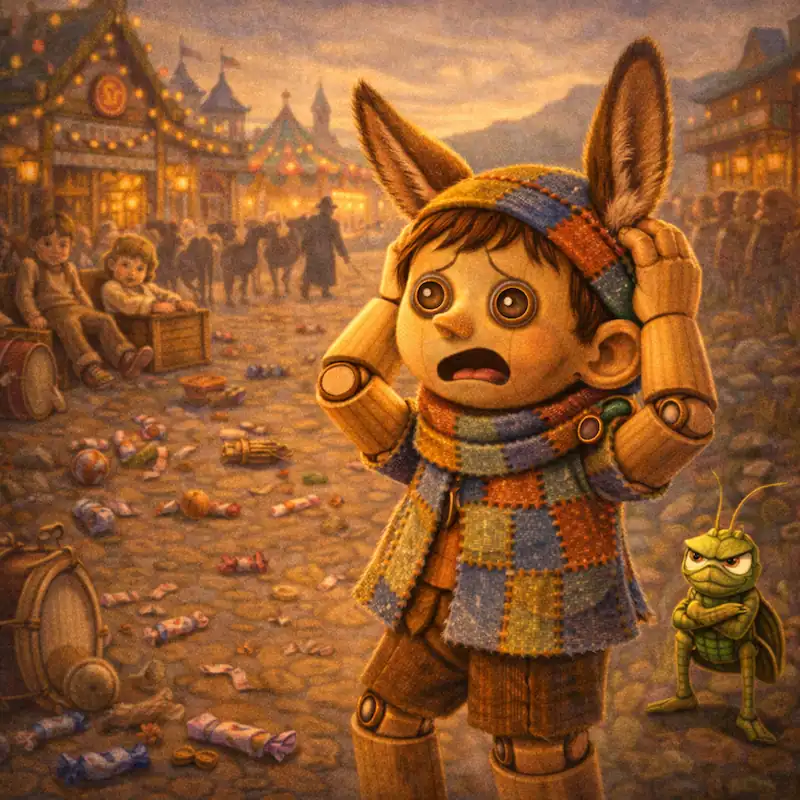
Pinocchio tried to shout, but the sound came out as a bray. His hands tingled and his feet thumped. In moments, hooves replaced them.
The Cricket hopped in panic. “We must leave now. This place turns boys into donkeys and sells them at the market.”
Pinocchio ran, faster on four legs than he ever had on two. They escaped to the sea and reached a dock where sailors mended nets.
Pinocchio begged, “Do you know Geppetto the clockmaker?”
A sailor nodded slowly. “The old man went searching for his son. He sailed out and never returned. A great whale has been seen in these waters.”
Pinocchio’s heart tightened. He dove into the sea, the Cricket clinging to his collar.
The Whale’s Belly
Pinocchio paddled through waves, calling, “Father!” Salt water splashed his face. The horizon stayed empty.
Then the sea rose like a wall. A whale burst from the water and opened its mouth wide. In one gulp, Pinocchio and the Cricket were swallowed into darkness.
Inside, the air was damp and heavy. A dim glow revealed scraps of wood and rope like the remains of lost boats.
A tired voice called, “Who is there?”
Pinocchio froze. “Father?”
Geppetto stepped forward, thin and pale but alive. For a moment he could only stare.
“Pinocchio,” he whispered. “You found me.”
They hugged, both shaking. The Cricket chirped with relief, then chirped again with urgency.
“We must escape,” Pinocchio said. “I will not lose you again.”
Smoke and a Real Boy
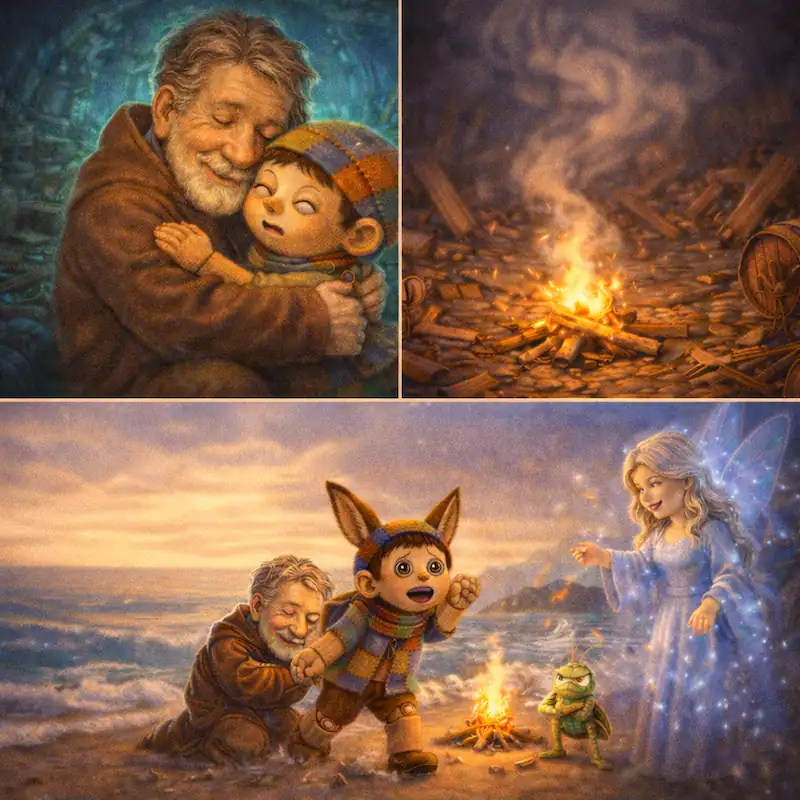
Pinocchio looked around the whale’s belly and formed a plan. “We will make smoke,” he said. “If the whale coughs hard enough, it might spit us out.”
Geppetto nodded and helped gather driftwood and scraps. Pinocchio struck sparks and soon a fire crackled. He fanned it until thick smoke rolled upward.
The whale shuddered. A deep cough shook the ground.
“Hold on!” Pinocchio cried as the cough turned into a roaring sneeze.
They shot through the whale’s mouth with a rush of water and air. Waves tossed them, then pushed them onto a sandy shore.
Geppetto crawled up the beach and called for Pinocchio.
Pinocchio lay still near a tide puddle. His donkey ears drooped. His chest did not move.
Geppetto fell to his knees. “No, my son.”
Blue light spilled across the sand. The Blue Fairy appeared and her face was gentle.
“Pinocchio,” she said, “you chose love over comfort. You faced danger to save your father. That is brave and that is true.”
She touched his forehead with her wand.
Warmth rushed through him. The donkey ears shrank. The hooves became feet. The wood softened into skin.
Pinocchio coughed, opened his eyes and looked down at his hands. “Father,” he whispered, “I can feel.”
Geppetto laughed through tears and hugged him tight. Together they walked home, step by step, with the Cricket chirping like a tiny bell of good sense.
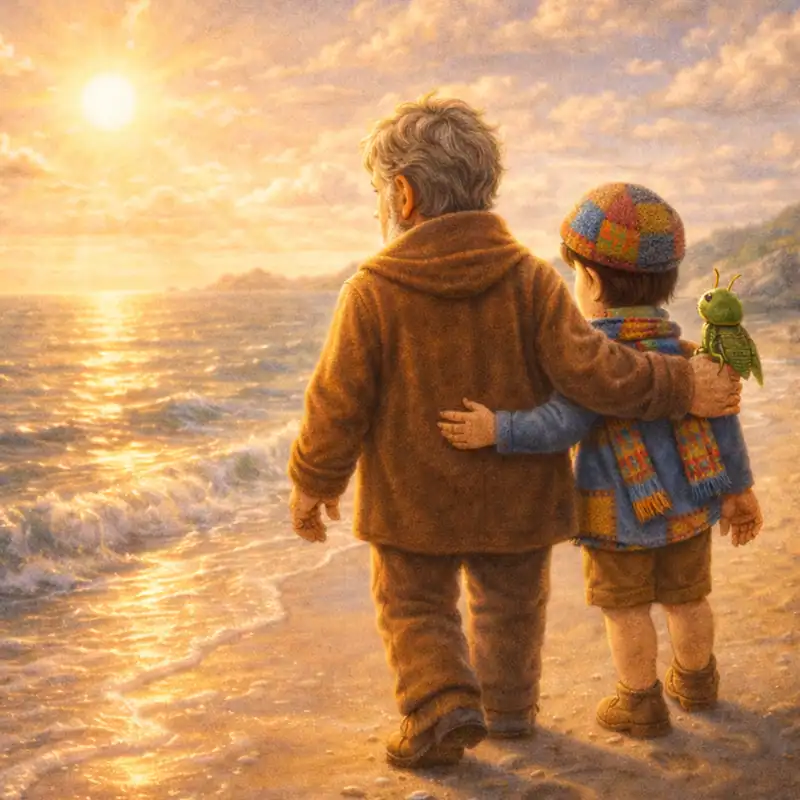
Back in the workshop, the clocks still ticked, but the sound now felt warm and hopeful in a home that was finally full.


