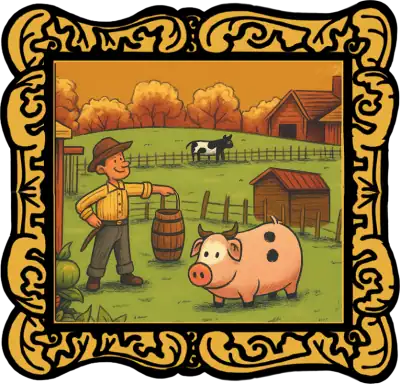
- Song Type: Nursery Rhyme / Cumulative Song.
- Educational Focus: Animal identification, phonetic sounds, and memory building.
- Origin: 1917 (as "Old MacDougal Had a Farm").
- Key Themes: Farm life, repetition, and rhythm.
Old MacDonald Had a Farm Lyrics

Old MacDonald had a farm,
E-I-E-I-O.
And on his farm
he had a cow,
E-I-E-I-O.
With a moo-moo here
and a moo-moo there.
Here a moo,
there a moo,
everywhere moo-moo.
Old MacDonald had a farm,
E-I-E-I-O.

Old MacDonald had a farm,
E-I-E-I-O.
And on his farm
he had a pig,
E-I-E-I-O,
With an oink-oink here
and an oink-oink there.
Here an oink,
there an oink,
everywhere oink-oink.
Old MacDonald had a farm,
E-I-E-I-O.

Old MacDonald had a farm,
E-I-E-I-O.
And on his farm he had a duck,
E-I-E-I-O.
With a quack-quack here
and a quack-quack there.
Here a quack,
there a quack,
everywhere quack-quack.
Old MacDonald had a farm,
E-I-E-I-O.

Old MacDonald had a farm,
E-I-E-I-O.
And on his farm
he had a horse,
E-I-E-I-O.
With a neigh-neigh here
and a neigh-neigh there.
Here a neigh,
there a neigh,
everywhere neigh-neigh.
Old MacDonald had a farm,
E-I-E-I-O.
Old MacDonald had a farm,
E-I-E-I-O!
And on his farm
he had some sheep.
E-I-E-I-O!
With a baa-baa here,
and a baa-baa there
Here a baa,
there a baa,
everywhere a baa-baa.
Old MacDonald had a farm,
E-I-E-I-O.
Old MacDonald had a farm,
E-I-E-I-O!
And on his farm
he had some chickens,
E-I-E-I-O!
With a cluck-cluck here,
and a cluck-cluck there.
Here a cluck,
there a cluck,
everywhere a cluck-cluck.
Old MacDonald had a farm,
E-I-E-I-O.

Old MacDonald had a farm,
E-I-E-I-O.
And on his farm
he had a cow,
E-I-E-I-O.
With a moo-moo here
and a moo-moo there.
Here a moo,
there a moo,
everywhere moo-moo.
Old MacDonald had a farm,
E-I-E-I-O.

Old MacDonald had a farm,
E-I-E-I-O.
And on his farm
he had a pig,
E-I-E-I-O,
With an oink-oink here
and an oink-oink there.
Here an oink,
there an oink,
everywhere oink-oink.
Old MacDonald had a farm,
E-I-E-I-O.

Old MacDonald had a farm,
E-I-E-I-O.
And on his farm he had a duck,
E-I-E-I-O.
With a quack-quack here
and a quack-quack there.
Here a quack,
there a quack,
everywhere quack-quack.
Old MacDonald had a farm,
E-I-E-I-O.

Old MacDonald had a farm,
E-I-E-I-O.
And on his farm
he had a horse,
E-I-E-I-O.
With a neigh-neigh here
and a neigh-neigh there.
Here a neigh,
there a neigh,
everywhere neigh-neigh.
Old MacDonald had a farm,
E-I-E-I-O.
Old MacDonald had a farm,
E-I-E-I-O!
And on his farm
he had some sheep.
E-I-E-I-O!
With a baa-baa here,
and a baa-baa there
Here a baa,
there a baa,
everywhere a baa-baa.
Old MacDonald had a farm,
E-I-E-I-O.
Old MacDonald had a farm,
E-I-E-I-O!
And on his farm
he had some chickens,
E-I-E-I-O!
With a cluck-cluck here,
and a cluck-cluck there.
Here a cluck,
there a cluck,
everywhere a cluck-cluck.
Old MacDonald had a farm,
E-I-E-I-O.

Old MacDonald had a farm,
E-I-E-I-O.
And on his farm
he had a cow,
E-I-E-I-O.
With a moo-moo here
and a moo-moo there.
Here a moo,
there a moo,
everywhere moo-moo.
Old MacDonald had a farm,
E-I-E-I-O.

Old MacDonald had a farm,
E-I-E-I-O.
And on his farm
he had a pig,
E-I-E-I-O,
With an oink-oink here
and an oink-oink there.
Here an oink,
there an oink,
everywhere oink-oink.
Old MacDonald had a farm,
E-I-E-I-O.

Old MacDonald had a farm,
E-I-E-I-O.
And on his farm he had a duck,
E-I-E-I-O.
With a quack-quack here
and a quack-quack there.
Here a quack,
there a quack,
everywhere quack-quack.
Old MacDonald had a farm,
E-I-E-I-O.

Old MacDonald had a farm,
E-I-E-I-O.
And on his farm
he had a horse,
E-I-E-I-O.
With a neigh-neigh here
and a neigh-neigh there.
Here a neigh,
there a neigh,
everywhere neigh-neigh.
Old MacDonald had a farm,
E-I-E-I-O.
Old MacDonald had a farm,
E-I-E-I-O!
And on his farm
he had some sheep.
E-I-E-I-O!
With a baa-baa here,
and a baa-baa there
Here a baa,
there a baa,
everywhere a baa-baa.
Old MacDonald had a farm,
E-I-E-I-O.
Old MacDonald had a farm,
E-I-E-I-O!
And on his farm
he had some chickens,
E-I-E-I-O!
With a cluck-cluck here,
and a cluck-cluck there.
Here a cluck,
there a cluck,
everywhere a cluck-cluck.
Old MacDonald had a farm,
E-I-E-I-O.
Moo-ve to More Farmyard Favourites
Read the Lyrics: Sing along to Mary Had a Little Lamb nursery rhyme.
Animal Rhymes: Explore the classic Baa Baa Black Sheep lyrics.
🍎 Parent Resource: Check out our Healthy Lunchbox Ideas for your little farmers to keep them fueled for a day of play.
Free Book! Get Dylan the Dancing Bear
Click the button below to grab your free copy.
Check your email (and your junk folder) once on BookFunnel.
We respect your privacy. Only free stories, updates and activities.
The History and Benefits of Old MacDonald Had a Farm
While most families recognize the version popularized in the 1920s, the roots of this rhyme go back to 1917 when it was originally titled “Old MacDougal Had a Farm.” This song is what educators call a cumulative song because each verse builds upon the last. You can even see the original 1917 songbook in the National Library of Scotland archives.
Why is it so popular for learning?
-
Speech Development: The E-I-E-I-O vowel sequence and animal sounds known as onomatopoeia help toddlers practice essential mouth movements.
-
Memory Skills: Children must remember the specific order of animals added to the farm as the song progresses.
-
Pattern Recognition: The repetitive structure makes it one of the best nursery rhymes for preschoolers to learn predictive language.
Old MacDonald Had a Farm: Frequently Asked Questions
-
Who is the author of Old MacDonald Had a Farm?
The song is a traditional folk rhyme with no single known author. However, the earliest modern version was recorded in 1917 by Frederick Thomas Nettleingham in a collection of songs titled Tommy's Tunes.
-
What is the meaning of E-I-E-I-O?
There is no literal meaning to "E-I-E-I-O." It is a rhythmic refrain used in cumulative songs to give children a chance to practice vowel sounds and keep the beat. It makes the lyrics easier for preschoolers to memorize.
-
Why is Old MacDonald good for child development?
Reading and reciting these lyrics helps children with onomatopoeia (animal sounds), memory recall, and pattern recognition. It is a powerful tool for early language acquisition and speech therapy.
-
Is it a folktale or a nursery rhyme?
It is considered a nursery rhyme and a "cumulative song." Because it has been passed down through generations and evolved over time, it is also a significant piece of musical folklore.