The Three Little Pigs Story
Once upon a time, there were three little pigs who lived with their mother in a cozy little cottage. The pigs were growing up quickly, and one day, their mother said, “My dear little pigs, it’s time for you to set out into the world and build homes of your own.”
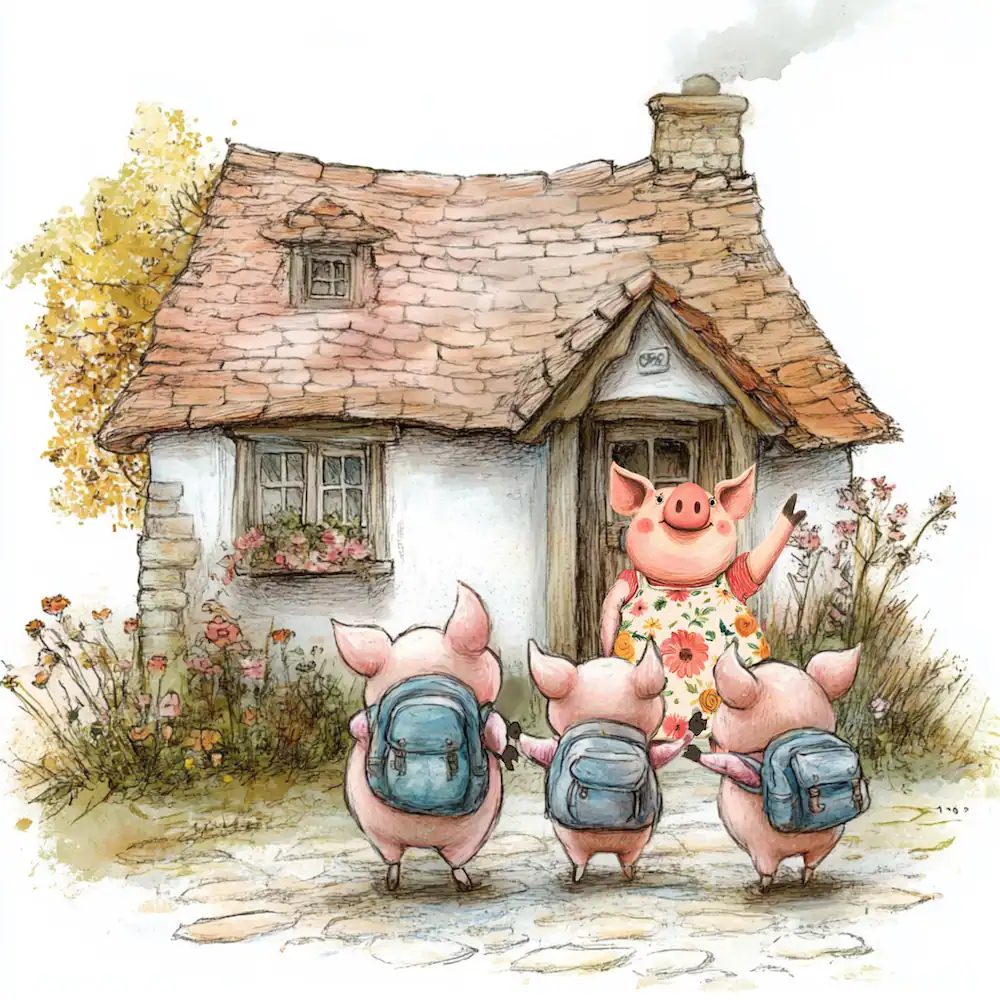
The three little pigs were excited but also a little nervous.
“Will we be able to build houses by ourselves?” asked the youngest pig, who was small and energetic.
“Of course, you will,” their mother said with a smile. “But remember to build strong houses, for the world is full of challenges and you must be ready to face them.” The three little pigs nodded.
The Three Little Pigs Build Their Houses
The next day, they each set off on their own to build their new homes. Each pig had different ideas about how to build the best house.
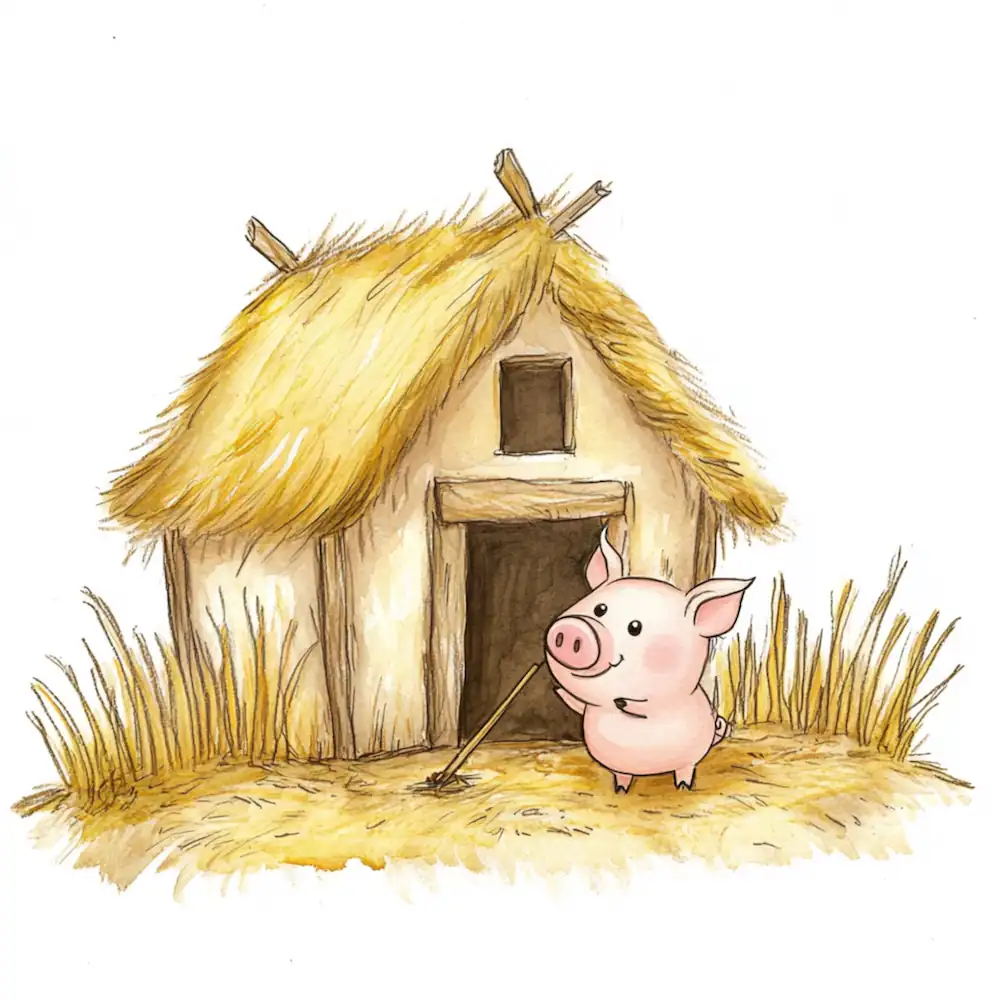
The Youngest Pig’s Straw House
The youngest pig, who was eager to finish quickly, decided to build his house out of straw. “This will be the easiest and fastest way to build a house,” he thought. “Then I’ll have plenty of time to play!”
The Second Pig’s Stick House
The second pig, who was a bit more thoughtful, decided to build his house out of sticks. “It won’t take too long, but it’ll be stronger than straw,” he said to himself. “And I’ll still have time to relax.”
The Eldest Pig’s Strong Brick House
The third pig, the eldest and wisest of the three, decided to build his house out of bricks. “It will take more time and effort, but my house will be strong and sturdy,” he thought. “I want to be safe.”
The three little pigs worked hard on their houses. The youngest pig quickly finished his straw house and was soon playing in the fields, enjoying the sunshine.
The second pig took a little longer, but he was pleased with his house of sticks and was soon relaxing in his armchair.

The eldest pig, meanwhile, spent long hours carefully laying bricks for his house, determined to make it as strong as possible.

The Big Bad Wolf Arrives
But not far from where the pigs had built their homes, a big, bad wolf was lurking. He was hungry, and he had his eye on the three little pigs.

One morning, the wolf came upon the straw house. He sniffed the air and licked his lips.
“A little pig lives here,” he growled to himself. “And I’m going to have him for dinner!”
The youngest pig, who was inside his straw house, saw the shadow of the wolf through his window. His heart raced with fear.
“Little pig, little pig, let me in!” the wolf called out in a sing-song voice.
The youngest pig trembled but replied, “No, no, no, not by the hair on my chinny chin chin!”
“I’ll Huff and I’ll Puff”: The Straw House Falls
“Then I’ll huff and I’ll puff, and I’ll blow your house down!” the wolf roared.
Before the little pig could even think, the wolf took a deep breath and he huffed and he puffed, and with a great gust of wind, he blew the straw house down.

The little pig squealed in fright and ran as fast as he could to his brother’s stick house.
The second little pig had just woken up when he saw his younger brother running toward him, out of breath and looking terrified.
“What’s wrong?” the second pig asked.
“The wolf!” the youngest pig gasped. “He blew my house down, and now he’s coming this way!”
The second pig let his brother inside and quickly bolted the door. “Don’t worry,” he said. “My house is stronger than yours. The wolf won’t get us here.”
But no sooner had he spoken than the wolf appeared at the door, grinning wickedly.
“Little pigs, little pigs, let me in!” the wolf demanded, his sharp teeth gleaming.
“No, no, no, not by the hair on our chinny chin chins!” the two pigs replied together.
The Big Bad Wolf Blows Down the Stick House
“Then I’ll huff, and I’ll puff, and I’ll blow your house down!” the wolf growled.
The wolf took an even deeper breath this time, and then he huffed and he puffed, and he blew the stick house down, sending sticks flying in every direction.

The two little pigs squealed in terror and ran as fast as their legs could carry them to their eldest brother’s house, made of bricks.
When the eldest pig saw his two brothers running toward him, their faces pale with fear, he immediately knew something was wrong.
“The wolf!” the youngest pig cried as they rushed inside. “He blew down my straw house!”
“And then he blew down my stick house!” the second pig added, slamming the door behind them.
The eldest pig nodded calmly. “Don’t worry, brothers. My house is made of bricks. The wolf won’t blow it down.”
The three pigs huddled together inside the sturdy brick house, listening carefully. Soon, they heard the wolf approaching.

“Little pigs, little pigs, let me in!” the wolf called out, sounding angrier than before.
“No, no, no, not by the hair on our chinny chin chins!” the three pigs shouted back.
“Then I’ll huff, and I’ll puff, and I’ll blow your house down!” the wolf bellowed.
The Brick House Stays Standing
The wolf took the deepest breath he could and he huffed and he puffed with all his might. But no matter how hard he blew, the brick house stood strong. The wolf’s breath didn’t move the sturdy bricks.
Frustrated, the wolf tried again, blowing even harder. Huff, puff, huff, puff! But the brick house didn’t budge.

Inside, the three pigs began to relax. “See?” said the eldest pig. “I told you this house is strong. The wolf can’t blow it down.”
Outside, the wolf was furious. He was tired from all the huffing and puffing, but he wasn’t ready to give up. “If I can’t blow this house down,” he muttered to himself, “then I’ll have to find another way inside.”
The Big Bad Wolf’s Chimney Plan
The wolf looked up at the chimney on the roof and grinned. “I’ll sneak in through the chimney,” he decided. “Those little pigs won’t see me coming.”
Inside the house, the pigs heard the wolf climbing onto the roof. “What’s he doing now?” the youngest pig whispered nervously.

“He’s going to try to come down the chimney!” the second pig exclaimed.
The eldest pig, who had been thinking quickly, smiled. “Don’t worry,” he said. “We’ll be ready for him.”
The eldest pig hurried to the fireplace and started a roaring fire. Then, he placed a large pot of water over the flames. “We’ll give him a little surprise when he comes down,” he said, winking at his brothers.
The Wolf’s Final Attempt and the Boiling Water
Sure enough, the wolf climbed down the chimney, eager to catch the pigs. But just as he reached the bottom, he tumbled straight into the pot of boiling water with a loud splash!
The wolf let out a yelp of pain and scrambled out of the pot, back up the chimney and into the woods.

The three little pigs watched as the wolf disappeared into the forest, his tail between his legs. They breathed a collective sigh of relief, knowing that they were finally safe.
“See?” said the eldest pig, turning to his brothers with a proud smile. “I told you my strong brick house would protect us.”
Safe at Last: Why the Brick House Won
The youngest pig nodded, feeling a little embarrassed. “I thought building with straw would be fast and easy,” he admitted, “but it wasn’t safe at all.”
The second pig nodded as well. “And I thought sticks would be strong enough. But your brick house was the only one the wolf couldn’t blow down.”
The eldest pig smiled kindly at his brothers. “It’s okay,” he said. “We all learned something important today. It’s worth taking the time to do things right, even if it takes more effort.”
From that day on, the three little pigs lived happily in the sturdy brick house, safe from the big bad wolf and any other dangers that might come their way. They enjoyed their peaceful lives in the meadow, and they never forgot the lesson of the strong brick house.
And so, the three little pigs lived happily ever after, knowing that hard work and careful planning were always the best way to stay safe. As for the wolf, he was never seen again.

For Parents and Teachers: Optional Printable Resources
If you are using The Three Little Pigs after story time, you may want extra printable reading, sequencing, vocabulary or writing resources for adult-led use.
This quiet box sits after the parent/teacher support content, not inside the story. Children can read and listen first. Adults can decide later whether an outside resource is useful.
Explore Super Teacher WorksheetsAffiliate disclosure: this Super Teacher Worksheets link may earn Kooky Kids World a commission if an adult chooses to subscribe or purchase through it, at no extra cost to them. Please review any resource independently before using it with children.
 SuperTeacher “worksheets have you covered” creative. Impact Ad ID: 3070018.