
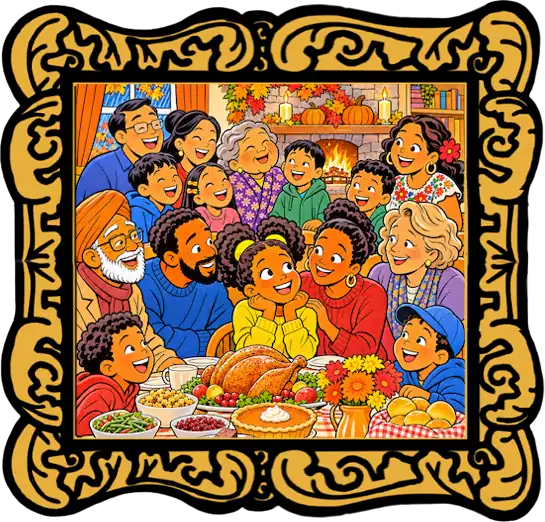
The Thanksgiving Table
The Table Ellie Could Control
Three pumpkin pies cooled on the kitchen counter while the turkey roasted. Outside, wet autumn leaves skittered across the yard and pasted themselves to the windows. Inside, everyone was getting ready for Thanksgiving dinner.
Grandma had asked Ellie to decorate the dining table and make 12 place cards. Ellie wrote each name on a card and glued on a paper leaf.
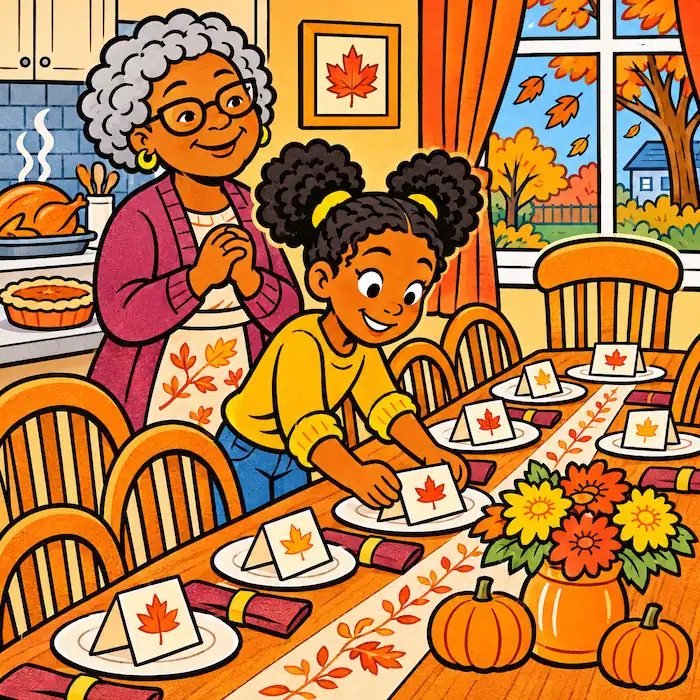
“The table looks lovely,” Grandma said. “Now we need one more chair at the end of the table.”
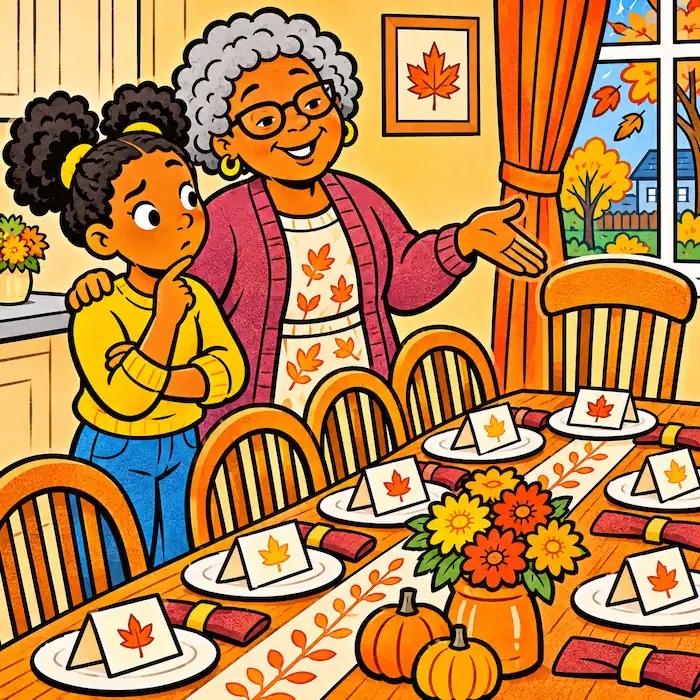
Ellie looked at the table. “But that makes thirteen chairs.”
“It does.” Grandma smiled. “I always set an extra chair for someone who needs kindness.”
“But everyone already has a chair.”
“You never know when someone might need a place at your table.”
Ellie put the thirteenth chair in place because Grandma had asked, but it seemed unnecessary. Ellie had planned everything. That was why she had made twelve cards, not eleven or thirteen.
Through the doorway, Ellie could see a smaller table in the family room. It wasn’t part of her dining room plan. A small bench stood beneath the coat hooks in the hallway.
The Guest List Shrinks
By late morning, rain drummed harder and wind bent the bare branches. Relatives called one by one. Aunt May said the highway was flooded. Uncle Ron and the cousins would stay home until the weather settled. Mom said they were being sensible.
“It’s disappointing,” Dad said after the last call, “but nobody should drive in this storm. It’s dangerous.”
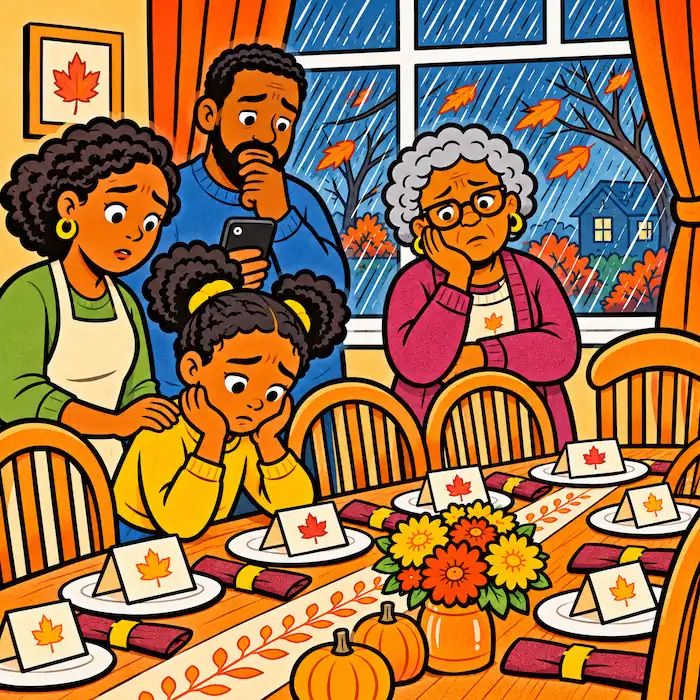
Ellie knew he was right, but her heart sank as she looked at her carefully arranged place cards. Only Ellie, Mom, Dad and Grandma were going to be sitting at the table tonight. There was a roasting turkey, three cooling pumpkin pies and enough potatoes to feed a marching band.
Twelve name cards waited in a neat line. The extra chair looked even more extra than before.
Grandma tucked foil over a dish. “We will still have a good dinner together.”
“We will have a very, very large dinner tonight,” Ellie said.
At last, the rain softened. Dad checked the street and his phone for the weather update.
“The worst of the storm has passed,” he said. “But some roads are still flooded, so it’s not safe to travel yet.”
Ellie watched water drip from the maple branches. On the sidewalk across the street, a familiar gray coat moved slowly toward a house.
A Grocery Bag in the Rain
Mr. Patel came home with two grocery bags. The bags sagged at his sides, and no one walked beside him. Ellie remembered him saying that his daughter always made their pumpkin pie in a yellow dish.
Ellie remembered the extra chair. “Dad, can we ask Mr. Patel to dinner?”
Dad followed her gaze. “We can ask. I’ll come with you.”
Ellie and Dad pulled on their raincoats and boots, then walked down the street to Mr. Patel’s home.
“Happy Thanksgiving,” Ellie said. “Would you like to join us for dinner?”
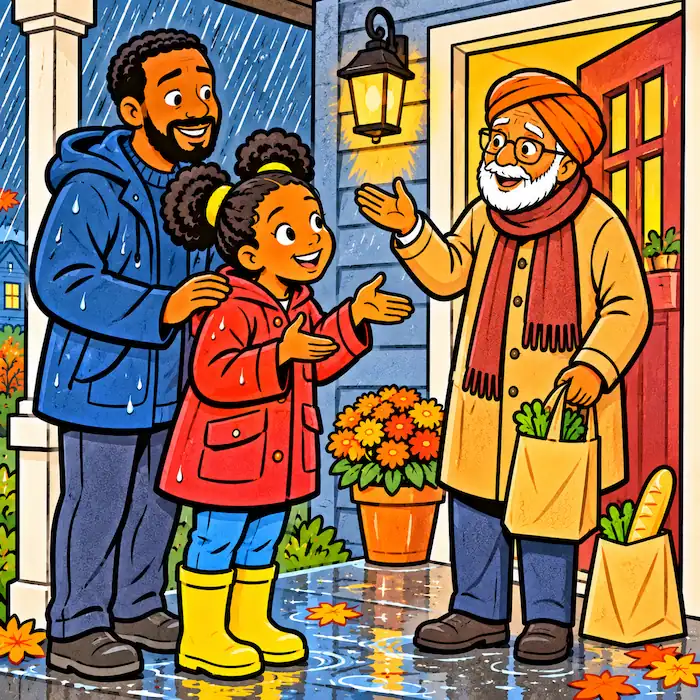
Mr. Patel’s eyebrows lifted. “That is a very kind invitation.”
“Is your daughter coming?” Ellie asked, then worried that the question sounded too nosy.
He did not seem offended. “Not today. Her train was canceled, so she decided to stay where she was.”
“You could have turkey and pie with us,” Ellie said. “We have plenty.”
Mr. Patel looked past her at Dad, who gave a small nod. “Then I would be glad to come. May I bring a loaf of bread?”
“Yes, please,” Ellie said. Suddenly, Grandma’s extra chair seemed like a wonderful idea.
As they turned home, Ellie spotted the family who had moved into the blue house last month. She had another thought. Dad heard it before she could finish saying, “What if…”
“We can invite a few more people,” he said.
More Doors, More Yeses
At the blue house, the Wu family answered with surprised smiles. There were seven of them: two parents, a grandparent and four children. Their own Thanksgiving plans had fallen through during the rush of moving into their new home. They offered to bring a folding chair and a plate of brownies.
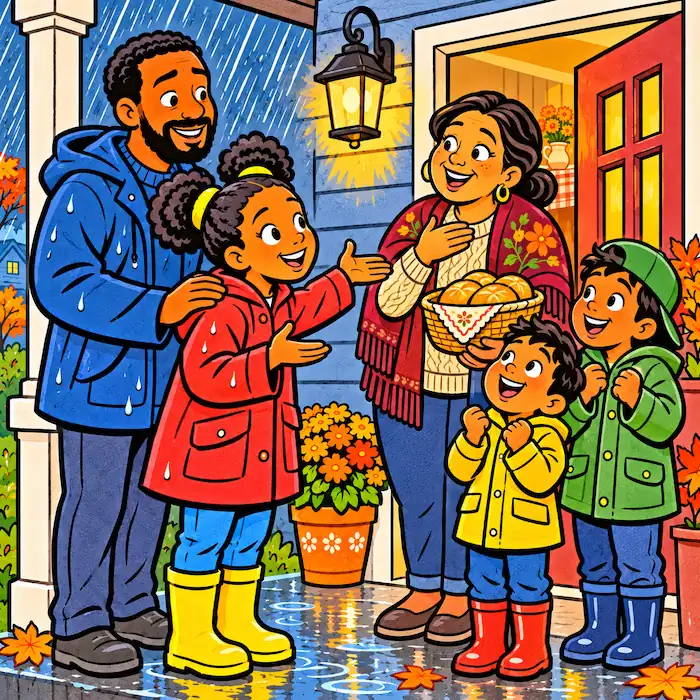
At the next corner, they found the two brothers who were staying with their aunt. Their parents had been called in for an emergency shift at the local hospital. The boys were staying with their aunt, who hadn’t had time to prepare a Thanksgiving dinner. She accepted the offer at once and offered to bring paper plates, paper napkins, a basket of rolls and another folding chair.
The younger brother asked whether there would be dessert.
“There are three pumpkin pies,” Ellie said.
“Then I accept too,” he said, very solemnly.
Dad laughed, and even Ellie had to laugh.
Their last stop was Mrs. Rivera’s house. Ellie invited her to Thanksgiving dinner, but Mrs. Rivera pressed a hand to her sweater.
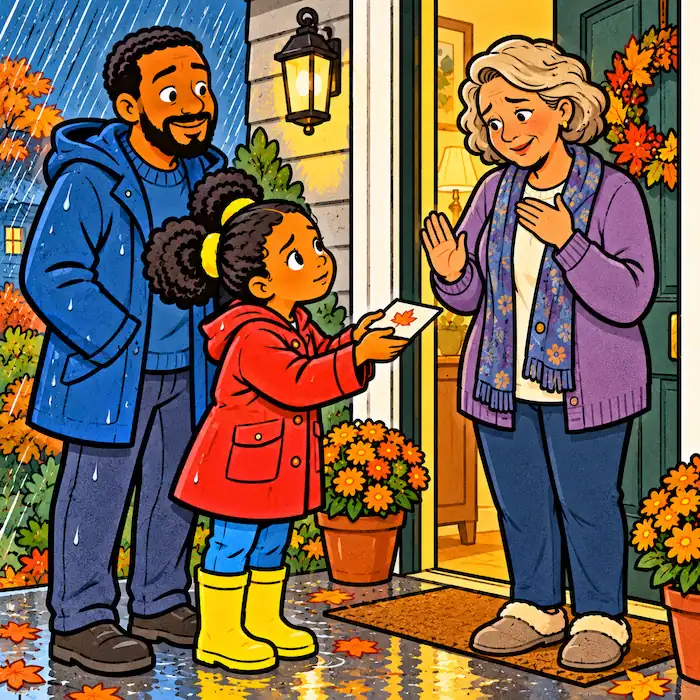
“That is sweet of you, but perhaps there will be too many guests already,” she said. “I would not want to crowd your family.”
“We have a lot of food,” Ellie said.
“I believe you,” Mrs. Rivera replied. “Still, I think I’ll stay home today. Thank you for inviting me.”
Ellie was disappointed, though Mrs. Rivera had been kind about turning down her invitation. As they headed home, Ellie counted their new guests. Eleven people had accepted. Including Ellie, Mom, Dad and Grandma, that made fifteen people altogether.
Back home, Ellie made new place cards. She knew the table would be a little crowded, but she was sure she could make it work.
The Plan Did Not Fit
Guests arrived just before dinner. Mr. Patel carried his bread. The seven members of the Wu family brought brownies and a folding chair. The aunt and the two brothers brought rolls, paper napkins, paper plates and another folding chair.
Fifteen people gathered around the table. Although there were enough chairs, there wasn’t enough room for everyone to sit and eat together. The extra chairs blocked the doorway and the path to the kitchen.
The folding chair gave a small squeak when Dad tested it. Everyone looked at it.
“It has opinions,” Dad said.
There were more guests than Ellie had first imagined this morning, and the room felt crowded.
Mr. Patel looked around at the squeeze. “I can leave,” he said quietly. “I do not want to take somebody else’s place.”
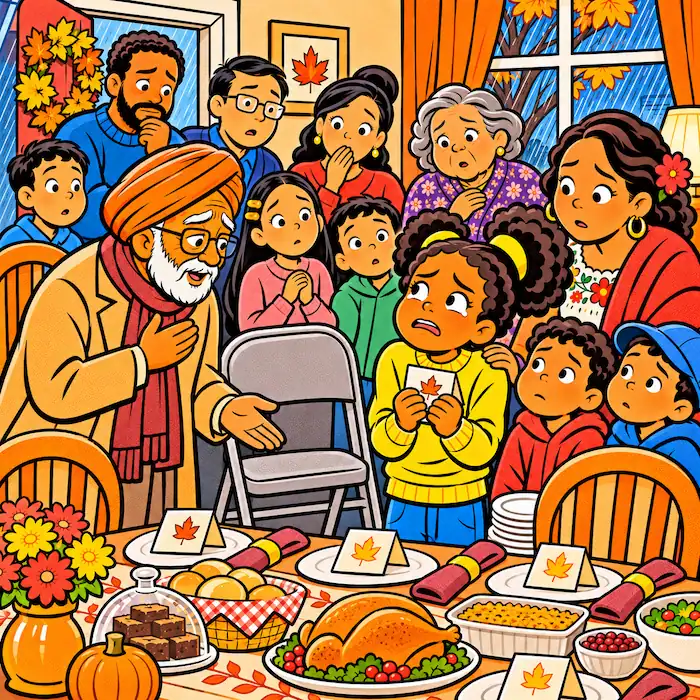
Ellie stared at the card with his name on it. He had come because his daughter could not. He had brought bread. Now he was offering to go because Ellie couldn’t fit everyone in.
The room went still except for the turkey timer ticking in the kitchen.
Nobody Is Leaving
Ellie looked around the dining room, then toward the family room, where the smaller table stood. She glanced at Grandma’s extra chair. If they could make room for one person, surely they could make room for everyone.
“Nobody is leaving,” Ellie said.
She said it louder the second time. “Nobody is leaving. We are changing the plan.”
Mr. Patel paused with his bread tucked under one arm.
Ellie pointed toward the family room. “We can pull out the smaller table and seat six people there. We can turn the dining table toward the window and seat nine people. Then the doorway and the path to the kitchen will be clear.”
Dad studied the space. Mom looked over his shoulder. “That could work,” Mom said.
“It will work,” Ellie said.
Grandma smiled proudly at her granddaughter.
Ellie’s New Table Plan
Dad and Mom turned the dining table toward the window and set nine chairs around it. Dad pulled out the smaller table, and he and the aunt arranged six chairs around it.
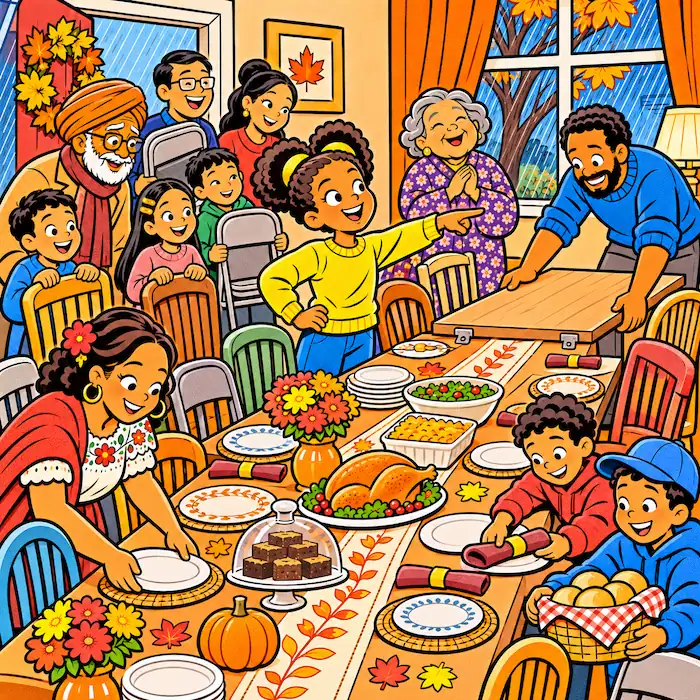
Grandma kept the hot turkey safely in the kitchen, and Dad carried the heavy dishes.
Ellie took charge of the safe things. She asked the brothers to put paper napkins at each place. With their aunt watching, they carried the basket of rolls. The Wu family and the aunt set their folding chairs at the family room table. One squeaked once as if it approved.
Ellie arranged the cards across both tables. Some were crossed out and rewritten. One card said “Grandma,” then “Mr. Patel,” then “Grandma” again. She decided it looked busy rather than bad.
The tables did not match. Neither did the chairs, but it didn’t matter. The two rooms held everyone, with a clear path between them.
“Where should I sit?” Mr. Patel asked.
Ellie put his card beside the bread. “Here. You brought the important part.”
“The bread?” he asked.
“The being here part,” Ellie said.
Mr. Patel smiled and sat down.
A Bigger Table, Then One More
Dinner stretched from the dining room into the family room. People passed the carved turkey, potatoes and rolls, while three pumpkin pies waited on the kitchen counter. The squeaky folding chair made a tiny sound whenever the younger brother reached for more gravy, which made him freeze each time as if the chair had spoken.
Stories bounced between the rooms. The Wu family described getting lost on their first trip to the library. Dad told everyone about Ellie’s card mix-up, and Ellie told him he was not allowed to make it sound worse than it was.
Just as Grandma began cutting the pumpkin pies, the front doorbell rang. Mrs. Rivera stood on the porch holding a covered basket.
“I reconsidered,” she said. “These are homemade corn muffins, and I hoped it was not too late.”
Ellie opened the door wide. “Don’t worry. We can always make room for one more.”
She remembered the small hall bench beneath the coat hooks. “Dad, could you bring the bench to the open end of the family room table?”
Dad carried it in and set it where it left the path clear. Ellie placed a paper napkin, a clean plate and a blank place card on the open end of the table. Mrs. Rivera sat on the bench, and the corn muffins joined the pies.
After pie, Grandma suggested a gratitude circle. Mr. Patel said he was grateful for laughter around a table. One brother said he was grateful that his parents were helping patients at the hospital, even though he missed them. Grandma looked at Ellie.
“I am grateful for Ellie’s kindness,” she said.
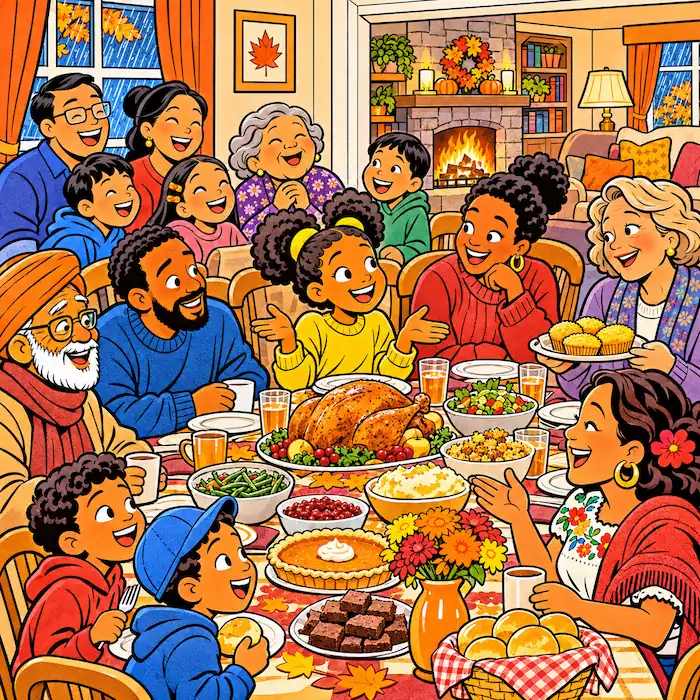
Ellie felt warm all the way to her toes. She looked at the mixed cards, the crowded tables and the chair that squeaked softly.
“I’m thankful everyone came,” Ellie said. “Even if my place cards are a complete mess.”
One year later, while pumpkin pies cooled and leaves skipped across the yard, Ellie helped Grandma count chairs.
“How many extra chairs should we prepare?” Ellie asked.
Grandma reached for another chair. “How many do you think?”
Ellie smiled. “Let’s start with more than we need.”
