Pecos Bill and the Tornado Story for Kids

Pecos Bill and the Tornado story image

Pecos Bill and the Tornado is an American tall tale for children aged 6 to 10. This version has been retold for young readers with clear language, wild cowboy humor and a lively focus on courage, exaggeration and helping others.

Tall tales are meant to stretch the truth in funny, impossible ways. In this story, Pecos Bill is so bold that even a tornado has to learn some manners.

Story Details

  • Independent Reading Age: 7 to 10 years
  • Listen-Along Age: 5 to 9 years
  • Reading Level: Early fluent readers and confident shared reading
  • Reading Time: Around 8 to 10 minutes
  • Author / Source: Traditional American tall tale, retold by Kooky Kids World
  • Story Type: American tall tale / folk hero story
  • Region / Origin: United States, especially the American Southwest and cowboy folklore
  • Main Characters: Pecos Bill, the coyotes, the cowboy and the tornado
  • Moral / Themes: Courage, confidence, tall-tale humor, helping others and using strength for good

Listen Along

0:00 / 0:00
Pecos Bill and the Tornado

Listen along to the Kooky Kids World audio for Pecos Bill and the Tornado

Kooky Kids World Cloud Logo showing where the audio read aloud file is.

About This Retelling

This child-friendly retelling keeps the main shape and spirit of Pecos Bill tall tales while using clear language for young readers. Traditional tall tales can vary between storytellers, books and regions, so this version should be read as an introduction rather than the only version.

Pecos Bill stories are full of impossible exaggeration. He is not meant to be a realistic cowboy. He belongs to a storytelling tradition where people make a hero bigger, braver and wilder every time the story is told.

The Story

Pecos Bill and the Tornado story image

Long ago, when the American West was still wide and wild, there lived a baby named Bill.

At least, he was a baby for about a week. After that, most people agreed he was something else.

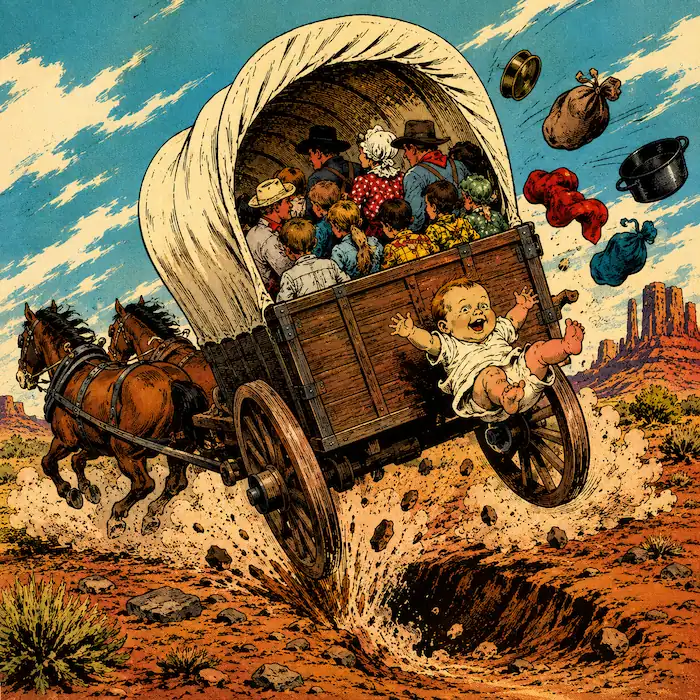
Bill was born in a little wagon rolling across Texas with his mama, his papa and a whole crowd of brothers and sisters. The wagon bumped over stones, rattled through dust and creaked under the hot sun.

One morning, while the family crossed a rough patch of trail, the wagon hit a hole.

BUMP!

The pots jumped. The blankets flew. The children shouted. And baby Bill bounced right out of the wagon.

Nobody noticed at first because the wagon was always noisy. By the time his mama counted heads, the trail behind them was empty except for dust.

“Oh no,” she cried. “Where’s Bill?”

They searched and searched, but the West was big, the sky was bigger and the baby was nowhere to be found.

Now, most babies left alone in the wilderness would cry.

Not Bill.

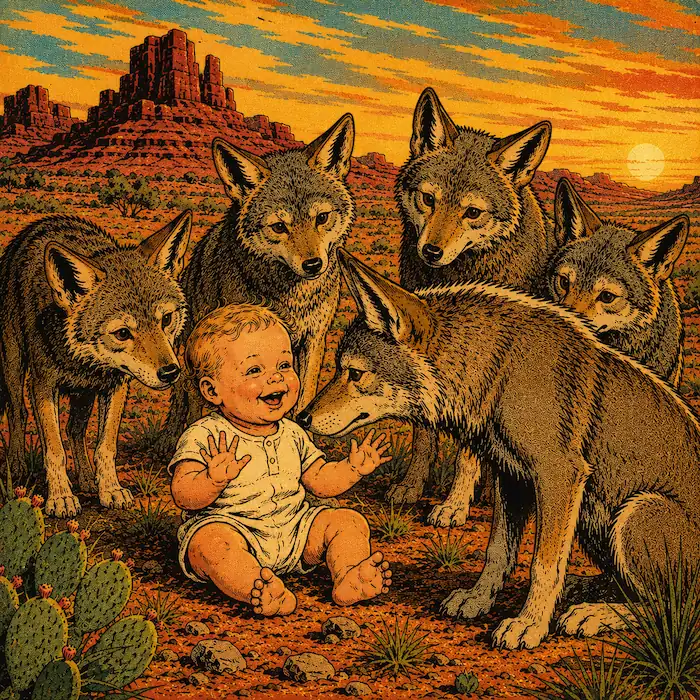
Bill sat up, looked around and gave a cheerful little yell.
Pecos Bill and the Tornado story image

A pack of coyotes heard him. They crept closer, noses twitching.

“Well now,” said the oldest coyote, “what kind of pup is that?”

Bill looked at the coyotes. The coyotes looked at Bill. Then Bill laughed.

It was such a loud, happy laugh that the coyotes jumped backward.

The oldest coyote sniffed him again. “He’s odd,” she said. “But he’s brave.”
Pecos Bill and the Tornado story image

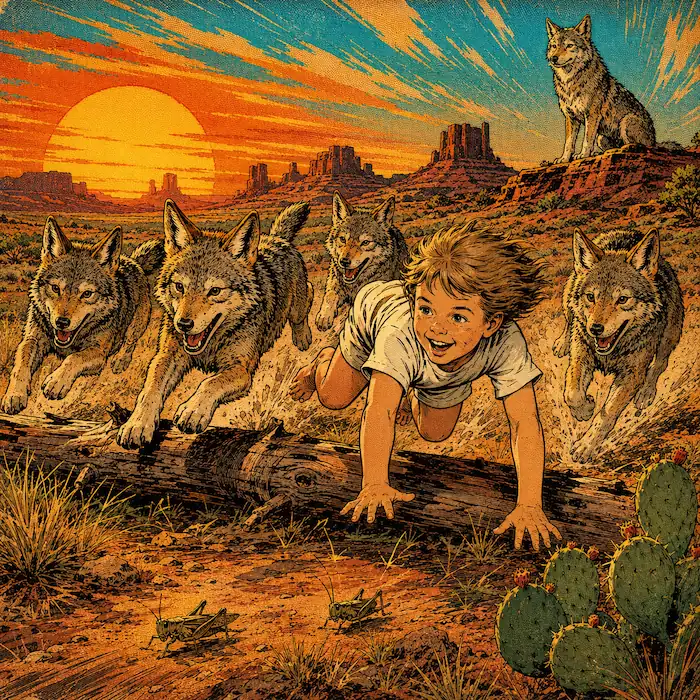
So the coyotes took Bill in. They taught him to run on all fours across the sand. They taught him to howl at the moon. They taught him where to find water, how to listen for rattlesnakes and how to tell a friendly breeze from a dust storm with a bad temper.

Bill grew fast. By the time he was ten, he could outrun a jackrabbit, out-howl three coyotes and leap over a cactus without pricking his toes.

He did not know he was a boy. He thought he was the strangest, tallest coyote in Texas.

One hot afternoon, Bill was chasing grasshoppers with his coyote brothers when he saw something he had never seen before.
Pecos Bill and the Tornado story image

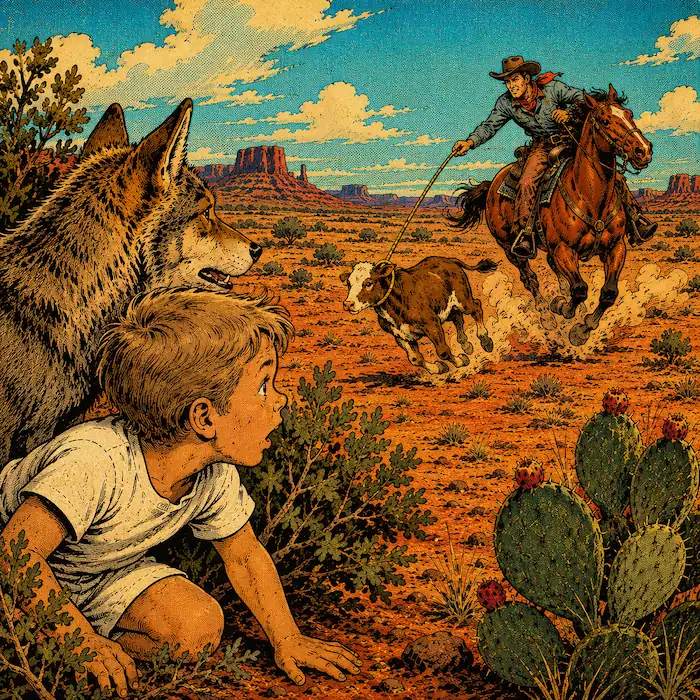
A man on horseback rode across the plain. He wore boots, a hat and a look that said he knew where he was going.

Bill crouched behind a bush.

“What is that creature?” he whispered.

“That,” said the oldest coyote, “is a cowboy.”

Bill watched the cowboy swing a rope through the air. The rope made a loop, sailed forward and dropped neatly around a young calf.

Bill’s eyes went wide. “That tail comes off!”

The oldest coyote shook her head. “That is not a tail. That is a lasso.”

Bill liked the sound of that. Lasso. He liked the look of it too.
Pecos Bill and the Tornado story image

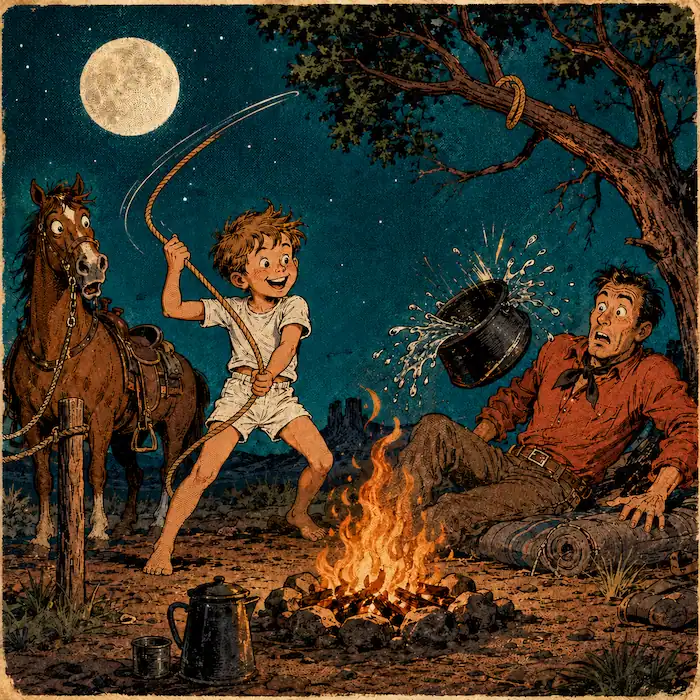
That night, while the coyotes slept, Bill crept toward the cowboy camp. He found a spare rope hanging from a branch, picked it up, swung it around his head and threw it at a bush.

He missed.

He tried again and caught his own foot.

He tried a third time and caught the branch, the cooking pot and the cowboy’s hat all at once.

The cowboy woke with a shout. “Who’s there?”

Bill stood up. The cowboy stared. Bill stared back.

“You look like a boy,” said the cowboy.

“I’m a coyote,” said Bill.

The cowboy rubbed his eyes. “You talk?”

“Course I talk,” said Bill. “Doesn’t everybody?”

The cowboy laughed so hard he nearly fell into the fire.

“What’s your name?” he asked.

“Bill,” said Bill. Then he thought for a moment. “Coyote Bill.”

The cowboy looked him up and down. “No, sir. You’re no coyote. You’re a boy. And judging by the size of your feet, you’ll be a mighty big one.”
Pecos Bill and the Tornado story image

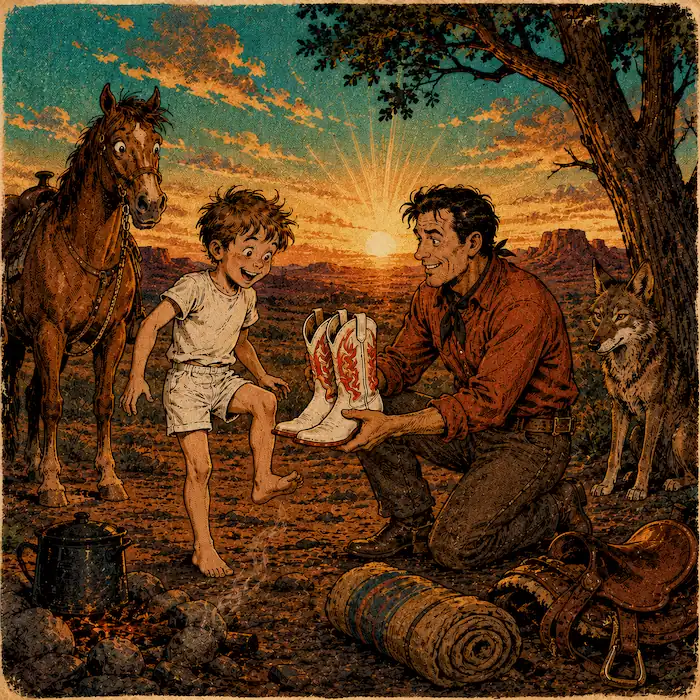
Bill did not believe him until the cowboy handed him a pair of boots.

Coyotes did not wear boots.

Bill put them on anyway. He liked the sound they made.

Clomp. Clomp. Clomp.

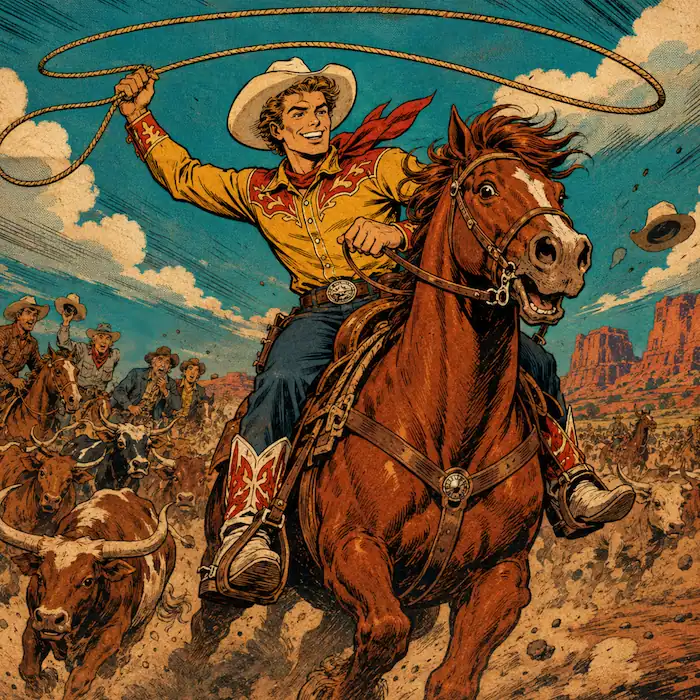
The cowboy taught Bill how to ride a horse, though Bill found most horses too slow. He taught Bill how to use a lasso, though Bill kept roping clouds by mistake. He taught Bill how to sit at a table, though Bill still preferred eating under it.
Pecos Bill and the Tornado story image

Before long, Bill became the best cowboy anyone had ever seen. He could ride a horse backward while tying a knot. He could spot a lost calf from three hills away. He could shout so loudly that beans jumped out of the pot.

Folks started calling him Pecos Bill, because he rode near the Pecos River and because “Coyote Bill Who Might Be a Boy” was too long to say.

Pecos Bill liked cowboy life. He liked the open sky, the hard work and sleeping under the stars with his hat over his face.

But most of all, he liked a challenge.

“If there’s something wild,” Bill said, “I’d like to meet it.”

The other cowboys warned him.

“Don’t say that too loud,” said one.

“The West hears boasting,” said another.

“And it answers,” said a third.

Sure enough, one summer, the West answered.
Pecos Bill and the Tornado story image

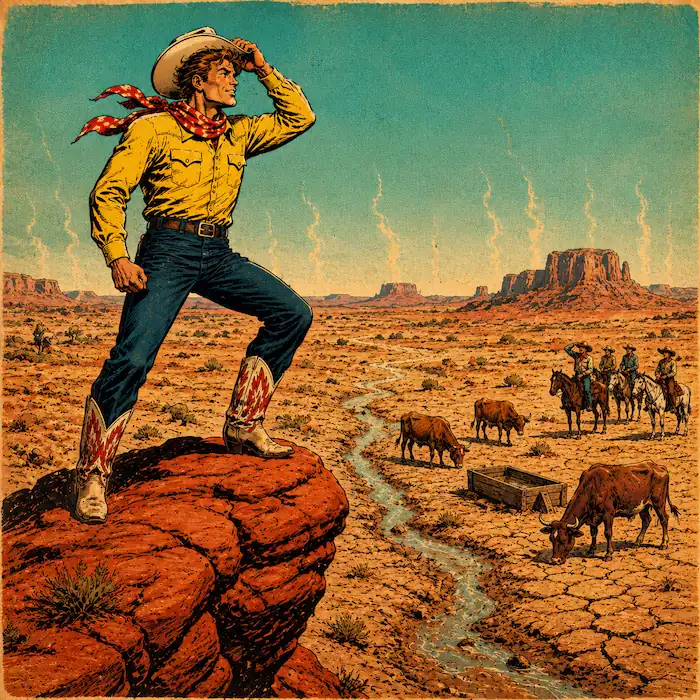
For weeks, no rain fell. The grass turned dry and brittle. The creek shrank to a trickle. The cattle stood with drooping heads, too hot to complain.

Every day the sky stayed blue. Too blue. Not a single cloud crossed it.

One evening, Pecos Bill climbed the tallest rock he could find and looked out across the land.

“We need rain,” he said.

A tiny wind brushed his cheek. Then another. Then another.

Far away, on the edge of the plain, a tower of dust began to rise.

One cowboy pointed. “Storm coming.”

Another squinted. “That’s no ordinary storm.”

The dust twisted higher. It spun faster. It roared like a thousand angry bees in a barrel.

The cowboys grabbed their hats.

“Tornado!” someone shouted.

The cattle scattered. Horses pulled at their ropes. Pots rolled across the camp. The tornado charged toward them, tall and gray and full of trouble.

Pecos Bill grinned.

“Well,” he said, “there’s something wild.”

“Bill, no!” cried the cowboys.

But Bill was already running.
Pecos Bill and the Tornado story image

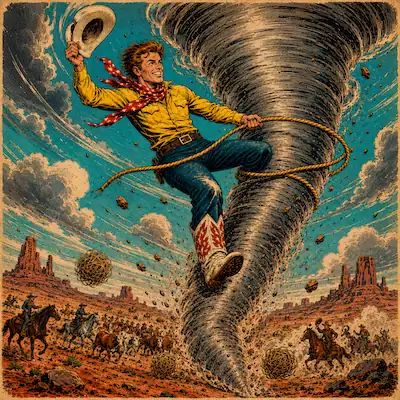
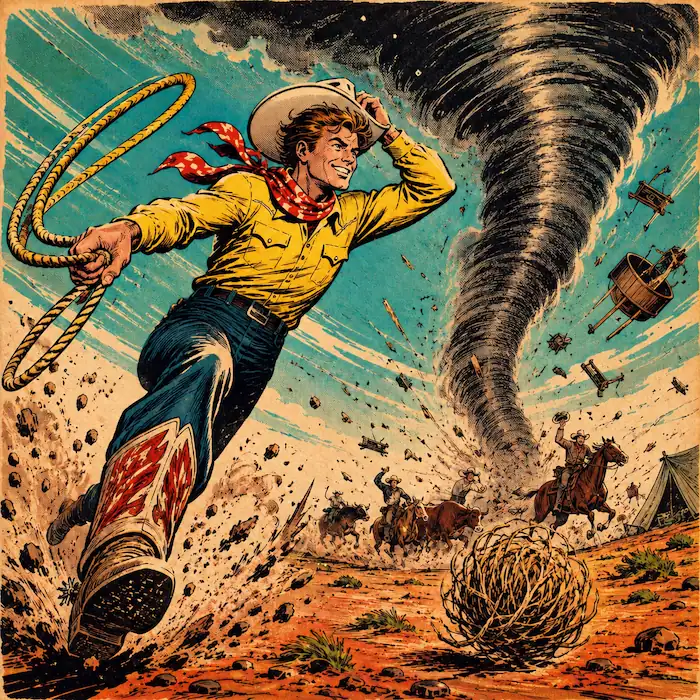
He ran straight toward the tornado with his lasso in one hand and his hat jammed low on his head.

The tornado saw him coming. At least, Bill was sure it did.

It leaned left. Bill leaned left.

It spun right. Bill spun right.

It sucked up dust, stones, tumbleweeds and one very surprised boot.

Bill planted his feet.

“Hold still!” he shouted. “I’m trying to rope you!”

The tornado did not hold still. It rushed at him with a howl.

Bill swung his lasso once. Twice. Three times.

Then he threw it.

The loop sailed through the air and dropped right over the tornado’s narrow middle.

“Got you!” Bill yelled.

The tornado jerked. Bill jerked too.

For one second, he stood firm. For two seconds, his boots dug deep tracks in the dirt. On the third second, the tornado yanked him clean off the ground.

Up went Bill. Round went Bill.

His hat flew one way. His boots flew another. His yell spun around so fast it came out sounding like a song.

“Yeeeee-haaaa-whoooo-aaaa!”

The cowboys watched with their mouths open.
Pecos Bill and the Tornado story image

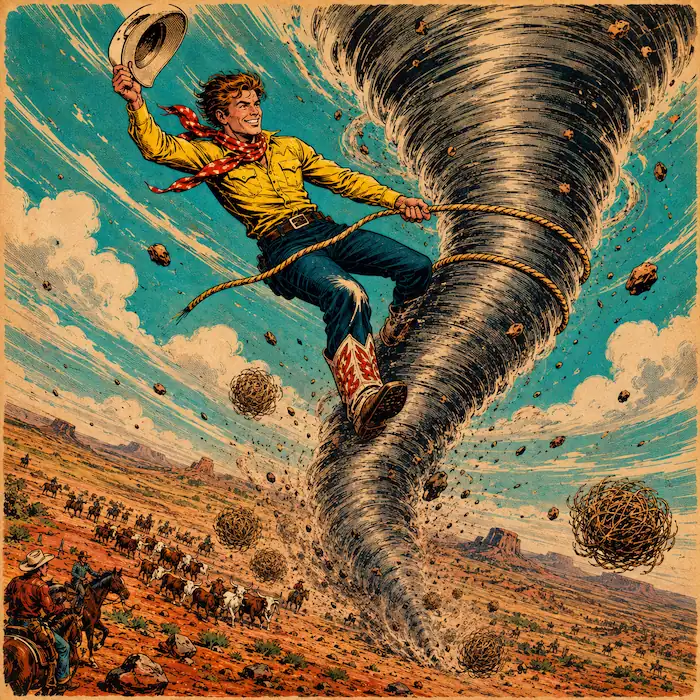
Pecos Bill was riding the tornado.

He wrapped one hand around the rope and slapped the wind with his hat.

“Easy there!” he shouted. “You’re bucking worse than a cactus with hiccups!”

The tornado bucked harder. It twisted across the plain, but Bill would not let go. It tried to scrape him against a cliff, but Bill lifted his knees. It tried to throw him into a creek bed, but Bill swung back up. It tried to shake him loose with dust in his ears and grit in his teeth.

Bill spat out a pebble.

“Is that all?” he called.

That made the tornado furious. It spun faster than a wagon wheel, faster than a rattlesnake’s tail, faster than gossip in a one-street town.

Bill’s eyes watered. His hair stood up. His shirt snapped like a flag.

Still he held on.

After a while, the tornado grew tired. It was not used to being ridden.

It slowed from a roar to a rumble. Then from a rumble to a grumble. Then from a grumble to a dizzy little whirl.

Pecos Bill leaned close and said, “Now listen here. This land needs rain, not ruin. You can stomp and snort all you like, but you’re going to help.”

The tornado gave one last spin. Bill pulled the rope.

The tornado wobbled toward a bank of heavy clouds hiding beyond the hills. It bumped into them so hard that the clouds burst open.

Rain poured down.

Big drops. Cool drops. Wonderful drops.

The dust settled. The creek began to sing. The cattle lifted their heads.

The cowboys cheered.

“Bill did it!”

“He rode the tornado!”

“He squeezed rain out of the sky!”
Pecos Bill and the Tornado story image

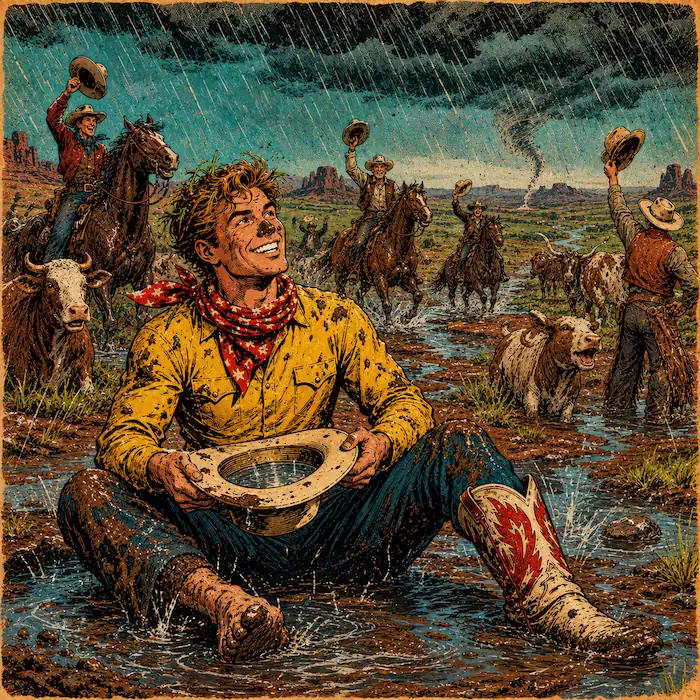
Pecos Bill slid down the last twist of wind and landed in a mud puddle with a splash.

For a moment, nobody moved.

Then Bill sat up.

He had mud on his nose, grass in his hair and one boot missing.

He smiled.

“That,” he said, “was a lively ride.”

The cowboys ran to him.

“Are you hurt?” they asked.

Bill checked his arms. He checked his legs. He checked his hat, which had landed upside down nearby and was now full of rainwater.

“Nope,” he said. “But I reckon that tornado learned some manners.”

From that day on, whenever storms rolled across the West, folks told the little ones not to be afraid.

“That’s just the wind remembering Pecos Bill,” they said.

“And if the rain comes after, thank him kindly.”

Pecos Bill went on to have many more adventures. Some folks say he rode a mountain lion. Some say he used a rattlesnake as a whip. Some say he dug a river by dragging his heels in the dirt.

Now, those folks may be stretching the truth.

Then again, tall tales are meant to stretch.

But if you ever hear thunder over Texas and see the clouds spinning in a hurry, look closely.

You might just spot a cowboy hat. And under it, grinning into the wind, there might be Pecos Bill, riding another tornado until it remembers to bring the rain.

Moral

Big courage is best when it helps others, not when it is used only for showing off.

Short Summary

Pecos Bill is lost as a baby in the wild American West and raised by coyotes. When he grows up, he discovers he is a boy, learns cowboy ways and becomes the boldest cowboy anyone has ever seen. During a terrible dry spell, he ropes and rides a tornado until it crashes into the rain clouds and brings water back to the land.

Main Characters

  • Pecos Bill: A larger-than-life cowboy hero who grows up wild, brave and full of impossible confidence.
  • The Coyotes: The animals who take Bill in when he is lost as a baby and teach him how to survive in the wild.
  • The Cowboy: The rider who helps Bill understand that he is a boy and teaches him cowboy skills.
  • The Tornado: A wild storm that Pecos Bill ropes and rides until it helps bring rain.
  • The Other Cowboys: The people who warn Bill that the West answers boasting and later cheer when he saves the day.

Vocabulary Spotlight

  • Tall tale: A story that uses huge exaggeration for fun.
  • Lasso: A rope with a loop used by cowboys to catch animals.
  • Coyotes: Wild animals related to dogs and wolves, often found in North America.
  • Tornado: A powerful spinning column of air that reaches from a storm cloud to the ground.
  • Brittle: Dry and easy to break.
  • Trickle: A very small flow of water.
  • Tumbleweed: A dry plant that rolls across open land in the wind.
  • Reckon: An informal word meaning think or suppose.

Discussion Questions

  1. Why do you think the coyotes decide to take Bill in?
  2. How does Bill change after he meets the cowboy?
  3. Why do the other cowboys warn Bill not to boast too loudly?
  4. What makes this story a tall tale instead of a realistic story?
  5. Pecos Bill is very brave. Is he also sensible? Why or why not?
  6. How does Bill use his courage to help others by the end of the story?
  7. Which part of the story is the most exaggerated or impossible?
  8. If you were telling your own tall tale, what impossible thing would your hero do?

Classroom Activities for Children

Tall Tale Stretch

Ask children to choose an ordinary action, such as jumping over a puddle, eating breakfast or running to school. Then ask them to stretch it into a tall tale. For example, the puddle becomes a river, breakfast becomes a mountain of pancakes or the run to school becomes a race with the wind.

Sequence the Story

Give children mixed-up story cards: Bill falls from the wagon, coyotes find Bill, Bill meets a cowboy, Bill learns to use a lasso, the land needs rain, Bill ropes the tornado and rain falls. Children place the cards in order and retell the story in pairs.

Tornado Movement Game

In a safe open space, children use their bodies to show the tornado changing shape. They can start as a tiny breeze, grow into a spinning storm, slow into a rumble and finally become a gentle rain cloud. Remind children to move carefully and keep enough space around them.

Make a Tall Tale Poster

Children draw Pecos Bill doing one impossible cowboy feat, such as riding a tornado, racing a mountain lion or lassoing a dust storm. Under the picture, they write one exaggerated sentence beginning, “Some folks say…”

Lasso Loop Fine-Motor Activity

Use string, ribbon or pipe cleaners to make safe paper lassos. Children can practice making loops and placing them around paper cactus shapes, cardboard boots or drawn tumbleweeds. This keeps the activity playful without using real ropes around people or animals.

Sound Effects Listen-Along

Assign children simple sound effects for a group retelling: BUMP for the wagon, howl for the coyotes, clomp for the boots, whoosh for the tornado and drip-drop for the rain. Read selected parts of the story and let children add the sounds at the right moments.

Brave or Boastful?

Write different actions on cards. Children sort them into “brave”, “boastful” or “both”. Discuss how Pecos Bill starts by wanting a challenge but ends by helping the land get rain.

Weather Watch

Take children outside or to a window and ask them to observe the weather. What does the sky look like? Is the wind gentle or strong? Children can draw a real weather picture and then draw a tall-tale version beside it.

Create a Class Tall Tale Hero

As a class, invent a new tall-tale hero. Decide the hero’s name, where they live, what impossible skill they have and what problem they solve. Children can each add one exaggerated detail.

Teachers’ Notes

Best curriculum fit: Folk tales and traditional stories, American folklore, story structure, exaggeration, weather, character traits and oral storytelling.

Key learning themes: Exaggeration, courage, humor, community help, weather, problem-solving and the difference between realism and fantasy.

Before reading: Explain that a tall tale is a story where everything is stretched until it becomes funny and impossible. Children should not expect the events to be realistic.

During reading: Pause at the most exaggerated moments and ask, “Could this really happen, or is this the tall tale growing?”

After reading: Ask children to identify the real-world problem in the story: the land needs rain. Then ask how the impossible tall-tale action solves it.

Cross-curricular links: English, geography, science, art and drama. Useful topics include exaggeration, oral storytelling, the American Southwest, dry landscapes, rivers, weather, wind, drought and tornado safety discussions.

Teacher tip: Keep the discussion focused on exaggeration and storytelling. Children do not need to treat Pecos Bill as a real historical figure.

Why This Version Works for Children

This version keeps the fun, impossible energy of a Pecos Bill tall tale while giving young readers a clear story shape. Bill is lost, raised by coyotes, discovers cowboy life and then uses his wild courage to solve a problem for the whole land.

The tornado scene gives the story a strong visual center, but the language stays light and comic rather than frightening. The ending also explains that tall tales are meant to stretch the truth, which helps children understand the genre.

What Parents and Teachers May Want to Know

This story includes exaggerated danger, including a baby falling from a wagon, a tornado and references to wild animals. These events are presented in a playful tall-tale style rather than realistic danger.

The story is best introduced as folklore and exaggeration. Pecos Bill is a legendary cowboy figure, not a realistic role model for safe behavior around storms or animals.

Some traditional Pecos Bill tales include rougher details. This Kooky Kids World version keeps famous tall-tale elements, such as the mountain lion and rattlesnake lasso references, while keeping the main story child-friendly and comic.

Story Background

Pecos Bill is a legendary cowboy from American tall-tale tradition. His stories are usually connected with the American West and Southwest, especially Texas and the area around the Pecos River.

Tall tales often make a hero impossibly strong, brave or clever. Pecos Bill is commonly said to have been raised by coyotes, ridden a mountain lion, used a rattlesnake as a lasso and even roped a tornado or cyclone. Different versions include different adventures, and storytellers often add new exaggerations for humor.

This version focuses on the tornado story because it is dramatic, funny and easy for children to understand. It also gives the tall tale a helpful shape: wild courage becomes useful when Pecos Bill brings rain to the dry land.

Further Reading for Adults and Teachers

Frequently Asked Questions About Pecos Bill and the Tornado

  • Is Pecos Bill a real person?

    Pecos Bill is usually treated as a fictional American tall-tale hero, not a confirmed real historical person.

  • What is a tall tale?

    A tall tale is a funny story that stretches the truth with huge exaggeration. The events are meant to be impossible or almost impossible.

  • Why was Pecos Bill raised by coyotes?

    In many versions of the legend, Pecos Bill is lost as a baby and taken in by coyotes. This explains why he grows up wild, brave and different from ordinary cowboys.

  • Did Pecos Bill really ride a tornado?

    No. Riding a tornado is part of the impossible humor of the tall tale. It shows how wildly exaggerated Pecos Bill stories are meant to be.

  • Why does this version mention a mountain lion and a rattlesnake lasso?

    Those are well-known parts of Pecos Bill folklore. This version mentions them briefly at the end as examples of other tall tales people tell about him.

  • Is this story suitable for younger children?

    It is best for children aged about 6 to 10, or younger children listening with an adult. The tornado and wild animal details are exaggerated and comic, but adults may want to explain that tall tales are not realistic safety examples.

  • What can children learn from this story?

    Children can learn about exaggeration, folklore, courage, story structure and the idea that strength or bravery is best when it helps others.