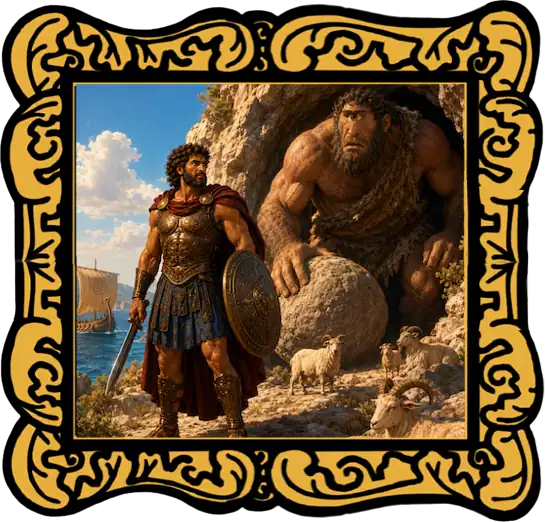

Odysseus and the Cyclops

Odysseus and the Cyclops is a Greek myth episode for children aged 7 to 11. This version is based on an episode from Homer’s Odyssey and has been retold in clear, child-friendly language with a focus on courage, clever thinking, pride and consequences.

In this retelling, Odysseus and his sailors enter a giant’s cave, become trapped and must find a way to escape. The story is tense, but the frightening parts are kept gentle for young readers.

Story Details

  • Independent Reading Age: 8 to 11
  • Listen-Along Age: 7 to 11
  • Reading Level: Middle elementary
  • Reading Time: About 9 to 12 minutes
  • Audio Length: About 11 minutes
  • Author / Source: Based on an episode from Homer’s Odyssey, retold for Kooky Kids World
  • Story Type: Greek myth episode
  • Region / Origin: Ancient Greek literary tradition
  • Main Characters: Odysseus, Polyphemus the Cyclops, Odysseus’ sailors
  • Moral / Themes: Clever thinking, courage, teamwork, pride, consequences

Listen Along

Audio cover for Odysseus and the Cyclops with Odysseus, the ship and rocky island
0:00 / 0:00
Odysseus and the Cyclops

Listen along to this child-friendly Greek myth episode about Odysseus, the Cyclops and the clever escape from the cave.

Kooky Kids World Cloud Logo showing where the audio read aloud file is.

About This Retelling

This child-friendly retelling keeps the main shape and meaning of the Greek myth episode while using clear language for young readers. Stories from ancient epics can vary between translations, classrooms and retellings, so this version should be read as an introduction rather than the only version.

Odysseus and the Cyclops Story

The Island Beyond the Sea

For many days, Odysseus and his sailors had crossed the wide sea. They had been away from home for a long time, and every man on the ships dreamed of Ithaca, the rocky island where Odysseus was king.

One morning, as pale light spread across the water, the sailors saw land ahead. The island looked quiet and green.
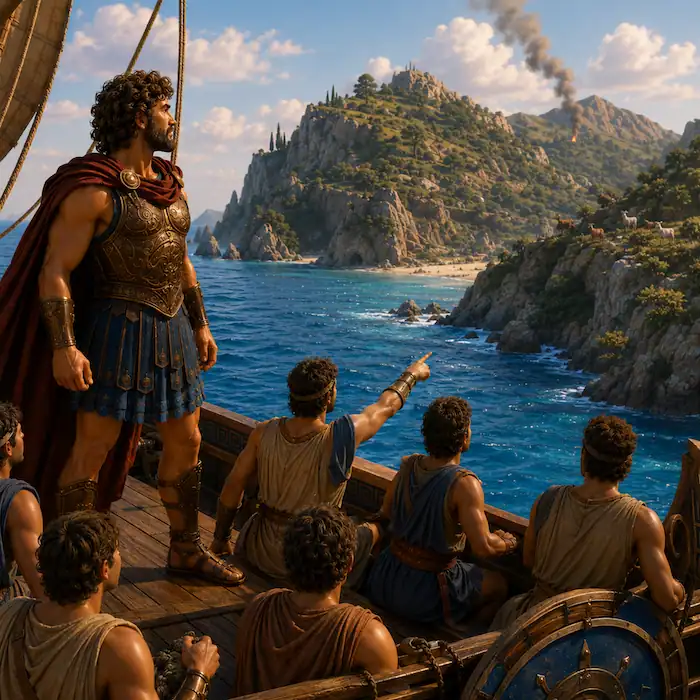
Odysseus and his sailors approaching a rocky island by ship

Wild goats moved along the cliffs, and smoke rose in the distance from a cave near the hills.

“People live there,” said one sailor. “Perhaps they will trade with us.”

“Perhaps they will give us food and water,” said another.

Odysseus looked at the shore. He was brave, curious and clever, but he was also eager to learn what kind of people lived in every place he found.

“We will take a small group,” he said. “The rest will stay with the ship.”

He chose twelve sailors and led them across the island. They carried skins of red wine, a little food and their hopes for a friendly welcome.
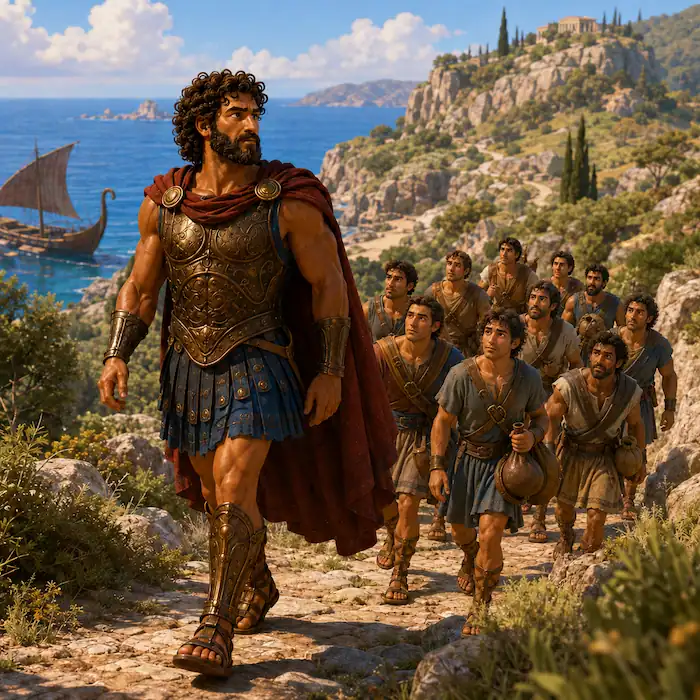
Odysseus leading sailors across the island toward the hills

The Giant’s Cave

The men climbed a stony path until they reached a huge cave. It was not like any home they had seen before. The entrance was wide enough for a giant to pass through. Inside were baskets of cheese, pens for lambs, bowls for milk, and great shelves carved from rock.

“No one is here,” whispered a sailor.

Another sailor stared at the food. “Let us take some cheese and hurry back to the ship.”

Odysseus shook his head. “We should wait for the owner. If he is kind, he may give us gifts. If he is not, we will know soon enough.”
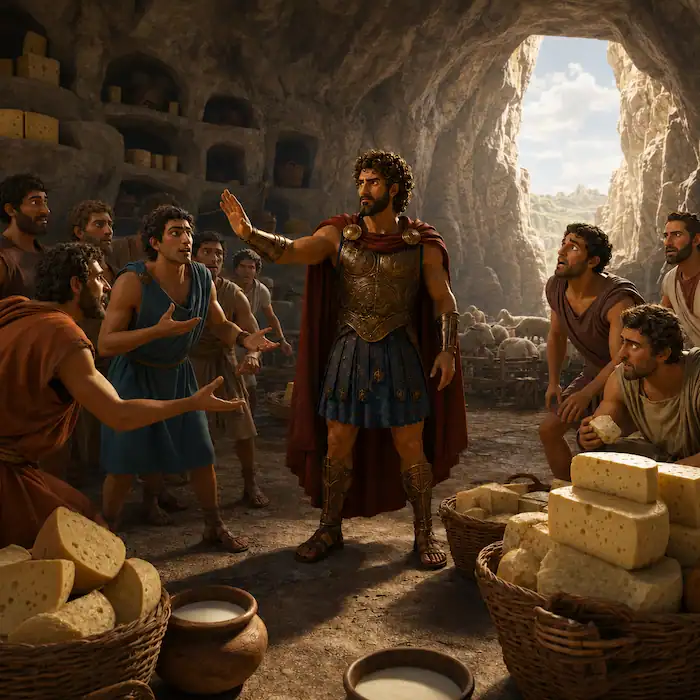
Odysseus and sailors looking toward the bright cave entrance

The sailors did not like this answer, but Odysseus was their leader, so they stayed. They sat in the cave and watched the shadows grow longer.

At sunset, the ground began to tremble.

Thud.

Thud.

Thud.

A giant came up the path, driving his sheep and goats before him. He was a Cyclops, a huge one-eyed shepherd named Polyphemus. His hands were as broad as shields.

The sailors pressed themselves against the wall of the cave.

Polyphemus drove his flock inside. Then he lifted a stone so large that no ship’s crew could have moved it and rolled it across the entrance. The cave went dark except for the glow of his fire.

Only then did he see the strangers.

The Question in the Dark

“Who are you?” Polyphemus roared, his voice rumbled like stones rolling down a hill. “Are you traders, or are you thieves?”

Odysseus stepped forward, though his heart beat hard. “We are Greeks, blown off course by the winds. We ask for welcome, as guests should be welcomed.”
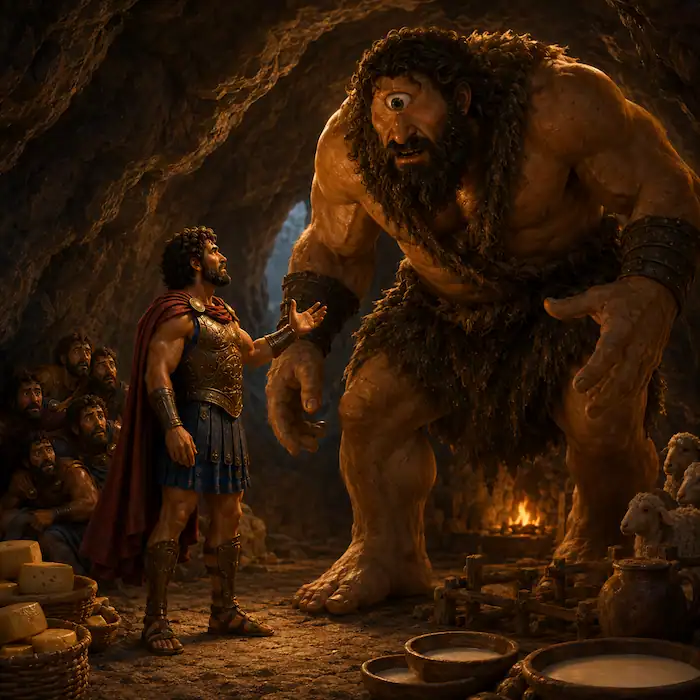
Polyphemus the Cyclops standing over Odysseus and his sailors in the cave

Polyphemus gave a terrible laugh. “I do not care for your rules of welcome.”

The sailors trembled. They knew they were trapped. The giant’s stone blocked the entrance, and even all of them together could not move it.

Odysseus watched carefully. Strength would not save them. Anger would not save them. If they were to escape, they would need a plan.

Polyphemus milked his sheep and goats, drank deeply, and lay down to sleep near the entrance. His great body blocked the way like a second wall.
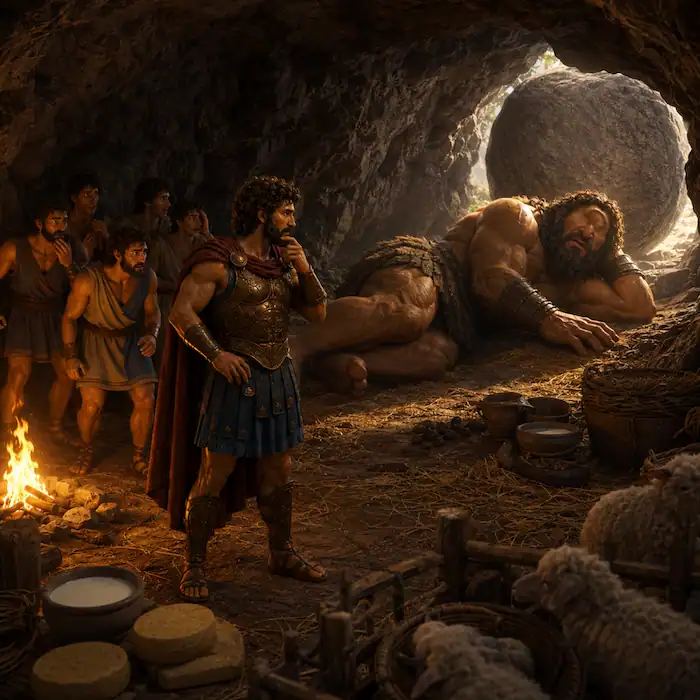
Odysseus and sailors trapped inside the cave behind the giant stone

One sailor whispered, “We should attack him while he sleeps.”

“No,” Odysseus whispered back. “If we do, who will move the stone? We would be trapped forever.”

So they waited through the long night.

Odysseus Makes a Plan

The next day, Polyphemus rolled the stone aside just long enough to let his flock out. He stood in the doorway while the sheep and goats passed, then rolled the stone back into place before leaving.
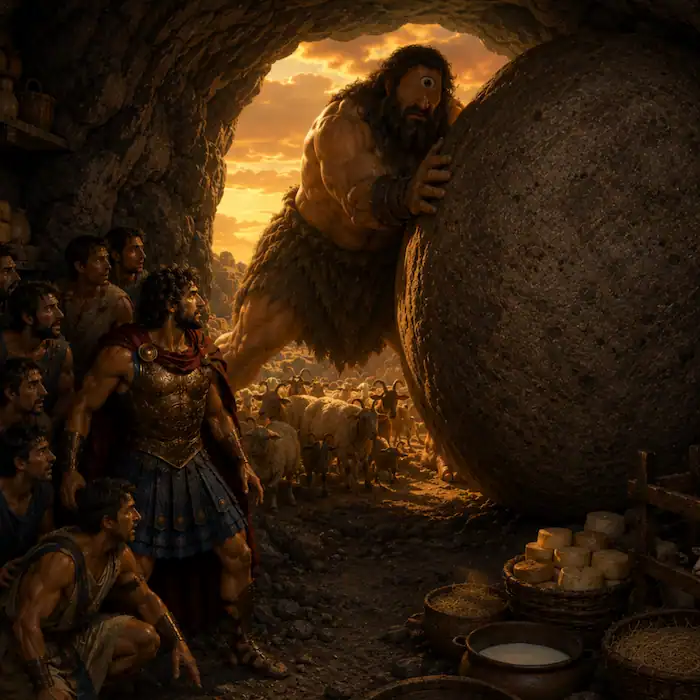
The Cyclops blocking the cave entrance with a giant stone

The sailors were alone again, but they were still prisoners.

Odysseus searched the cave. Against one wall, he found a huge wooden staff, still green and heavy. It was far too large for a man to carry as a walking stick, but Odysseus saw what it could become.

“We will shape this wood,” he told his men quietly. “We will make it sharp at one end. Then we will hide it until night.”

The sailors worked with care. They scraped and shaped the wood, they smoothed the point, then hardened it in the fire.
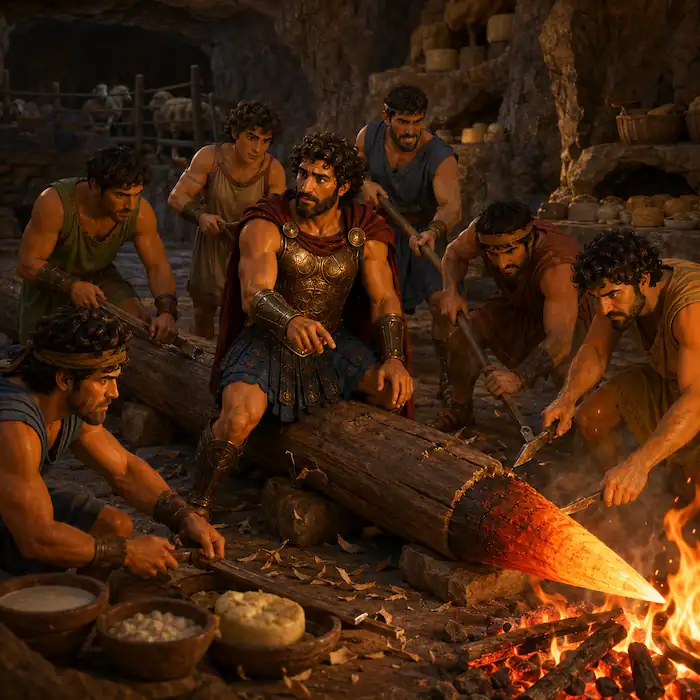
Odysseus and sailors preparing a wooden staff as part of their escape plan

When it was ready, they hid it beneath the straw.

As evening fell, Polyphemus returned with his flock. Again he rolled the giant stone across the cave mouth, again he milked the sheep and goats, again he looked at the trapped men with his single bright eye.

Odysseus picked up the wine he had brought from the ship.

“Cyclops,” he said, “you have eaten and worked hard. Drink this wine, it is strong and sweet.”
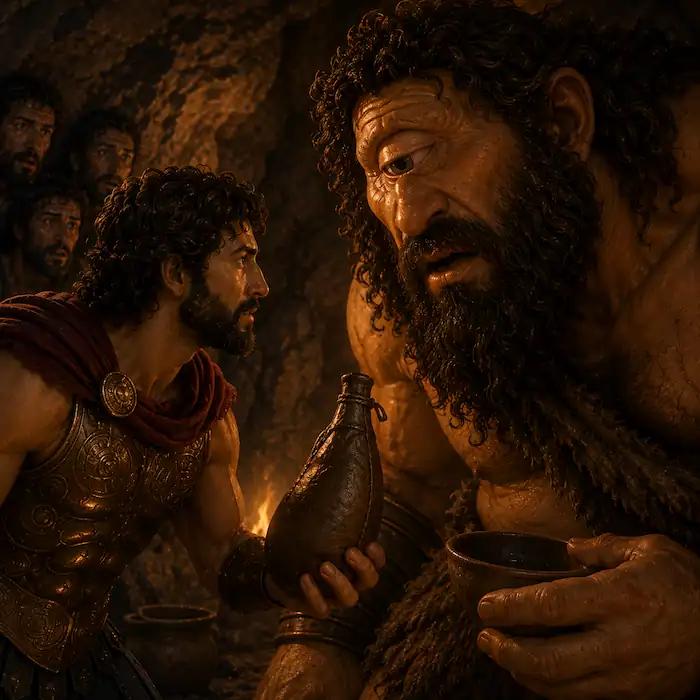
Polyphemus drinking in the cave while Odysseus and sailors watch carefully

Polyphemus took the skin and drank. His face changed from suspicion to surprise.

“More,” he demanded.

Odysseus gave him more. The Cyclops drank again and again, until his voice grew thick and sleepy.

“You have pleased me,” Polyphemus said. “Tell me your name.”

Odysseus lowered his head, hiding the sharp look in his eyes.

“My name is Nobody,” he said. “Nobody is what my mother, father and friends call me.”

Polyphemus laughed. “Then I will remember you, Nobody.”

Soon the giant sank into a deep sleep.

Nobody Tricks the Cyclops

Odysseus gathered his men. They lifted the sharpened staff and held it over the fire until the point glowed.

“This is our chance,” Odysseus whispered. “Be brave. Work together.”

The men moved as one. They drove the burning point toward the Cyclops’ single eye. Polyphemus woke with a roar that shook dust from the cave roof. He stumbled, shouted and clutched at the air.
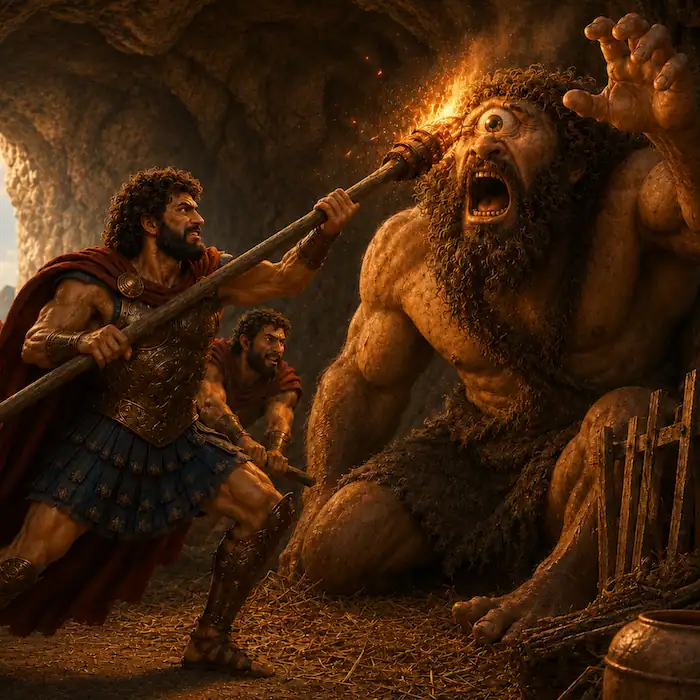
Odysseus and sailors carrying out their escape plan while the Cyclops sleeps

Outside, other Cyclopes heard him and came to the cave.

“What is wrong, Polyphemus?” they called. “Is someone hurting you?”

Polyphemus shouted, “Nobody is hurting me!”

The Cyclopes outside grumbled to one another.

“If nobody is hurting him, then why is he shouting?” said one.

“Perhaps he is sick,” said another.

They walked away, leaving Polyphemus alone in the cave with Odysseus and his men.

The sailors could hardly believe it. Odysseus’ strange answer had saved them, at least for the moment.

But the stone still blocked the door.

Under the Sheep

All night, Polyphemus groaned and felt around the cave. Odysseus kept his men close and silent. At last, when morning came, the sheep and goats began to stir.

Polyphemus rolled the stone away from the entrance, but he did not let the flock rush out freely. Instead, he sat in the doorway and spread his hands over the backs of the animals as they passed.

“He will catch us if we try to run,” whispered a sailor.

Odysseus looked at the sheep. They were large, thick-fleeced and strong. Then another idea came to him.

He quickly tied his men beneath the bellies of the biggest sheep, using strips of rope from the cave. He fastened each sailor carefully, so the sheep’s wool hid him from above. Last of all, Odysseus clung beneath the largest ram.
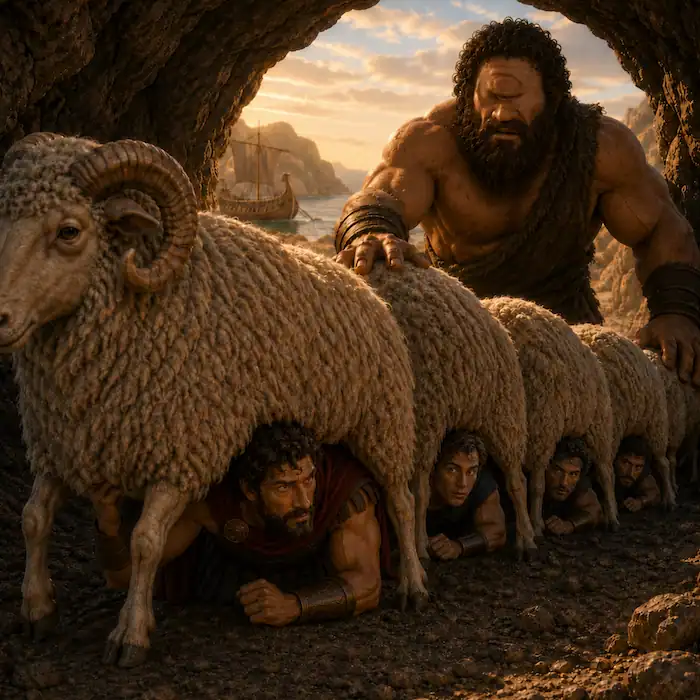
Odysseus and his sailors escaping under sheep while Polyphemus checks the flock

One by one, the sheep moved toward the doorway.

Polyphemus touched their backs as they passed. He felt wool, horns and warm bodies, but he did not feel the men hidden underneath.

The great ram walked last. Polyphemus stopped it and stroked its fleece.

“Dear ram,” he said sadly, “why are you last today? You are usually first to leave the cave. Do you grieve because Nobody has tricked your master?”

Odysseus held his breath beneath the ram.

At last, Polyphemus let the animal pass.

The ram stepped into the morning light.

Back to the Ships

As soon as the sheep were far enough from the cave, Odysseus and his men untied themselves. They ran to the shore, driving some of the sheep with them for food. The sailors on the ships stared in amazement as their friends came racing back.

“Push off!” Odysseus cried. “Row!”

The sailors leaped to the oars. The ship slid away from the beach and out onto the shining water. Behind them, Polyphemus heard the noise and staggered toward the shore.

The giant tore a great rock from the hillside and hurled it toward the sound of the ship. It crashed into the sea, sending waves high into the air. The ship rocked wildly, but the sailors rowed harder and escaped the worst of the wave.
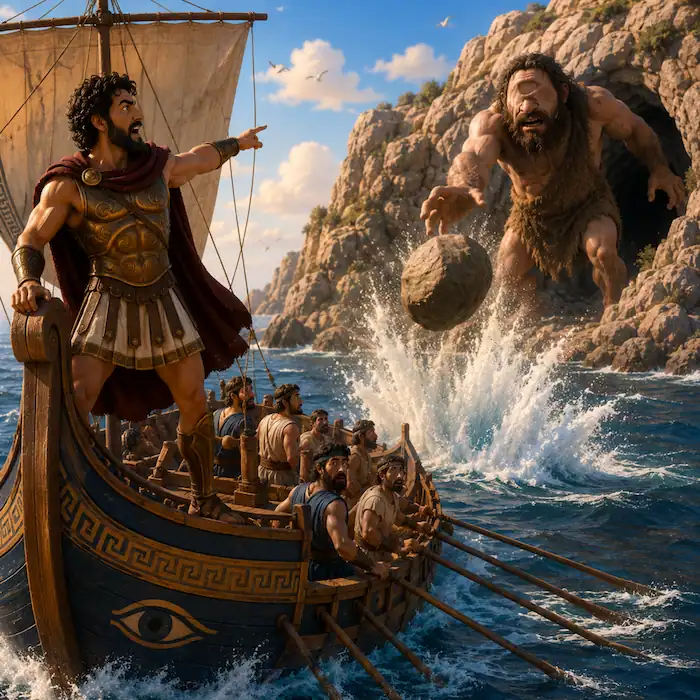
Odysseus and his sailors rowing away from the Cyclops on their ship

“Quiet,” the sailors begged Odysseus. “Do not anger him again.”

But Odysseus stood tall in the stern of the ship. He had won through courage and cleverness, and pride burned hot inside him.

“Cyclops!” he shouted across the water. “If anyone asks who tricked you, tell them it was Odysseus, son of Laertes, king of Ithaca!”

The sailors groaned. They knew he should not have spoken.

Polyphemus lifted his face toward the sea. Now he knew the name of the man who had escaped him.

The Cyclops called on his father, Poseidon, the god of the sea, and asked him to trouble Odysseus on his journey home.

Odysseus heard the words and grew silent.

The ship moved farther from the island. The sailors were alive, and that was a great blessing. Yet Odysseus had learned something bitter: a clever plan can save you, but proud words can bring new danger.

The Lesson on the Waves

The island grew smaller behind them. The cave, the flock and the giant faded into the distance, but the memory stayed with every man on the ship.

Odysseus had used his mind when strength was useless. He had protected his men with patience and planning. He had chosen the name Nobody at just the right moment.

Yet he had also shouted his real name when silence would have been wiser.

As the ships sailed on, Odysseus looked across the endless sea toward home. He knew the journey would not be easy, but he also knew this: courage needs wisdom beside it, and victory is safest when pride stays quiet.
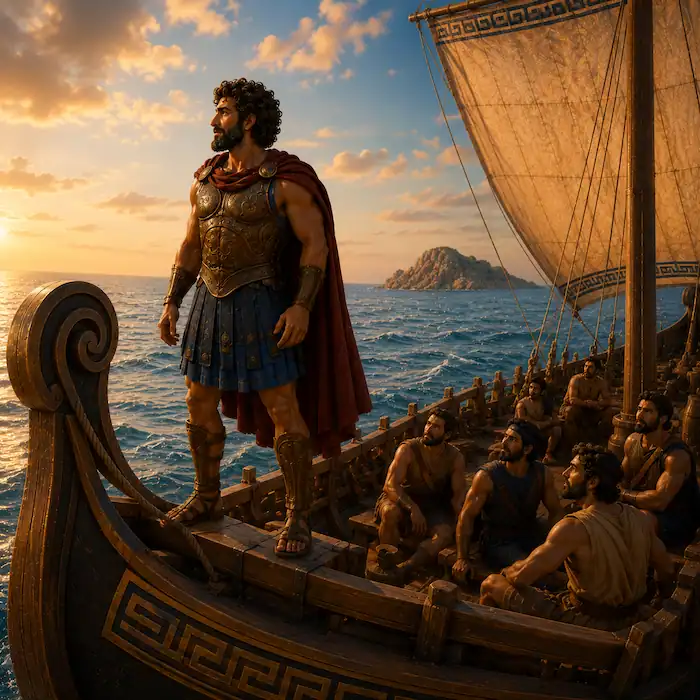
Odysseus standing on the ship as his sailors sail onward after escaping

Moral

Moral: Clever thinking can solve great problems, but pride can turn a victory into a new danger.

Short Summary

Odysseus and his sailors land on an island and become trapped in the cave of Polyphemus, a one-eyed giant called a Cyclops. Odysseus tricks the giant by saying his name is Nobody, then helps his men escape beneath the sheep. After reaching the ship, Odysseus proudly shouts his real name, which brings new trouble for the journey home.

Main Characters

  • Odysseus: A Greek hero and king of Ithaca who is brave, clever and sometimes too proud.
  • Polyphemus: A one-eyed giant called a Cyclops who traps Odysseus and his sailors in a cave.
  • Odysseus’ sailors: The crew members who follow Odysseus, help with his plan and escape with him.
  • The ram: The largest sheep in the cave, which carries Odysseus safely past the Cyclops.

Vocabulary Spotlight

  • Cyclops: A giant from Greek myth with one eye in the middle of his forehead.
  • Cave: A large hollow place in rock or a hillside.
  • Flock: A group of sheep, goats or birds.
  • Shepherd: Someone who takes care of sheep.
  • Cunning: Cleverness used to solve a problem or trick someone.
  • Escape: To get away from danger or being trapped.
  • Pride: A strong feeling of being pleased with yourself, which can become a problem if it turns into boasting.
  • Ithaca: The island home of Odysseus in Greek myth.

Discussion Questions

  1. Why did Odysseus and his sailors go into the Cyclops’ cave?
  2. Why could the sailors not simply run away when Polyphemus fell asleep?
  3. How did the name Nobody help Odysseus’ plan work?
  4. What did the sailors do to help each other escape?
  5. Why do you think Odysseus shouted his real name from the ship?
  6. Was Odysseus wise, proud or both? Explain your answer.
  7. What could Odysseus have done differently after escaping?
  8. What does this story teach about using your mind when you are frightened?

Classroom Activities for Children

  1. Story Map Challenge: Ask children to draw four places from the story: the ship, the island, the cave and the sea escape. Add arrows to show the order of events.
  2. Nobody Dialogue Practice: In pairs, children act out the short exchange where Polyphemus asks for Odysseus’ name. Keep the tone dramatic but not frightening.
  3. Escape Sequencing Cards: Give children event cards from the story and ask them to place them in order.
  4. Build a Safe Cave Model: Using paper, cardboard or blocks, children make a simple cave scene with sheep, a stone door and a path to the sea.
  5. Sheep Movement Game: Children move around the room like a quiet flock while one child gently acts as the Cyclops at the cave door. The aim is controlled movement, listening and taking turns.
  6. Pride and Wisdom Sorting: Sort action cards into wise choices and risky choices.
  7. Outdoor Observation Walk: Look for natural hiding places for small animals and connect this to how Odysseus noticed the sheep and used what was around him.
  8. Design a Hero’s Shield: Children draw a shield for Odysseus with symbols for cleverness, courage, home and teamwork.
  9. Feelings Timeline: Children mark how the sailors might have felt at different points: curious, worried, afraid, hopeful, relieved and alarmed.
  10. Retell in Six Sentences: Children write or say the whole story in six clear sentences.

Teachers’ Notes

  • Best curriculum fit: Greek myths, classical literature introductions, myths and legends, hero stories, problem-solving narratives, character choices and consequences.
  • Key learning themes: Cleverness, teamwork, courage under pressure, pride, consequences, leadership and mythic storytelling.
  • Before reading: Explain that this is one episode from a much longer ancient Greek story called the Odyssey. Tell children that the story is tense, but this version avoids graphic detail.
  • During reading: Pause when Odysseus says his name is Nobody. Ask children to predict why that answer might matter later.
  • After reading: Compare Odysseus’ clever plan with his proud shouting from the ship. Ask whether one person can make both wise and unwise choices in the same story.
  • Cross-curricular links: Ancient Greece, map work around the Mediterranean, drama, descriptive writing, vocabulary, PSHE or SEL discussion about pride and choices.
  • Teacher tip: Keep the focus on decisions and consequences rather than the frightening details of the Cyclops. This helps the story stay useful and age-appropriate.

Why This Version Works for Children

This retelling keeps the core mythic plot: the landing on the island, the cave, the Cyclops, the name Nobody, the escape beneath the sheep and Odysseus’ proud mistake at sea. It softens the most graphic parts of the ancient episode while keeping the adventure and lesson clear.

The language is clear enough for middle elementary readers, but the story still respects the intelligence of children aged 7 to 11. Odysseus is shown as brave and clever, but not perfect, which gives children a strong chance to discuss choices and consequences.

What Parents and Teachers May Want to Know

The Cyclops episode is one of the more dramatic parts of the Odyssey. In older versions and translations, it can include violent and graphic details. This Kooky Kids World retelling keeps the important plot points but avoids graphic wording and keeps the focus on problem-solving.

Children who enjoy adventure stories, myths and problem-solving tales may find this story exciting. Sensitive children may still want an adult nearby because the story includes danger, being trapped and a frightening giant.

Story Background

Odysseus and the Cyclops is based on an episode from Homer’s Odyssey, an ancient Greek epic poem about Odysseus’ long journey home after the Trojan War. The Cyclops in this episode is named Polyphemus.

The story is part of the public-domain classical tradition and has been translated and retold many times. This page does not present an official or complete version of the Odyssey. It offers a child-friendly introduction to one episode, using cautious language and keeping the focus on the journey home.

Common themes in the episode include cleverness over strength, the responsibilities of leadership, the danger of pride and the consequences of revealing too much at the wrong time.

Further Reading for Adults and Teachers

Adults and teachers who want to compare this child-friendly retelling with a public-domain source may use Project Gutenberg’s edition of The Odyssey by Homer. Book 9 contains the Cyclops episode. Teachers should preview older translations before sharing them with children because the source episode is more intense than this retelling.

Frequently Asked Questions About Odysseus and the Cyclops

  • Is Odysseus and the Cyclops a Greek myth?

    Yes. This story is based on an episode from Homer’s Odyssey, an ancient Greek epic poem. It is commonly retold as a Greek myth episode for children and students.

  • Who is the Cyclops in the story?

    The Cyclops is Polyphemus, a giant shepherd with one eye. He traps Odysseus and his sailors inside his cave.

  • Why does Odysseus say his name is Nobody?

    Odysseus says his name is Nobody so that when Polyphemus calls for help, the other Cyclopes think no one is hurting him. This clever trick gives Odysseus and his sailors a chance to escape.

  • How do Odysseus and his sailors escape?

    They hide beneath the sheep in the Cyclops’ flock. When Polyphemus lets the animals out of the cave, he feels their backs but does not find the men hidden underneath.

  • What mistake does Odysseus make after escaping?

    Odysseus proudly shouts his real name from the ship. This lets Polyphemus know who tricked him and leads to more trouble for Odysseus on his journey.

  • Is this version suitable for children?

    This retelling is written for children aged about 7 to 11. It keeps the adventure and lesson of the myth but avoids graphic detail.

  • What is the moral of Odysseus and the Cyclops?

    The story shows that clever thinking can solve dangerous problems, but pride and boasting can create new ones.

  • Is audio available for this story?

    Yes. This draft includes a listen-along audio file for Odysseus and the Cyclops.