Australian Stories for Kids: Aboriginal Australian Tales
Choose an Australian story when your child wants a rainbow serpent shaping the land, a frog who drinks an entire billabong or a kangaroo and joey finding their way through the bush. These three Kooky Kids World retellings offer animal adventure, vivid landscapes and moments worth talking about together.
Read Australian stories on Kooky Kids World
The Rainbow Serpent: Aboriginal Australian Story
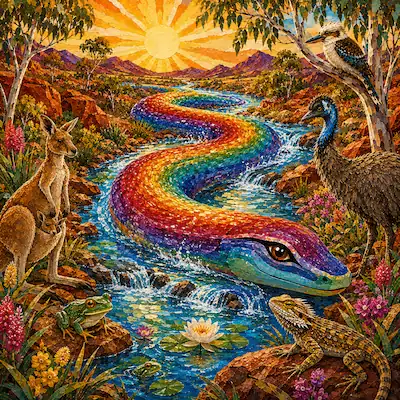
When the Rainbow Serpent wakes beneath the quiet earth, water begins to move, rivers and waterholes take shape, and animals enter a new world. This powerful story gives children a vivid journey through color, land and the water every creature needs.
Choose this for a sweeping story world, water and land at its center, and a big question about caring for what everyone depends on.
Tiddalik the Very Thirsty Frog
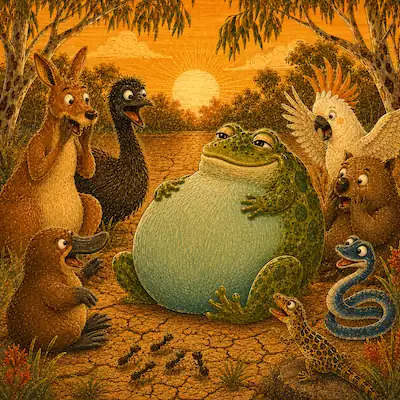
Tiddalik drinks every drop from the billabong, leaving the other animals to find a way to bring the water back. Their clever plan turns into a lively parade of animals trying to make one enormous frog laugh.
Choose this for a funny animal story with repetition, teamwork and a satisfying splash of an ending.
How Kangaroo Got Her Pouch
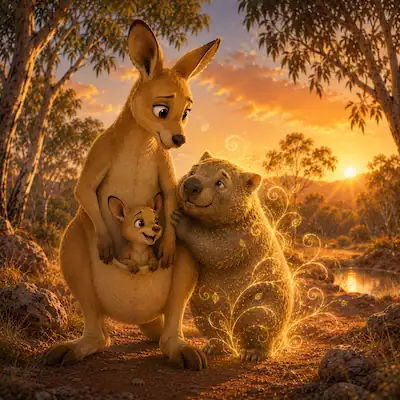
Kangaroo is trying to keep little Joey safe in the hot bush when she meets an old wombat who needs help. A kind choice leads to an unexpected gift and the pouch Joey needs.
Choose this for a warm animal tale about helping someone, caring for family and kindness returned in a surprising way.
Related Reading
Aboriginal Australian Stories for Kids: What Parents Can Talk About

Read this adult-facing guide for ideas about the conversations these three stories can open after you have enjoyed them together.
Which Australian story should I start with?
Start with The Rainbow Serpent for a powerful story world of water, land and animals.
Start with Tiddalik for a funny frog, a billabong without water and a lively plan from the other animals.
Start with How Kangaroo Got Her Pouch for a warm journey with Joey, a wombat and an act of kindness.
For parents and teachers
For a big imaginative read-aloud: try The Rainbow Serpent. Ask children what they notice about the waterholes, animals and changing land.
For humor and participation: choose Tiddalik. Invite children to think of another animal that might try to make the frog laugh.
For a gentler animal story: choose How Kangaroo Got Her Pouch. Talk about why Kangaroo helps before she knows there will be anything in return.
For interested adults, the Australian Institute of Aboriginal and Torres Strait Islander Studies offers an introduction to Aboriginal and Torres Strait Islander Australia. It is an adult source, not a substitute for listening to community-specific voices and materials.
More folk tales
When you are ready to explore beyond this small collection, browse Folk Tales for Kids for traditional stories from around the world. This page stays focused on the three Australian stories above.
Frequently Asked Questions
-
Which Australian story should we read first?
Start with Tiddalik the Very Thirsty Frog for lively animal humor and repetition. Choose How Kangaroo Got Her Pouch for a warm animal story about kindness. Choose The Rainbow Serpent for a larger story world shaped by water, land and powerful change.
-
Are these stories all from one Aboriginal Australian tradition?
No. Aboriginal and Torres Strait Islander peoples and communities are diverse, and stories can have different versions and cultural contexts. This small collection brings together three Kooky Kids World retellings that are presented as Aboriginal Australian stories, not a complete guide to the many distinct traditions.
-
What can children talk about after reading?
Children can talk about why water matters in The Rainbow Serpent, what happens when Tiddalik takes too much, and why Kangaroo chooses to help the wombat. Start with the story moment children remember most, then ask what they think should happen next.
-
How can parents and teachers use these stories?
Read one story aloud, pause at a choice and ask what a character needs, notices or decides to do. Children can draw a waterhole, retell the animals’ plan to make Tiddalik laugh, or create a sequence of helpers from Kangaroo’s journey.