
The Story
A Garden Behind the Wall
Every afternoon, as soon as school ended, the children ran down the little lane and slipped through the gap in the hedge into the giant’s garden. Beyond it stood the loveliest garden in the whole village.
The grass was soft and green. Peach trees stretched their branches wide. In spring, they bloomed in clouds of pink and white. In summer, the leaves made cool shady places for games. In fall, the fruit glowed like tiny lanterns among the branches. Even the birds seemed happier there than anywhere else.
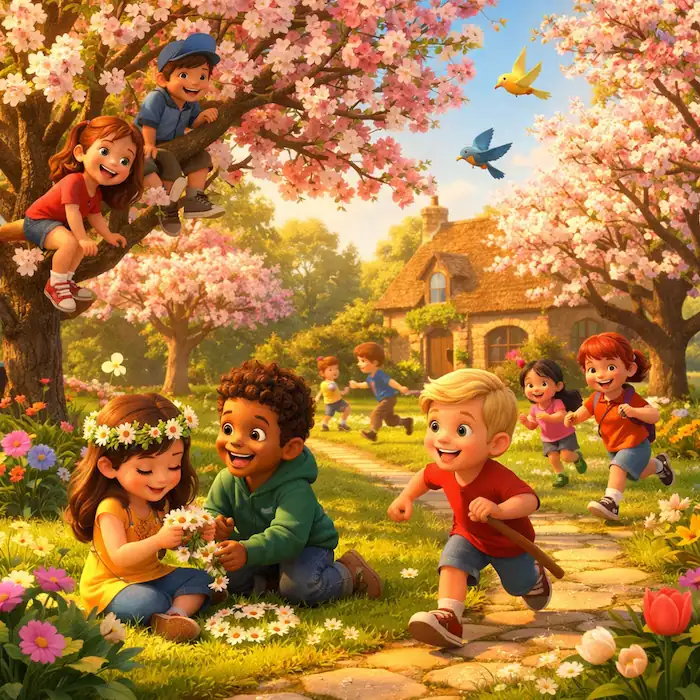
“This is the best place in the world,” said Nora, who was the quickest climber.
“It smells like sunshine,” said Ben, lying flat on the grass with his arms spread wide.
The children played hide-and-seek behind the bushes, climbed the trees and made crowns from daisies. When they were tired, they sat beneath the branches and listened to the birds sing overhead.
The garden belonged to a giant, but he had been far away for seven years, visiting an old friend in the mountains. Since he had not been home, the children had made the place their own.
Then one afternoon, just as the church bell rang and the children were beginning another game, the ground gave a heavy shudder.
Thud. Thud. Thud.
A shadow fell over the grass.
The children looked up and froze.
The giant had returned.
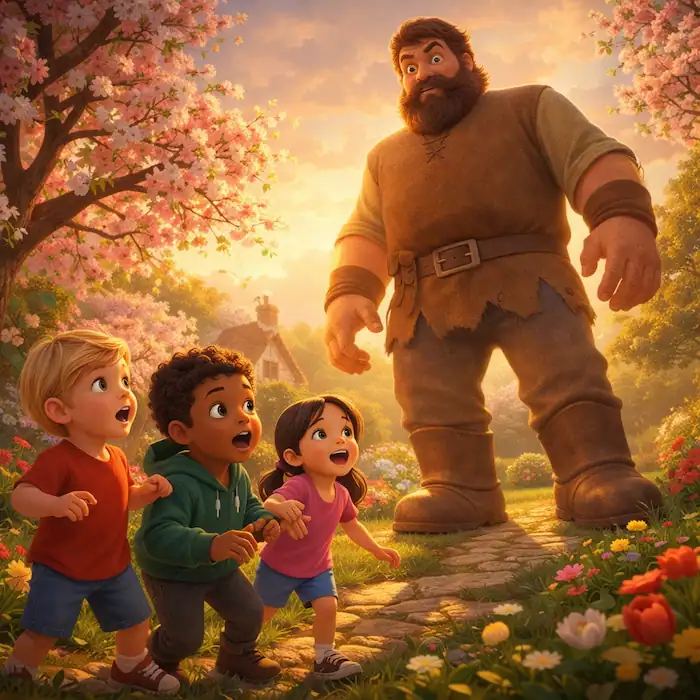
He was taller than the garden wall, with a great beard that blew in the wind and boots like black barrels. He stared at the children, then at the trampled grass and broken blossoms beneath their feet. His face turned hard at once.
“What are you doing in my garden?” he roared.
The birds burst from the trees. Ben scrambled to his feet and stumbled backward. Nora nearly fell from a branch. “We were only playing,” whispered a little girl.
“My garden is my garden,” thundered the giant. “No one may play here but me.”
He stamped toward them with such a frightful look that the children fled in all directions. They squeezed through the gap in the hedge and ran down the lane without once looking back.
When the last child had gone, the giant folded his arms.
“At last,” he said. “Now I shall have peace.”
The Wall Grows Higher
The very next morning, the giant sent for stonecutters and builders. He ordered a wall to be raised all around the garden, high and thick and solid. When the work was done, there was not a single gap left.
Then he nailed up a sign in the middle of the wall.
TRESPASSERS WILL BE PROSECUTED.
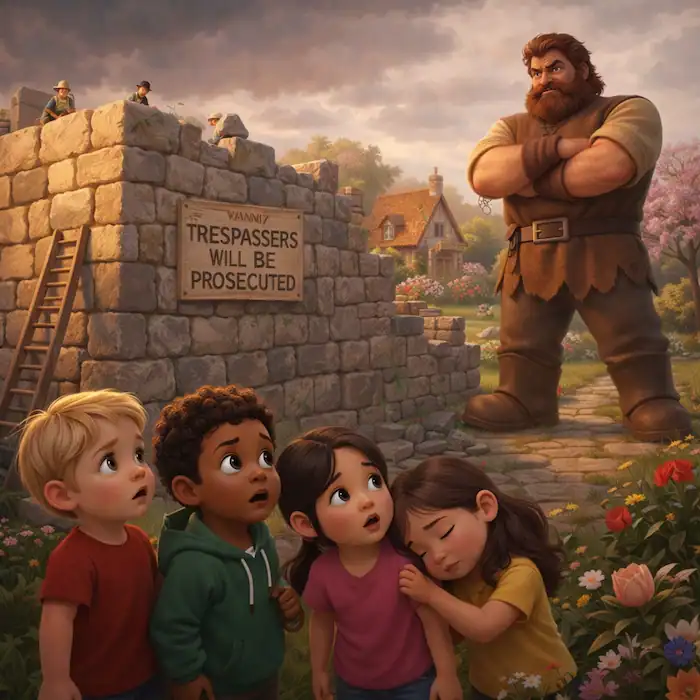
The letters were large and black and very unfriendly.
The children stood in the lane and stared at it.
“That used to be our garden,” said Ben quietly.
“No,” said Nora. “It was never ours. But he didn’t have to be so mean.”
There was nowhere else quite like it. The road was dusty. The village square was crowded. The field by the mill was full of prickly weeds. So the children wandered from place to place, never settling long, always thinking of the trees beyond the wall.
Inside the garden, the giant walked about, pleased with himself.
“How splendid,” he said. “No noise, no shouting, no muddy footprints, no broken branches.”
He sat in a wide stone chair beneath a peach tree and listened.
But he heard nothing.
No laughter.
No running feet.
No songs.
No birds.
The silence pressed around him like fog.
Still, the giant told himself that silence was better than children.
“I like my own company,” he muttered.
So he waited for spring.
Winter Never Leaves
Across the countryside, spring arrived as it always did. The snow melted from the hills, tiny shoots pushed through the soil and birds built nests beneath cottage roofs. But inside the giant’s garden, winter stayed.
Frost painted every branch silver-white and snow wrapped the grass in a thick blanket. The north wind raced between the trees and howled around the walls, while hail rattled on the roof of the giant’s house like thrown pebbles.
The giant pulled aside his curtain one morning and stared out in surprise.
“What a strange thing,” he said. “It is still winter.”
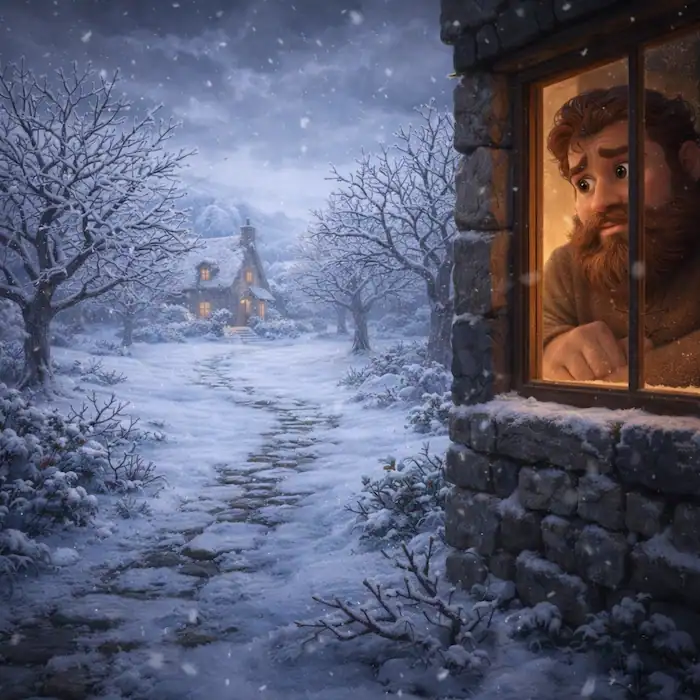
He waited another day and then another week, yet nothing changed. No buds opened, no birds sang and no warm breeze touched the grass.
Only one tree made a weak little effort. It pushed out a few pale leaves, but the north wind snapped them off.
The giant frowned.
“I cannot understand it,” he said.
He lit a fire in his great hall and sat by the window, watching the bare branches shiver. The garden looked grand from far away, but up close it felt sad, as if the trees themselves were waiting for something.
Weeks passed. He tried reading by the fire and dozed in his chair, but nothing settled the restlessness that had begun to grow inside him.
Outside the wall, he could hear the faint sounds of village life. Sometimes he even heard children laughing in the distance. Each time, something tugged at him in a way he did not like.

The Children Return to the Garden
At last, on a bright morning late in the year, the giant awoke to the sweetest sound he had heard in a long time.
A bird was singing.
Not just one note or two, but a full bright song that floated through the air like silver bells.
He hurried to the window and looked out.
In one corner of the wall, a few stones had come loose. Through the gap, children were climbing quietly into the garden one by one. Every place where a child sat had changed.
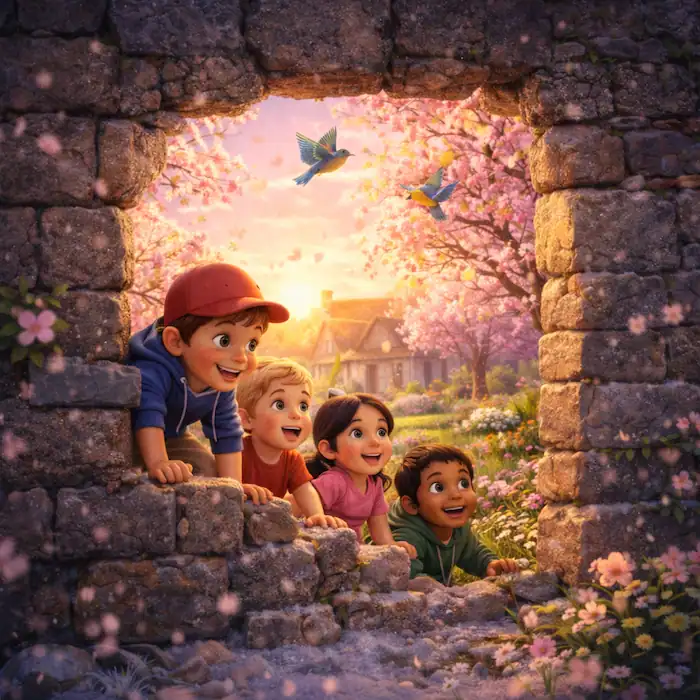
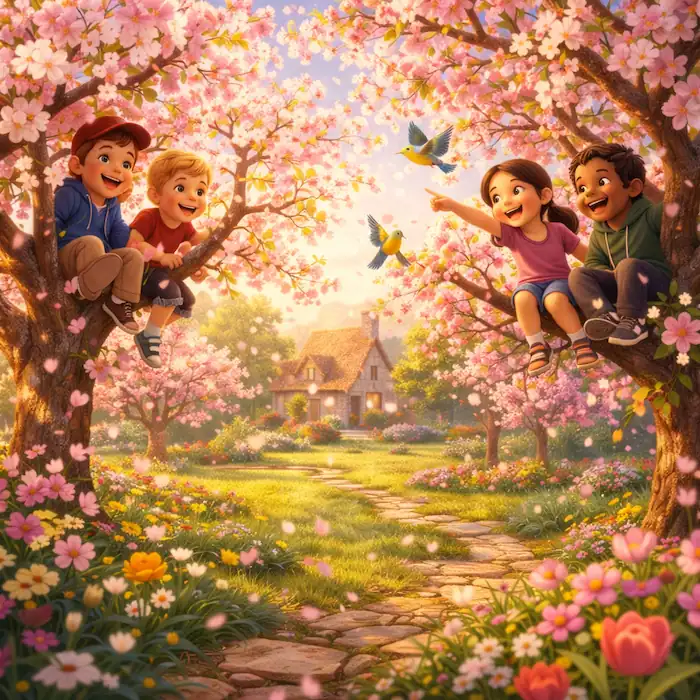
The trees near them were covered in blossoms. Pink and white petals danced in the breeze, birds fluttered overhead and the grass shone green beneath their feet.
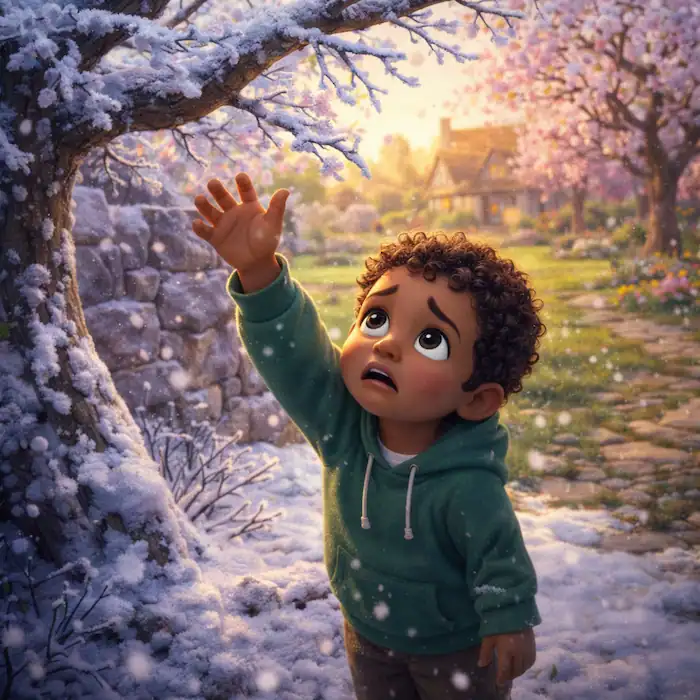
Only one corner remained locked in winter.
There stood the smallest child of all, a little boy with soft curls and a pale face. He was trying to climb into a tree, but the branches were too high for him. Each time he reached up, he slipped back.
The giant stared, and for the first time a strange feeling stirred in his heart. It was not anger this time, nor pride, but a deep and sudden shame. “How blind I have been,” he said softly.
At last he understood why spring had stayed away. The garden had never needed silence at all. It had been waiting for laughter.
The Giant Changes
The giant went downstairs as quickly as he could and opened the front door onto the garden. The moment the children saw him, they screamed and scattered in every direction, but the smallest boy did not run.
The giant stopped beside him. “Little one,” he said in the gentlest voice he could manage, “shall I help you?”
Without a word, the giant bent down, scooped him up and set him among the branches. At once the tree burst into bloom. Golden leaves shimmered in the sunlight, white blossoms opened around the child like stars and birds came flying back to sing.
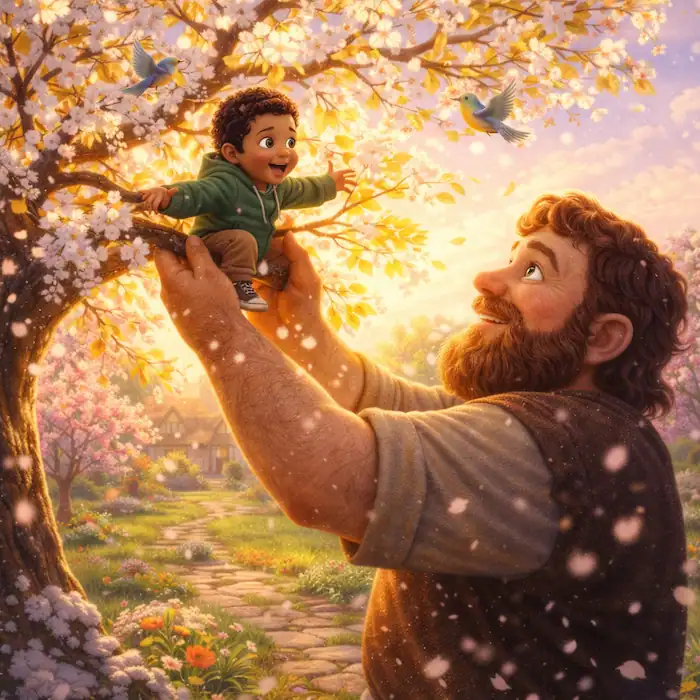
The little boy laughed, wrapped his arms around the giant’s neck and hugged him. The giant stood very still. No one had ever hugged him before.
When the other children saw that the giant was no longer angry, they crept back in. One by one, they returned to the trees, the flowerbeds and the soft green grass, and spring followed them.
The giant took a great ax from his shed.
“Help me,” he called.

Stone by stone, the wall came down, and by evening there was no wall at all.
“My garden shall belong to the children,” he said.
A Garden Full of Joy
From that day on, the giant changed.
Each afternoon he watched for the children at the gate. He built them a swing from an old oak branch and carved smooth little benches from fallen wood.
Soon the giant’s garden became the happiest place in the village. Spring and summer returned in their proper times. In fall, the fruit bent the branches low, and in winter the giant and the children built castles in the snow.
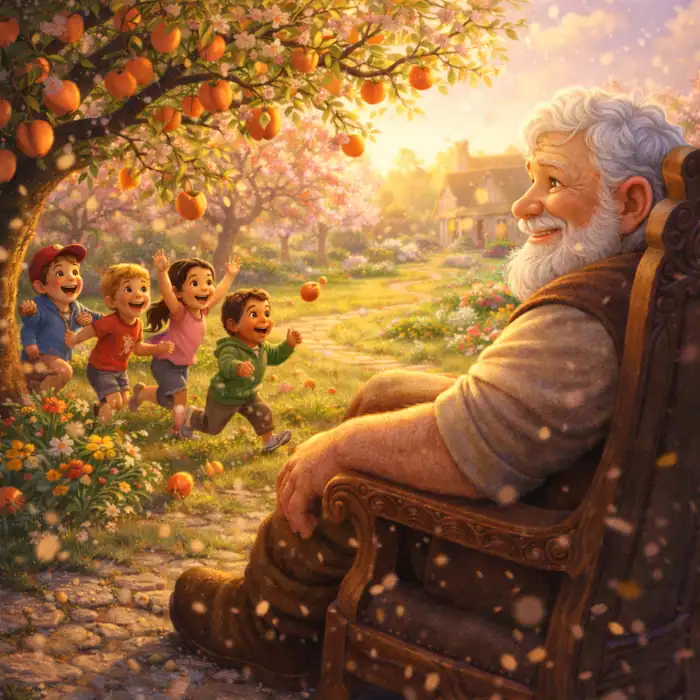
Yet one sadness remained in his heart: he never saw the smallest boy again.
Years passed, and the giant grew old. His beard turned white and his steps became slower, but he loved to sit in the garden and listen to the children laugh.
The giant had become part of the garden itself, as steady as the old trees and as welcome as sunshine.
The Tree of White Blossoms
One winter morning, the giant awoke very early.
A warm glow shone through the curtains.
At the far end of the garden, the tree in the corner was covered in white blossoms, and beneath it stood the little boy.
The giant’s heart leaped.
“My little child!” he cried.
He hurried across the garden as quickly as his old legs would carry him. When he came near, he saw marks on the child’s hands and feet.
The giant dropped to his knees.
“Who has dared hurt you?” he cried.
The child smiled gently.
“No,” he said. “These are the wounds of love.”
The giant looked at him with wonder. Then the child’s face shone with such beauty and peace that the giant knew he stood before someone holy.
The child said, “Once you let me play in your garden. Today you shall come with me to my garden, which is Paradise.”
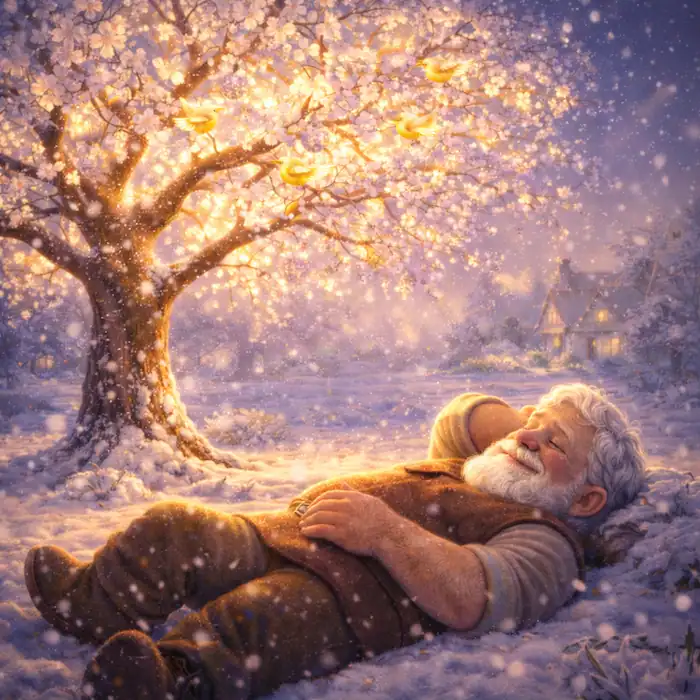
The giant’s old face grew calm.
That afternoon, when the children came running after school, they found the giant lying beneath the tree, very still, with white blossoms scattered all around him like snow. His face was peaceful, and though it was the heart of winter, the corner where he lay looked like spring.