

The Pied Piper of Hamelin

Audio Story in a gold frame: The Pied Piper playing a flute against a colorful geometric background
0:00 / 0:00
The Pied Piper of Hamelin
Kooky Kids World Cloud Logo showing where the audio read aloud file is.

The Pied Piper of Hamelin is a classic German folktale about a town overrun by rats. A mysterious piper arrives and uses his magic flute to lead the rats into the river, saving the town. But when the townspeople refuse to pay him, the Piper returns and plays another tune, this time leading the children away forever. This haunting story explores promises, greed, justice, and consequences.

The Pied Piper of Hamelin

The Rat Problem

Cartoon rats scurry through colourful medieval town streets

Long ago, in a time of trouble, the town of Hamelin faced a terrible problem. Rats. Hundreds and thousands of them. Big ones, small ones, sneaky ones. They ran through every street, chewed through cupboards, and even danced on rooftops. The townspeople had tried everything, but nothing worked.

One day, a strange man appeared at the town gate, calling himself a piper.He wore a long cloak made from many pieces of brightly colored cloth. Because of his coat, the people began calling him the Pied Piper.

Pied Piper stands at city gates in colourful patchwork cloak

“I hear you’ve got a rat problem,” the man said with a smile. “I can rid your town of every last one—for a price.”

Desperate, the townspeople quickly agreed. They promised to pay him a handsome sum if he could truly send the rats away.

Without another word, the Pied Piper reached into his pocket and pulled out a small flute. Then, he began to play.

The music was eerie and enchanting. Soft as a breeze through reeds, with notes that shimmered like silver raindrops. It floated through the streets like a whisper, wrapping around corners and slipping under doorways. Suddenly, the rats began to pour out of every house! One by one, hundreds of them scurried after the sound of the pipe.

Pied Piper playing his flute as rats gather around him

Still playing, the Piper strolled out of town toward the river. The rats followed close behind, tumbling over one another to keep up. He waded into the water, still playing. Without hesitation, the rats followed him into the river, and there they drowned.

Rats follow the Piper into a river and begin to drown

The people of Hamelin were overjoyed. At last, their town was free from the horrible rodents.

The Broken Promise
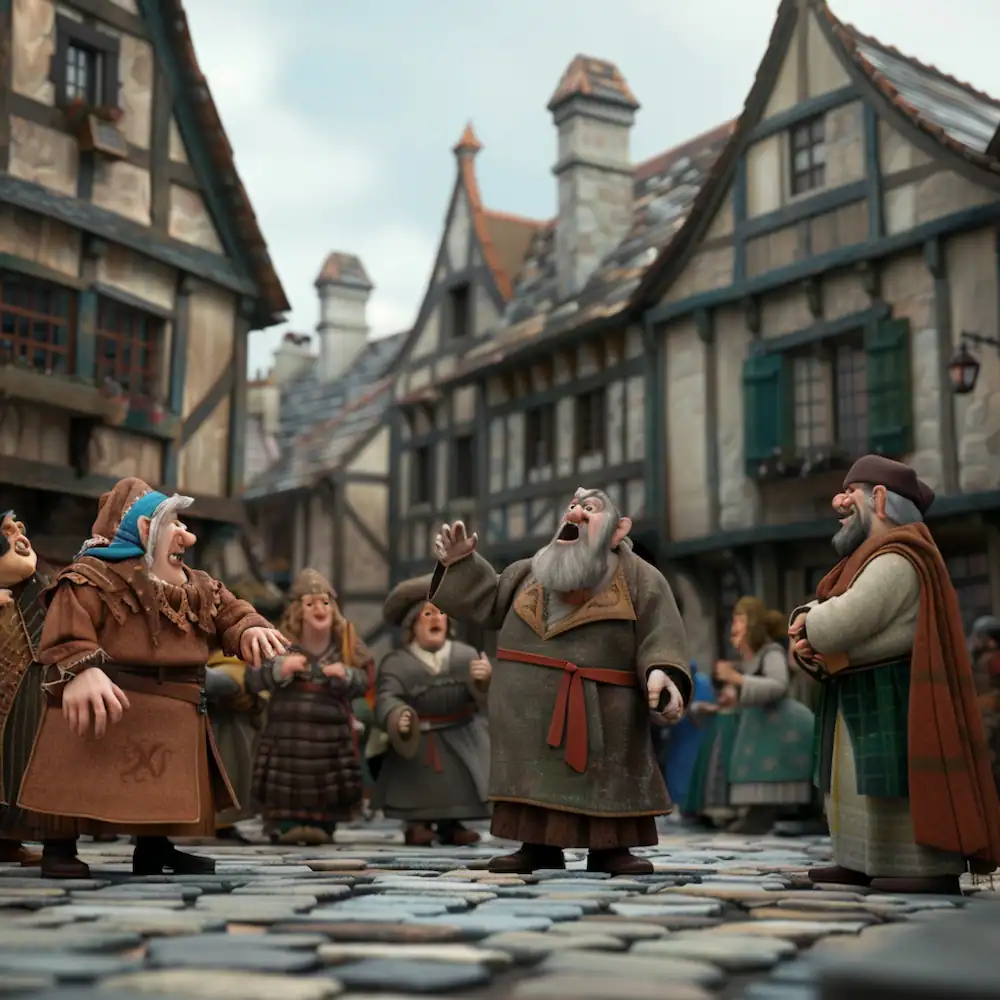
Angry townsfolk argue in front of medieval buildings

But now that the rats were gone, the townspeople grew stingy.

“That was far too easy,” muttered one man.

“Why should we pay him so much?” said another.

“Perhaps he used magic! That shouldn’t count,” said a third.

When the Piper returned for his payment, the townspeople refused. They offered only a few coins, nothing close to what they had promised.

The Piper’s eyes narrowed. “You broke your word,” he said quietly. “You’ll regret it.”

He left the town, his colourful cloak billowing behind him. No one stopped him. No one said thank you. No one paid a single silver coin.

The Children Vanish

 

The Piper returns in a dark cloak and feathered hat at night

Not long after, the Piper returned.

But this time, he looked different. He wore a dark green hunter’s cloak, a red feathered hat, and a grim expression. No one noticed him at first.

Then, he pulled out his flute once again, and began to play.

This melody was sweeter than before. High and dancing like sunlight on water, playful yet strange, like a dream you couldn’t wake from.

But it wasn’t rats that came this time.

It was children.

From every corner of Hamelin, boys and girls came running. Toddlers and teens, rich and poor, even the mayor’s own daughter. They smiled and laughed as they followed the Piper through the streets.

The Pied Piper returns in a dark cloak and feathered hat at night

But there was something eerie about it. The music felt like a spell. Beautiful, but impossible to resist.

One babysitter, holding a little child, followed at a distance. But when she saw the group heading toward the mountains, she turned back and ran to warn the others.

A young woman carrying a baby turns away from the marching children

By the time the parents reached the town gates, it was too late.

The Piper had led 130 children into a mountain—and vanished.

Aftermath and Mystery

Panicked townspeople run through the streets in confusion

The town was in chaos. Mothers wept in the streets. Fathers searched every hill and valley. Messengers rode in every direction, shouting the children’s names.

But not a single one returned.

The place where they vanished became known as the Silent Street. No music or dancing was allowed there, not even during weddings. Even now, people remember the terrible price the town paid for breaking their promise.

The mountain just outside Hamelin still stands, though no one knows what lies within. The name of the hill has been forgotten, but the sorrow remains.

A flute lies abandoned near a mountain path at sunset

Some say the children reappeared in a faraway land, building a new life beyond the mountains. Others say they were never seen again.

But one thing is certain, the Piper kept his word. And Hamelin never forgot.

Moral of the Story

The moral of The Pied Piper of Hamelin is that promises must be kept, and greed can lead to devastating consequences. The people of Hamelin were happy to accept help when they needed it, but once the danger had passed, they refused to honor their word. The story warns that dishonesty and selfishness can harm far more people than expected.

Vocabulary Spotlight

Eerie – Strange, spooky, or unsettling.

Enchanting – Charming in a magical or powerful way.

Stingy – Unwilling to give or spend fairly.

Billowing – Flowing outward in large waves.

Grim – Serious, dark, or severe.

Resist – To fight against something or refuse to follow it.

Vanished – Disappeared suddenly.

Consequences – The results or effects of actions.

Justice – Fair treatment or fair results.

Retribution – Punishment given as a result of wrongdoing.

Parent and Teacher Discussion Questions

  1. Why did the people of Hamelin agree to pay the Piper?
  2. Why did they change their minds after the rats were gone?
  3. What does the story teach about keeping promises?
  4. Do you think the Piper’s revenge was fair? Why or why not?
  5. How did greed cause the town’s downfall?
  6. Why is the second tune more frightening than the first?
  7. What emotions do you think the parents felt when the children vanished?
  8. Why do you think this story has been remembered for so long?
  9. What would you have done if you were one of the townspeople?
  10. What lesson should the people of Hamelin have learned too late?

Teacher’s Note

The Pied Piper of Hamelin works well for teaching moral lessons, consequences, and cause and effect. It also supports discussion about promises, fairness, greed, justice, and how one bad decision can affect an entire community.

Dylan's First Day at School
FREE EBOOK

Get Dylan’s First Adventure

Join the dancing fun! Grab your free copy of Dylan’s school debut.

Send My Copy

Check your email (and junk folder).

Classroom and Home Activity Ideas

  • Create a cause and effect chart showing how the town’s broken promise led to the disappearance of the children
  • Hold a character debate on whether the Piper was a hero, a villain, or both
  • Make a moral poster showing the lesson about promises and greed
  • Retell the story in four parts: the rats, the deal, the broken promise, and the disappearance
  • Write an alternative ending where the townspeople keep their word
  • Compare the two tunes and discuss how sound and mood change the story

March to More Enchanting Melodies

History of The Pied Piper of Hamelin

The Pied Piper of Hamelin comes from traditional German folklore and is linked to the town of Hamelin in Germany. The tale is often connected to a reported event from the year 1284, when many children were said to have disappeared from the town, though what really happened remains a mystery. Over time, the story became one of Europe’s best-known legends.

The best-known literary version in English was written by Robert Browning in 1842, but the tale itself is much older than Browning’s poem.

Pied Piper of Hamelin Frequently Asked Questions

  • What is The Pied Piper of Hamelin about?

    The Pied Piper of Hamelin is a traditional German folktale about a mysterious musician who saves a town from rats by playing his pipe. But when the townspeople refuse to pay him, he returns and leads their children away instead. The story is about broken promises, greed, and consequences.

  • Who wrote The Pied Piper of Hamelin?

    The Pied Piper of Hamelin comes from traditional German folklore, but the best-known literary version in English was written by Robert Browning in 1842.

  • Is The Pied Piper of Hamelin a true story?

    The story is based on a long-standing legend connected to the town of Hamelin in Germany. It is often linked to reports that many children disappeared there in 1284, although historians do not know exactly what happened.

  • What is the moral of The Pied Piper of Hamelin?

    The main moral of The Pied Piper of Hamelin is that promises should be kept. The story also warns against greed, dishonesty, and treating people unfairly after they have helped you.

  • What happens in The Pied Piper of Hamelin story?

    In The Pied Piper of Hamelin story, the town is overrun by rats. The Piper removes them with music, but when the townspeople break their promise to pay him, he returns and leads the children away.

  • Where does The Pied Piper of Hamelin come from?

    The Pied Piper of Hamelin comes from Germany, specifically the town of Hamelin in Lower Saxony.

  • Why is Robert Browning connected to The Pied Piper of Hamelin?

    Robert Browning wrote one of the most famous literary retellings of The Pied Piper of Hamelin in 1842. His poem helped make the story even more widely known in English.

  • What did The Pied Piper of Hamelin do?

    The Pied Piper first used his magical pipe to lead the rats out of Hamelin. Later, after the town refused to pay him, he used another tune to lead away the children.

  • What happened to the children in The Pied Piper of Hamelin?

    In most versions, the children followed the Piper out of Hamelin and disappeared into a mountain, never to return. Some retellings say one child remained behind or later told the story.

  • Is The Pied Piper of Hamelin a fairy tale or a folktale?

    It is best described as a German folktale or legend, although many readers also group it with classic fairy tales because it contains magical elements.

  • What is the theme of The Pied Piper of Hamelin?

    The main themes of The Pied Piper of Hamelin are broken promises, greed, justice, retribution, and the consequences of selfish choices.

  • Why is The Pied Piper of Hamelin still remembered today?

    The story remains memorable because it combines a mysterious legend, a striking moral lesson, and an unsettling ending. Its warning about greed and promises still feels powerful.