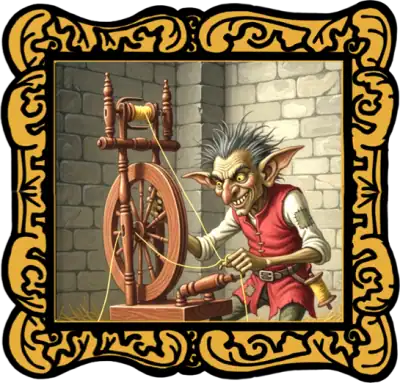

Rumpelstiltskin is a classic fairy tale best known through the Brothers Grimm version about a miller’s daughter, a greedy king and a strange little man who can spin straw into gold. This retelling keeps the best-known parts of the Rumpelstiltskin story while using clear, child-friendly language.
- Independent Reading Age: 7–10
- Reading Level: Lower to Middle Elementary (Grades 2–5)
- Reading Time: 5–7 minutes
- Author / Source: Traditional tale collected by the Brothers Grimm, retold for children
- Story Type: Fairy tale
- Region / Origin: Germany / European folk tradition
- Main Characters: Rumpelstiltskin, miller’s daughter, the king
- Moral / Themes: Truthfulness, greed, promises, consequences and cleverness
The Story of Rumpelstiltskin
The Miller’s Boast
In a small kingdom lived a miller and his daughter, Elisa.
The miller loved to brag. Often it was harmless but sometimes his bragging slid into lies. Small ones, big ones, but this time he went too far.
One day he boasted to King Leopold that his daughter was so clever she could spin straw into gold. Elisa covered her face in embarrassment, but the King’s eyes flashed with greed. “Gold?” he said. “Then bring her to my castle at once!”
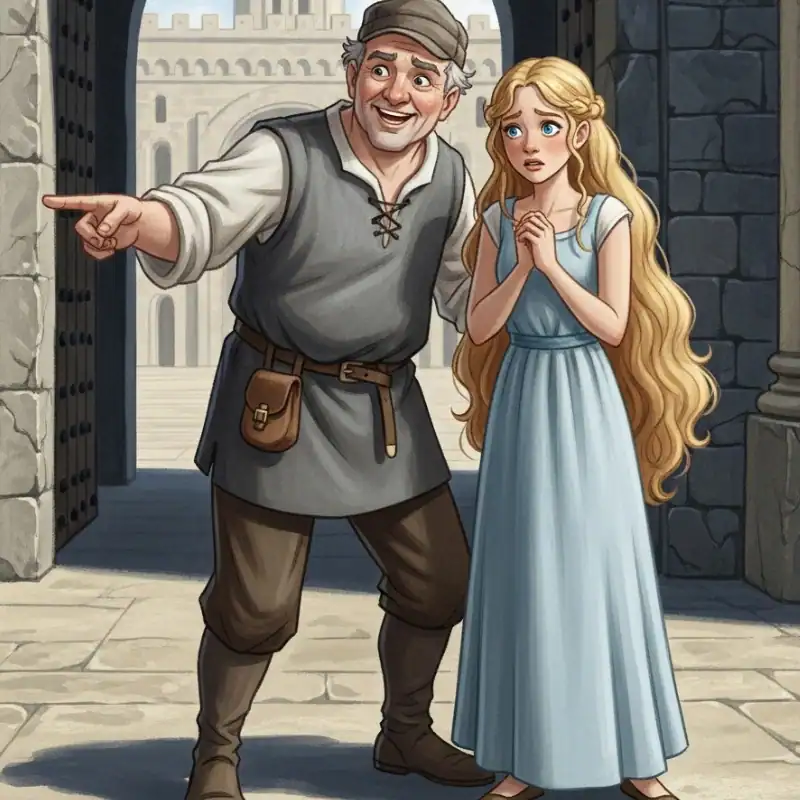
Because the miller had bragged and lied, Elisa was brought to the castle and faced a task no one could be expected to do.
Straw Into Gold
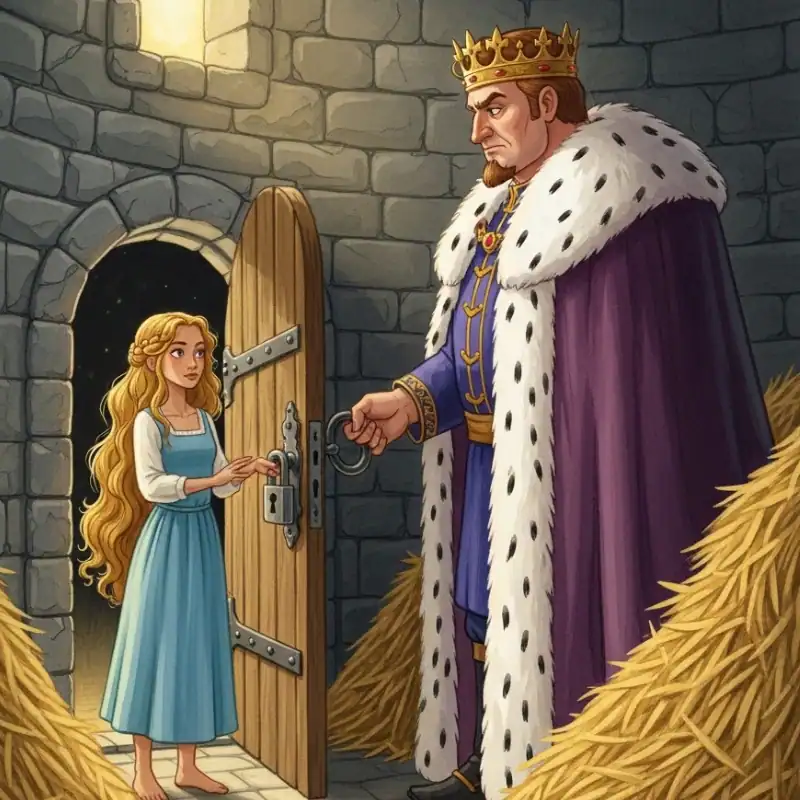
King Leopold led Elisa to a tower room piled high with dry, dusty straw. “Here is the straw,” the King said. “If this is not spun into gold by morning, you will pay the price for your father’s boast.” The King left, pulling the door closed and turning a massive key in the outer lock. The straw smelled sharp and dusty and the spinning wheel gave a low hum in the corner. Elisa sank onto a low stool, staring at the golden light fading in the small window. Elisa wept, knowing the task was impossible.
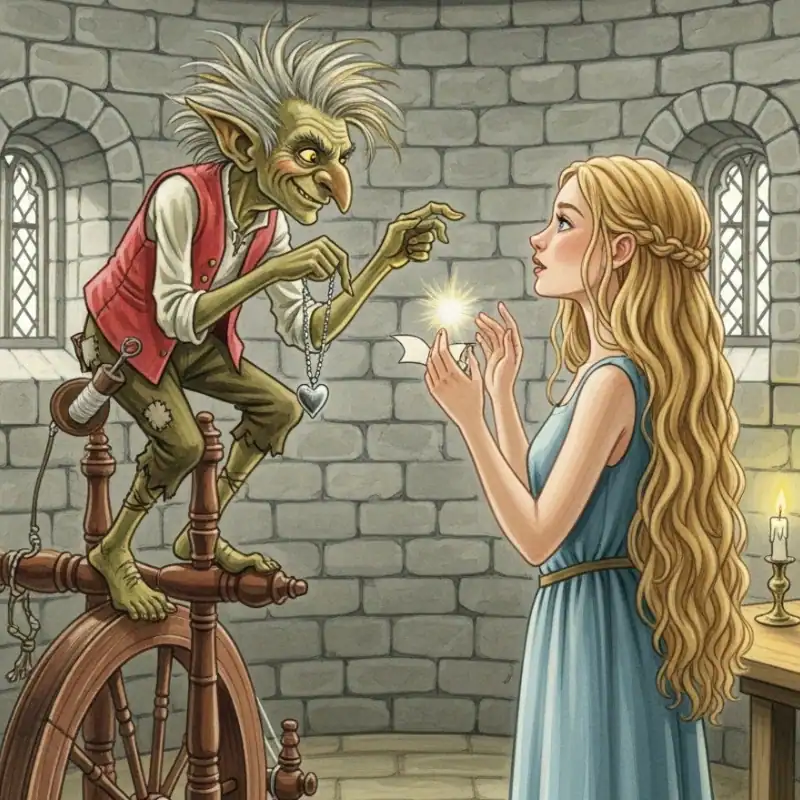
Suddenly, a strange little man, hardly taller than the stool, magically popped into the room. “Why are you crying, little miller’s daughter?” he squeaked. When Elisa explained, the little man offered, “I will spin the straw for you. What will you give me?” Desperate, Elisa gave him her favorite silver necklace. The little man whirred and spun all night, and by dawn, the room glittered with spun gold.
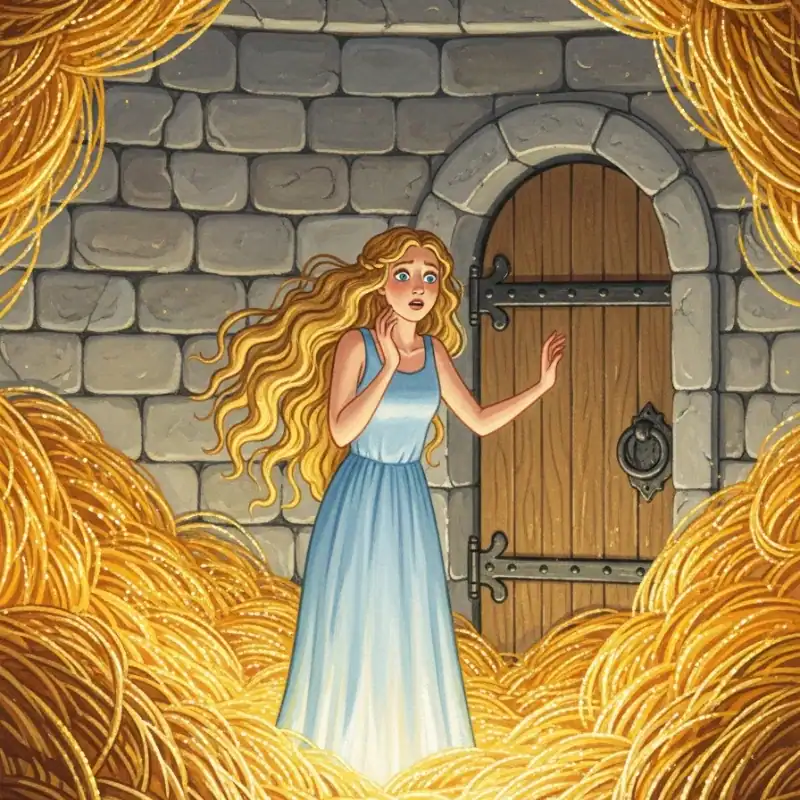
The King was thrilled but not satisfied. “Excellent! Now for a bigger test,” the King said, locking her in a second, larger room piled like a mountain with straw.
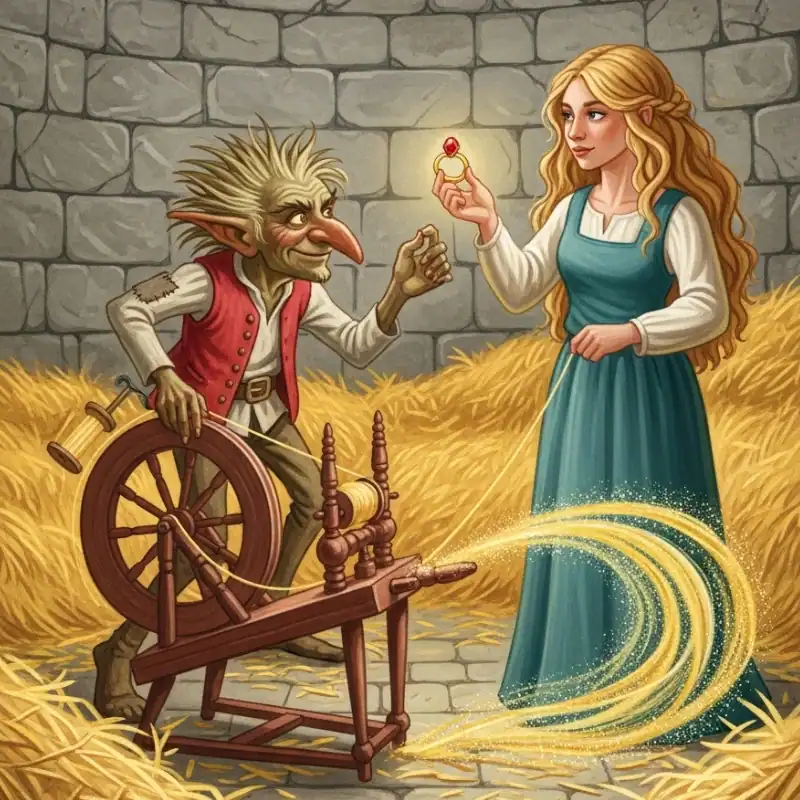
Just as before, the strange little man appeared when she was most helpless. “What will you give me this time?” he asked. Elisa had only her ring left, which she handed over with a sigh. Again, the little man took the straw and spun it into a room full of gold, then vanished with a puff of smoke.
The Dangerous Promise
The King, delighted by the second room of gold, clapped his hands. “One last trial,” he said. “Spin this largest room into gold, and you shall be my Queen.” Elisa stood alone.
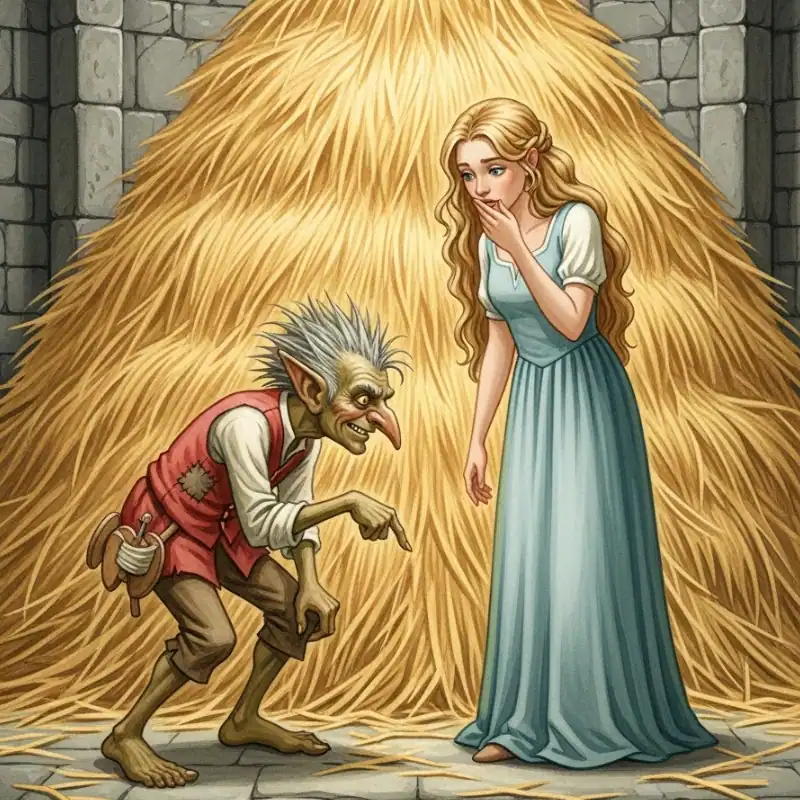
The little man appeared, and she had nothing left to give. He chuckled, “Then promise me your first-born child.” Her heart hammered. Promises mattered, but she was trapped. Fear closed in. Horrified, Elisa promised. The straw became gold. Elisa became Queen.
The Name Game
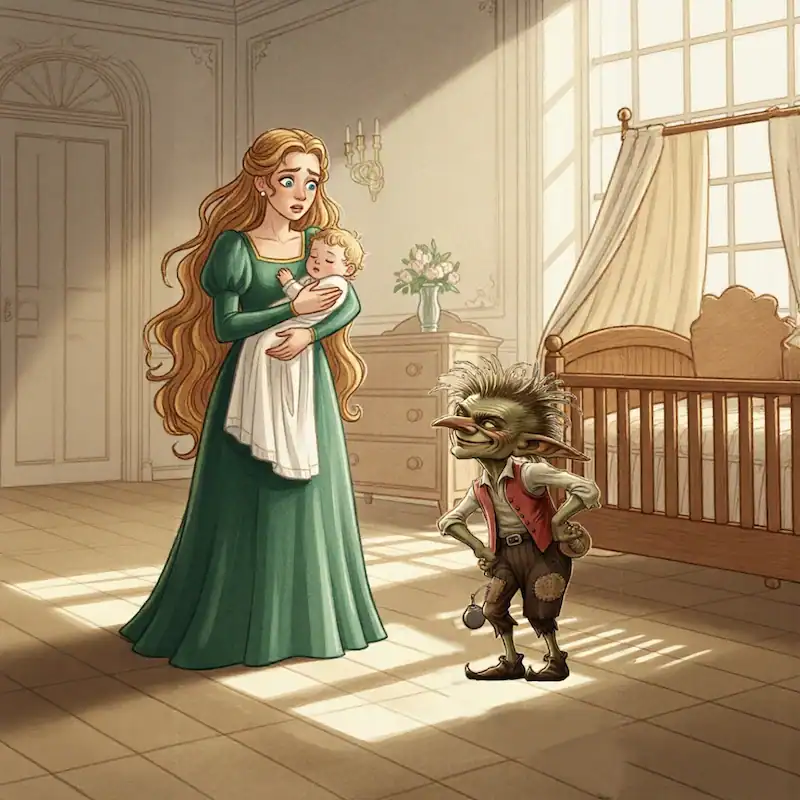
In time, the palace bells rang with happier news: Elisa was expecting a child and when the baby was born, the whole kingdom rejoiced. She held her sweet baby close, her days filled with joy. Then, one quiet afternoon, he reappeared in the royal nursery. “Queen,” he squeaked, his eyes glinting, “I have come for what you promised.”
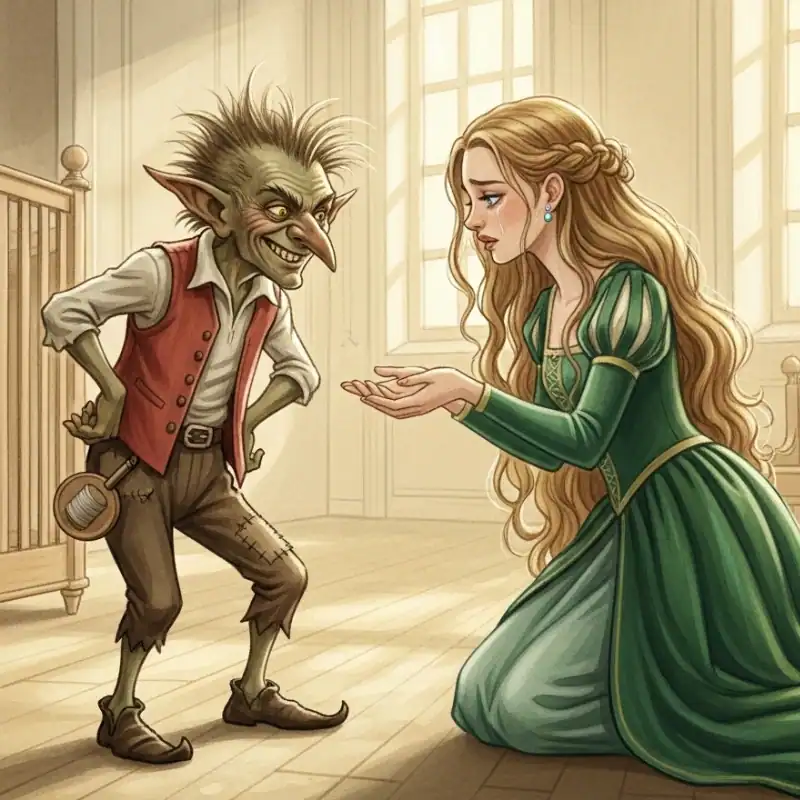
Queen Elisa sobbed and begged, offering all the wealth of the kingdom.
“I want your child!” he insisted.
“Please,” Elisa said, standing tall though she trembled, “give me a fair chance to save my child. Set me a challenge.”
The little man laughed, certain she would fail. “I’ll give you three days for this challenge: if you can guess my name before the sun sets on the third day, you may keep the child.”
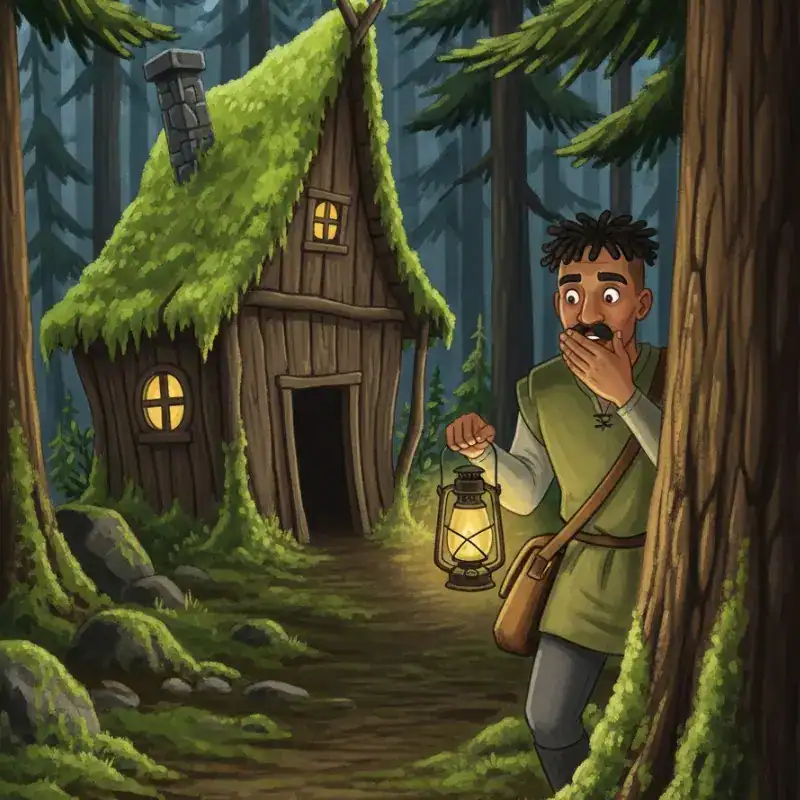
Elisa called her most trusted servant. “Go out and bring me every unusual name you hear. Ask the woodcutters, farmers and travellers. If you pass the woods after dark and hear singing or see a lone fire, keep hidden and listen.”
For two days she tested each name he gathered, one by one, while the sun slid toward the horizon and the nursery shadows grew long. That night, the servant spotted a red glow in the trees, crept close and saw the little man dancing round a fire and singing…
“Round I twirl, round I spin
What’s my name? You’ll never win
I’m Rumpelstiltskin!”
The Queen’s Cleverness
The third day, the little man returned, his smile huge and wicked. “What is my name, Queen?” he chirped. Elisa met his gaze, steady and calm. She looked him straight in the eye and said, clearly, “Is your name… Rumpelstiltskin?”
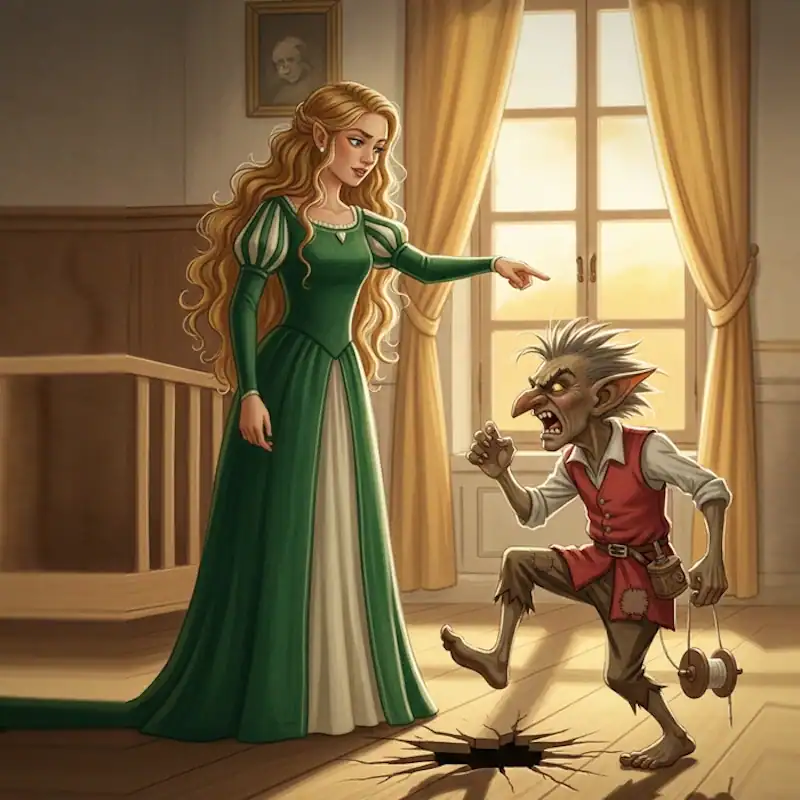
The little man shrieked a terrible, furious scream. He stamped so hard the stone floor cracked like ice. A whirl of smoke wrapped around him, the crack widened with a sharp snap and in a rush of wind he was gone, vanished from the castle and never seen again.
Later, the miller came to the palace in shame. He apologized to Elisa for his lies but she forgave him. He promised to speak the truth from then on.
Moral
Rumpelstiltskin teaches that lies and greedy choices can cause great trouble, while clever thinking and truth can help set things right.
Vocabulary Spotlight
Boast — to talk proudly about yourself or someone else
Greed — wanting more and more for yourself
Bargain — an agreement or deal
Glinting — shining with a small, sharp light
Whirred — moved very quickly with a soft spinning sound
Cleverness — the ability to think and solve problems well
Teacher’s Note
Rumpelstiltskin works well in class because it is short, memorable and full of strong discussion themes children can understand: lying, greed, pressure, promises and clever problem-solving. It also opens useful conversations about what to do when adults make poor choices that affect others.
It also supports:
- sequencing
- cause and effect
- discussion of promises
- problem-solving
- character choices
- identifying a moral
Parent and Teacher Discussion Questions for Rumpelstiltskin
Use these questions to explore truth, greed, pressure, promises and clever problem-solving.
Why did the miller brag to the king, even though it was not true?
Talk about whether he wanted attention, approval or status, and why people sometimes exaggerate to impress others.
Who caused the most trouble in the story: the miller, the king or Rumpelstiltskin?
Ask children to explain their answer with examples from the story.
Was Elisa truly free to make her promise, or was she pressured into it?
This helps children think about whether a promise is fair if someone feels trapped or frightened.
Why is the king an important part of the problem?
Children often focus only on Rumpelstiltskin, but the king’s greed matters too.
What makes Rumpelstiltskin such a powerful character in the story?
Discuss whether it is his magic, his confidence, the bargain he makes or the fear he creates.
Why does knowing his name matter so much?
This gets children thinking about names, identity and power in fairy tales.
How does Elisa change from the beginning of the story to the end?
Look at how she moves from being frightened and trapped to being calm, thoughtful and clever.
What is the biggest lesson in Rumpelstiltskin?
Let children decide whether the main lesson is about lying, greed, unfair promises or using your wits.
And here is the stronger activity section with it, so both sections match in quality.
Classroom Activities
Promise or Pressure?
Give children different example promises and ask them to sort them into fair promises and unfair promises. Then compare them with the promise in Rumpelstiltskin.
Spin Straw Into Gold?
Ask children to imagine an impossible task someone might boast about. Then discuss what could go wrong when people exaggerate or lie to impress others.
Name Guessing Game
Make a list of unusual fairy-tale-style names. Let children guess which one could belong to a magical character, then talk about why names matter so much in this story.
Who Caused the Trouble?
Ask children to rank the characters — the miller, the king and Rumpelstiltskin — in order of who caused the most harm, and explain their reasons.
What Should Elisa Have Done?
Give children a chance to discuss or write what Elisa could have done at each stage of the story: when her father lied, when the king locked her in the room and when the little man demanded a promise.
More Stories from the Brothers Grimm
Looking for more Brothers Grimm fairy tales? Try these next.
The Elves and the Shoemaker — a warm Grimm story about generosity, gratitude and quiet acts of kindness.
Cinderella — another Grimm fairy tale about hardship, hope and a better ending.
Hansel and Gretel — a classic tale about danger, clever choices and surviving a threat.
Snow White and the Seven Dwarfs — another Grimm story about danger, deception and escaping a wicked enemy.
Rapunzel — a story about captivity, courage and the hope of freedom.
The Frog Prince — a shorter Grimm tale about promises, change and unexpected outcomes.
Stories with Similar Themes
Looking for more stories about truth, promises, greed and clever choices? Try these next.
The Emperor’s New Clothes — a moral tale about pride, truth and seeing clearly.
The Boy Who Cried Wolf — an Aesop fable about lying and consequences.
The Town Mouse and the Country Mouse — a story about choices, consequences and what matters most.
Hansel and Gretel — a tale of danger, pressure and using clever thinking to survive.
History of Rumpelstiltskin
Rumpelstiltskin is best known today through the Brothers Grimm version published in the nineteenth century in their collection of German fairy tales. Like many Grimm stories, it comes from older folk tradition rather than being invented entirely by the brothers themselves. Over time, it became one of the best-known tales about impossible tasks, dangerous promises and the power of cleverness.
To learn more about Jacob and Wilhelm Grimm and the fairy tales they collected, see Britannica’s overview of the Brothers Grimm.
About This Retelling
We chose to retell Rumpelstiltskin because it remains one of the clearest fairy tales about lying, greed, promises and clever problem-solving. This version keeps the best-known moments of the story while using language that is easier for modern children to follow.
Frequently Asked Questions about Rumpelstiltskin
-
What is the story of Rumpelstiltskin about?
It is a traditional German fairy tale about a miller’s daughter, a greedy king and a strange little man who spins straw into gold in exchange for payment.
-
Who wrote Rumpelstiltskin?
Rumpelstiltskin is an older traditional tale, not a story originally written by the Brothers Grimm. The best-known printed version was collected and published by Jacob and Wilhelm Grimm.
-
Is Rumpelstiltskin a Brothers Grimm fairy tale?
Yes. It is one of the best-known tales in the Grimm collection.
-
What is the moral of Rumpelstiltskin?
The story teaches that lies and greed can cause serious trouble, while truth and cleverness can help put things right.
-
Why does Rumpelstiltskin want the first-born child?
In the story, he demands the child as payment because the queen has nothing else left to give.
-
How does the queen defeat Rumpelstiltskin?
She learns his name and speaks it before the end of the third day.
-
What is Rumpelstiltskin’s real name?
His name is Rumpelstiltskin.
-
Is Rumpelstiltskin a fairy tale or a folktale?
It is usually classed as a fairy tale and is also part of the wider European folktale tradition.