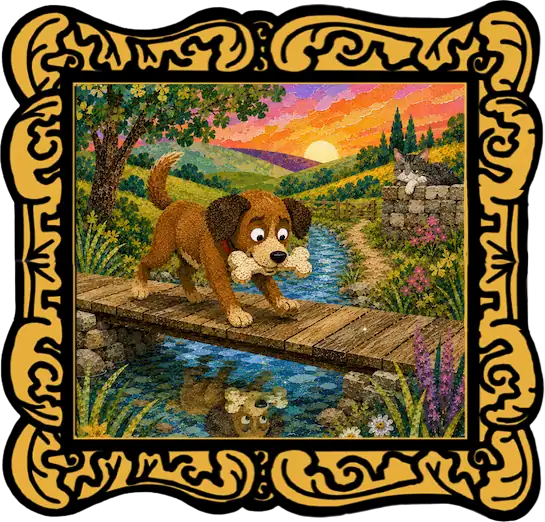

About This Story
The Dog and His Reflection is a short Aesop fable for children aged 4 to 8. This child-friendly retelling keeps the classic lesson about greed, gratitude and learning to be happy with what you already have.
In this story, a hungry dog finds a bone. When he sees his own reflection in the water, he thinks another dog has an even better bone. His greedy choice teaches him a simple lesson.
Story Details
- Independent Reading Age: 6 to 8
- Listen-Along Age: 4 to 8
- Reading Level: Early elementary
- Reading Time: About 4 to 6 minutes
- Author / Source: Based on an Aesop fable, retold for Kooky Kids World
- Story Type: Fable
- Region / Origin: Aesop fable tradition
- Main Characters: Dog
- Moral / Themes: Gratitude, greed, patience, wise choices and being content
Listen Along

Listen to this child-friendly Aesop fable read aloud, then read the full story below.

Explore This Story
The Dog and His Reflection Story
One bright morning, a dog trotted along a country path with his nose close to the ground.
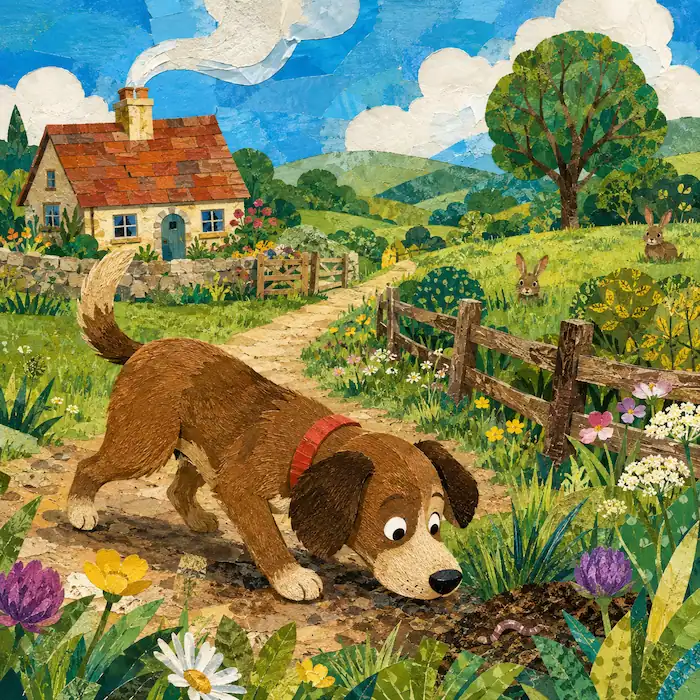
Sniff, sniff, sniff.
He could smell grass, damp earth and the faint trail of rabbits. He could smell bread cooling in a cottage window. He could smell smoke from a chimney and flowers beside a fence.
Then he smelled something better than all of those things.
A bone.
The dog stopped at once. His ears lifted. His tail wagged.
There, beside the path, lay a fine bone. It was not too small. It was not too thin. To the dog, it looked like the best bone in the whole wide world.
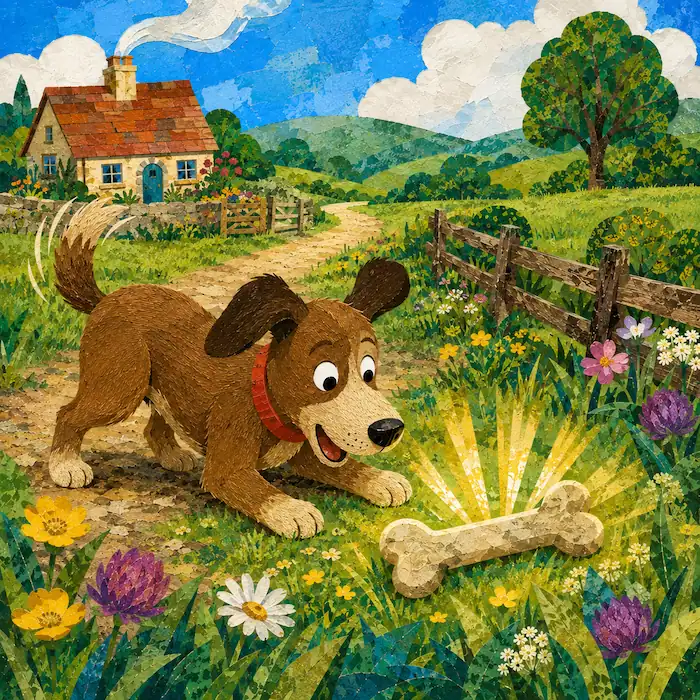
“What luck!” thought the dog.
He picked up the bone in his mouth and held it proudly.
Now, the dog could have sat down right there and enjoyed his breakfast. But he wanted somewhere quiet. He wanted a shady place where no other dog would bother him.
So off he went, trotting down the path with the bone held tight between his teeth.
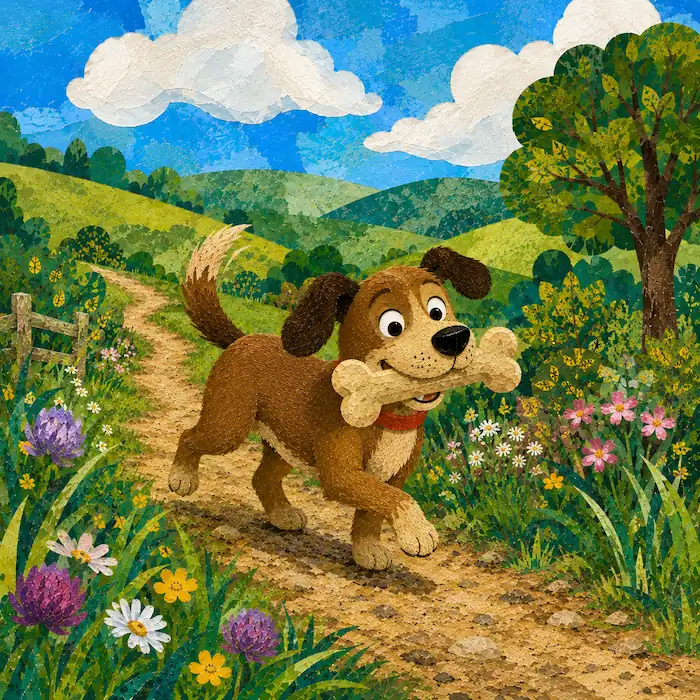
The dog passed a field where sheep nibbled the grass.
He passed a garden where hens scratched in the dust.
He passed an old wall where a sleepy cat opened one eye, saw the bone and closed the eye again.
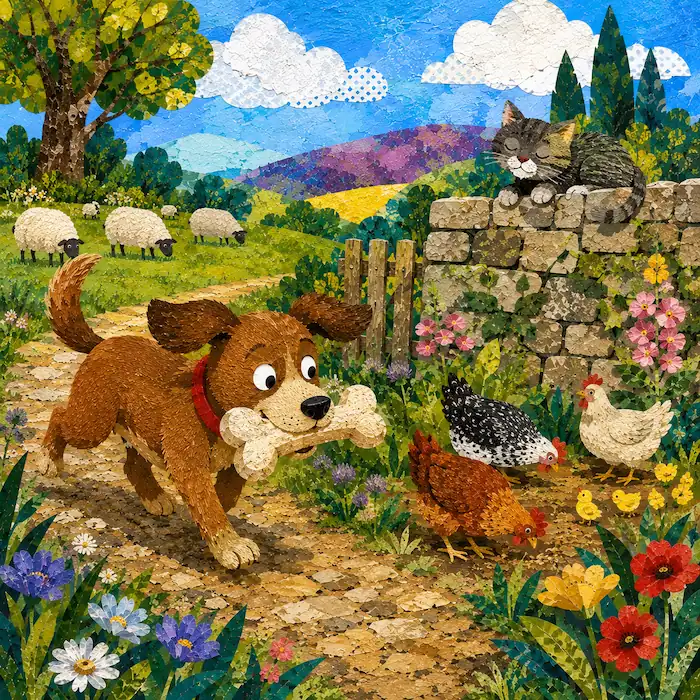
The dog walked faster.
“This is my bone,” he thought. “I found it. I will keep it safe.”
Soon he came to a narrow wooden bridge over a stream. The water below was calm and clear. Sunlight flashed on the surface and little ripples moved around the stones.
The dog stepped onto the bridge.
Tap, tap, tap went his paws on the wood.
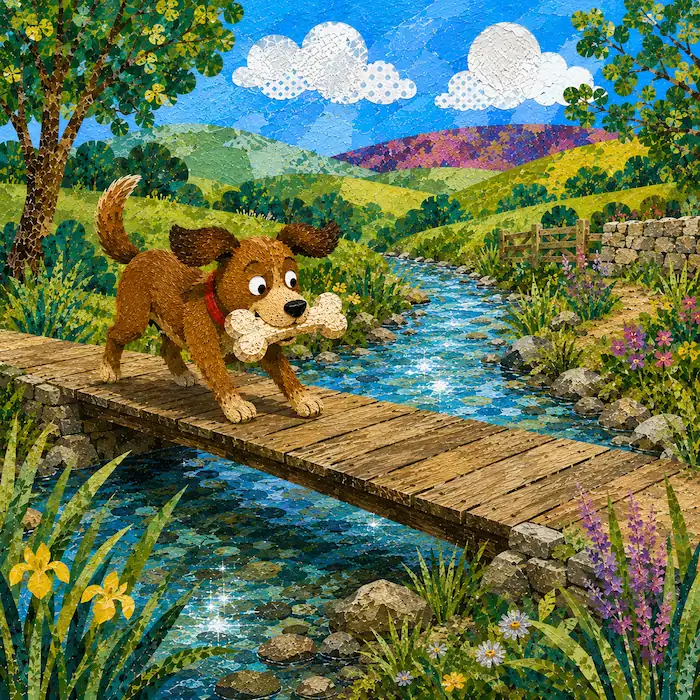
Halfway across, he looked down, and there, in the water, he saw another dog.
The dog on the bridge froze.
The dog in the water froze too.
The dog on the bridge held a bone in his mouth.
The dog in the water held a bone in his mouth too.
The dog on the bridge stared.
The dog in the water stared back.
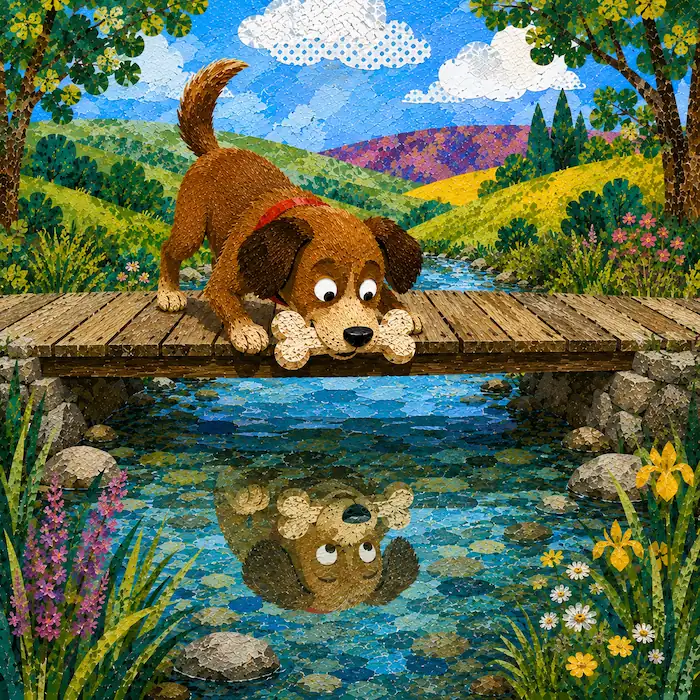
Now, the dog did not understand reflections. He did not know that the water was showing him his own face, his own ears and his own bone.
He thought, “There is another dog down there.”
Then he looked more carefully at the bone in the water.
It seemed longer.
It seemed brighter.
It seemed better than the bone he already had.
The dog’s tail stopped wagging.
“That dog has a bigger bone than mine,” he thought. “Why should he have a better one? I want that bone too.”
The dog leaned over the bridge.
The dog in the water leaned closer too.
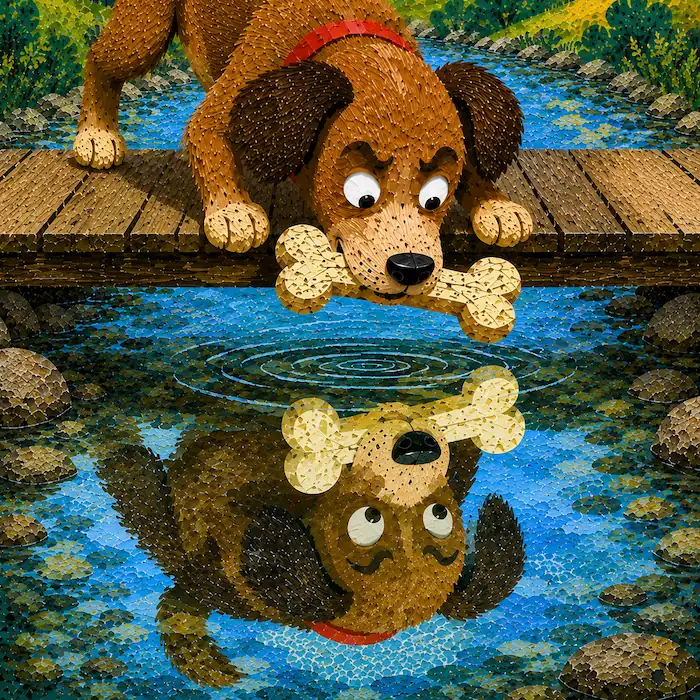
The dog on the bridge wrinkled his nose.
The dog in the water wrinkled his nose too.
“Give me that bone,” thought the dog.
Of course, the dog in the water said nothing. He only stared back with the same bright eyes and the same bone.
The dog on the bridge grew annoyed.
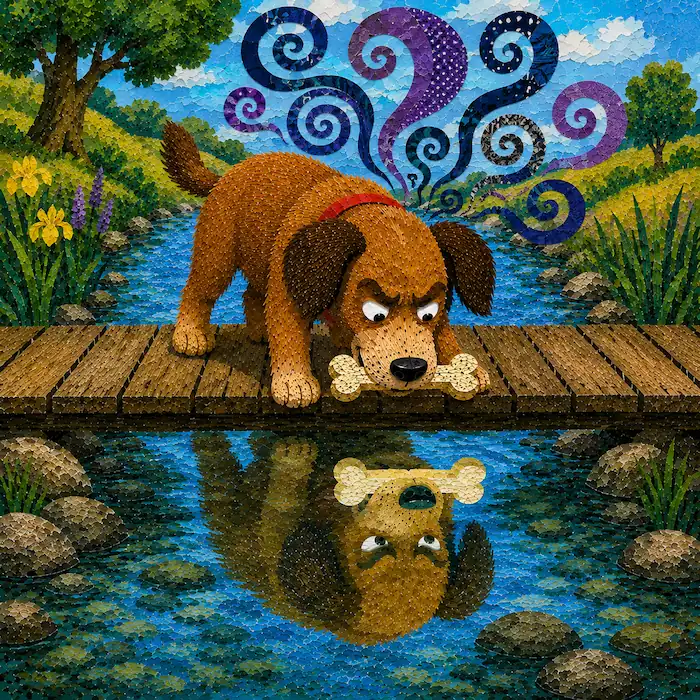
“I found my bone,” he thought. “But if I can take that bone too, I will have two bones. Two bones are better than one.”
He forgot how happy he had been only a few minutes before.
He forgot that his own bone was tasty and real.
He forgot that he already had exactly what he needed.
All he could think about was the other bone.
The dog planted his paws on the bridge.
He lifted his head.
He opened his mouth to bark.
“Woof!”
But the moment he opened his mouth, his own bone slipped free.
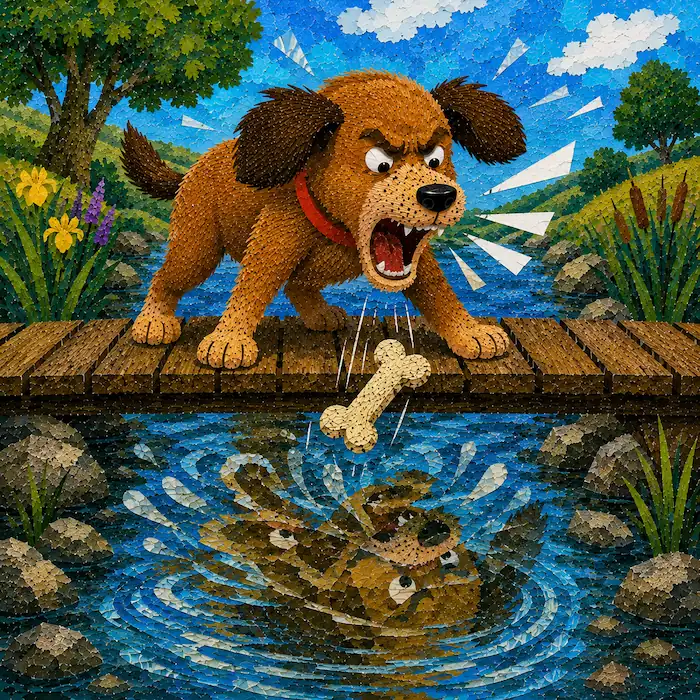
Down it fell.
Plop!
The bone dropped into the stream. It splashed through the shining reflection and sank beneath the water.
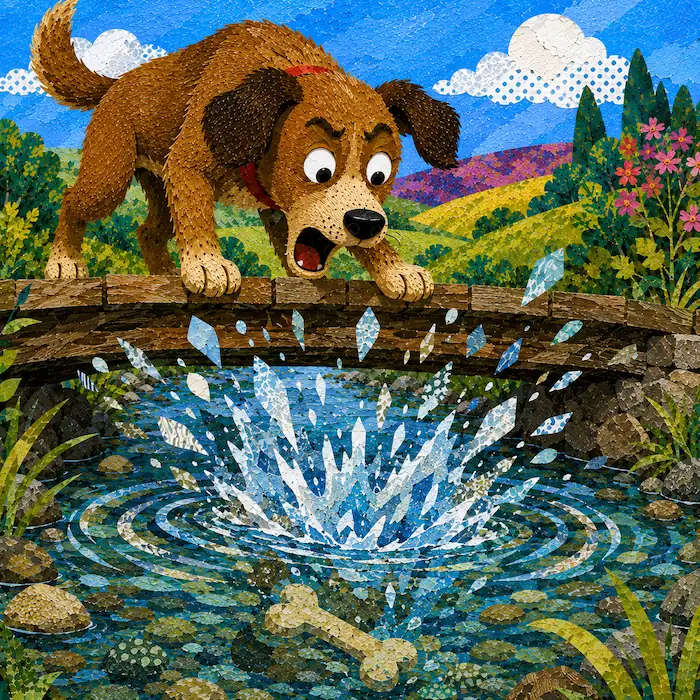
The dog stared in shock.
The dog in the water vanished into ripples.
The bigger bone vanished too.
The dog looked left. He looked right. He leaned over the bridge and searched the stream.
But the bone was gone.
There was no other dog.
There was no second bone.
There was only the water, the empty bridge and one very disappointed dog.
The dog sat down on the bridge.
His mouth was empty.
His stomach was empty.
And now he understood, a little too late, that he had lost a good thing because he wanted more than he needed.
“I had a fine bone,” he thought sadly. “It was enough. But I forgot to be happy with it.”
The dog climbed down from the bridge and walked back along the path.
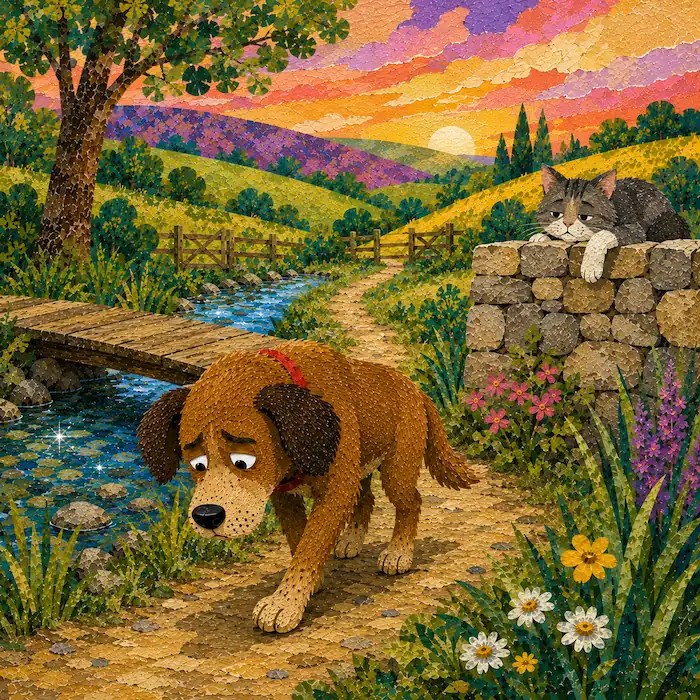
He passed the old wall, where the sleepy cat opened one eye again.
“No bone?” seemed to say the cat.
The dog lowered his head and kept walking.
He passed the garden. He passed the field. He passed the place where he had first found the bone.
This time, there was nothing waiting for him.
But the dog carried away something else.
He carried a lesson.
The next time he found something good, he would not drop it while grabbing at a shadow. He would be thankful for what he had, before greed made him lose it.
Moral of The Dog and His Reflection
Be grateful for what you have, because greed can make you lose it.
This fable reminds children that wanting more is not always wise. Sometimes, if we chase something that only looks better, we may lose the good thing already in our hands.
Short Summary
A dog finds a bone and carries it across a bridge. When he looks into the stream, he sees his own reflection and thinks another dog has a better bone. He opens his mouth to bark and drops his real bone into the water. The dog learns that greed can make you lose what you already have.
More Stories
If you enjoyed The Dog and His Reflection, you may also like:
Main Characters
Dog
Dog is excited, hungry and proud of his lucky find. He is not bad, but he lets greed guide his choice. By the end of the story, he understands that he lost a real bone because he tried to grab one that was only a reflection.
The Reflection
The reflection is not a real character, but it is important to the fable. It shows Dog what he already has, while making him think there is something better to take.
Vocabulary Spotlight
- Fable: A short story that teaches a lesson.
- Reflection: An image you see in water, glass or a mirror.
- Greed: Wanting more and more, even when you already have enough.
- Grateful: Thankful for what you have.
- Stream: A small river.
- Ripple: A small wave on the surface of water.
- Real: Something that truly exists.
- Shadow: A dark shape made when something blocks light.
Discussion Questions
- What did Dog find at the beginning of the story?
- Why did Dog look into the stream?
- What did Dog think he saw in the water?
- Why did Dog drop his bone?
- Was the bone in the water real? How do you know?
- What could Dog have done instead of barking?
- What does this fable teach about greed and gratitude?
Classroom Activities for Children
1. Reflection Experiment
Place a small toy near a bowl of water or a safe mirror. Let children observe how reflections work. Discuss why Dog might have been confused.
2. Real or Reflection Sorting
Show children simple pictures of real objects and reflections. Ask them to sort the pictures and explain what makes each one real or reflected.
3. Gratitude Bone Craft
Children draw or cut out a paper bone. On it, they write or draw one thing they are grateful for.
4. Retell with Four Pictures
Ask children to draw four scenes: Dog finds the bone, Dog sees the reflection, Dog barks and Dog loses the bone.
5. Better Choice Role Play
Children act out the story twice. The first time, Dog makes the greedy choice. The second time, Dog makes a wiser choice and walks away with his bone.
Teachers’ Notes
This fable works well for lessons on greed, gratitude, observation and cause and effect. It is short, visual and easy for younger children to retell.
For preschool and early elementary groups, focus on the simple lesson: Dog lost what he had because he wanted more. For older children, discuss how appearances can be misleading and why wanting something does not always mean it is worth chasing.
Why This Version Works for Children
- The plot is simple and easy to follow.
- The reflection idea gives children a clear visual hook.
- The moral is practical for everyday choices.
- The story avoids harsh punishment while keeping the consequence clear.
- It supports both literacy discussion and a simple observation activity.
What Parents and Teachers May Want to Know
The Dog and His Reflection is a classic fable about greed and contentment. It can help children talk about wanting more, comparing what they have with what others seem to have and making careful choices.
Story Background
The Dog and His Reflection is commonly told as one of Aesop’s fables. Aesop’s fables are short traditional stories that often use animals to teach a human lesson. This story may also appear under titles such as The Dog and the Shadow.
This Kooky Kids World version is a child-friendly retelling. It is not presented as the only version of the fable.
Further Reading for Adults and Teachers
Adults and teachers can compare this child-friendly retelling with a public-domain reference version:
Frequently Asked Questions About The Dog and His Reflection
What is the moral of The Dog and His Reflection?
The moral is to be grateful for what you have, because greed can make you lose it.
Is The Dog and His Reflection an Aesop fable?
Yes. The Dog and His Reflection is commonly told as one of Aesop’s fables.
What age is The Dog and His Reflection good for?
This retelling works well for children aged 4 to 8 as a listen-aloud story, or around 6 to 8 for independent reading.
What did the dog see in the water?
The dog saw his own reflection, but he thought it was another dog with another bone.
Why did the dog lose his bone?
The dog opened his mouth to bark at the reflection. When he did, the real bone fell from his mouth into the stream.
What can children learn from this fable?
Children can learn that it is wise to be thankful for what they have and careful about chasing things that only seem better.
Copyright Notice
This Kooky Kids World retelling is based on a traditional public-domain Aesop fable. This retelling text, support sections and page materials were prepared for Kooky Kids World.
