
Short Summary
The Crow and the Pitcher is a short Aesop fable for children aged 3-7. A thirsty crow finds water at the bottom of a tall pitcher, but his beak cannot reach it. Instead of giving up, he drops small pebbles into the pitcher one by one. The water rises until the crow can drink. The story shows children that patience and clever thinking can help solve problems.This gentle retelling has been written for younger readers, with simple language, a clear problem and a satisfying solution.
It is a good story for children who enjoy animal tales, clever ideas and stories where a small action makes a big difference.
Listen-Along Section
Story Details
- Independent Reading Age: 5-7 years
- Listen-Along Age: 3-7 years
- Reading Level: Early reader
- Story Reading Time: 2-3 minutes
- Author / Source: Traditional Aesop fable, retold by Kooky Kids World
- Story Type: Fable
- Region / Origin: Ancient Greece
- Main Characters: The crow
- Moral / Themes: Problem solving, patience, clever thinking and not giving up
The Story – The Crow and the Pitcher
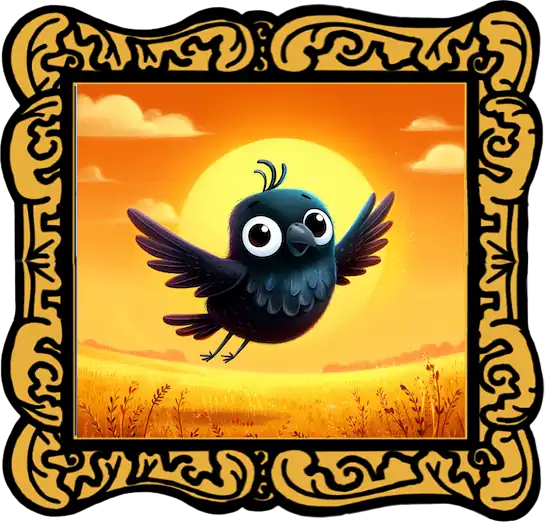
One hot sunny day, a crow flew over the fields. The sun was bright, the air was dry and the crow was very thirsty.
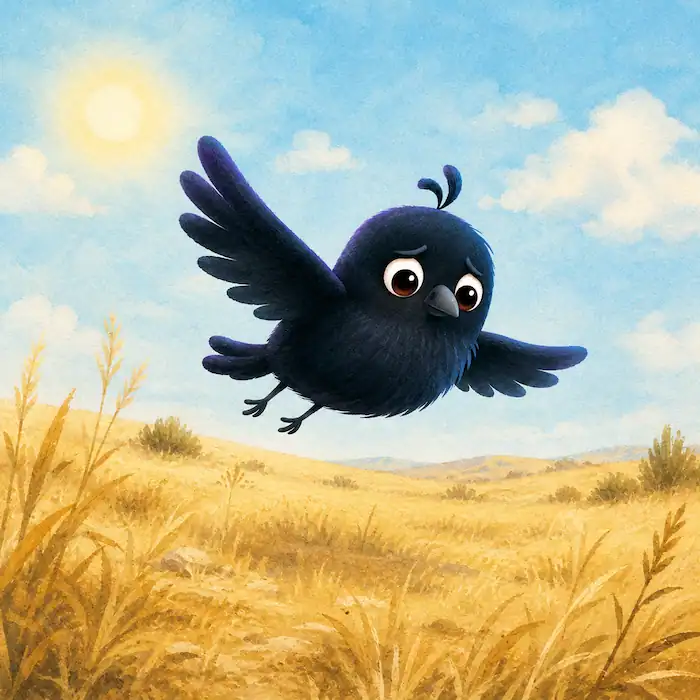
“Caw, caw,” called the crow. “I need a drink of water.”
He looked in the grass, but there was no water. He looked beside a stone wall, but there was no water there either. Then he looked under the shade of a tree.
Still no water.
At last, the crow saw something near a garden path. It was a tall clay pitcher.
The crow flew down and hopped close. “Maybe there is water inside,” he said.
He stood on the rim of the pitcher and looked in.
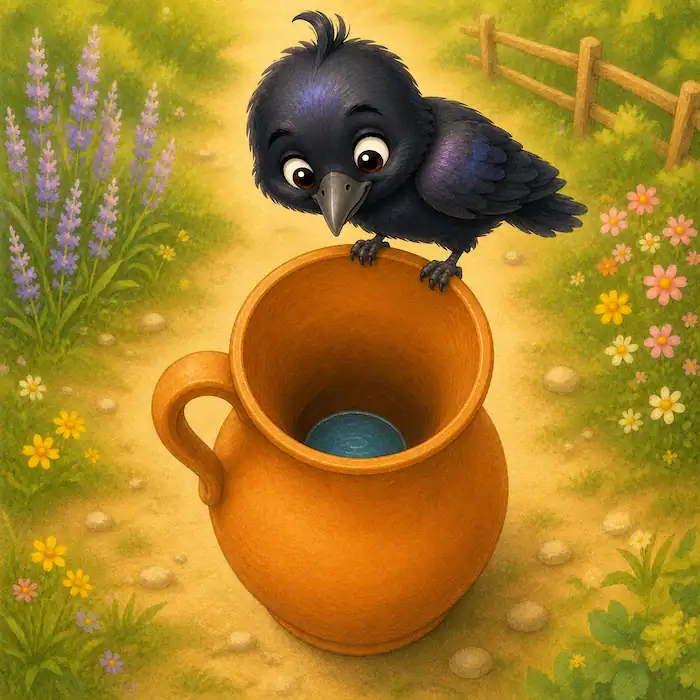
Yes! There was water at the bottom. The crow was so happy that he flapped his wings.
But when he bent his head down, his beak could not reach the water. He stretched his neck. He leaned as far as he could. He tried again and again, but the water was too low.
“Oh dear,” said the crow. “The water is there, but I cannot reach it.”
The crow sat beside the pitcher and thought. He did not cry. He did not fly away. He looked around carefully.
On the ground, he saw many small pebbles. One pebble was gray. One pebble was brown. One pebble was round and smooth.
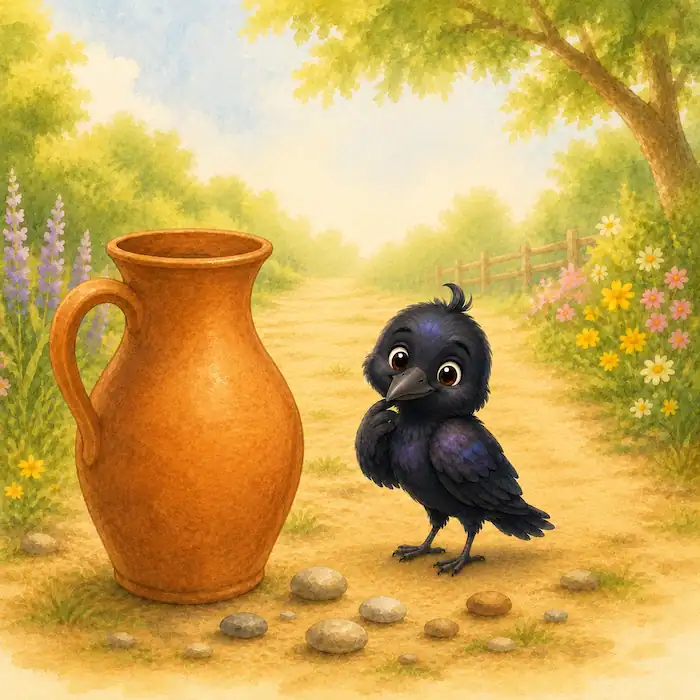
The crow picked up the gray pebble in his beak and dropped it into the pitcher.
One pebble.
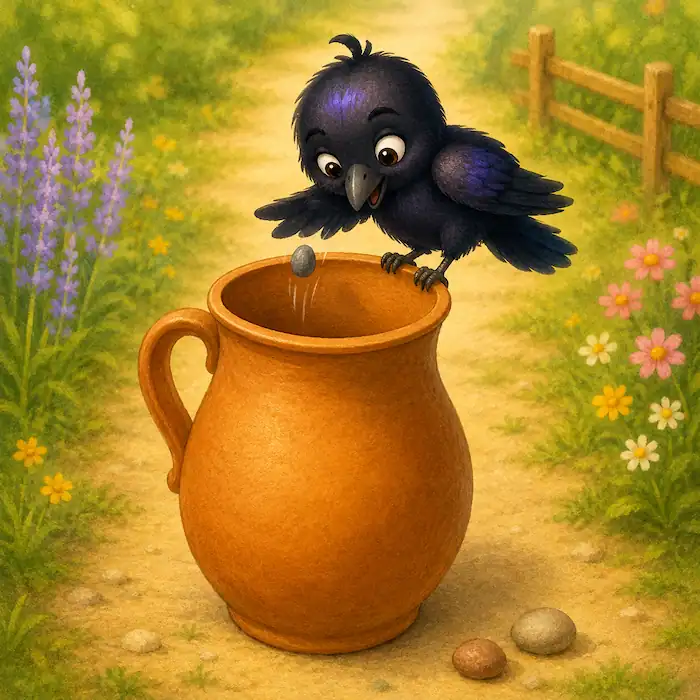
Plop!
The water moved a little. The crow looked inside.
“Hmm,” he said. “That helped a tiny bit.”
He picked up the brown pebble and dropped it in.
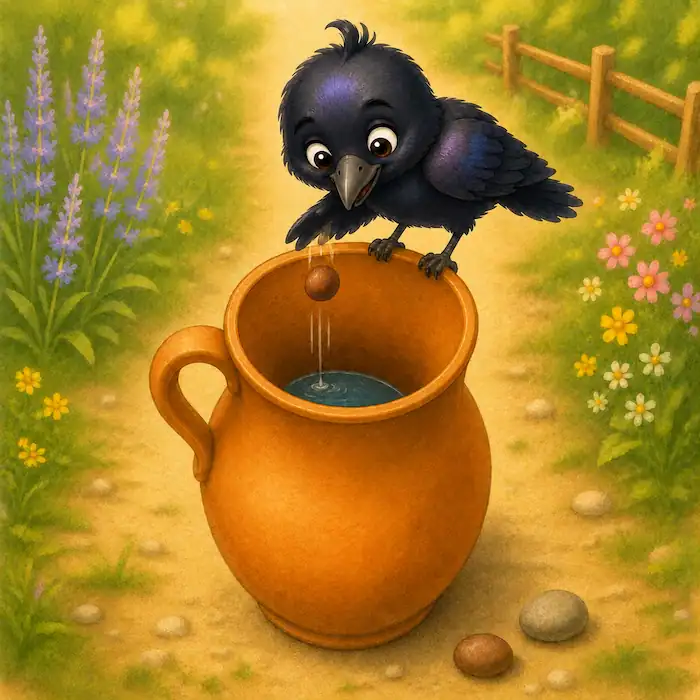
Two pebbles.
Plop! Plop!
Then he picked up the round, smooth pebble.
Three pebbles.
Plop! Plop! Plop!
The water was rising, but it was still not high enough.
So the crow kept going. Pebble by pebble, the water came higher. At last, the water was close enough.
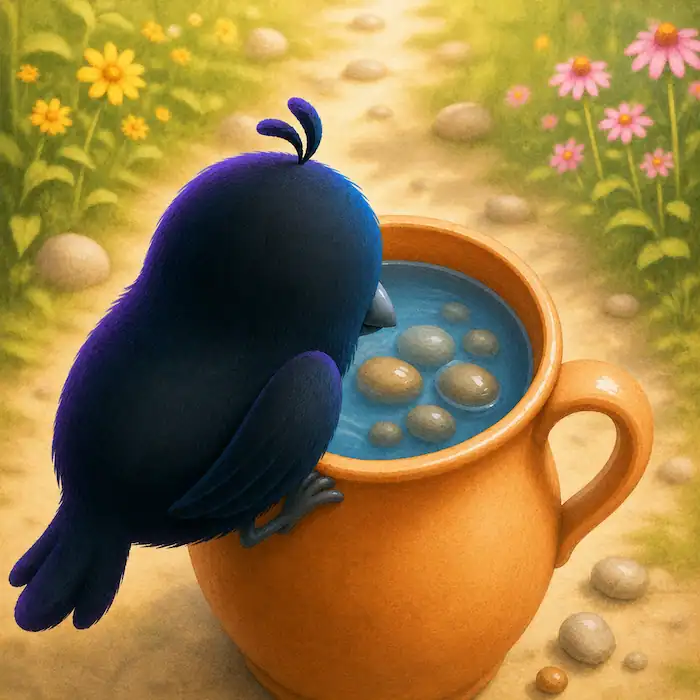
The crow dipped his beak into the pitcher and took a cool drink.
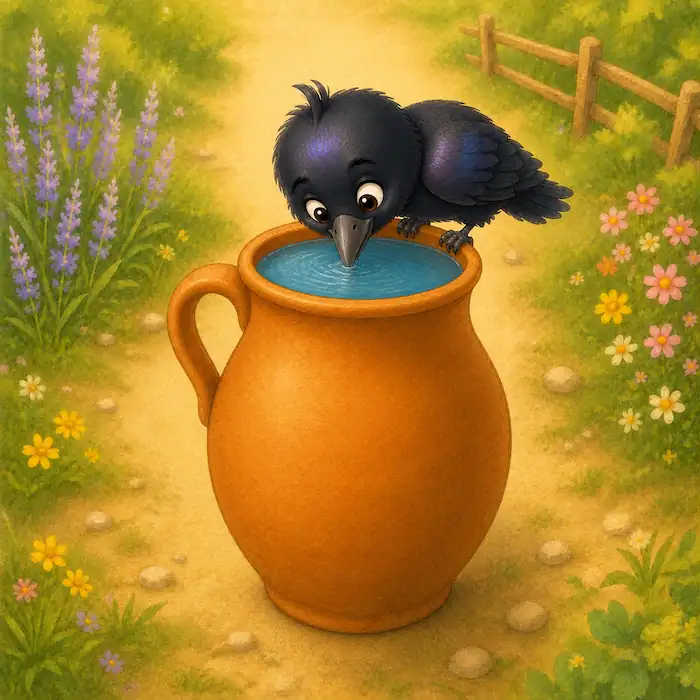
“Ahh,” said the crow. “That is much better.”
He drank until he was no longer thirsty. Then he shook his feathers, spread his wings and flew back into the bright blue sky.
The crow had solved his problem, one small pebble at a time.
Moral
Small ideas can solve big problems when we think carefully and do not give up.
More Stories
For more short fables and animal stories, try these Kooky Kids World pages:
Main Characters
The Crow
The crow is thirsty, tired and looking for water. He is not the strongest animal in the story, but he is careful and thoughtful. He notices the pebbles, tries an idea and keeps going until the water rises.
Vocabulary Spotlight
- Pitcher: A tall jug used to hold water or another drink.
- Pebble: A small, smooth stone.
- Thirsty: Needing a drink.
- Rim: The top edge of a cup, bowl or pitcher.
- Problem: Something that needs to be solved.
- Patient: Able to keep trying without getting angry or giving up.
Discussion Questions
- Why was the crow looking for water?
- Why could the crow not drink from the pitcher at first?
- What did the crow notice on the ground?
- How did the pebbles help the water rise?
- What would you have tried if you were the crow?
- Can you think of a time when a small idea helped solve a problem?
Classroom Activities for Children
1. Pebble Counting Activity
Give children counters, buttons or paper circles. Ask them to count how many “pebbles” they drop into a pretend pitcher. This supports early counting and sequencing.
2. Water-Rising Science Demonstration
Use a clear cup, water and clean stones or marbles. Let an adult drop the objects in slowly so children can watch the water level rise. Ask: “What changed?” and “Why did the water move up?”
Safety note: Use large, clean objects with young children and supervise closely.
3. Story Sequencing Cards
Create four picture cards: the crow is thirsty, the crow finds the pitcher, the crow drops pebbles in and the crow drinks the water. Ask children to put the cards in order.
4. Crow Movement Game
Children flap like crows, hop near the “pitcher”, pick up pretend pebbles and drop them in. This works well for preschool and early primary movement breaks.
5. Draw the Clever Crow
Ask children to draw the crow, the pitcher and the pebbles. Older children can add labels such as crow, pitcher, pebble and water.
6. Writing Prompt
Finish this sentence: “I solved a problem when I…” Younger children can answer aloud while an adult writes down their words.
7. Kind Problem-Solving Circle
Ask children to name small ways to solve classroom problems, such as sharing pencils, asking for help or trying again calmly.
Teachers’ Notes
The Crow and the Pitcher is useful for early-years and lower-primary lessons because the plot is simple, visual and easy to sequence. It supports:
- problem-solving language
- early science discussion about water displacement
- sequencing and retelling
- animal story themes
- vocabulary development
- perseverance and calm thinking
For younger children, keep the focus practical and gentle. The story does not need a harsh “work harder” message. It works best as a tale about noticing, thinking and trying one small step at a time.
Why This Version Works for Children
This retelling uses short sentences, repeated actions and a clear emotional problem: the crow is thirsty and cannot reach the water. Children can easily understand what the crow wants and why the pebbles help.
The story also gives younger children a satisfying pattern. Each pebble matters, and the crow succeeds because he keeps trying calmly.
What Parents and Teachers May Want to Know
The Crow and the Pitcher is a traditional Aesop fable. Many versions are very short, with only a few lines of story and a direct moral. This Kooky Kids World retelling expands the scene gently so younger children can picture what is happening.
The story is suitable for preschool listening, early-reader practice and classroom discussion. It is not frightening, and the problem is resolved in a positive way.
Story Background
The Crow and the Pitcher is one of Aesop’s best-known fables. Aesop’s fables are short traditional stories often linked with ancient Greece. They usually use animals to show a simple lesson about life, choices or character.
Versions of this fable vary, but the central idea is usually the same: a thirsty crow cannot reach water in a pitcher, so he drops stones into it until the water rises.
Further Reading for Adults and Teachers
Adults and teachers can compare this retelling with public-domain versions of Aesop’s fables, including:
These sources are useful for adults who want to see a shorter traditional version before using this child-friendly retelling.
Frequently Asked Questions About The Crow and the Pitcher
-
What is The Crow and the Pitcher about?
The Crow and the Pitcher is about a thirsty crow who finds water in a tall pitcher but cannot reach it. He drops pebbles into the pitcher until the water rises high enough to drink.
-
What is the moral of The Crow and the Pitcher?
The moral is that careful thinking and patience can help solve problems.
-
What age is The Crow and the Pitcher best for?
This retelling is best for children aged 3-7 as a listen-along story and children aged 5-7 as an early independent reading story. It can also work for ages 5-10 in classroom fable lessons.
-
Is The Crow and the Pitcher an Aesop fable?
Yes. The Crow and the Pitcher is a traditional fable commonly linked with Aesop.
-
Why does the water rise when the crow drops pebbles into the pitcher?
The pebbles take up space in the pitcher, so the water moves upward. Teachers can use this story for a simple science demonstration with adult supervision.
-
Is this story suitable for preschool children?
Yes. This version is gentle and simple enough for many preschool children to listen to, especially with pictures, actions or a water-level demonstration.
Copyright
This Kooky Kids World retelling is based on a traditional public-domain Aesop fable. This retelling text, support sections and page materials were prepared for Kooky Kids World.