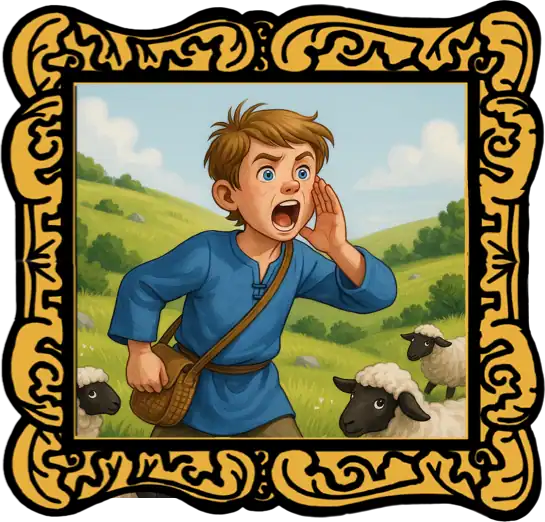
The Boy Who Cried Wolf is a classic Aesop fable retold for kids aged 5–10. When Finn, a bored shepherd boy, tricks the village by shouting “Wolf,” he learns a lasting lesson about honesty and trust. Read aloud or use in class to spark discussion on truth, consequences and making amends.
The Boy Who Cried Wolf
Finn the Shepherd Boy
Finn was a young shepherd boy, in charge of the villagers’ sheep. Every day he led them up the big green hill to graze. It was an important job… but Finn found it terribly boring.
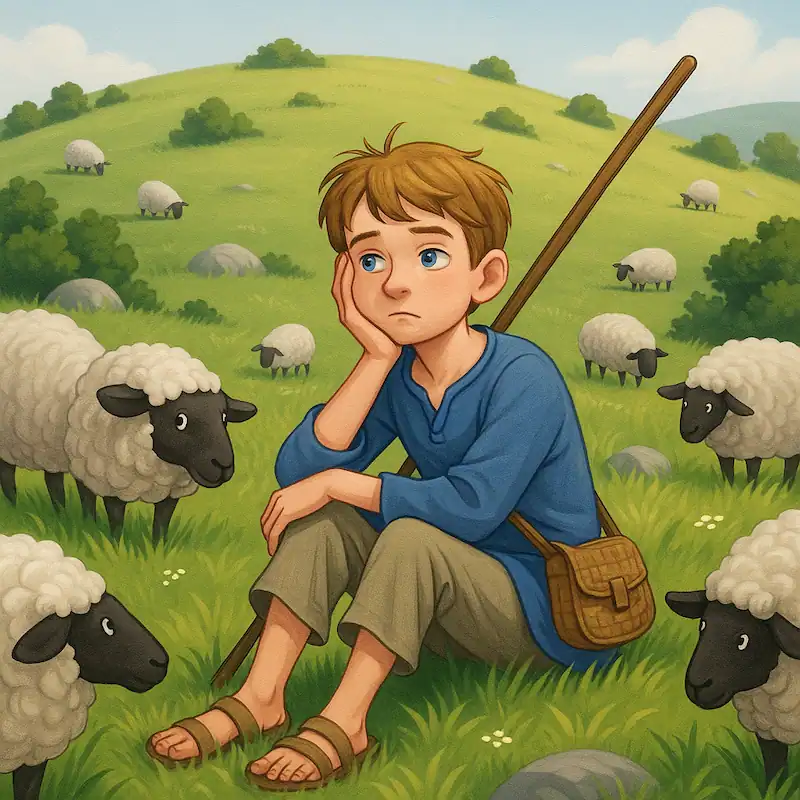
One sunny afternoon, Finn had an idea.
A mischievous idea.
A silly idea.
A very bad idea.
The First Trick
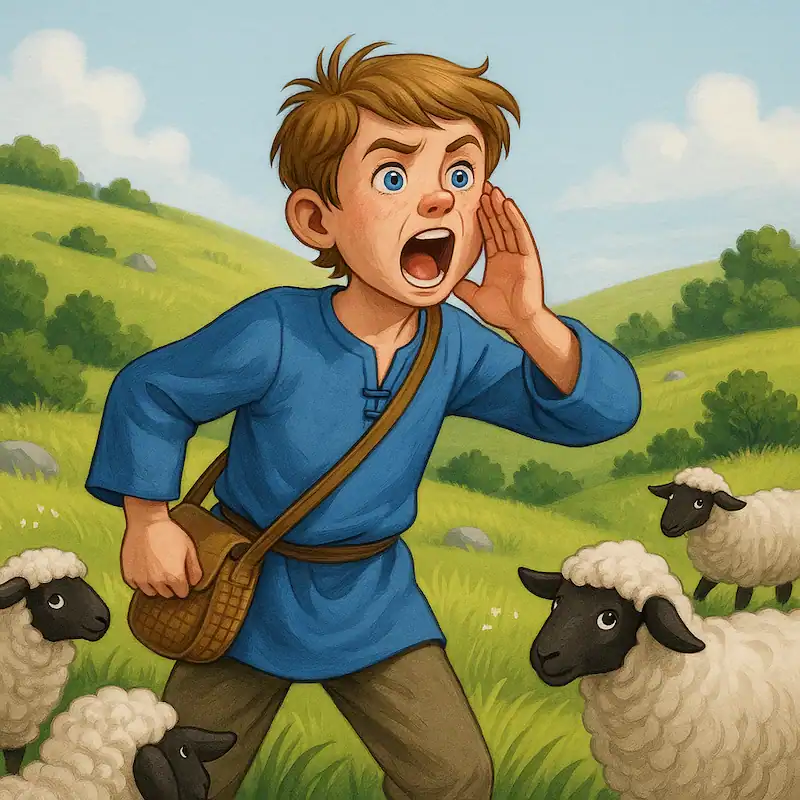
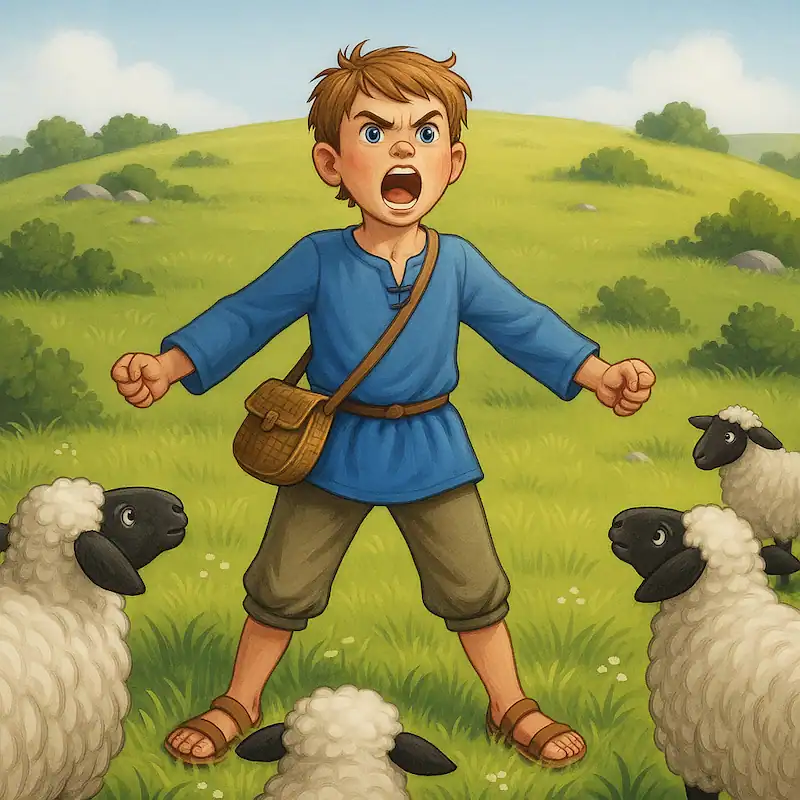
He cupped his hands and shouted with all his might:
“WOLF! WOLF!” he cried.
THERES A WOLF ATTACKING THE SHEEP!“
The villagers heard his cries and rushed up the hill. But at the top, there was no wolf… only Finn laughing at his trick.
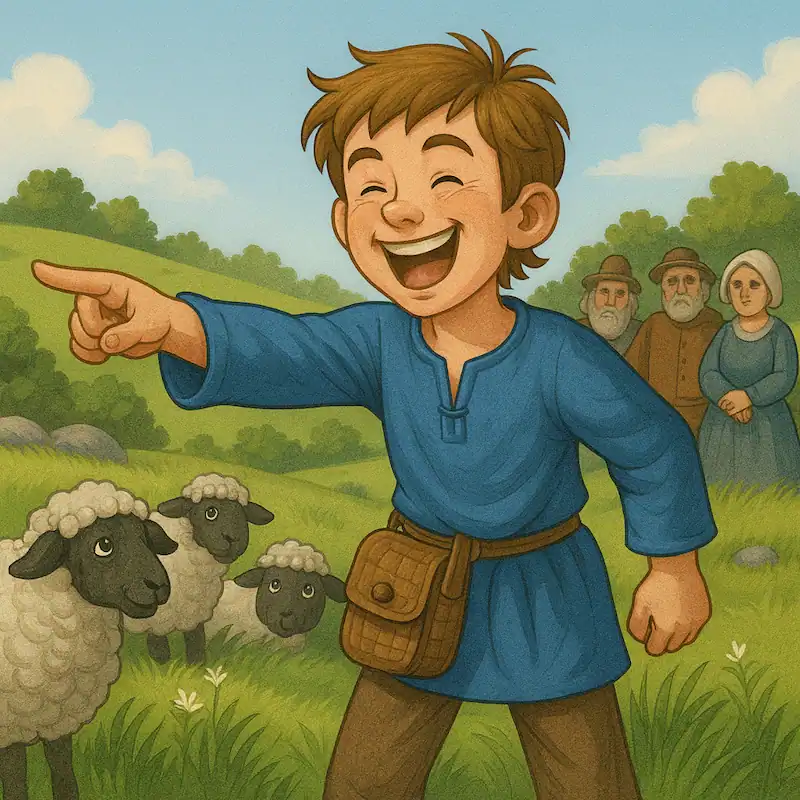
The villagers were furious and stomped home.
The Second Trick
The next day, Finn did it again. “WOLF! WOLF!” he cried.
The villagers, though doubtful, came once more.
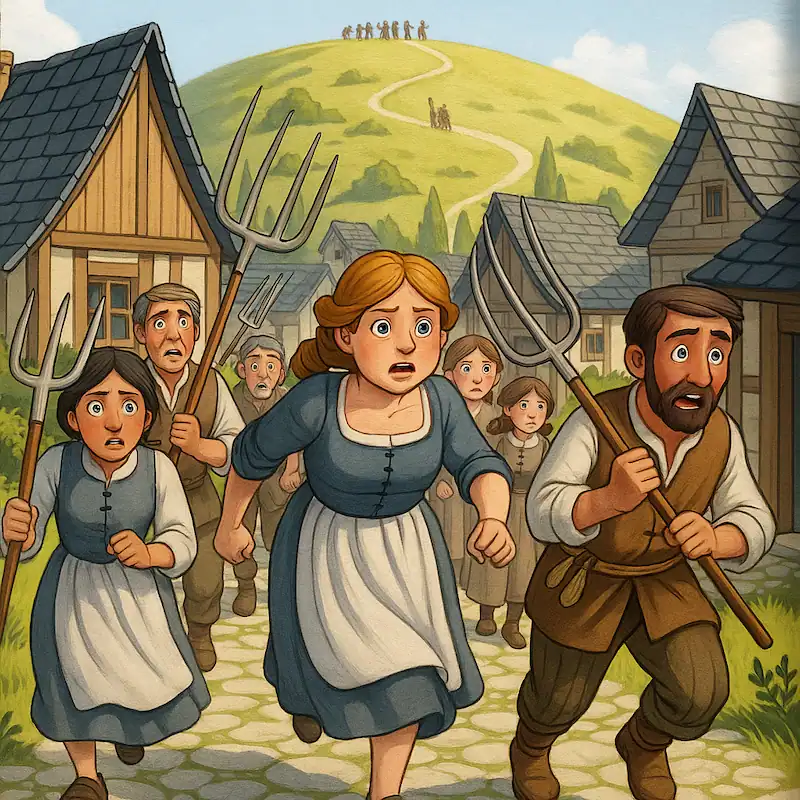
Again, no wolf. Just lies. They warned Finn they would not be fooled again.
When the Real Wolf Came
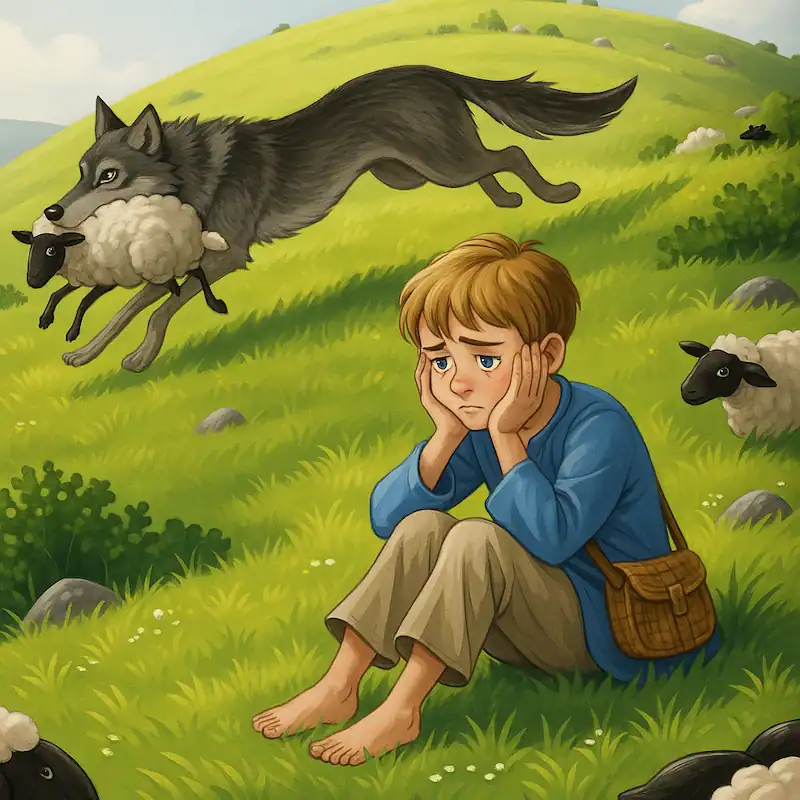
But later that day… a real wolf appeared.
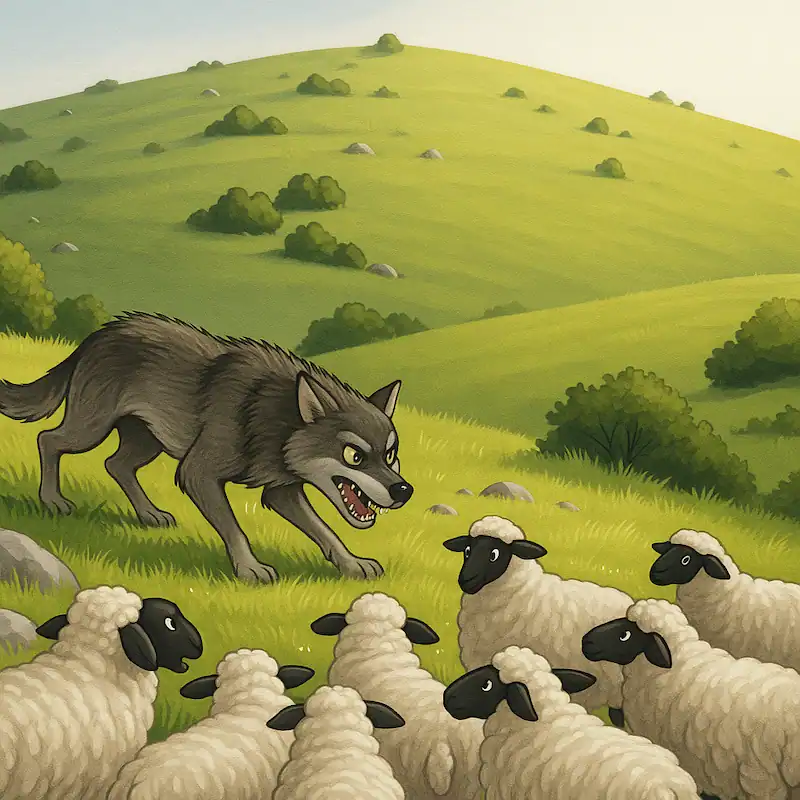
Big. Grey. Sharp teeth flashing. It chased the sheep!
Finn screamed, “WOLF! WOLF! PLEASE HELP!”
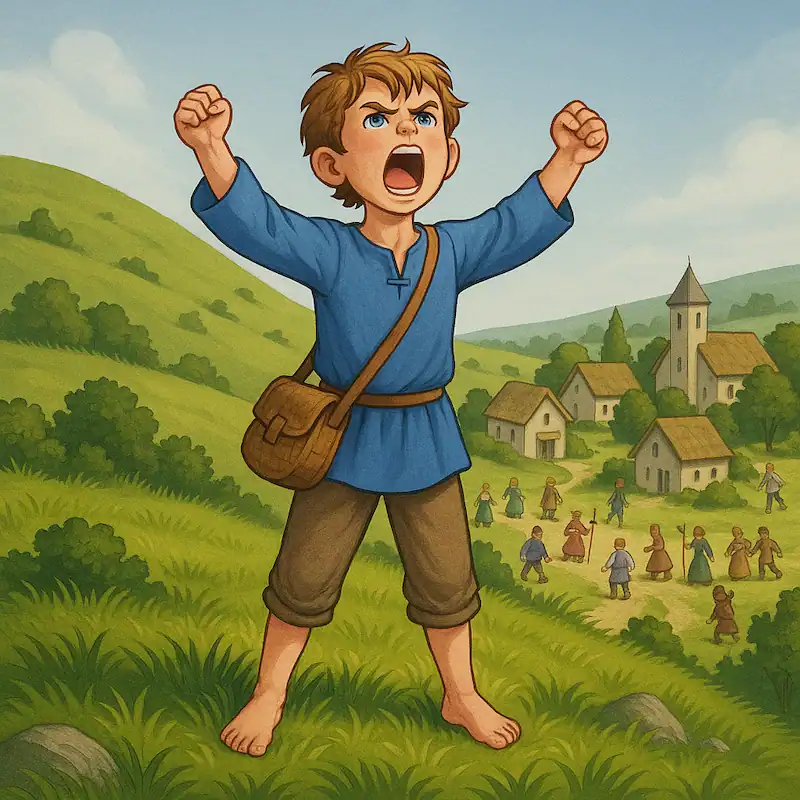
But this time, the villagers didn’t come. They thought it was just another trick.
The wolf scattered the flock and carried one away. Finn was left alone, sad and regretful.
Moral of the Story of The Boy Who Cried Wolf
When the villagers found him, they said:
“No one believes a liar, even when they tell the truth.”
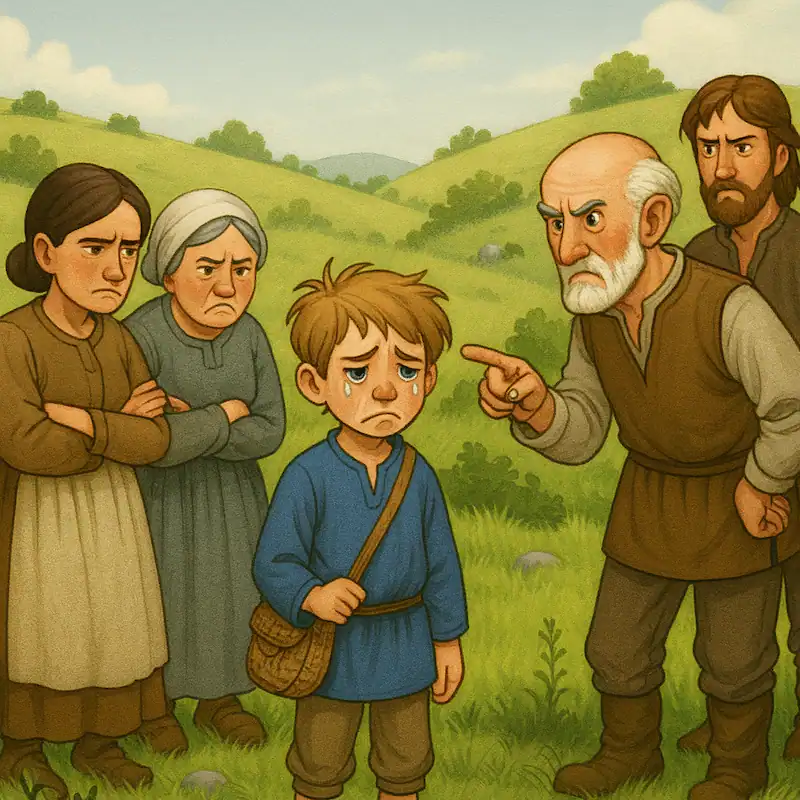
And from that day on, Finn promised to always be honest.
THE END
For More Stories with Morals,
The Gingerbread Man – a runaway biscuit learns that bragging has consequences
The Pied Piper of Hamelin – a town discovers what happens when you break a promise.
The Three Little Pigs – an English folktale about effort, planning and staying safe.
This tale is one of Aesop’s classic fables.
You can read more about Aesop on the official Wikipedia page.
The Boy Who Cried Wolf Q&A
-
Why is The Boy Who Cried Wolf a fable?
Because it’s a short story designed to teach a clear moral lesson. Like many fables, it uses a simple plot and everyday characters to show the consequences of dishonest behaviour.
-
Why was The Boy Who Cried Wolf written?
It was created to teach the importance of honesty and trust. The story warns that repeated lies can destroy credibility, making it hard for others to believe you when it matters.
-
What is the moral of The Boy Who Cried Wolf?
If you lie too often, people stop trusting you — even when you finally tell the truth. Trust is valuable, and once it’s damaged it can be difficult to rebuild.
-
What is The Boy Who Cried Wolf about?
A shepherd boy shouts “Wolf!” as a joke to get attention. When a real wolf appears later, nobody believes him, and the flock is left unprotected.
-
What are the main themes in The Boy Who Cried Wolf?
Honesty, trust, responsibility, consequences, and community. It also shows how attention-seeking behaviour can backfire and cause real harm.
-
Who wrote The Boy Who Cried Wolf?
The story is traditionally attributed to Aesop, an ancient storyteller. Many versions exist because it has been retold and adapted for centuries.
-
When was The Boy Who Cried Wolf written?
There isn’t one confirmed date. It comes from ancient storytelling traditions and has appeared in many collections over time in slightly different forms.
-
What does “crying wolf” mean?
“Crying wolf” means raising a false alarm — warning people about danger when there isn’t any. If someone does it repeatedly, others may ignore them in a real emergency.
-
Is The Boy Who Cried Wolf a true story?
No. It’s a fable, meaning it’s meant to teach a lesson rather than describe a real historical event.
-
How can you teach this story’s message to kids?
Ask simple questions: “How did the villagers feel when he lied?” “What could he have done instead?” “How do you rebuild trust?” Then link it to real life: jokes, exaggeration, and telling the truth even when it’s inconvenient.