Summary
The Happy Prince is a classic story about kindness, sacrifice and compassion. High above a busy city stands the golden statue of the Happy Prince, admired by all for his beauty. But when a little Swallow stops to rest at his feet, he discovers that the Prince is weeping for the suffering people below. Together, they begin a moving journey of generosity and selflessness.
This page offers a clear, classroom-friendly introduction to Oscar Wilde’s famous tale. It also includes a Vocabulary Spotlight, Classroom Activities, Parent and Teacher Discussion Questions, a short History of The Happy Prince, and a FAQ.
- Independent Reading Age: 8–12
- Reading Level: Upper Elementary / Middle Grade
- Reading Time: 9–11 minutes
- Best for: Empathy, guided reading, moral themes, social justice discussion
- Author / Source: Oscar Wilde, retold for children
- Story Type: Literary Fairy Tale / Allegory
- Region / Origin: Ireland (Victorian Era)
- Main Characters: The Happy Prince (Statue), The Swallow (Messenger)
- Moral / Themes: Sacrifice, Compassion, generosity, Appearances versus Reality
The Story
A Prince of Gold

High above a cold and crowded city, on a tall stone column, stood a beautiful statue. It was the statue of the Happy Prince. His body was covered in gold leaf, his eyes sparkled with sapphires, and a bright red ruby gleamed from the hilt of his sword.
Everyone in the city admired him.
“He’s as grand as a weathercock!” said a Town Councillor, hoping to sound clever.
“Why can’t you be more like the Happy Prince?” sighed a mother to her grumpy son.
“He looks just like an angel!” gasped a group of schoolchildren in their red cloaks and neat white pinafores.
They all thought he must have lived the happiest life of anyone.
But they were wrong.
The Swallow and the Statue
One chilly evening, a small Swallow flew over the city. His friends had gone south to Egypt weeks ago, but he had stayed behind because he’d fallen in love with a Reed.
She had a slim waist and waved so beautifully in the wind that he had courted her all summer. But in the end, she didn’t want to leave her river home. So, the Swallow said goodbye and flew off alone.
That night, the little bird spotted the statue of the Happy Prince.
“I’ll rest here for the night,” he said. “Plenty of fresh air, and what a view!”
He settled down between the Prince’s golden feet. But just as he tucked his head under his wing…
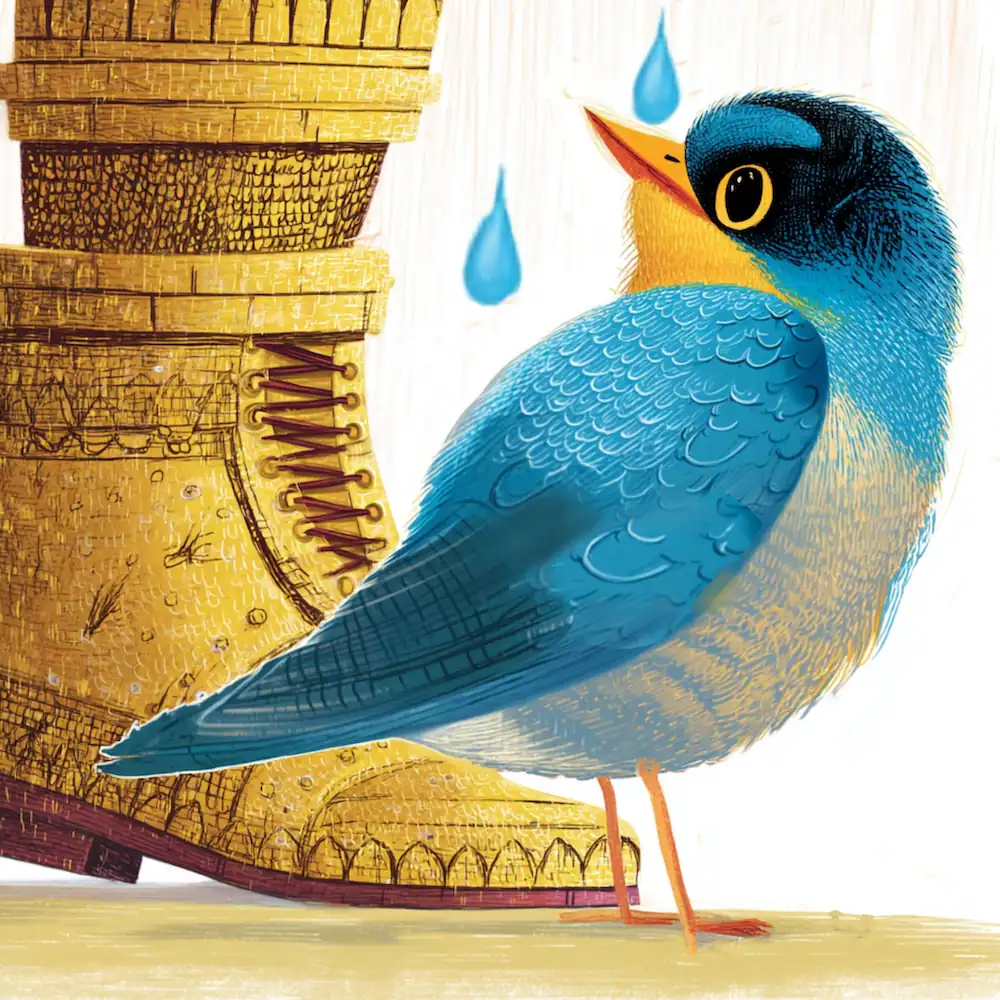
Plop!
A drop of water landed on him.
“Strange!” he said, looking up. “Not a cloud in the sky.”
Plop!
Another drop.
Then a third.
The Swallow looked again. The statue’s eyes were filled with tears.

“Who are you?” asked the Swallow.
“I am the Happy Prince,” said the statue in a soft voice.
“Then why are you crying?” asked the bird, puzzled. “You’ve got gold skin, shiny jewels, and the best spot in town!”
“When I was alive,” said the Prince, “I lived in a palace where sadness was never allowed. People called me the Happy Prince, because I smiled all the time. But now that I’m up here, I can see the pain and sorrow in the city and my heart of lead, once hidden beneath all that gold, aches every day.”
The Swallow tilted his head. “You have a heart?”
“Yes,” said the Prince. “And I need your help.”
A Gift for the Seamstress
“Far away,” said the Prince, “in a little house, a woman sits sewing dresses for the Queen’s court. Her hands are sore and red. Her little boy is lying sick in bed with a fever, crying for something to eat. But she has nothing to give him but river water.”
The Swallow ruffled his feathers. “I was planning to go to Egypt, you know.”
“I cannot move,” said the Prince, “but you can fly. Take the ruby from my sword and give it to her.”
The Swallow sighed. “Fine. I’ll stay one night.”
He gently plucked the ruby from the hilt and flew over the rooftops.
He passed the cathedral, the palace, the river, and the noisy markets. At last, he reached the tiny house. The mother had fallen asleep at her sewing, and the child moaned in his dreams.
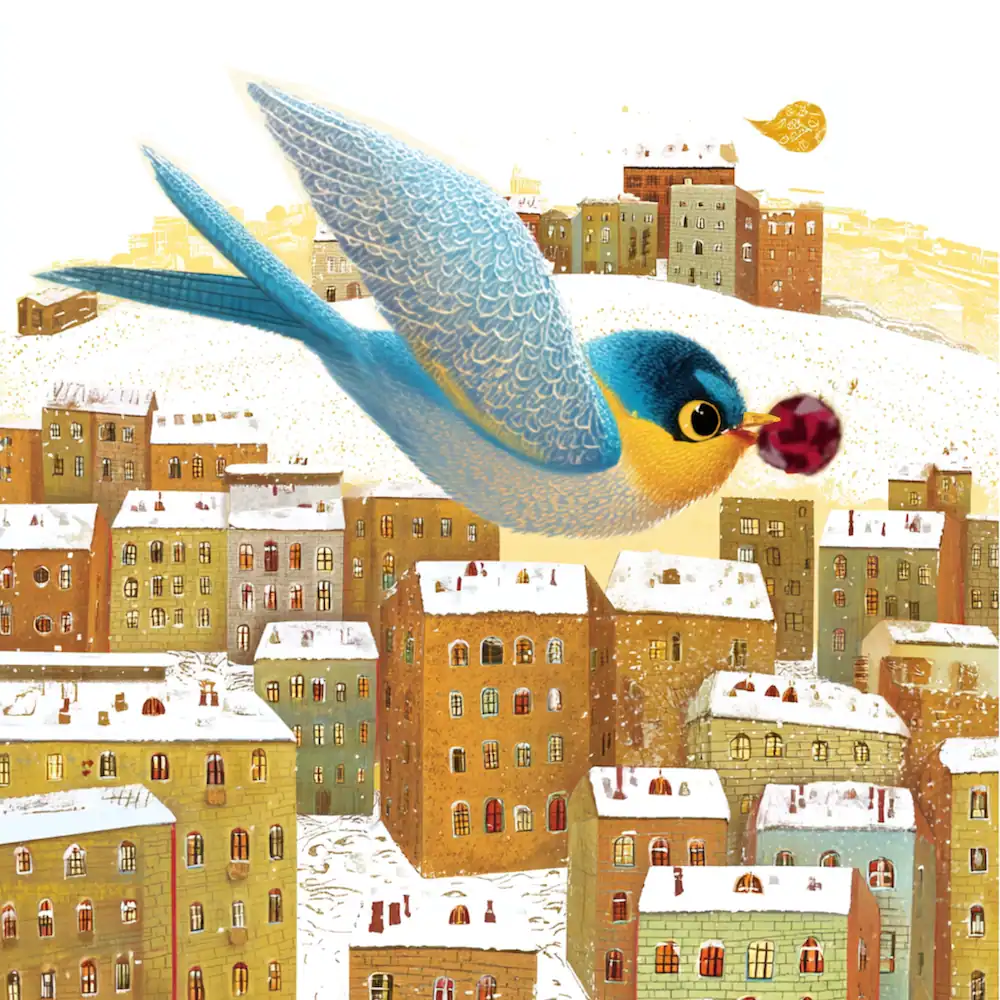
The Swallow laid the ruby next to her thimble and gently fanned the boy’s forehead with his wings. The boy sighed in his sleep.
“So cool,” he whispered. “I think I’m getting better.”
The Swallow had never felt this kind of warmth before. Not from the sun. Not even from the Reed.
Another Night, Another Gift
The next day, the Swallow bathed in the river.
“What an unusual sight,” said a man crossing the bridge. “A swallow so late in the year!” He scribbled a long letter about it for the newspaper. Everyone quoted it, even though it was full of words they didn’t understand.
“I really must leave tonight,” said the Swallow. “Egypt awaits!”
But when the moon rose and he returned to say goodbye, the Prince had another request.
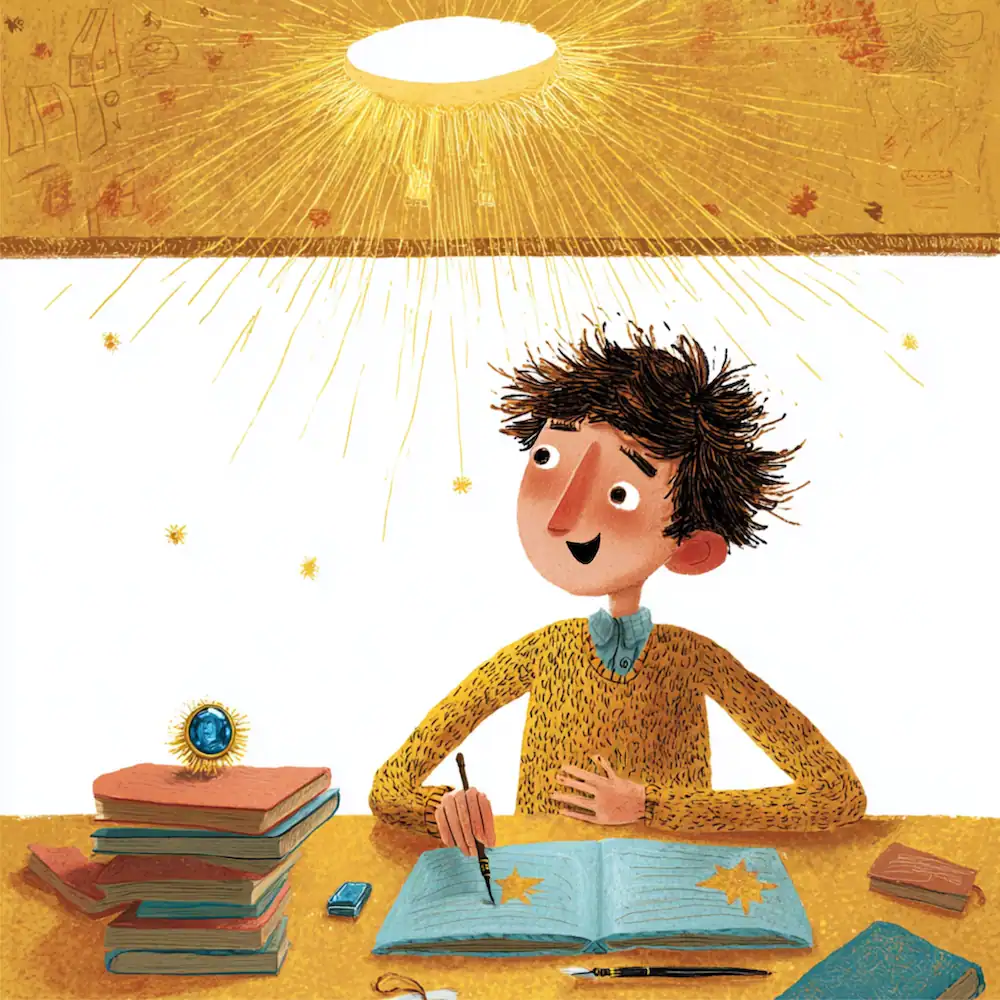
“Across the city, I see a student in an attic room,” said the Prince. “He’s trying to finish a play, but he’s cold and hungry. Please take him one of my eyes. They are sapphires from India.”
The Swallow hesitated. “Your eye? But then you’ll only have one!”
“Please,” said the Prince.
So the Swallow pecked out one sapphire and flew it to the attic room. The young man saw the jewel and cried, “A gift! Now I can finish my play!”
A Third Gift and a Big Decision
That evening, the Prince spoke again.
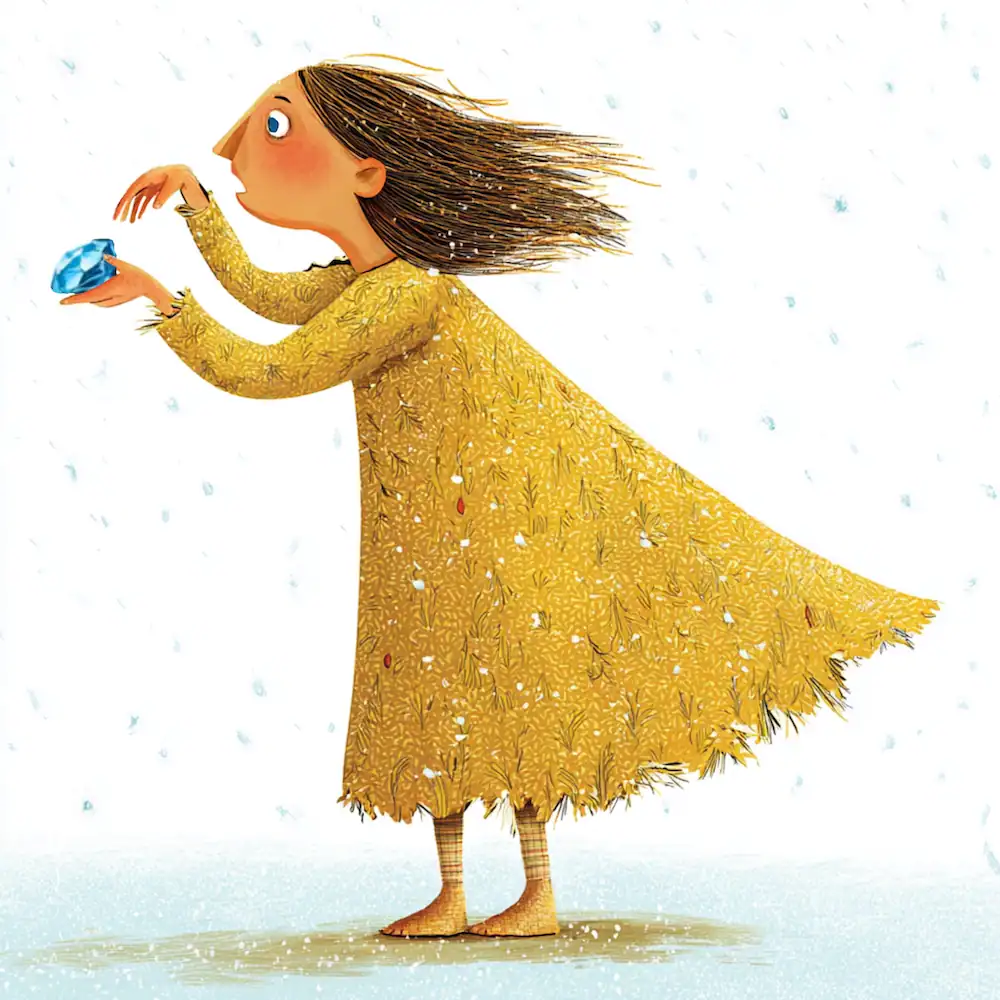
“In the square below stands a poor match girl. She’s lost her matches in the gutter and is crying because she’s frightened to go home with nothing to show.”
“I can’t take your other eye,” said the Swallow. “You’ll be blind!”
“Please,” whispered the Prince.
So the Swallow took the second sapphire and dropped it into the girl’s hand. She laughed with relief and ran home, clutching the jewel tightly in her hand.
Then the Swallow returned and whispered, “You are blind now. I will stay with you always.”
And he did.
The Last of the Gold
Every day, the Swallow perched on the Prince’s shoulder and told him tales of faraway lands. Red birds on the Nile, wise old Sphinxes, golden palaces, and secret deserts.
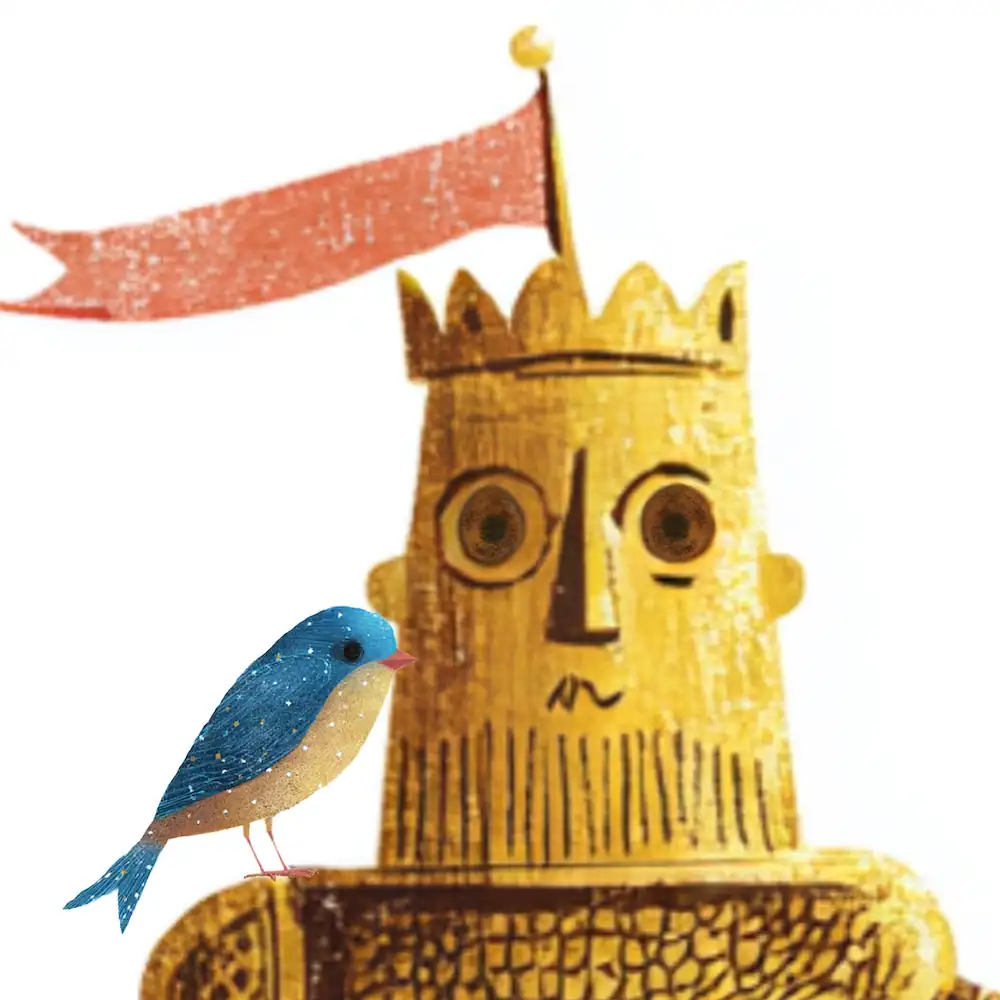
“Those are wonders indeed,” said the Prince. “But the greatest mystery is the misery of people.”
“Then let me fly over the city and report what I see,” said the Swallow.
He returned with stories of hungry children, shivering beggars, and boys sleeping under bridges.
“Take the gold from my body,” said the Prince. “Leaf by leaf. Give it to the poor.”
So the Swallow did.
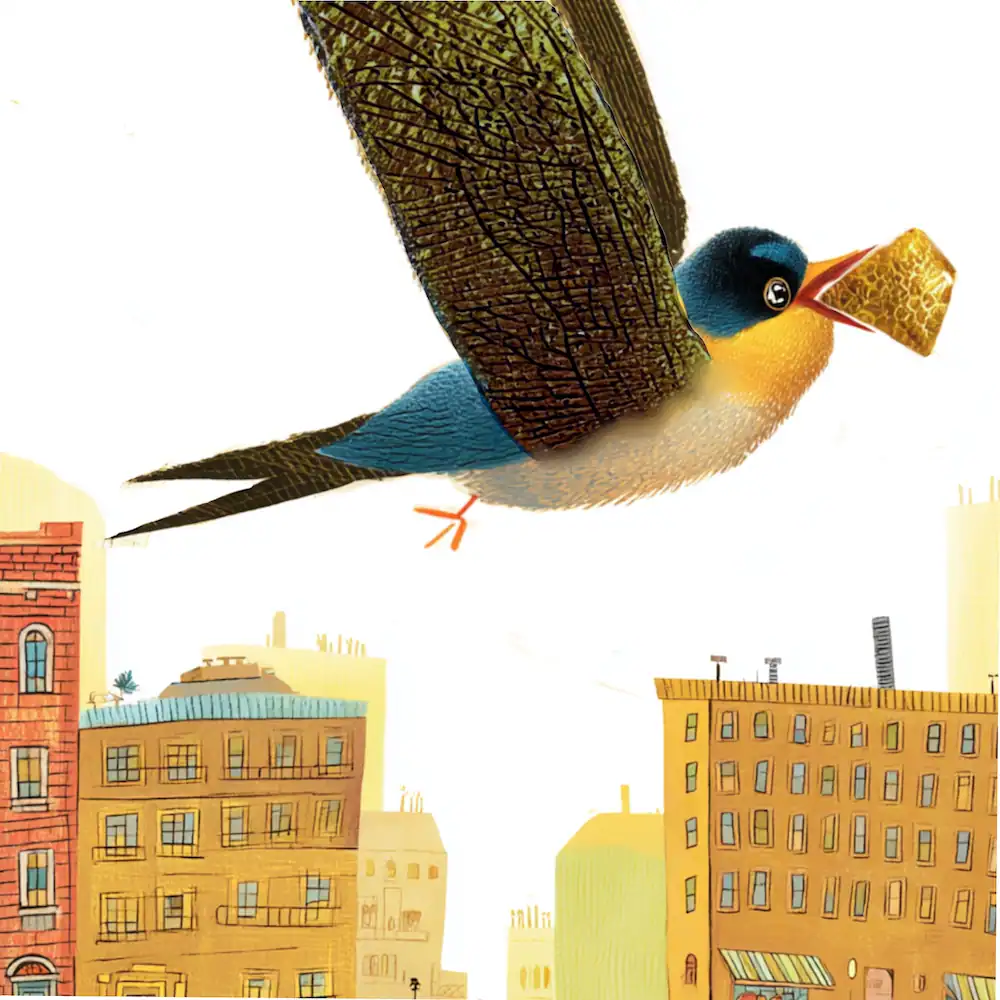
Soon, the statue looked dull and grey, but the people in the city had bread, firewood, and warm smiles.
The Swallow’s Final Gift
Winter came. Snowflakes drifted down. Frost glittered like diamonds on the rooftops.
He could barely fly now, and searched for crumbs with trembling wings. But he never left the Prince.
One morning, he felt it was time.
“Goodbye, dear Prince,” he whispered. “Let me kiss your hand.”
“No,” said the Prince softly. “Kiss me on the cheek, for I love you.”
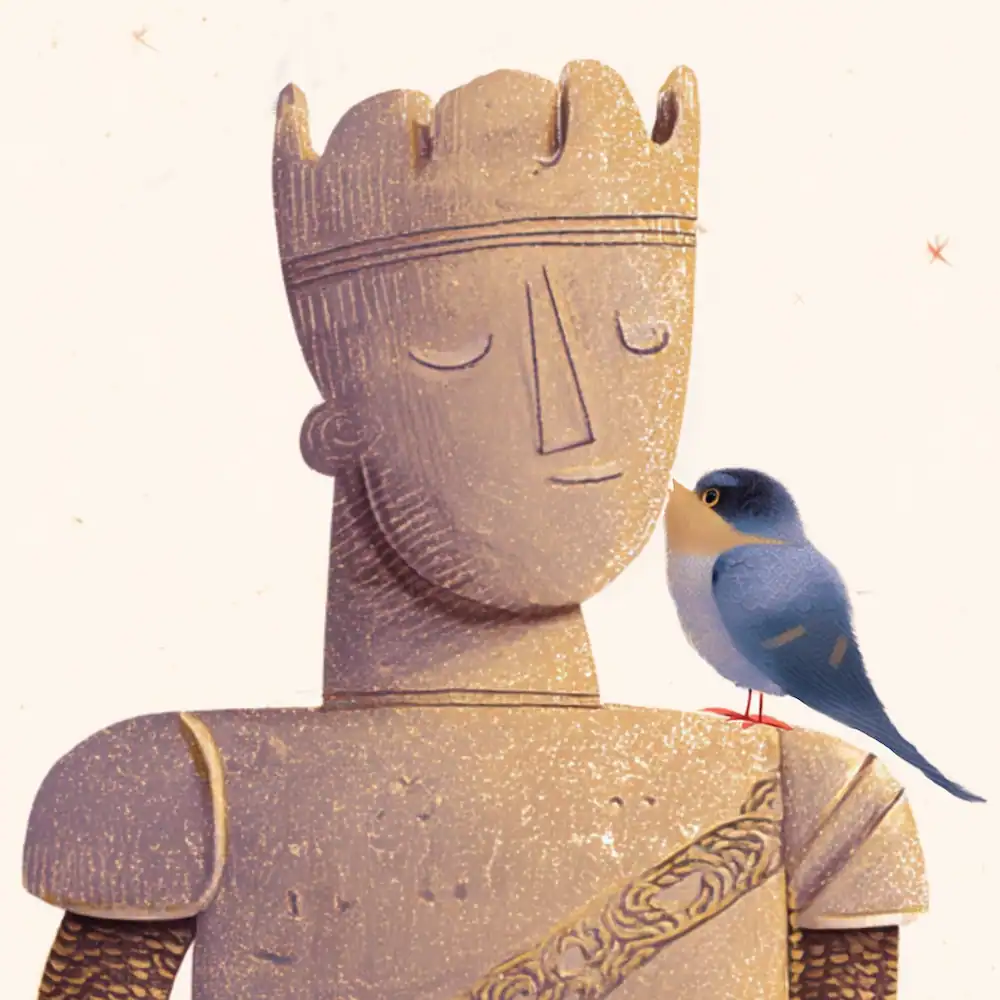
The Swallow kissed him and with that, he fell at the statue’s feet and died.
At that same moment, the Prince’s heart of lead, once hidden beneath all that gold, snapped in two.
What Happened Next
The next morning, the Mayor walked through the square with his councilors.
“Goodness me!” he said, looking up. “The statue looks awful! No ruby, no eyes, and no gold at all!”
“Indeed!” agreed the councilors. “He’s no longer beautiful or useful.”
So they pulled the statue down and threw it into a furnace. But the broken heart didn’t melt.
“This bit’s useless,” said the foundry worker. He tossed it onto a dust heap right beside the little dead Swallow.
Later that day, an Angel passed by.
“Bring me the two most precious things in the city,” said God.
The Angel returned with the lead heart and the lifeless Swallow.
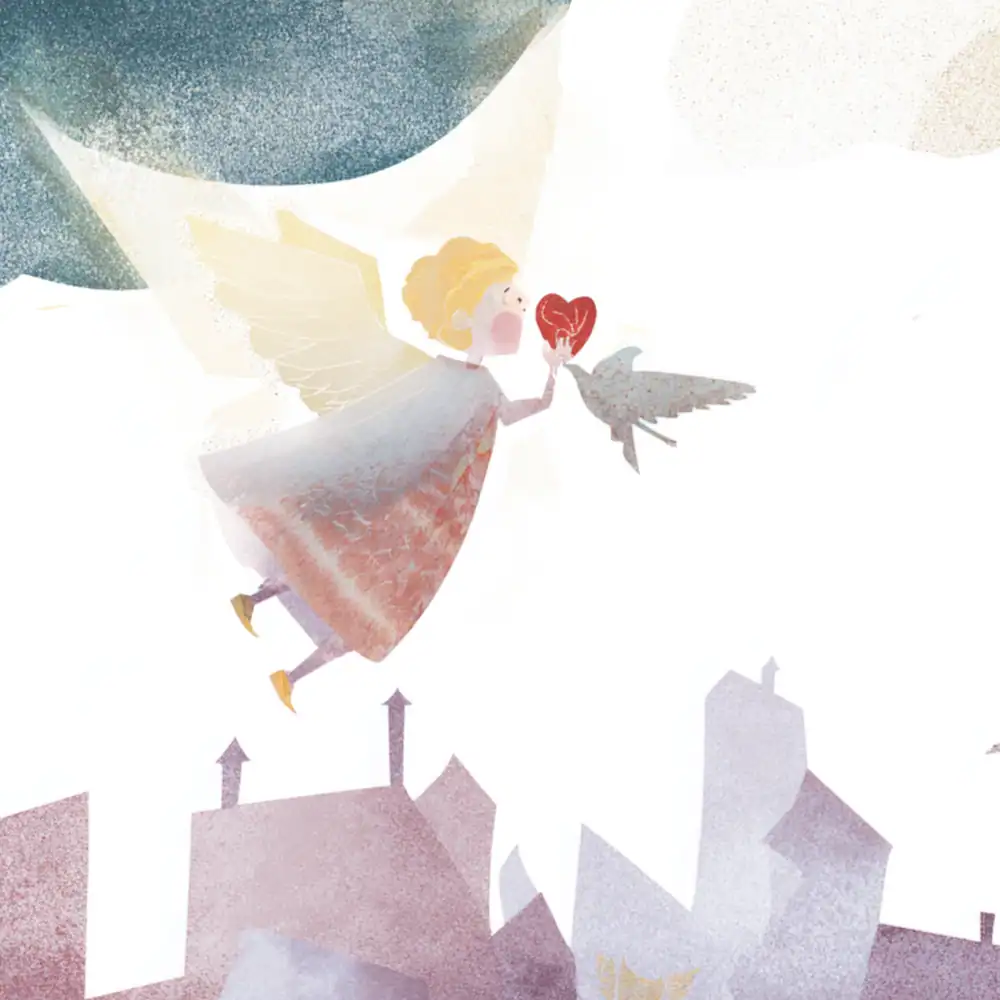
“You have chosen well,” said God. “This little bird shall sing forever in my garden, and the Happy Prince shall live in my city of gold.”
And so they were reunited, one who had given everything, and one who had flown for love in a place where joy and kindness never fade.
Teacher’s Note
This classic story works well for teaching empathy, symbolism and the contrast between outward appearance and inner worth. It also supports discussion about generosity, sacrifice, poverty, kindness and how small acts of care can have a lasting impact.
Get Dylan’s First Adventure
Join the dancing fun! Grab your free copy of Dylan’s school debut.
Send My CopyCheck your email (and junk folder).
Vocabulary Spotlight
-
Pinafores: Sleeveless garments worn over clothes to keep them clean.
Weathercock: A figure on top of a building that turns with the wind.
Courted: Tried to win someone’s love in an old-fashioned way.
Thimble: A small metal cap worn on the finger while sewing.
Sapphire: A valuable gemstone, usually bright blue.
Foundry: A place where metal is melted and shaped.
Shabby: Old, worn out or in poor condition.
Admired: Looked at with pleasure or respect.
Sorrow: Deep sadness.
Compassion: Kind concern for someone who is suffering.
Misery: Great suffering or unhappiness.
Seamstress: A person, traditionally a woman, who sews clothes for a living.
Cathedral: A large and important church.
Attic: A room or space directly under the roof of a house.
Precious: Something very valuable, loved or important.
Classroom Activities
1. The “Precious Things” Art Project
What you need
-
Paper
-
Pencils or crayons
-
Two large circles drawn on the page
How to do it
-
Ask children to draw something the world might think is precious in the first circle, such as gold, jewels or money.
-
In the second circle, ask them to draw something the Happy Prince and the Swallow would think is precious, such as food, kindness, friendship or helping someone in need.
-
Invite children to explain the difference between the two pictures.
Why it works
This activity helps children explore symbolism and think about the difference between price and true value.
2. The Swallow’s Travel Log
What you need
-
Paper or worksheet
-
Pencil
-
Optional map of Europe and North Africa
How to do it
-
Ask children to imagine the Swallow is writing a postcard or diary entry to his friends in Egypt.
-
They should describe what he has seen in the city and explain why he chose to stay with the Happy Prince.
-
Older children can add details about the journey and compare the cold city with warm Egypt.
Why it works
This activity builds empathy, perspective-taking and descriptive writing skills.
3. Foundry Science: Why Didn’t the Heart Melt?
What you need
-
Information about materials such as gold, lead and iron
-
Paper for notes or a simple comparison chart
How to do it
-
Talk about what happens when materials are heated.
-
Compare different materials and discuss which melt more easily.
-
Ask children why Oscar Wilde may have chosen a lead heart as the part that remained after the statue was destroyed.
-
Discuss whether the heart matters only as an object, or also as a symbol.
Teacher note: In real life, lead melts at a much lower temperature than gold. Lead melts at about 327°C (621°F), while gold melts at about 1,063–1,064°C (1,945–1,947°F). In the story, the heart survives symbolically, showing that love and kindness can outlast outward beauty.
Why it works
This links literature with science while helping children understand symbolism.
4. Kindness in Action Chart
What you need
-
Large sheet of paper or display board
-
Sticky notes or small paper slips
-
Pens or pencils
How to do it
-
Create a chart called Small Acts of Kindness.
-
Ask each child to think of one kind action they could do at school, at home or in the community.
-
Add each idea to the chart.
-
If you like, turn it into a weekly kindness challenge and reflect on what happened.
Why it works
This helps children connect the story’s message to real life and see that small actions can matter.
5. Gold Leaf Giving Game
What you need
-
A simple outline of the Happy Prince
-
Small pieces of yellow or gold paper
-
Glue or reusable sticky tack
How to do it
-
Cover the Prince outline with small pieces of gold paper.
-
Write a need or scenario on the back of each piece, such as a cold house, a hungry child or someone with no firewood.
-
Each time a piece is removed, ask children to decide who the Prince should help and why.
-
Encourage them to think carefully about fairness and need.
Why it works
This activity helps children explore generosity, fairness and the difficult choices involved in helping others.
6. Freeze Frame Drama
What you need
-
Space for children to stand and move
-
Optional prompt cards with key moments from the story
How to do it
-
Put children in small groups.
-
Give each group a moment from the story, such as the Swallow arriving, the Prince crying, the ruby being delivered or the final goodbye.
-
Ask them to create a still freeze-frame scene.
-
Invite the class to guess the moment and discuss the feelings shown.
Why it works
This improves comprehension, sequencing and emotional understanding.
7. Appearance vs Reality Sorting Activity
What you need
-
Paper or whiteboard
-
A list of story examples
How to do it
-
Make two columns: What It Looks Like and What It Really Is.
-
Start with examples from the story:
-
The statue: looks rich and beautiful / is actually sorrowful and compassionate
-
The Swallow: looks small and ordinary / is actually brave and loyal
-
The Mayor: looks important and wise / is actually shallow and unfair
-
-
Ask children to sort more examples from the story into the two columns.
-
Discuss why people sometimes judge too quickly.
Why it works
This helps children understand theme and character in a concrete, age-appropriate way.
8. Write a Missing Scene or New Ending
What you need
-
Writing paper
-
Pencil
How to do it
-
Ask children to choose one writing task.
-
They might write a missing conversation between the Prince and the Swallow, the Swallow’s thoughts before he stays, or a new ending in which the townspeople discover the truth.
-
Encourage them to keep the tone of the original story.
-
Invite volunteers to read their work aloud.
Why it works
This builds creativity, inference and character voice.
9. The City Below Contrast Activity
What you need
-
Paper
-
Pencils, crayons or paints
How to do it
-
Fold a page in half or draw a line down the middle.
-
On one side, draw the grand city that people admire.
-
On the other side, draw what the Prince sees from above: hunger, poverty and hardship.
-
Compare the two sides and talk about why the city looks so different depending on where you stand.
Why it works
This helps children explore viewpoint, contrast and hidden hardship in the story.
10. Most Precious Object Debate
What you need
-
A list of words or pictures, such as gold, food, shelter, kindness, love, friendship and time
How to do it
-
Show children the list of objects or ideas.
-
Ask them to decide which is most precious and explain why.
-
Compare answers before and after reading the story.
-
If appropriate, hold a simple class debate.
Why it works
This develops speaking, listening and justification skills while reinforcing the story’s central message.
Parent and Teacher Discussion Guide
1) Why is the statue called the “Happy Prince” if he’s crying?
Answer: People thought he was happy because he looked shiny and grand, but once he saw the city’s suffering he felt sad.
Ask next: Can someone look fine but feel not okay? How could you tell?
Try it: Check in with one person today and ask, “How are you really?”
2) What surprised the Swallow when he stopped to rest?
Answer: He saw tears on the statue even though the sky was clear.
Ask next: What does that tell us about the Prince?
Try it: Notice one small thing today that others might miss and tell someone kindly.
3) Why did the Swallow decide to help, even though he wanted to go to Egypt?
Answer: He saw someone in real need and chose to help before his trip.
Ask next: Have you ever changed your plan to help someone? What happened?
Try it: Give up a few minutes of screen time to help at home.
4) What did the Happy Prince give away, and why?
Answer: He gave his ruby, his two sapphire eyes, and his gold to help people eat and keep warm.
Ask next: Which gift do you think was the hardest to give? Why?
Try it: Choose one toy or book to pass on to someone else.
5) How did the Swallow change in the story?
Answer: At first he thought about himself; then he cared more about others and stayed with the Prince.
Ask next: What helps you care about someone more than yourself?
Try it: Do one quiet chore without being asked.
6) The townspeople took the statue down because it looked shabby. Was that fair?
Answer: They judged by looks and didn’t know what the Prince had done for the city.
Ask next: How could they have found out the truth first?
Try it: Before judging, ask one extra question this week.
7) Why did the Swallow stay, even when it got cold?
Answer: He loved the Prince and wanted to keep helping.
Ask next: When is it right to stick by a friend even when it’s hard?
Try it: Sit with someone who’s alone at lunch or play with someone new.
8) Why didn’t the Prince’s lead heart melt in the fire?
Answer: Real love and kindness are strong—they don’t break or melt away.
Ask next: Can you think of a time when kindness felt strong?
Try it: Write a quick thank-you note to someone kind.
9) Why did the Angel choose the heart and the Swallow as the most precious things?
Answer: Because they gave everything to help others.
Ask next: What makes something truly precious to you?
Try it: Start a small “kindness jar” and add a note each time you spot kindness.
10) What can we learn from the Happy Prince and the Swallow?
Answer: Even small actions can make a big difference; kindness matters more than riches.
Ask next: What is one small kind thing we can do today—at home, at school, or online?
Try it: Pick a simple act now and do it together.
More Stories You Might Enjoy
The Emperor’s New Clothes – Vanity Vs Truth
The Ugly Duckling – Don’t judge by looks
The Frog Prince – Promises and change
The Fairies’ Harp – Kindness rewarded
The Tale of Gelert the Dog – Loyalty and Courage
History
The Happy Prince was written by the Irish author Oscar Wilde and published in 1888. Wilde wrote these stories for his two sons, and this tale reflects his deep interest in compassion, social inequality, and the difference between outward beauty and inner worth. Although it reads like a classic fairy tale, it serves as a powerful allegory about love, sacrifice, and social responsibility.
Note for Educators: While many St. Patrick’s Day activities focus on luck and leprechauns, it is also a wonderful time to explore the deeper side of Irish culture through its famous writers. The Happy Prince moves beyond simple folklore to teach children about empathy and kindness—making it a perfect quiet-time addition to any St Patrick’s Day lesson plan.
The Happy Prince — Frequently Asked Questions
-
Who wrote the original The Happy Prince?
The story was written by the famous Irish author and playwright Oscar Wilde. It was first published in May 1888 as part of his collection, The Happy Prince and Other Tales.
-
What is the moral of the story?
The central moral is that true happiness and value come from compassion and sacrifice, rather than outward wealth or beauty. It teaches that helping others has a lasting spiritual impact, even if the world doesn't notice.
-
Why is he called the "Happy Prince" if he is always crying?
In life, the Prince lived in a palace where sorrow was not allowed, so he believed he was happy. As a statue, he is placed high above the city where he can finally see the reality of people’s suffering, causing his "lead heart" to weep with compassion.
-
Why didn't the Prince’s lead heart melt in the furnace?
In the story, the heart remains solid as a symbol of pure love and kindness. While lead has a low melting point in real science, Wilde uses the un-melted heart to show that the good deeds of the Prince and the Swallow are eternal and cannot be destroyed by fire.
-
Is "The Happy Prince" in the public domain and suitable for schools?
Yes. The original text is in the public domain, making it an excellent, cost-free resource for classrooms. It is highly recommended for Upper Primary/KS2 (ages 8–12) for lessons on empathy, Victorian history, and literary symbolism.
About the Original Story
The Happy Prince first appeared in Oscar Wilde’s 1888 collection The Happy Prince and Other Tales. It remains one of his best-known children’s stories and is remembered for its powerful themes of generosity, sacrifice and compassion.