
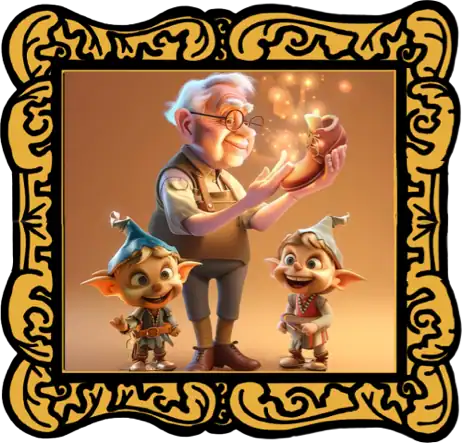

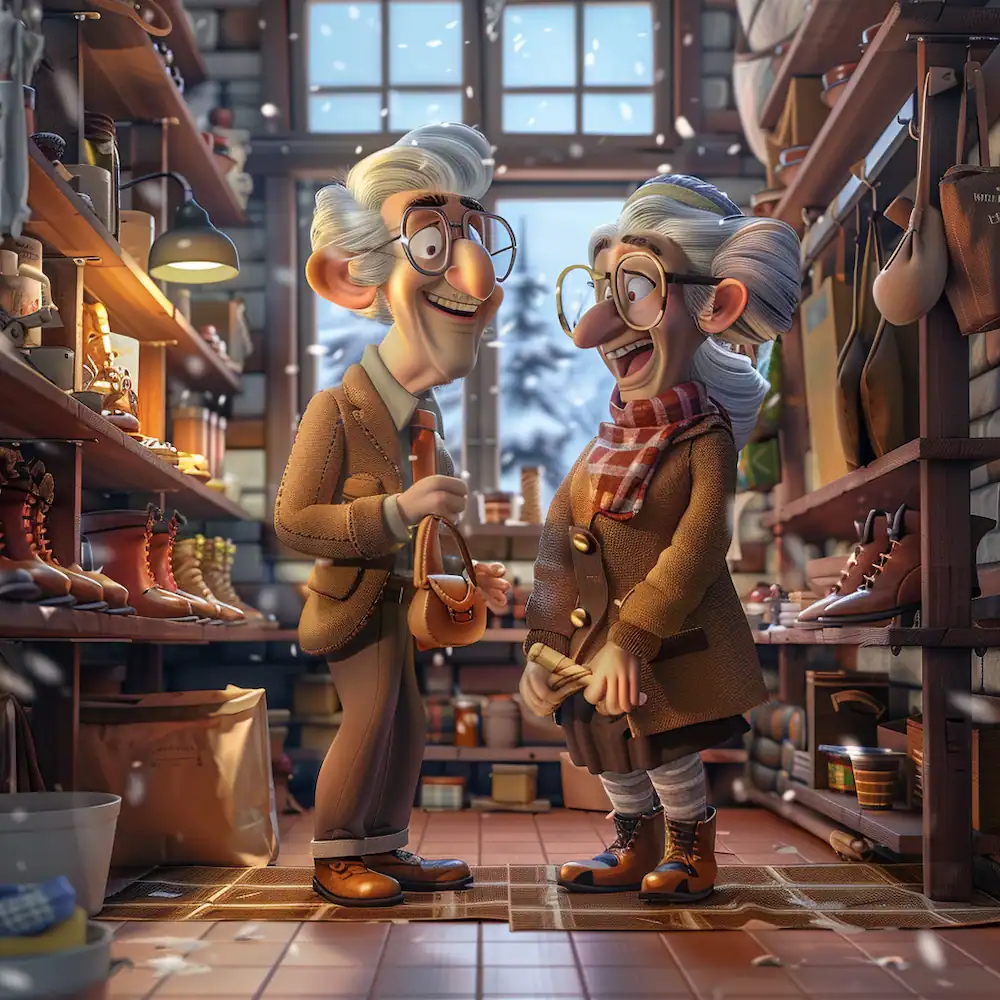
In a cosy little workshop on the edge of town lived a kind-hearted shoemaker and his cheerful wife. Though they once had steady work and warm meals, times had changed. Now, with bills unpaid and customers scarce, they had just enough leather left for one final pair of shoes.
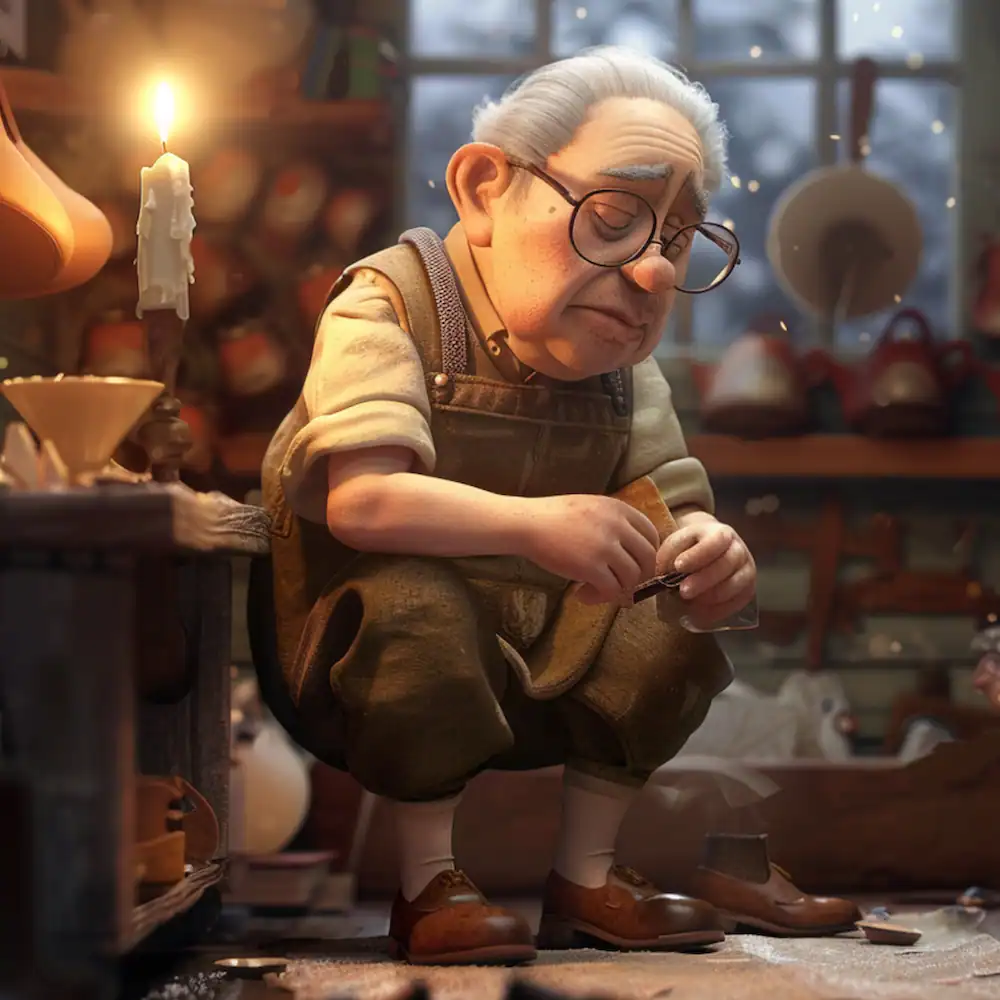
That evening, as the sky turned pink and the street lamps flickered on, the shoemaker sat at his workbench. Carefully, he cut out the leather, planning to sew the shoes in the morning.
“I’ll do my best tomorrow,” he said, brushing off his apron. “For now, let’s rest. Worrying won’t help.”
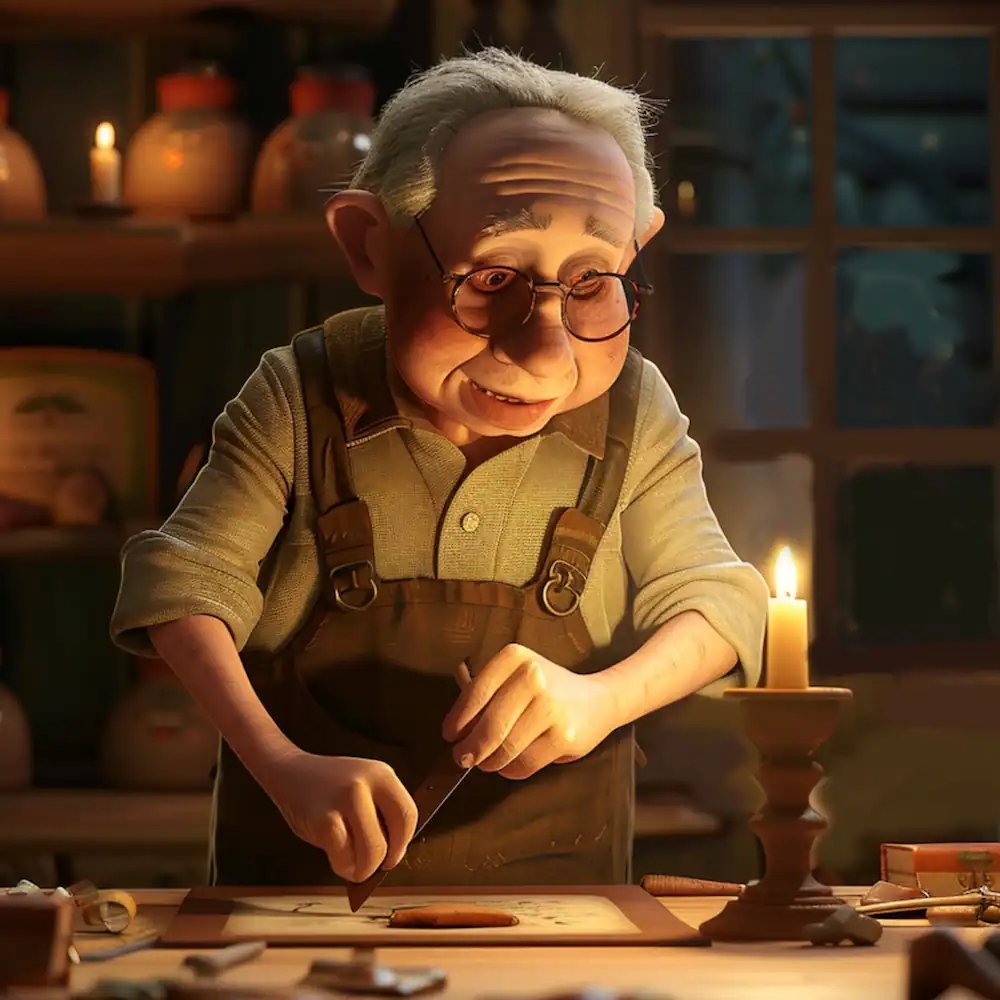
He placed the leather on the table, wished his wife goodnight, and climbed into bed. Despite their troubles, he slept soundly, with a clear conscience and a hopeful heart.
Mystery in the Night
The next morning, something strange happened.
The shoemaker rose early, ready to begin his work. But when he entered the workshop—he gasped!
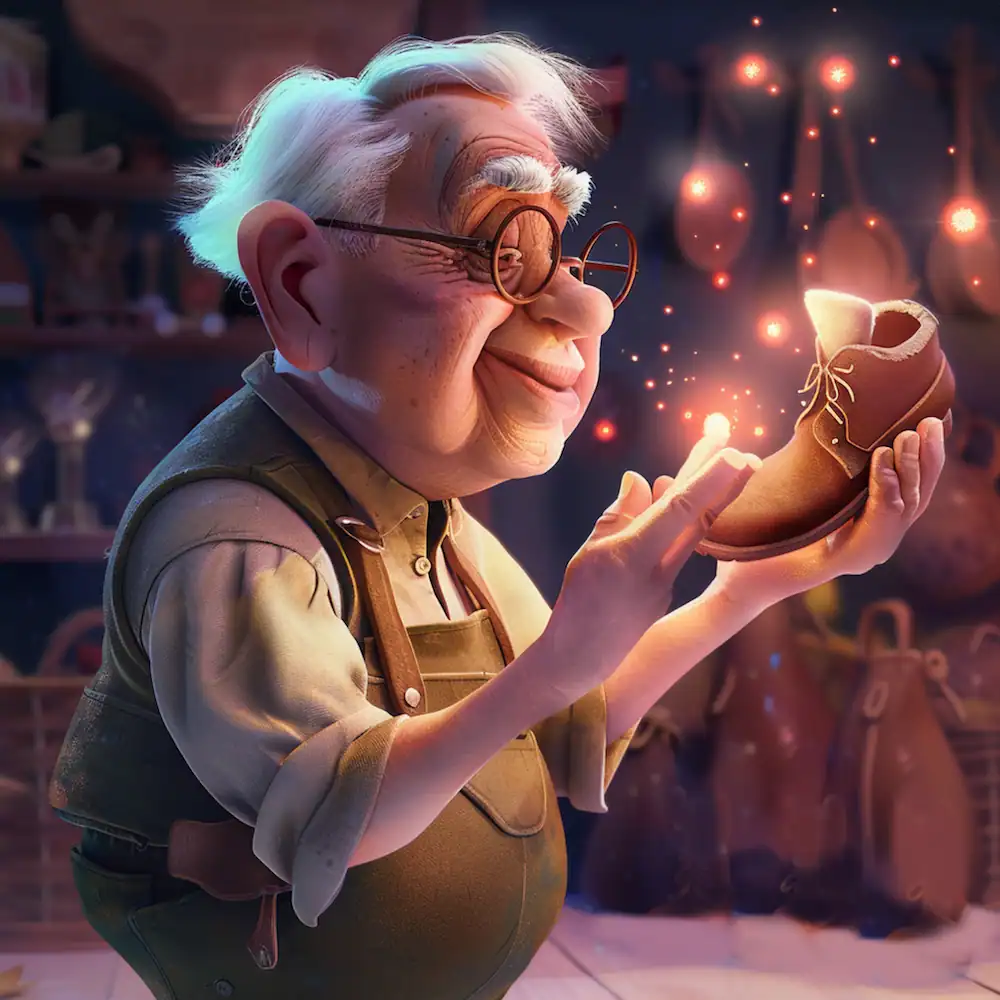
There, on the table, stood a perfect pair of shoes. Not scraps of leather. Not half-stitched soles. But finished shoes—polished, neat, and beautiful. Every stitch was perfect, every seam tight. They looked like they belonged in a royal palace.
His wife peeked in behind him. “Did you get up early and finish them?” she asked.
“No!” he said, wide-eyed. “I swear I didn’t touch them!”
Before they could puzzle it out, a customer came through the door.
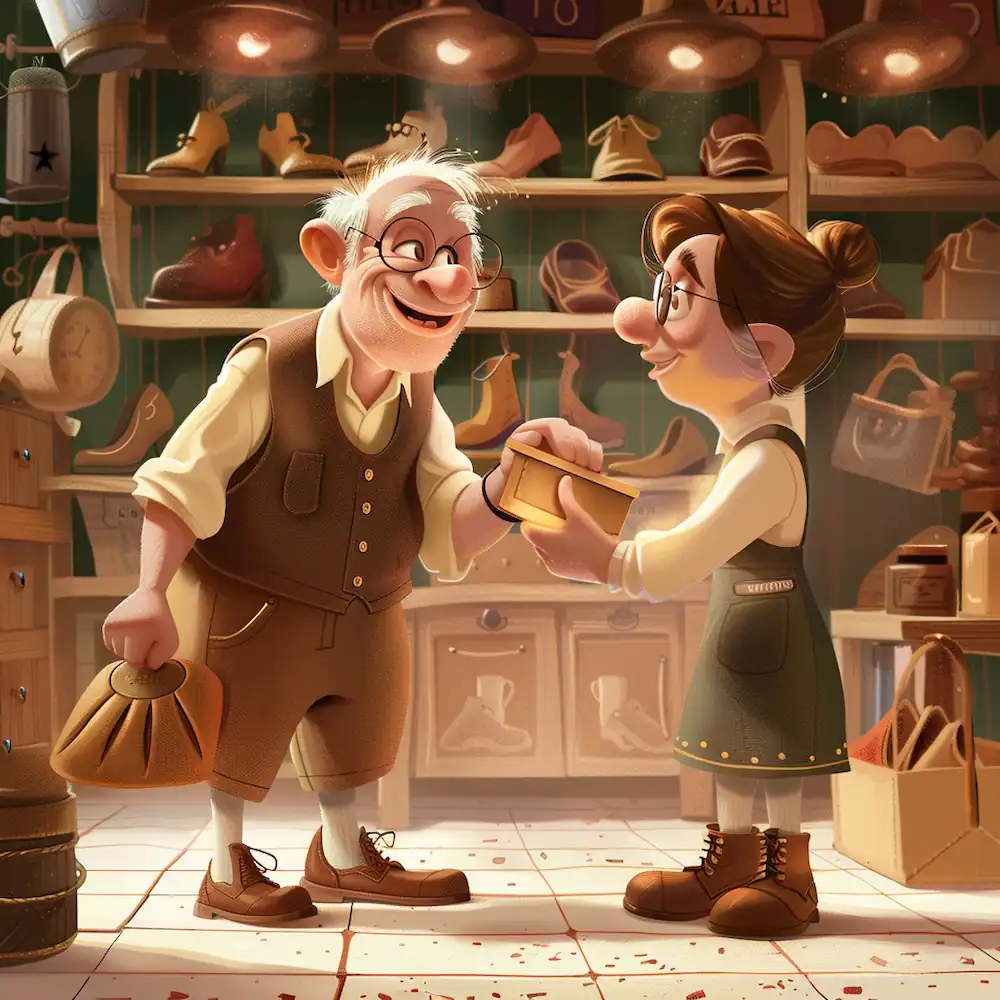
“What splendid shoes!” the man said. He tried them on, found they fit perfectly, and paid more than the usual price. With the money, the shoemaker bought leather for two new pairs of shoes.
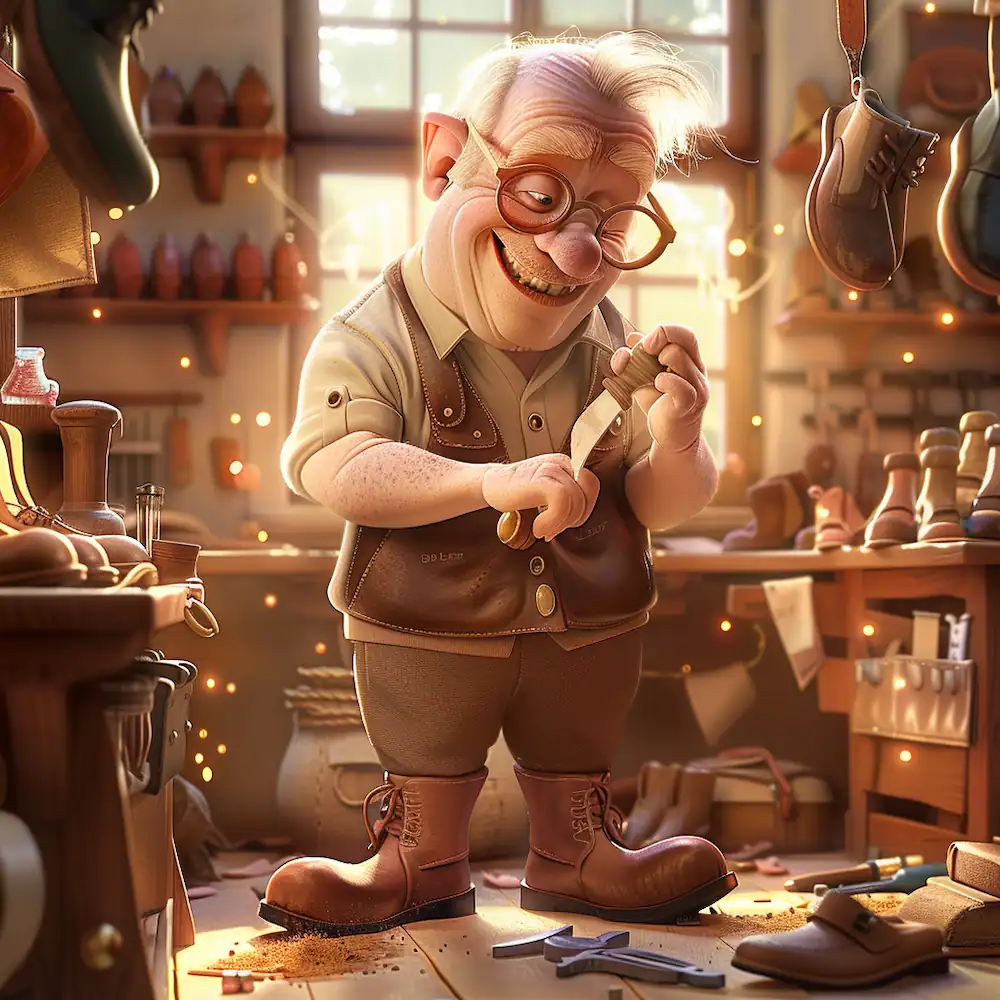
That evening, he prepared the leather just as before, hoping the magic would return. And once again, when the sun came up, the shoes were already made—just as fine as the first pair.
Again, the shoes sold quickly. The shoemaker bought leather for four more pairs. Morning after morning, the pattern continued. Whatever he cut out in the evening was stitched, hammered, and finished by dawn.
Little by little, their fortunes turned. The shelves filled with fine shoes. Customers returned, bringing friends. And before long, the shoemaker and his wife were no longer poor. In fact, they had everything they needed—and a little extra, too.
The Christmas Discovery
One frosty evening, just before Christmas, the shoemaker looked up from his work and said, “Wife, I must know who is helping us. Someone—somehow—is working through the night to make these shoes. Shall we stay up and see?”
His wife smiled. “I’ve been wondering the same thing! Let’s find out.”
So, they lit a candle and hid behind a curtain, just beside the fireplace. The room was quiet. Only the ticking of the clock and the soft crackle of the fire could be heard.

At midnight, two tiny figures crawled under the door, their shadows flickering in the candlelight. They were no taller than a teacup and wore only tattered paupers’ rags—frayed at the hems, patched at the knees, and far too thin for the winter chill.
Without a word, they scrambled up onto the workbench, rolled up their worn sleeves, and got to work.
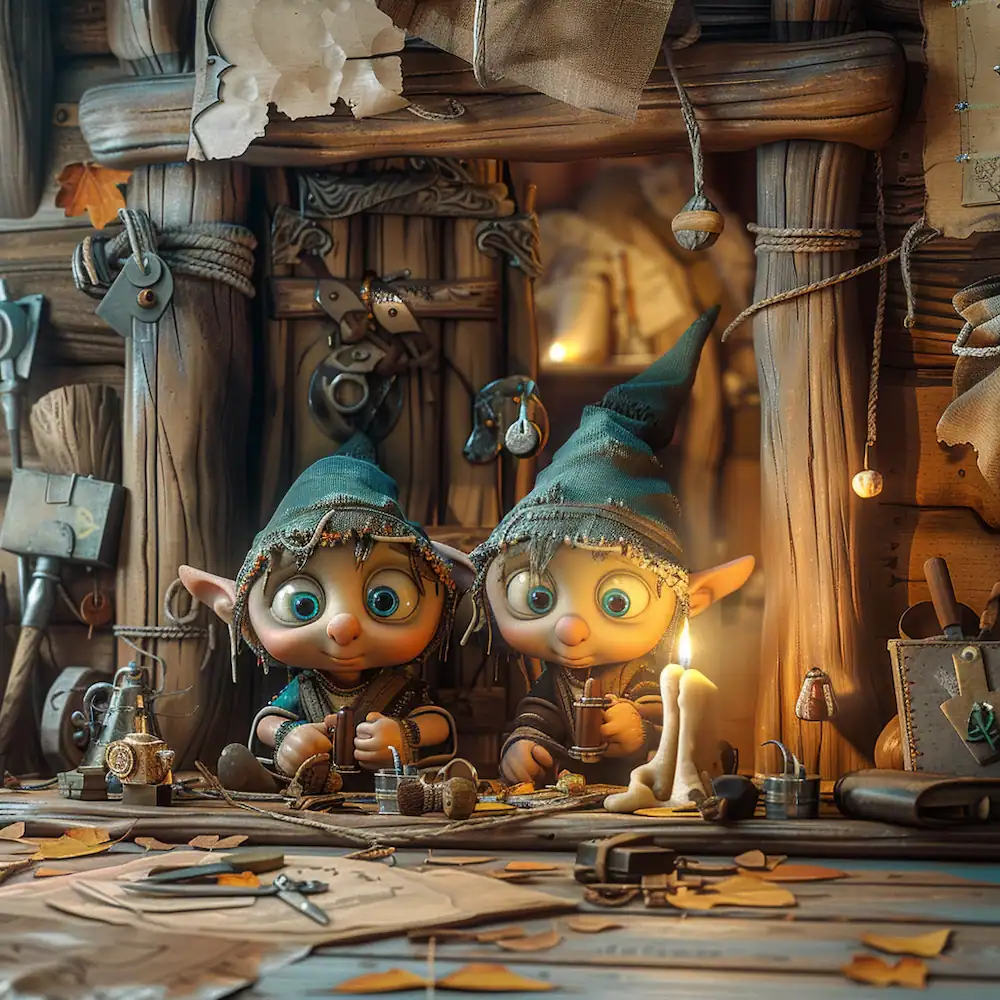
Their fingers flew. One cut, the other sewed. One hammered, the other polished. Their movements were swift and clever, their teamwork so perfect it was like watching a dance.
In less than an hour, all the shoes were done. The tiny visitors gave a nod of satisfaction—then scampered off into the night.
The shoemaker and his wife stared at each other, amazed and grateful.
A Gift in Return
The next morning, the wife bustled into the kitchen with a sparkle in her eye.
“Those little fellows have helped us more than we can ever repay,” she said. “And they don’t even have proper clothes! They must be freezing.”
“You’re right,” said the shoemaker, already pulling out his softest scraps of leather. “I’ll make them the finest tiny shoes anyone’s ever seen!”
“I’ll sew them shirts, waistcoats, pants and coats,” she said, laying out fabric on the table. “And I’ll knit them warm woollen stockings.”
They worked for two days, cutting and stitching, knitting and hemming. By Christmas Eve, everything was ready: two small sets of clothing and two pairs of perfectly polished shoes, each no bigger than a walnut.

That night, instead of laying out leather, they placed the tiny gifts on the workbench. Then they hid behind the curtain once more.
A Night of Joy
At the stroke of midnight, the elves returned. They crawled under the door just as they had before, their ragged clothes trailing behind them. Their patchy sleeves flapped as they clambered up onto the table, expecting to find another night’s work waiting.
But tonight, there was no leather.
Instead, they found two neat bundles—each holding tiny shirts, pants, warm woollen stockings, and soft leather shoes.
The elves froze, blinking in surprise. Then they rushed forward and gently touched the gifts, as if they couldn’t believe they were real. Their faces lit up with wonder.
In an instant, they slipped off their rags and put on the new clothes—buttoning shirts, tugging up pants, and carefully sliding their feet into the perfectly polished shoes.
They twirled and laughed, spinning across the workbench and hopping from stool to stool. No longer dressed in tatters, they moved with lightness and glee, their joy filling every corner of the little workshop.
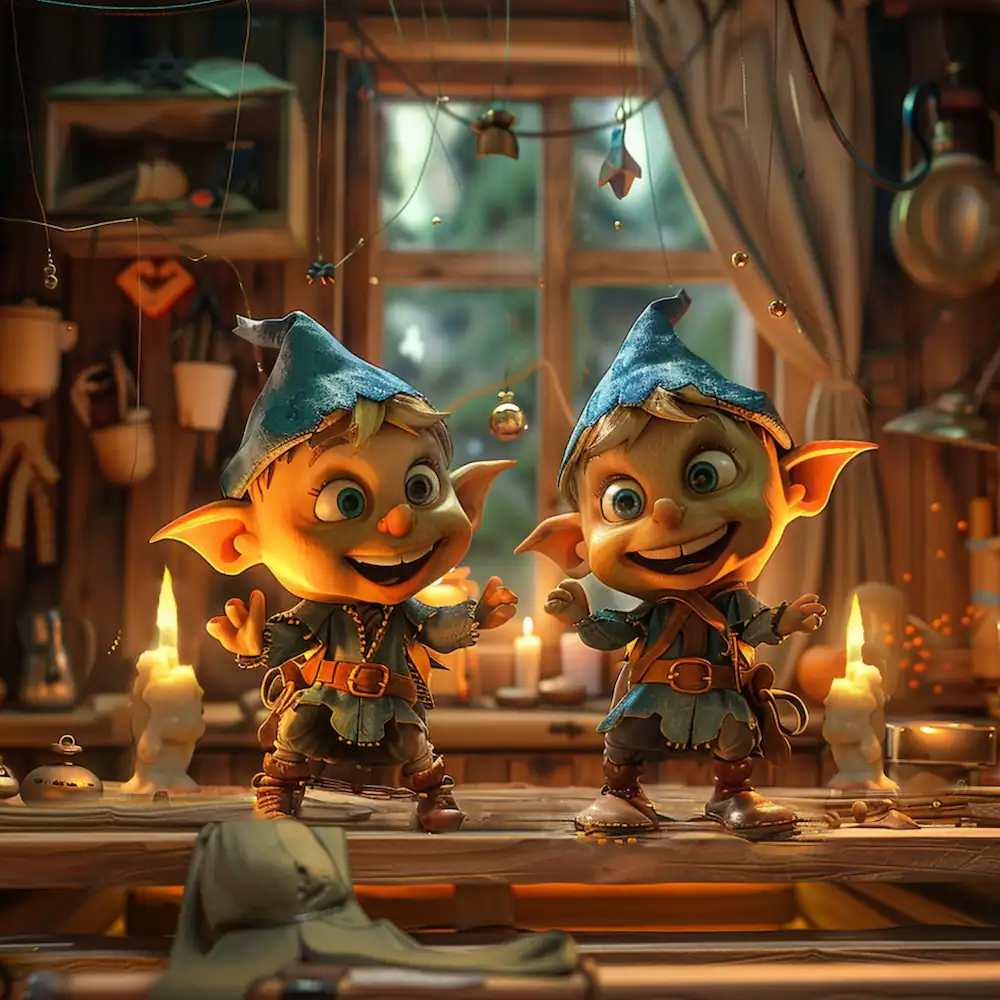
Finally, with one last cheerful leap, they vanished out into the night—and never returned.
Happily Ever After
The shoemaker and his wife never saw the elves again. But their hearts were full of warmth and gratitude.
Though they often glanced at the door in case their tiny friends came back, they knew the elves had gone off to new adventures—happy, clothed, and free.
From that day on, the shoemaker’s business continued to thrive. People came from far and wide to buy his beautiful shoes, not just because of their quality—but because they were made by hands once blessed with magic.
“We may never see them again,” said the shoemaker, “but we’ll never forget the kindness they showed us—and the joy of giving something back.”
And so, the kind shoemaker and his wife lived happily and comfortably for the rest of their days. Not rich in gold, perhaps—but rich in goodness, and always ready to help others in need.
Moral of the Story
Even the smallest acts of kindness can change lives.
Gratitude, generosity, and hard work bring joy—not only to those who receive, but also to those who give. And sometimes, just sometimes… a little magic helps too.
If You Enjoyed This Story, Try These Too:
The Gingerbread Man – A fast-paced tale of cleverness and consequences.
The Princess and the Pea – A short, funny fairy tale with a magical twist.
Cinderella – Another classic story about kindness, magic, and unexpected rewards.
Sleeping Beauty – A dreamy, enchanted tale full of fairy gifts and lasting love.
The Fairies’ Harp – A Welsh folktale about secret gifts and the joy of music.
